How Far an Abyssinian Can Jump
Anyone who shares their home with an Abyssinian knows that these cats aren't content with just walking around on the floor. They are creatures of incredible athleticism, often surprising their human companions with their seemingly effortless leaps and bounds to places that seem impossibly high. If you've ever wondered just how far your Aby can jump, or how to manage their boundless energy and vertical ambitions, you're in the right place. This guide will delve into the physics behind their phenomenal jumps, explain why they have such a strong drive to climb, and offer practical advice on creating a home environment that keeps them safe, happy, and well-exercised.
The Abyssinian's Incredible Vertical Leap: How Far Can They Really Jump?
It's not an exaggeration to say that an Abyssinian's jumping ability can feel like something out of a superhero movie. They are built for movement, and that includes an impressive vertical and horizontal range that can catch even seasoned cat owners off guard. When you see a sleek Aby spring from a standstill to the top of a refrigerator, it's a testament to centuries of natural selection favoring agility and strength.
The Mechanics of an Abyssinian's Jump
The secret to an Abyssinian's remarkable jumping prowess lies in their unique physical build. Unlike some heavier, more cobby breeds, Abyssinians possess a lean, muscular, and incredibly flexible body. Think of them as finely tuned athletic machines. Their hind legs are particularly powerful, acting like coiled springs ready to launch their light frame into the air.
When an Abyssinian prepares to jump, it’s a masterclass in biomechanics. They crouch low, gathering all their power, and then explode upwards or forwards. Their spine is incredibly flexible, allowing for deep compression and powerful extension. Their long, slender legs, while looking delicate, are packed with fast-twitch muscle fibers, perfect for sudden bursts of energy. This combination of a light body mass and strong musculature means they don't need a running start; often, a standing jump is enough to clear significant distances. The precision in their movements is also key; they can gauge distances and land with remarkable accuracy, even on narrow ledges.
Typical Vertical and Horizontal Distances
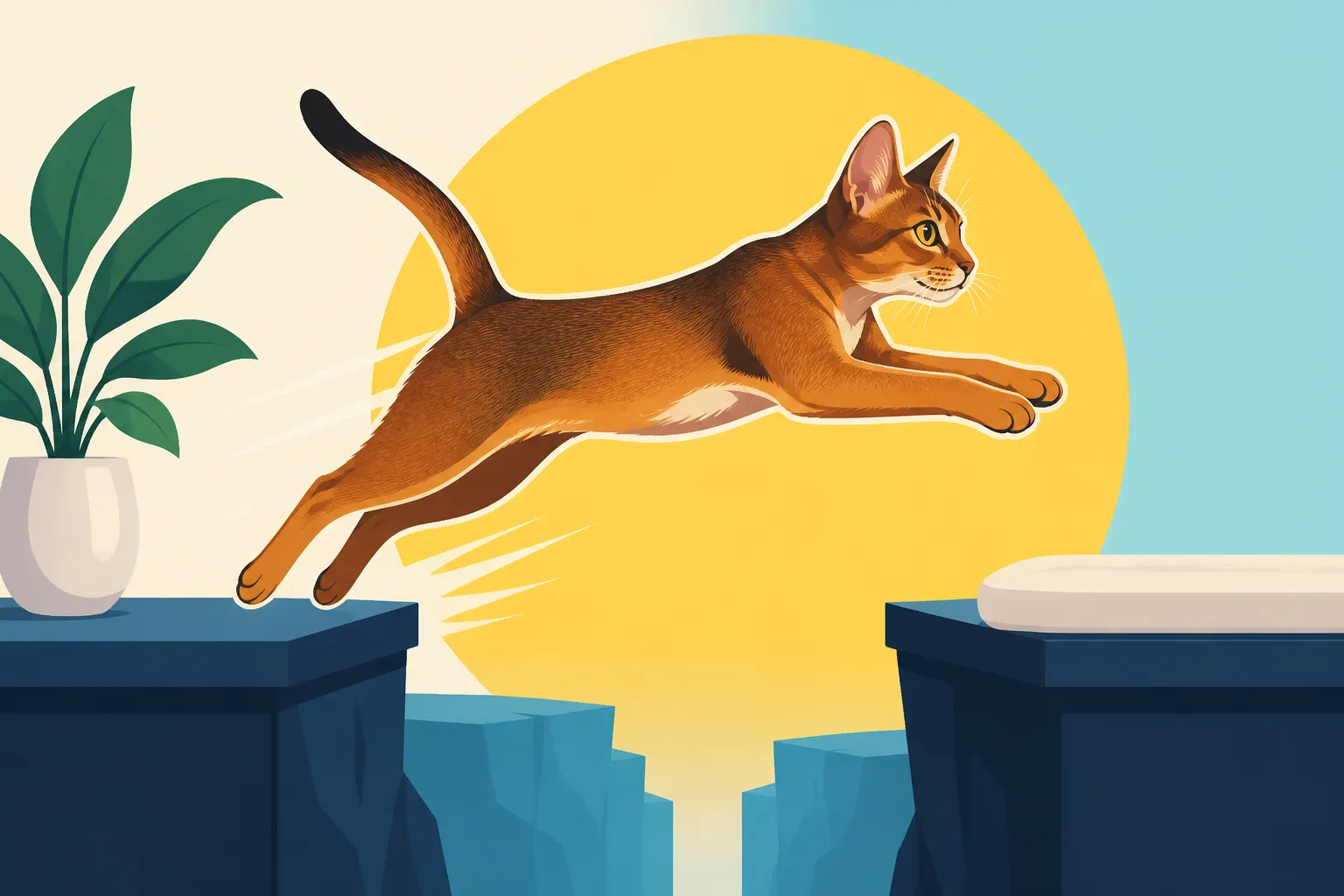
So, what does this translate to in real numbers? While every cat is an individual, and factors like age, fitness, and motivation play a role, a healthy adult Abyssinian can typically achieve vertical jumps of 6 to 8 feet from a standstill. This means that countertop, the top of a standard fridge, or even a tall bookcase is often well within their reach. From a horizontal perspective, they can easily clear distances of 4 to 6 feet when motivated, effortlessly leaping from one piece of furniture to another, or across open spaces.
Imagine your Aby on the living room floor, suddenly deciding the top of your 7-foot bookshelf looks like an excellent vantage point. With a flick of their powerful hindquarters, they can be up there in a blink. It's not just about raw power; it's also about agility and grace. They can twist and turn mid-air, adjusting their trajectory to land perfectly. This capability is why we often find them perched on the highest points in a room, surveying their domain. It's also why having appropriate climbing structures is so vital. You might find your Aby trying to scale curtains or jump to precarious spots if there aren't enough sanctioned high places. If you want to know more about how high they commonly go, you might find How High an Abyssinian Will Climb a fascinating read.
Why Abyssinians Are Built for the Heights (and How It Shapes Their Behavior)
Understanding how Abyssinians jump is only half the story. The other crucial part is understanding why they do it. Their incredible athleticism isn't just a party trick; it's deeply ingrained in their evolutionary history and current behavioral needs. These aren't lazy lap cats; they are dynamic explorers.
An Instinctive Need for Elevation
Abyssinians, often referred to as the "Clowns of the Cat Kingdom" or "little cougars," carry a strong echo of their wild ancestors. In the wild, elevation provides safety from predators, an excellent vantage point for hunting or surveying territory, and a quiet, secure place to rest. This instinct is still very much alive in your domesticated Aby. They feel safer, more in control, and more engaged when they are up high.
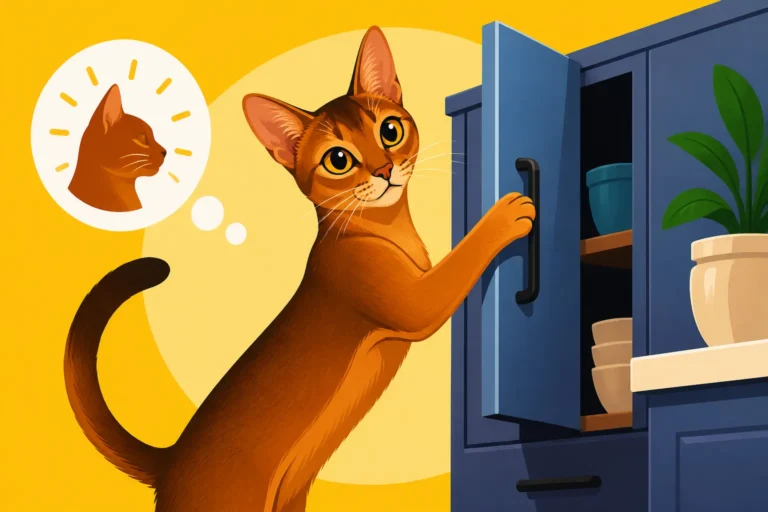
It's not just about safety, though. It's about mental stimulation. Being on top of a bookshelf, a tall cat tree, or a set of wall-mounted shelves gives them a different perspective on their world. They can observe everything happening below, from the movements of their human companions to the rustling of leaves outside the window. This constant observation keeps their sharp minds engaged. Without these opportunities for elevation, an Abyssinian can become frustrated, leading to undesirable behaviors as they try to create their own vertical adventures, sometimes in places you'd rather they didn't go, like atop your precious china cabinet. This deep-seated need for vertical territory is why An Abyssinian Needs Height More Than It Needs Floor. They truly thrive when given opportunities to explore the vertical dimension of your home.
The Role of Agility and Energy in Their Jumping Prowess
The Abyssinian's boundless energy is directly linked to their jumping capabilities. These are incredibly active cats. They aren't content to simply nap all day; they need to move, to play, and to explore. Their agility is phenomenal, allowing them to not only jump high but also to navigate complex climbing routes with ease, often seeming to defy gravity.
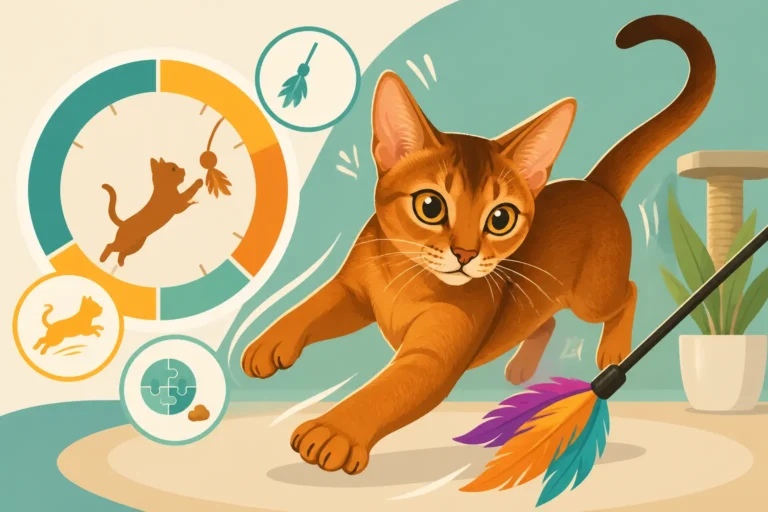
This high energy level means they require outlets for their physical prowess. If an Abyssinian isn't given enough opportunities to burn off energy through play and climbing, that energy will find an outlet, often in ways that are less than ideal for your household. You might find them scaling shelves, batting objects off high surfaces, or simply running "zoomies" through the house at top speed. It’s why The Abyssinian Is the Busiest Cat in the House – they genuinely are. Incorporating jumping into their daily routine, whether through play with wand toys that encourage aerial leaps or by providing varied climbing structures, is crucial for their overall well-being. It helps them stay mentally stimulated and physically fit, channeling their natural instincts into acceptable and safe activities.
Creating a Safe and Stimulating Environment for a Jumping Abyssinian
Given their innate need for height and incredible jumping ability, it's essential to design your home with your Abyssinian's vertical ambitions in mind. Ignoring this aspect of their nature can lead to frustration for both you and your cat, not to mention potential damage to your belongings or even injury to your Aby.
Providing Appropriate Vertical Space
The most effective way to satisfy an Abyssinian's climbing instincts is to provide ample, safe, and engaging vertical territory. This means more than just one small cat tree in the corner. Think about creating a true vertical landscape throughout your home.
Tall Cat Trees: Look for cat trees that are robust, stable, and reach near the ceiling. Abyssinians prefer height, and a wobbly, short tree won't satisfy their needs. Search on platforms like Amazon for extra-tall or multi-level cat trees with sturdy bases and multiple platforms. Ensure the materials are durable, as your Aby will be putting it through its paces. These trees provide excellent opportunities for vertical ascent and a safe place to perch and observe.
Wall-Mounted Shelves and Catwalks: This is often the superior solution for Abyssinians because it fully utilizes vertical wall space without taking up precious floor space. You can create a customized, multi-level climbing route that challenges their agility and provides multiple high perches. Think ledges, steps, and even hammocks mounted securely to your walls. When searching for these, again, check Amazon for various modular systems that can be configured to your space. Remember, Why Wall Shelves Work Better Than a Tree for an Abyssinian is often due to their customizability and ability to cover more territory.
Clear Climbing Routes: Consider the pathways your Aby will take. Can they easily transition from a chair to a shelf, or from a cat tree to a window perch? Ensure there are clear, safe steps in between so they don't have to make dangerously long or awkward jumps. When installing shelves, make sure How Far Apart Abyssinian Wall Shelves Should Sit is appropriate for their agility – not too close that it's boring, but not so far they have to strain or risk a fall.
Here’s a quick comparison of common vertical enrichment options:
| Feature | Tall Cat Tree | Wall-Mounted Shelves & Catwalks | Bookcases/Furniture (adapted) |
|---|---|---|---|
| Pros | Freestanding, easy to move, multiple levels | Space-saving, customizable, high vantage points | Utilizes existing items, cost-effective |
| Cons | Can be bulky, less customizable, may wobble | Requires installation, permanent, potential wall damage | Not always cat-safe, less stable, can damage items |
| Ideal for | Primary climbing structure, rest spots | Maximizing vertical space, creating complex routes | Supplemental climbing, temporary solutions |
| Safety Considerations | Ensure sturdy base, good weight distribution | Securely mounted to studs, appropriate spacing | Ensure stability, clear off breakables |
Redirecting Undesirable Jumping Habits
Despite your best efforts to provide amazing vertical spaces, your Abyssinian might still try to jump onto prohibited surfaces like kitchen counters, dining tables, or shelves laden with fragile items. This isn't malice; it's just them being an Aby and exploring every possibility. The key is redirection and consistency.
- Make Prohibited Areas Unappealing: For surfaces like kitchen counters, you can use temporary deterrents. Double-sided sticky tape (often available on Amazon), aluminum foil, or motion-activated air canisters can make these spots less attractive. The goal isn't to punish but to create a mild, unpleasant experience that the cat associates with the surface, not with you.
- Provide an Irresistible Alternative: This is where your dedicated cat trees and wall shelves shine. When you redirect your Aby from a counter, immediately guide them to an approved climbing structure. Reward them enthusiastically when they use it. They need to understand where they can jump.
- Engage in Interactive Play: Direct their jumping energy into appropriate activities. Use wand toys to encourage them to leap and chase up cat trees or wall-mounted scratchers. Regular, vigorous play sessions can help burn off excess energy that might otherwise be directed towards unauthorized climbing. Remember, Why an Abyssinian Destroys Cheap Furniture Faster is often because it doesn't stand up to their athletic prowess, so invest in durable toys and structures.
- Consistency is Key: Everyone in the household needs to be on the same page. If one person allows counter-jumping, it undermines all your training. Be patient, be consistent, and your Aby will learn the house rules.
Recognizing and Supporting an Abyssinian's Physical Health for Peak Performance
An Abyssinian's impressive jumping ability is a hallmark of their athleticism. To ensure they can continue to leap and play throughout their lives, it's crucial to support their physical health. Their lean build and active nature make them less prone to certain issues, but they still require mindful care.
Maintaining Ideal Body Condition
The Abyssinian's body condition is directly linked to their jumping and climbing prowess. They are naturally lean, muscular cats. Any extra weight puts unnecessary strain on their joints, muscles, and internal organs, making those high jumps more difficult and potentially painful. A healthy Abyssinian should have a clearly defined waist when viewed from above, and you should be able to easily feel their ribs when gently running your hands along their side, without them being visible.
Maintaining this lean physique requires a balanced diet appropriate for an active cat, along with plenty of exercise. Free-feeding, where food is left out all day, can sometimes lead to overeating, even in active breeds. Portion control and scheduled meals can help manage their calorie intake. Remember, Why a Lean Abyssinian Puts Less Load on Its Joints – every ounce matters when you're an aerial acrobat. Regular weigh-ins at home and during vet visits can help you track their condition and make adjustments as needed.
When Jumping Becomes a Concern: Signs of Injury or Age
While Abyssinians are incredibly agile, their constant activity can sometimes lead to injuries, and like all cats, they eventually feel the effects of aging. It's vital for owners to be observant and recognize when their Aby's jumping behavior changes.
- Hesitation or Reluctance: If your Abyssinian, who once effortlessly scaled the highest points, suddenly hesitates before jumping, or avoids their favorite climbing spots, it's a significant red flag. They might seem to "think" about the jump, or try a lower route instead.
- Stiffness or Pain After Jumping: Watch for any signs of discomfort after landing. This could be anything from a slight limp, favoring a leg, or a general stiffness in their gait. They might also appear less enthusiastic about play that involves jumping.
- Changes in Landing: A usually graceful landing might become clumsy or heavy, indicating pain or weakness in their legs or joints.
- Reduced Activity Levels: A general decrease in their usual energetic play, especially activities involving jumping and climbing, should warrant attention. This can sometimes be an early sign of underlying health issues, including conditions like patellar luxation, which can manifest as skipping a step or struggling with stairs. How Patellar Luxation Shows in a Jumping Abyssinian details these kinds of subtle changes.
- Vocalization: Any new or increased vocalization (meows, growls, hisses) during movement or when attempting to jump can indicate pain.
If you observe any of these changes, it's crucial to consult your veterinarian promptly. Early diagnosis and intervention can make a significant difference in managing discomfort and preventing further issues. As they age, their jumping abilities will naturally diminish, as explained in What an Old Abyssinian Slows Down From. Adjusting their environment with ramps, lower shelves, and soft landing spots can help them continue to enjoy vertical spaces safely into their senior years. Regular vet check-ups, even for seemingly minor changes, are paramount in keeping your athletic Aby healthy and happy throughout their lifespan.
Disclaimer
This article is for general informational purposes only and does not constitute professional advice. Laws, prices and regulations vary by location and change over time. Consult a qualified professional for guidance on your specific situation.