How Patellar Luxation Shows in a Jumping Abyssinian
It’s absolutely heartbreaking to watch your usually agile Abyssinian, a cat renowned for its boundless energy and incredible athleticism, suddenly hesitate before a jump or let out a little cry when landing. That characteristic spring in their step, the effortless scaling of cat trees, and those gravity-defying leaps are core to their identity, and when something threatens that, it's natural to feel worried. If you've noticed your energetic explorer is starting to falter, performing a little skip or even refusing to jump, you might be dealing with patellar luxation, a condition where the kneecap slips out of its groove. This guide will walk you through understanding this condition, recognizing its signs, and exploring the management options available to keep your Abyssinian thriving.
What Exactly Is Patellar Luxation in an Abyssinian?
Patellar luxation sounds like a mouthful, but it simply means a dislocating kneecap. For an Abyssinian, a breed celebrated for its strong, muscular physique and incredible jumping prowess, issues with the kneecap can be particularly impactful. This isn't just a minor inconvenience; it can range from a fleeting skip to severe lameness, affecting their quality of life. Understanding the mechanics behind it is the first step toward helping your beloved cat.
Understanding the Anatomy of a Cat's Knee
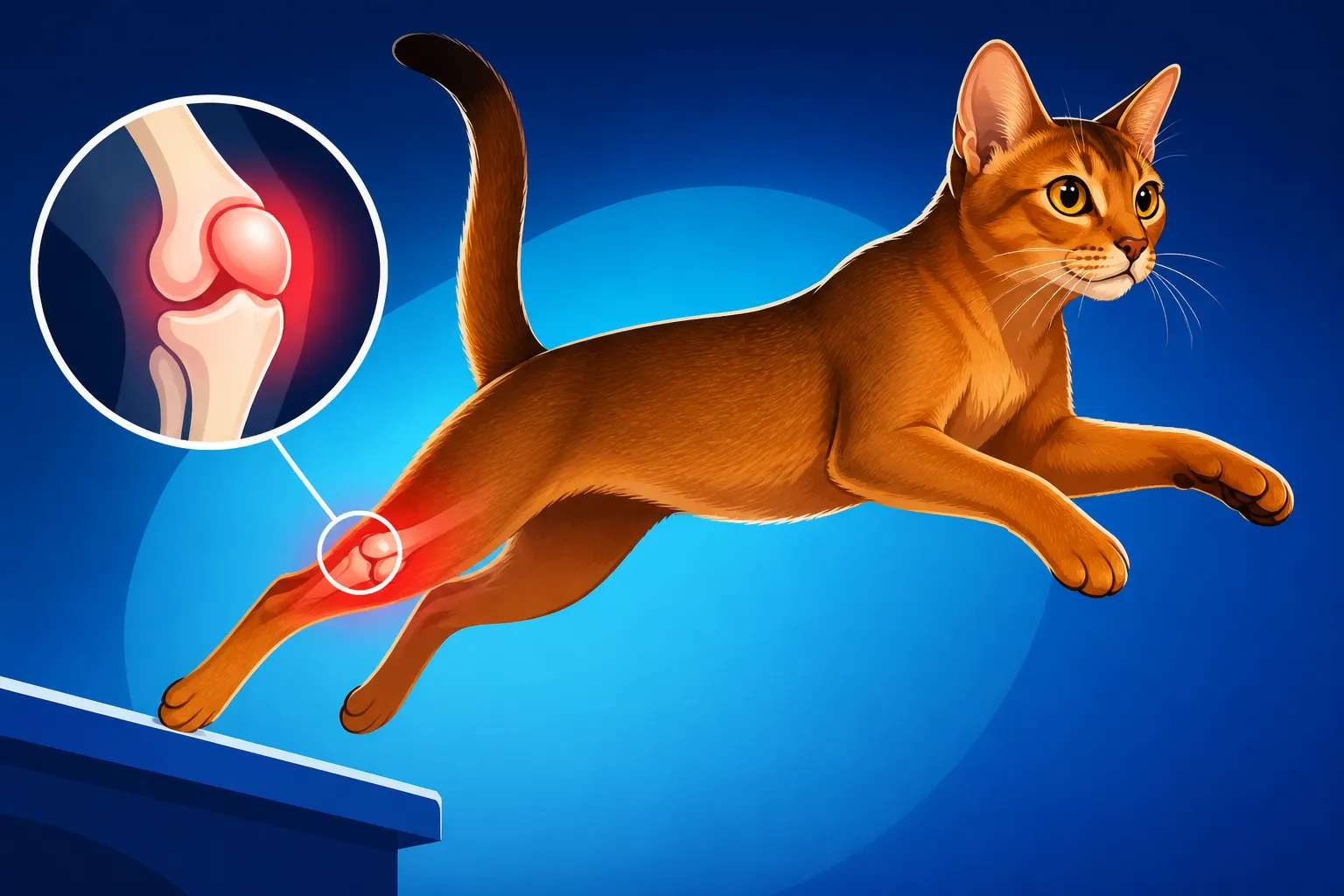
To truly grasp patellar luxation, it helps to visualize the knee. Imagine the thigh bone (femur) at the top, and the shin bone (tibia) at the bottom. The kneecap, or patella, is a small bone that sits in a groove on the end of the femur, called the trochlear groove. It's connected to muscles above and below it by tendons, essentially acting as a pulley system. When your Abyssinian bends and straightens its leg, the patella should glide smoothly up and down this groove, ensuring efficient movement and transmitting muscle power to the lower leg. This intricate design allows for the powerful pushes and soft landings that make Abyssinians such amazing jumpers.
How the Kneecap "Slips" Out of Place
Patellar luxation occurs when the kneecap pops out of that trochlear groove. This dislocation can happen either towards the inside of the leg (medial luxation, which is more common in cats and small dogs) or towards the outside (lateral luxation). When the kneecap slips, it disrupts the normal mechanics of the knee joint. The leg might lock up, or your cat might hold it up for a few steps until the patella pops back into place on its own. It's a bit like a bicycle chain coming off its gears – suddenly, the power isn't transmitted, and movement becomes compromised. This can be painful and certainly startling for your cat, especially one that relies so heavily on its hind limbs for its signature acrobatics. Sometimes, the groove itself might not be deep enough, or the ligaments and tendons holding the patella in place are too loose, creating the perfect storm for it to slip.
The Genetic Component in Abyssinian Patellar Luxation
While patellar luxation can sometimes be caused by trauma, it's most often a developmental or genetic condition in Abyssinians, meaning they're born with a predisposition to it. Breeders strive to produce healthy kittens, but genetic conditions can sometimes be passed down unknowingly. This is why a thorough understanding of a cat's lineage and health history is so crucial. Certain breed lines may carry a higher risk, indicating that the genetic makeup of the individual cat contributes significantly to the likelihood of developing the condition. While there isn't a specific DNA test for patellar luxation like there is for some other Abyssinian conditions, responsible breeders will screen their breeding cats for orthopedic issues to try and minimize its occurrence. This careful attention to health helps ensure that the athletic legacy of the Abyssinian continues for future generations.
Recognizing the Subtle Signs in an Active Abyssinian
Abyssinians are masters of disguise when it comes to pain or discomfort. Their high pain tolerance and active nature mean they often try to push through, making it harder for us to notice when something is wrong. That's why it's so important to be observant of any changes, no matter how minor they seem, especially in their movement.
The "Skip" or "Hop" in Their Gait
One of the hallmark signs of patellar luxation, particularly in its earlier or intermittent stages, is a characteristic "skip" or "hop" in your Abyssinian's gait. You might notice them running along, seemingly fine, and then suddenly they lift one back leg for a step or two, carrying it briefly before putting it back down and resuming normal movement. This isn't usually accompanied by a dramatic cry of pain, which can make it easy to dismiss as just a quirky cat moment. However, what you're likely seeing is the moment their kneecap has slipped out of place, causing them to compensate by not putting weight on that leg. Once the kneecap pops back into its groove, often with a slight shake of the leg, they'll act as if nothing happened. Keep a keen eye out for this, especially when they're excited and racing around. Even a fleeting pause or an unusual bounce in their stride when they're making one of their signature, rapid turns could be a subtle clue that something isn't quite right.
Reduced Enthusiasm for Jumping and Climbing
Your Abyssinian lives for vertical space. They want to be on top of the fridge, scaling the cat tree, or leaping onto your shoulders. It's just part of their charm! So, if you start noticing a decline in their usual climbing and jumping enthusiasm, it's a huge red flag. They might hesitate before taking a familiar jump, stare longingly at a high perch they used to effortlessly reach, or choose to use lower furniture as stepping stones rather than a direct leap. Perhaps they're not quite as graceful on the landing, exhibiting a slightly awkward or stiff posture. This isn't about them "getting old" if they're still young; it's often a direct consequence of knee discomfort. They learn that jumping and landing causes pain, so they simply avoid it or modify their movements. This change can be gradual, so comparing their current activity level to just a few months prior can be telling. Remember, a Why an Abyssinian That Stops Climbing Needs a Vet is a serious concern.
Pain, Swelling, and Changes in Behavior
As patellar luxation progresses or becomes more severe, the signs become less subtle. You might notice outright lameness, where your Abyssinian consistently favors one leg, holding it up more often. While Abyssinians are typically very stoic, a sudden cry when they move a certain way, or a yelp if you accidentally touch the affected knee, is a clear sign of pain. You might even feel or see some swelling around the joint, though this can be difficult to detect under their dense, ticked coat. Beyond physical cues, pay attention to behavioral shifts. A cat that's normally gregarious and playful might become more withdrawn, less interested in games, or even show aggression when approached, especially if they anticipate being handled near their painful leg. Changes in appetite, increased hiding, or excessive licking of the affected limb are all indicators that your Abyssinian is experiencing more than just a minor inconvenience. Because Why a Lean Abyssinian Hides Illness Longer Than a Heavy Cat is a common issue with this active breed, early detection of these behavioral changes is particularly vital.
Grading Patellar Luxation and What It Means
Once you suspect patellar luxation, a trip to the vet is essential. They'll perform a thorough physical examination, and if luxation is present, they'll assign a grade. This grading system is crucial because it helps determine the best course of action and what you can expect in terms of management and prognosis. It's not just a label; it's a guide to understanding the severity of your cat's condition.
The Four Grades of Luxation Explained
Veterinarians typically use a four-grade scale to classify patellar luxation, ranging from mild to severe.
- Grade I: This is the mildest form. The kneecap can be manually luxated (pushed out of the groove) by the vet but pops back into place on its own with very little effort. Your Abyssinian might show occasional skipping, but often they're asymptomatic. Movement isn't significantly impaired, and there's usually no obvious pain.
- Grade II: In this stage, the patella luxates spontaneously or can be manually luxated, but it will pop back into the groove either on its own or with manipulation of the leg. This is where you'll most commonly see that "skipping" gait as the kneecap slips out and then back in. It might cause more frequent lameness, especially after exercise.
- Grade III: Here, the kneecap is luxated most of the time. While it can still be manually reduced (pushed back into the groove), it will immediately luxate again once the pressure is released. Cats with Grade III luxation often have persistent lameness and might develop a bow-legged or knock-kneed stance. The trochlear groove is typically shallower, and there can be some skeletal deformities starting to develop.
- Grade IV: This is the most severe grade. The kneecap is permanently luxated and cannot be manually returned to the trochlear groove. There are significant skeletal deformities, and the groove itself might be almost flat or completely absent. Cats with Grade IV luxation often have severe, chronic lameness and significant pain. They may struggle to bear weight on the affected limb and their ability to move normally is severely compromised.
Understanding Which Patella Grade an Abyssinian Can Live With without surgery is a key discussion to have with your vet.
Diagnosing Luxation During a Vet Visit
Diagnosing patellar luxation usually starts with a comprehensive physical examination. Your vet will palpate (feel) your Abyssinian's knees, gently manipulating the joint to assess the stability of the kneecap. They'll try to manually luxate the patella and observe if and how easily it returns to its normal position. They'll also check for any associated pain, swelling, or crepitus (a grinding sound or sensation within the joint). To confirm the diagnosis and assess the extent of any skeletal changes, X-rays are usually recommended. While X-rays don't directly show the kneecap moving out of place, they can reveal the depth of the trochlear groove, any rotation of the tibia, and signs of arthritis or other joint degeneration that might be present. In some cases, your vet might recommend a referral to a veterinary orthopedic specialist for a more advanced evaluation, especially if surgery is being considered.
Here’s a simplified table outlining the typical presentation and initial treatment approach for each grade:
| Grade of Luxation | Patella Position | Clinical Signs | Initial Treatment Approach |
|---|---|---|---|
| Grade I | Luxates manually, reduces spontaneously | Occasional "skip," minimal pain | Conservative: weight management, joint supplements |
| Grade II | Luxates spontaneously, reduces manually/spontaneously | Intermittent lameness, more frequent skips | Conservative or surgical, depending on frequency/pain |
| Grade III | Luxated most of the time, reduces manually but reluxates | Persistent lameness, abnormal stance, pain | Surgical intervention typically recommended |
| Grade IV | Permanently luxated, cannot be reduced manually | Severe lameness, chronic pain, significant deformity | Surgical intervention almost always required |
Prognosis Based on Severity and Early Intervention
The prognosis for an Abyssinian with patellar luxation varies significantly depending on the grade and how early the condition is diagnosed and managed. For Grade I and many Grade II cases, especially if they are mild and cause no pain, conservative management can be very effective in maintaining a good quality of life. This often involves careful weight management, physical therapy, and joint supplements. However, for higher grades (III and IV), and for Grade II cases that cause significant pain or frequent lameness, surgical correction is usually the most effective path to long-term comfort and mobility.
Early intervention is key. Addressing the problem when it's still mild can prevent further damage to the joint cartilage and reduce the risk of developing secondary arthritis. If left untreated, chronic luxation can lead to more severe lameness, pain, and degenerative joint disease, which can significantly impact your Abyssinian's adventurous spirit. Your vet will discuss the specific prognosis for your cat, weighing factors like their age, overall health, and the extent of any existing arthritis.
Managing and Treating Abyssinian Patellar Luxation
Once a diagnosis of patellar luxation is made, you and your veterinarian will work together to create a management and treatment plan tailored to your Abyssinian's specific needs and the grade of their condition. This isn't a one-size-fits-all situation, and the approach can range from conservative care to surgical intervention.
Conservative Management for Milder Cases
For Abyssinians with Grade I luxation, and some with Grade II where the lameness is infrequent and not painful, conservative management is often the first line of defense. The goal here is to support the joint and minimize further irritation or progression of the condition.
- Weight Management: This is perhaps the most critical aspect. Every extra pound your Abyssinian carries puts additional stress on their joints, exacerbating any existing issues. Keeping them at a lean, healthy weight helps to reduce the load on the knees and can significantly improve comfort. Your vet can help you determine How to Read an Abyssinian's Body Condition Through That Coat and recommend a suitable diet and exercise plan. Even for an active breed, calorie intake needs to match output to maintain an ideal body condition.
- Joint Supplements: Many veterinarians recommend joint supplements containing ingredients like glucosamine, chondroitin, and MSM. These compounds are believed to support cartilage health and reduce inflammation within the joint. While they won't cure the luxation, they can certainly help to slow down degenerative changes and improve comfort. Omega-3 fatty acids are also excellent natural anti-inflammatories. You might see specific cat-formulated supplements from brands like Cosequin or Dasuquin, which are often well-regarded.
- Controlled Exercise and Physical Therapy: While you don't want to stop your Abyssinian from being active entirely, managing their exercise can be beneficial. Avoid high-impact activities that involve sudden twists, sharp turns, or extreme jumps. Instead, encourage controlled movements, gentle play sessions, and perhaps even activities like leash walking on even surfaces, which can help build muscle around the joint without overstraining it. A veterinary physical therapist can also provide specific exercises and techniques to strengthen supporting muscles and improve joint stability.
- Pain Management (if needed): If there's any discomfort, your vet might prescribe anti-inflammatory medications (NSAIDs) for short periods, especially during flare-ups. Always ensure any medication is cat-specific, as many human pain relievers are highly toxic to felines.
Remember, conservative management aims to support the joint and improve comfort, but it won't correct the anatomical issue. Regular check-ups are vital to monitor progress and ensure the condition isn't worsening.
Surgical Options and Recovery Expectations
When conservative management isn't enough, or for higher-grade luxations, surgical correction becomes the primary recommendation. The aim of surgery is to stabilize the kneecap permanently within the trochlear groove, restoring normal knee function and preventing further damage.
Several surgical techniques can be employed, often in combination:
- Trochlear Wedge Resection or Block Recession: This involves deepening the trochlear groove where the kneecap sits. The surgeon carefully removes a wedge or block of bone from the groove, then repositions the cartilage so the patella has a deeper, more secure channel to glide in.
- Tibial Tuberosity Transposition: If the attachment point of the patellar tendon on the shin bone (tibial tuberosity) is misaligned, causing the kneecap to pull to one side, this procedure involves cutting the bone and re-attaching it in a more anatomically correct position.
- Fascial Release or Anti-Rotational Sutures: These techniques address the soft tissues around the knee. The surgeon might cut tight connective tissue on one side of the knee (fascial release) or use sutures to tighten the joint capsule on the opposite side to help pull the kneecap into alignment.
The recovery from patellar luxation surgery requires dedication and patience. Your Abyssinian will likely need several weeks of restricted activity, followed by a gradual return to normal movement. This means no jumping, climbing, or rough play for a significant period. Pain management will be crucial during the initial recovery phase, and your vet will prescribe appropriate medications. Physical therapy, which might include gentle range-of-motion exercises, passive flexion, and extension, and controlled walking, will be introduced to rebuild muscle strength and improve joint flexibility. The full recovery period can range from 8 to 12 weeks or even longer. While anesthesia always carries some risk, Whether an Abyssinian Is a Low Anesthetic Risk is generally positive with proper pre-surgical screening, making surgery a viable option for many.
Post-Surgery Care and Long-Term Support
Successfully navigating surgery is only half the battle; the post-operative care is paramount for a good long-term outcome. This phase demands strict adherence to your vet's instructions. Your Abyssinian will likely go home with pain medication, anti-inflammatories, and possibly antibiotics. It’s critical to administer these exactly as prescribed to manage discomfort and prevent infection. An Elizabethan collar (e-collar) will probably be necessary to prevent them from licking or chewing at their incision site, which can lead to infection or reopening of the wound.
Confining your active Abyssinian might be the hardest part. A small, safe space with no opportunities for jumping or climbing is essential. Think a large dog crate or a small, single room where you can easily monitor them. Gradual reintroduction to activity is key. A typical timeline might involve:
- Weeks 1-2: Strict rest, leash walks only for bathroom breaks, pain meds.
- Weeks 3-6: Slightly increased controlled activity, gentle physical therapy exercises.
- Weeks 7-12: Gradually increasing duration and intensity of walks and supervised play.
Even after full recovery, ongoing support for joint health is important. This includes maintaining an ideal weight (as discussed in Why a Lean Abyssinian Puts Less Load on Its Joints), continued use of joint supplements, and regular veterinary check-ups to monitor the operated knee and the contralateral (other) knee, as some cats can develop luxation in the second leg. Pet insurance, such as through Healthy Paws, can be a lifesaver when considering the costs associated with diagnostic tests, surgery, and long-term care for conditions like patellar luxation. Their plans often cover accidents and illnesses, which would include many of these crucial veterinary expenses, offering peace of mind during a stressful time.
Living with an Abyssinian Who Has Patellar Luxation
Living with an Abyssinian who has patellar luxation, whether managed conservatively or surgically, means making some adjustments to their environment and lifestyle. It’s all about creating a supportive, safe space that allows them to thrive despite their joint condition. Your goal is to maximize their comfort and mobility for as long as possible.
Environmental Modifications to Support Joint Health
Abyssinians are natural climbers and jumpers, and while you don't want to completely strip away their opportunities for vertical exploration, some modifications can significantly reduce strain on their knees.
- Ramps and Steps: Instead of letting them leap directly onto high surfaces like beds, sofas, or window perches, provide pet-friendly ramps or sturdy steps. This allows them to access their favorite spots without the high impact of jumping down or the intense push of jumping up. You can even find stylish, carpeted ramps that blend into your home decor.
- Strategic Placement of Furniture: Arrange furniture in a way that creates "staircases" or gradual ascent routes to higher areas. For instance, a sturdy side table next to a bookcase can serve as an intermediate step. This reduces the height of any single jump they need to make.
- Non-Slip Surfaces: Slippery floors like hardwood, tile, or laminate can be treacherous for cats with joint issues. Consider placing rugs, runners, or carpet tiles in high-traffic areas and around popular climbing spots to provide better traction. This minimizes the risk of slips and falls that could further injure the knee or cause re-luxation.
- Accessible Resources: Ensure food, water, and litter boxes are easily accessible without requiring jumps or awkward movements. For an older Abyssinian or one with severe luxation, low-sided litter boxes can be a real blessing.
These small changes can make a huge difference in their daily comfort and confidence, helping them continue to be the busy, curious cats we know and love, just with a little less strain on their precious joints.
Maintaining a Healthy Weight and Muscle Tone
We've touched on weight management already, but it truly cannot be stressed enough, especially for a cat prone to orthopedic issues. A lean physique translates directly to less stress on the knee joints. Regularly weighing your Abyssinian and monitoring their body condition using a body condition score chart can help ensure they stay in their ideal range. Remember, Why an Abyssinian's Weight Should Be Recorded at Every Visit to the vet is because it's an early indicator of so many underlying health issues, including joint pain.
Beyond weight, maintaining good muscle tone is crucial. Strong muscles around the knee provide natural support and stability to the joint. While you might need to limit high-impact activities, encourage controlled, low-impact exercise. This could be playing with wand toys at ground level, encouraging short walks on a harness (if your Abyssinian is agreeable to it), or engaging them in puzzle feeders that require movement rather than dramatic leaps. Consult with your vet or a veterinary physical therapist for specific exercises that can strengthen their hind limb muscles safely. Nutritional support, including high-quality protein in their diet, also plays a role in maintaining muscle mass.
Regular Veterinary Check-ups and Monitoring
Even if your Abyssinian has undergone successful surgery or is managing well with conservative care, regular veterinary check-ups are absolutely non-negotiable. These appointments allow your vet to:
- Monitor the Affected Joint: They can assess the stability of the kneecap, check for any signs of recurrence or progression, and evaluate the development of secondary arthritis.
- Assess Overall Joint Health: Cats often have luxation in both knees, or they might develop issues in other joints as they age. Your vet can monitor for these possibilities.
- Adjust Management Plans: As your Abyssinian ages, their needs will change. Your vet can adjust pain management strategies, recommend new supplements, or suggest changes to their exercise routine. For instance, How Arthritis Shows in an Abyssinian That Used to Climb might indicate a need for different pain relief options.
- General Health Screening: These check-ups are also vital for catching other age-related conditions early. When a Middle Aged Abyssinian Needs Yearly Bloodwork is an important discussion to have with your vet, as early detection of conditions like kidney disease or hyperthyroidism can significantly impact their longevity and quality of life.
Your vet is your most important partner in ensuring your Abyssinian lives a full, comfortable, and active life. Don't hesitate to ask questions or bring up any concerns you have about your cat's mobility or behavior, no matter how small they seem. Being proactive and consistent with their care will give your spirited Abyssinian the best chance at a happy, mobile life. If costs are a concern for these regular vet visits or potential future treatments, exploring options like pet insurance from Healthy Paws can help cover eligible expenses, including unexpected illnesses or chronic conditions that might arise.
Disclaimer
The information provided in this article is for general informational purposes only and is not a substitute for professional veterinary advice, diagnosis, or treatment. Always seek the advice of your veterinarian or other qualified health provider with any questions you may have regarding a medical condition. Never disregard professional veterinary advice or delay in seeking it because of something you have read in this article.