Why an Abyssinian’s Gums Should Be Checked Monthly
As a devoted Abyssinian owner, you know these cats are bundles of energy and curiosity, always on the go. But their vibrant personalities can sometimes mask underlying health issues, especially when it comes to their oral health. Many of us don't realize how quickly gum problems can escalate in this breed, or how much pain our active little companions might be silently enduring. This guide is here to shed light on why checking your Abyssinian's gums monthly isn't just a good idea, but an essential part of their care, and what you need to look out for to keep their smiles healthy and their lives full of joy.
The Unique Vulnerability of Abyssinian Gums
Abyssinians, for all their robust energy, can be surprisingly delicate when it comes to their dental health. It’s a common frustration for owners, because you feed them the best food, provide plenty of toys, and they seem perfectly happy, yet their mouths can be a silent battleground. This isn't just bad luck; it's often rooted in genetic predispositions and the breed's specific physiology.
Why Abyssinian Kittens are Prone to Gum Issues
It might seem counterintuitive for a young, seemingly healthy kitten to develop significant dental problems, but for Abyssinians, it’s a sad reality. Many Abyssinian kittens can develop something called juvenile gingivitis, which, as the name suggests, is an inflammation of the gums that appears much earlier than in most other cat breeds. You might notice it when your little one is barely six months old, when their adult teeth are just settling in. Imagine trying to eat with sore, swollen gums – it's no fun. They might start dropping kibble more often, or show a sudden preference for softer foods, which you might just put down to pickiness. This early onset isn't just cosmetic; it's a red flag, signaling a potential lifelong struggle if not addressed. It can be incredibly disheartening to realize your energetic kitten is already facing a chronic condition that many other breeds don't encounter until old age. This vulnerability is why understanding Why an Abyssinian Kitten's Gums Fail at Six Months is so crucial.
The Silent Progression of Periodontal Disease
One of the most challenging aspects of caring for an Abyssinian is their incredible ability to mask pain and discomfort. These cats are wired to be active and playful, and they will often continue their usual antics even when something is seriously wrong. This means that gum disease, which can be quite painful, often progresses silently, right under our noses. You might not see obvious signs like crying or refusing to eat until the condition is quite advanced. This stoicism is admirable in a way, but it puts the onus on us, their human companions, to be vigilant. Periodontal disease starts as gingivitis but can quickly progress to affect the structures supporting the teeth, leading to bone loss and eventually tooth loss. By the time an Abyssinian shows overt symptoms like drooling or reluctance to play, the damage might already be extensive. This silent progression is particularly dangerous because Why a Lean Abyssinian Hides Illness Longer Than a Heavy Cat applies to dental pain just as much as it does to internal illness – their active metabolism and lean physique can make early detection tricky.
How Overgrown Gum Tissue Becomes a Problem
Beyond simple inflammation, some Abyssinians are prone to a condition called gingival hyperplasia, where the gum tissue actually grows excessively, sometimes to the point of covering part of their teeth. This isn't just unsightly; it creates little pockets where food particles and bacteria can get trapped, leading to an even more aggressive form of gum disease. Picture trying to clean your teeth if your gums were constantly swollen and creeping over them – it's nearly impossible. This overgrowth makes effective brushing a nightmare, even if your cat is cooperative. It accelerates plaque and tartar buildup, which in turn fuels further inflammation. Without intervention, these overgrown gums can become a constant source of infection and pain for your cat. Understanding How Overgrown Gum Tissue Buries an Abyssinian's Teeth really highlights why regular checks are paramount, because once those teeth are buried, the problem becomes much harder to manage with just at-home care.
What Monthly Checks Involve and What to Look For
So, you understand why it's important, but how do you actually do it, and what exactly should you be looking for? It might feel a bit intimidating at first, trying to peer into your Abyssinian's mouth, especially if they’re not accustomed to it. But with patience, gentle handling, and consistency, it becomes a routine that can literally save them from a lot of discomfort and you from significant vet bills.
The At-Home Visual Inspection
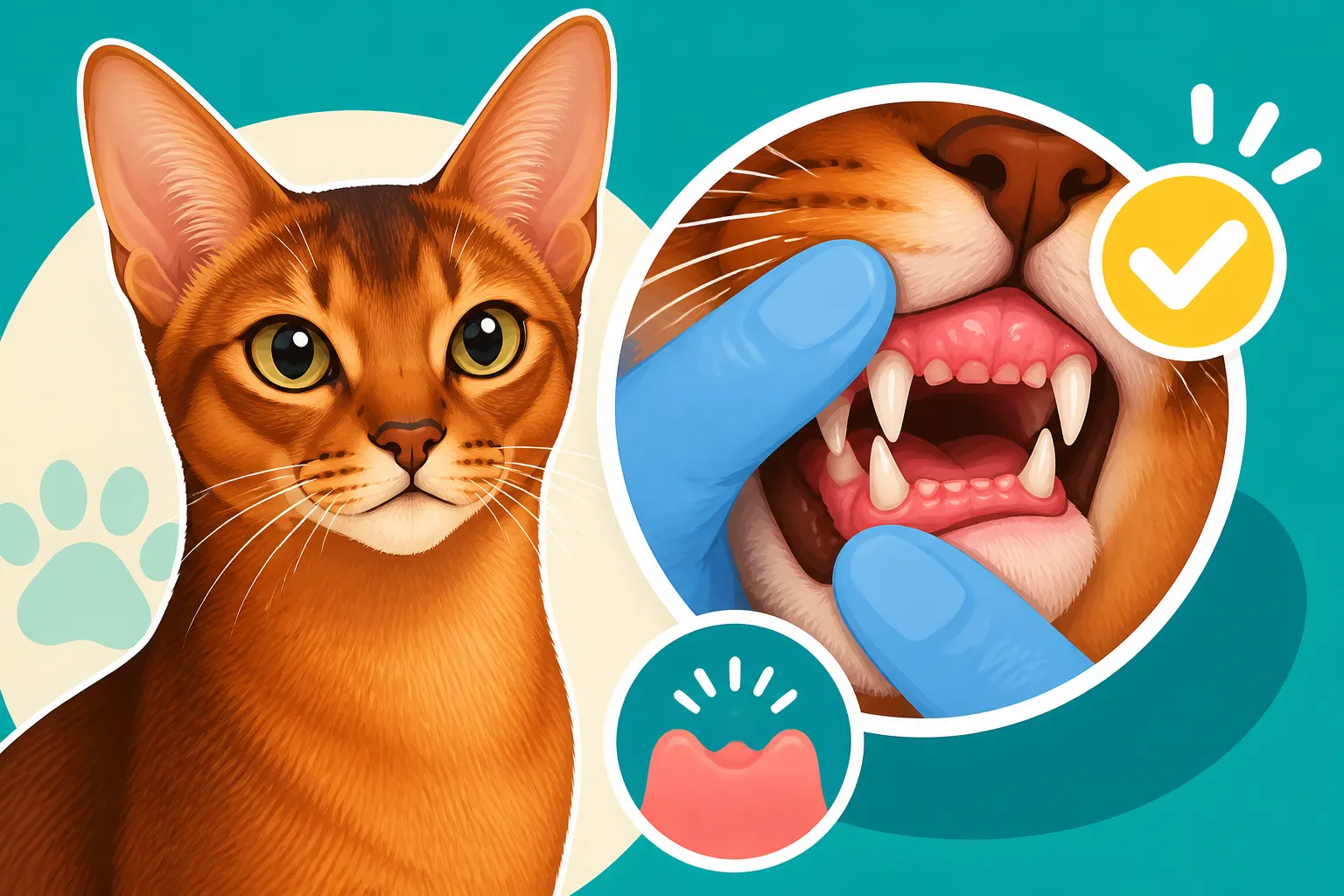
A monthly visual check doesn't need to be a wrestling match. The goal is to make it a calm, brief interaction. Start by gently lifting your Abyssinian's lips to expose their gums and the outer surfaces of their teeth. You're looking for several key indicators. Healthy gums should be a nice, pale pink, firm, and lie tightly against the teeth. There should be no swelling, redness, or bleeding. Pay close attention to the gum line, where the gum meets the tooth, as this is where problems often begin. You'll want to check both the upper and lower jaws, on both sides. Don't forget to glance at the back teeth too, as problems there can often go unnoticed. If your cat tolerates it, you can even gently open their mouth slightly to peek at the inner surfaces, though this is harder for many cats. Look for any plaque or tartar buildup, which will appear as yellowish or brownish deposits, especially near the gum line. This monthly check is your first line of defense, giving you the power to spot issues before they become major problems. Why an Abyssinian's Gums Should Be Checked Monthly is about being proactive, not reactive.
Signs Beyond Just Red Gums
While red, swollen gums are the most obvious warning sign, there are other, more subtle clues that your Abyssinian might be experiencing dental discomfort. Keep an eye (and nose!) out for changes in their behavior or physical state. Bad breath, or halitosis, is a huge indicator of bacterial overgrowth in the mouth. It's not just "cat breath"; a truly foul odor suggests infection. You might also observe your Abyssinian pawing at their mouth, dropping food more frequently, or chewing on one side of their mouth. Some cats might develop a preference for soft, wet food over their usual crunchy kibble, or even hesitate before eating. Others might become more irritable, or shy away from head scratches, particularly around their cheeks. These are all subtle signals that something is amiss. It’s vital to pay attention to nuances like Why an Abyssinian Kitten Stops Chewing Its Food because what seems like a quirky habit could be a cry for help.
Here's a quick comparison of what healthy versus unhealthy gums look like:
| Feature | Healthy Abyssinian Gums | Unhealthy Abyssinian Gums |
|---|---|---|
| Color | Pale pink | Bright red, dark red, purple, or very pale/white (anemia) |
| Texture/Shape | Firm, smooth, lie tightly against teeth | Swollen, puffy, bleeding easily, receded, overgrown |
| Odor | Mild, neutral ("cat breath" but not foul) | Strong, foul, pervasive bad breath |
| Appearance | No visible plaque or tartar; clean teeth | Yellowish/brownish plaque/tartar buildup, broken teeth |
| Behavior | Eats normally, no pawing at mouth, tolerates touch | Dropping food, chewing on one side, pawing at mouth, irritable |
| Moisture | Moist and shiny | Dry, sticky |
The Importance of a Consistent Routine
Consistency is truly the secret ingredient in effective home dental care for your Abyssinian. It's not enough to check their gums only when you suspect a problem; by then, it might be too late to prevent serious issues. Integrating these monthly checks into a broader grooming routine, perhaps after a weekly brush or nail trim, can make it less of a chore and more of an expected part of their care. Start early, even with a young kitten, to get them accustomed to having their mouth handled. Positive reinforcement, like a special treat they only get after their "mouth check," can work wonders. Remember, your Abyssinian thrives on routine, and establishing this as part of their regular care helps them feel more secure. Over time, you'll become incredibly adept at recognizing the subtle shifts that indicate a problem, often long before a less vigilant owner might. This consistent approach is a cornerstone of Why Home Dental Care Starts Early in an Abyssinian, setting them up for a lifetime of better oral health.
The Serious Consequences of Neglecting Abyssinian Dental Health
Skipping those monthly gum checks might seem like a small thing, especially if your Abyssinian is a master of disguise when it comes to pain. But neglecting their oral health can lead to far more than just bad breath. The consequences can be painful, expensive, and even life-threatening, affecting not just their mouth but their entire body.
Tooth Resorption and Tooth Loss
One of the most insidious and painful dental conditions affecting cats, including Abyssinians, is tooth resorption. This isn't simply decay; it's when the tooth structure itself begins to break down, often starting at the gum line and progressing inward. It's incredibly painful, akin to a severe cavity, but the damage is irreversible. Your cat might have perfectly clean teeth on the surface, but underneath, the resorption process can be slowly destroying them. Eventually, the affected tooth will become so fragile that it may fracture, or require extraction because of the intense pain it causes. For Abyssinians, with their known gum sensitivities, tooth resorption can be a particularly nasty complication, often following on the heels of chronic gingivitis and periodontal disease. It's heartbreaking to realize your vibrant cat has been living with such a profound source of pain. This is why Why Tooth Resorption Follows Abyssinian Gum Disease is such a critical topic to understand, as it highlights the domino effect of neglecting those early gum issues.
Systemic Health Risks
The mouth isn't an isolated part of the body; it's intimately connected to overall health. When bacteria from infected gums and teeth enter the bloodstream, they can travel to vital organs, causing secondary infections and inflammation. The kidneys, heart, and liver are particularly vulnerable. Chronic dental disease can exacerbate existing conditions or even initiate new health problems. For an Abyssinian, a breed already predisposed to certain kidney issues, adding another layer of systemic inflammation from dental disease is a serious concern. While not directly caused by dental disease, conditions like What Renal Amyloidosis Deposits in an Abyssinian's Kidney remind us of the importance of maintaining overall health and minimizing inflammation in a breed prone to specific organ vulnerabilities. Ensuring a healthy mouth is one way to reduce the overall inflammatory burden on their body and support their long-term health.
Financial and Emotional Strain
Let's be real: veterinary care can be expensive, and dental procedures are often among the pricier treatments. Neglecting regular at-home checks and professional cleanings almost always leads to more extensive, and therefore more costly, interventions down the line. A simple scale and polish can turn into multiple tooth extractions, a gingivectomy to remove overgrown gum tissue, or even advanced diagnostics to rule out underlying systemic issues. These procedures require anesthesia, which adds another layer of cost and risk. But beyond the financial burden, there's the emotional toll. Seeing your beloved Abyssinian in pain, having to undergo surgery, and managing their recovery is stressful for everyone involved. It's a heavy feeling to know that perhaps more diligent, monthly checks could have caught the problem earlier, when it was simpler and less invasive to treat. Preventative care, even if it feels tedious at times, is truly an investment in both your cat's health and your peace of mind. Many online retailers like Chewy and Amazon offer a variety of dental chews, brushes, and specialized foods, which can be part of a proactive approach, though they don't replace vet care. For cats struggling to eat due to dental pain, softer, palatable food options are easier on sensitive mouths while you await veterinary intervention. Understanding Why Abyssinian Dental Work Is the Biggest Line in the Budget isn't about scaring you, but about being realistic and empowering you to take proactive steps.
Disclaimer
This article is for general informational purposes only and does not constitute professional advice. Laws, prices and regulations vary by location and change over time. Consult a qualified professional for guidance on your specific situation.