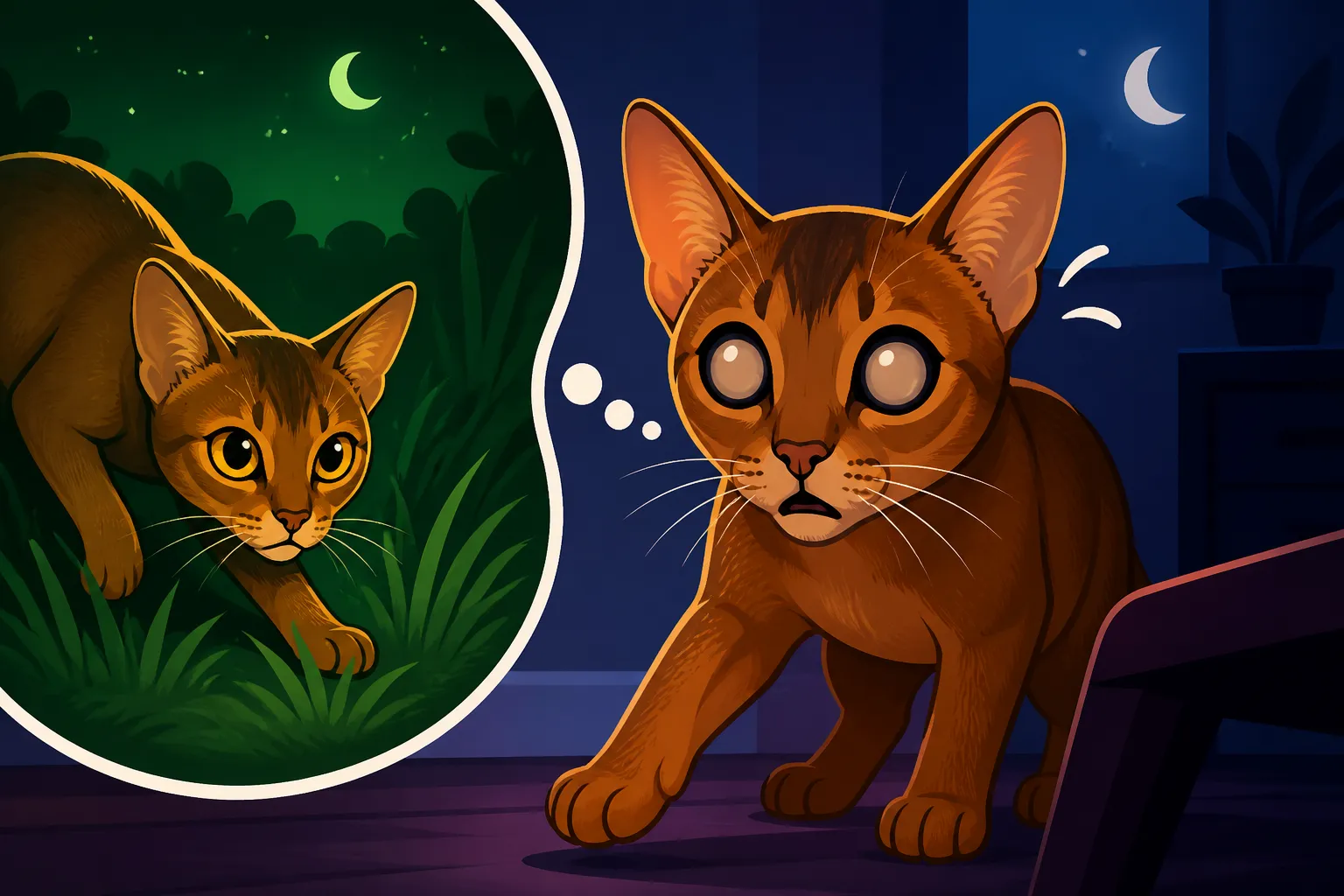
When an Abyssinian’s Night Vision Goes First
It’s truly disheartening when you start to notice subtle shifts in your beloved Abyssinian’s behavior, especially when it hints at something as fundamental as their vision. Many Abyssinian owners find themselves initially baffled, chalking up odd bumps or hesitations to a temporary distraction, only to realize later that their cat's keen sight, particularly in dim light, is quietly slipping away. This guide aims to shed light on why night vision is often the first to go in Abyssinians and what signs to look for so you can act quickly.
Understanding PRA-rdAc and Early Vision Changes
When we talk about vision issues in Abyssinians, one of the most significant concerns that often comes to mind for experienced owners and breeders is Progressive Retinal Atrophy, or PRA-rdAc. It’s a hereditary condition that, unfortunately, targets the light-sensing cells in the back of your cat's eyes. It's not a sudden event, but a gradual decline, which makes it particularly tricky to spot in its earliest stages.
The Genetic Roots of Progressive Retinal Atrophy
PRA-rdAc is linked to a specific genetic mutation, making it something that careful breeders screen for. Abyssinians carry a gene called CEP290, and a mutation in this gene is responsible for the rdAc form of PRA. If an Abyssinian inherits two copies of this mutated gene—one from each parent—they are considered "affected" and will develop the condition. If they inherit only one copy, they are carriers and won't show symptoms themselves but can pass it on. This is why it’s so critical for breeders to understand how the CEP290 test clears an Abyssinian before breeding. Knowing Why Two Clear Abyssinian Parents End the Problem can prevent so much heartache.
The retina is an incredibly complex part of the eye, responsible for converting light into signals that the brain interprets as images. Within the retina are specialized cells called photoreceptors: rods and cones. Rods are primarily responsible for vision in low light (night vision) and detecting movement, while cones handle bright light, color vision, and fine detail. In the case of PRA-rdAc, the rods are typically affected first, which explains why night vision is the initial casualty.
How Night Vision Becomes Affected First
Imagine trying to navigate your home in near darkness. You’d probably be a bit more hesitant, maybe bump into things you usually sail past. This is precisely what happens to an Abyssinian as their rods begin to degenerate due to PRA-rdAc. The ability to see in dim light—something cats are naturally excellent at, far surpassing human capabilities—starts to diminish. Initially, your cat might cope quite well, especially in a familiar environment. Cats are masters of adaptation and often compensate for vision loss with their other heightened senses, like hearing and smell.
This is a key reason why How PRA-rdAc Blinds an Abyssinian Slowly describes a progression that can be easily missed. Their world slowly dims, first at night, then progressively during the day. This is why early detection is more about noticing changes in behavior rather than a sudden inability to see. For instance, you might notice that your usually fearless cat becomes more cautious when moving from a brightly lit room into a hallway after sunset. They might hesitate before jumping onto a familiar cat tree if the room is dim.
The Subtle Signs You Might Miss
Because Abyssinians are so agile, intelligent, and adaptable, they often mask their initial vision problems incredibly well. It’s not like they'll walk head-first into a wall right away. Instead, the signs are far more subtle. You might notice them being less inclined to play games that involve tracking small toys in dim light, or perhaps they misjudge a jump from the couch to a chair they’ve successfully cleared a thousand times before. These small blips in their usual confident movements can be the first whispers of trouble.
Another sign can be a change in their pupil size. In dim light, a cat's pupils should dilate widely to let in as much light as possible. As PRA-rdAc progresses, you might notice How an Abyssinian's Pupils Change With rdAc – they may be more dilated than usual, even in moderately lit conditions, as the eye tries to compensate for the failing rods. Keeping an eye on these subtle physical and behavioral cues is crucial.
Behavioral Indicators of Waning Night Vision
Abyssinians are known for their boundless energy and acrobatic prowess. They are climbers, jumpers, and explorers by nature. This makes early vision loss particularly heartbreaking to witness and, paradoxically, harder to detect because their inherent athleticism helps them compensate for a time.
Navigating in Low Light
The most telling initial signs of night vision loss will manifest when your Abyssinian tries to navigate their usual terrain in reduced lighting conditions. Think about the routes they take every day – leaping onto counters, scaling cat trees, dashing through hallways. If these activities suddenly become hesitant or fraught with missteps after dusk, it's a huge red flag.
For example, a cat who once zipped through the house in the evening might start sticking to well-lit paths, or show a marked reluctance to enter a darkened room. They might slow their pace, lowering their head slightly, almost feeling their way with their whiskers more actively than before. They might even hug the walls, rather than confidently striding across the open floor. These behavioral changes are often the first concrete evidence that What an Abyssinian Does First as Its Sight Goes is losing its ability to see in the dark.
Changes in Play and Interaction
An Abyssinian loves to play, and they are notoriously engaged hunters, even indoors. A common early sign of night blindness is a decrease in their enthusiasm for or ability to play games that rely on visual tracking, particularly in low light. If your Abyssinian used to chase a laser pointer or a feather wand with gusto in the evening, but now seems to miss it more often, or simply loses interest quickly, it could be a sign.
They might still be eager to play during the day when their cone cells are still functioning, leading owners to believe there's no serious issue. This disparity in daytime versus nighttime play can be a crucial diagnostic clue. Observe how they interact with toys and their environment after the sun goes down. Are they less accurate in their pounces? Do they seem startled by objects they should have seen?
Why an Abyssinian Bumps Furniture Before Anyone Notices
This is perhaps one of the most frustrating and often overlooked early signs. An Abyssinian is incredibly adept at memorizing the layout of its home. Even with declining vision, they rely heavily on this mental map. So, instead of outright crashing into furniture, they might begin to "ghost" it. They might brush past a table leg a little too closely, or misjudge the distance of a jump onto a favorite shelf, landing with a slight wobble. The first few times, you might dismiss it as a clumsy moment, but if it becomes a pattern, especially in dim light, pay attention. The blog post Why an Abyssinian Bumps Furniture Before Anyone Notices delves deeper into this compensatory behavior.
They might also startle more easily when approached from an unexpected direction, or if you move something slightly in their familiar environment. Their spatial awareness, once reliant on keen vision, now demands more input from touch and hearing. This adaptation is incredible, but it's also your cat trying to tell you something isn't right.
What to Do When You Suspect Night Blindness
Discovering that your Abyssinian's night vision is fading can be worrying, but early intervention and understanding the progression of PRA-rdAc can help you manage the condition and maintain your cat's quality of life.
The Importance of a Prompt Veterinary Visit
If you suspect your Abyssinian is experiencing any form of vision loss, don't delay in scheduling a visit with your veterinarian. Describe all the subtle changes you've observed, no matter how minor they seem. Your regular vet can perform an initial eye examination, but it's highly likely they will recommend a referral to a veterinary ophthalmologist. These specialists have advanced equipment and expertise to diagnose retinal conditions accurately.
A prompt visit is important not just for diagnosis, but also to rule out other potential causes of vision changes that might be treatable, such as glaucoma, cataracts, or other systemic diseases affecting the eyes. While Whether Anything Slows Retinal Atrophy in an Abyssinian may not offer a cure, understanding the exact cause is the first step in supportive care.
Diagnostic Steps and Confirmation
When you visit the veterinary ophthalmologist, they will conduct a thorough examination. This typically involves several tests:
- Ophthalmoscopy: Using a special instrument to look at the retina at the back of the eye. In early PRA-rdAc, changes might be subtle, but a specialist can often detect them.
- Electroretinography (ERG): This is a specialized test that measures the electrical activity of the retinal cells in response to light. It can detect functional abnormalities in the rods and cones long before significant visible changes occur. It's the gold standard for diagnosing retinal degeneration.
- Genetic Testing: Since PRA-rdAc is a known genetic condition in Abyssinians, your vet will almost certainly recommend a DNA test. This usually involves a simple cheek swab and can definitively confirm the presence of the mutated CEP290 gene. This test is crucial for breeders and for owners who want a clear understanding of their cat's condition. The results can take a few weeks to come back, but they are incredibly informative. You can learn more about this by reading How a Vet Confirms Retinal Atrophy in an Abyssinian.
Supporting Your Abyssinian with Impaired Vision
Once a diagnosis of PRA-rdAc is confirmed, there's no cure to reverse the degeneration, but there's plenty you can do to help your Abyssinian adapt and thrive.
Firstly, maintain a consistent home environment. Try not to move furniture, cat trees, or litter boxes frequently. Cats with vision loss rely heavily on their memory of their surroundings. If you must move something, do it gradually and guide your cat around the new setup.
Consider adding tactile cues, like different textures of mats or rugs, to signal important areas such as food and water bowls, or litter boxes. This can help them navigate independently. For example, a sisal mat near the litter box can alert them to its presence.
Increasing ambient lighting in your home, especially at dusk and during the night, can also make a huge difference. Nightlights in hallways and rooms your cat frequents can help them feel more secure.
Even with reduced vision, your Abyssinian will still want to climb and play. Provide safe, sturdy climbing options, like cat trees with wider, easily accessible platforms. You might be surprised Why a Blind Abyssinian Still Climbs, but it's instinct! Ensure landings are soft and clear of obstacles. Interactive toys that make noise or are scented can still be highly engaging. Always remember to prioritize safety; for example, Why a Blind Abyssinian Must Stay Indoors is paramount to prevent them from getting lost or injured.
It's also a good idea to discuss pet insurance with your vet or a company like Healthy Paws. While pre-existing conditions typically aren't covered, if you have coverage before diagnosis, it can help with the costs of specialized diagnostics, ongoing vet visits, and any supportive care or medications your cat might need. Understanding your financial options early on can greatly reduce stress.
| Symptom Category | Early Signs (Night Vision Loss) | Later Signs (General Vision Loss) |
|---|---|---|
| Navigation | Hesitation in dim light; bumping into objects only at night. | Bumping into objects in any light; disoriented in unfamiliar places. |
| Play | Missing toys in dim light; reduced interest in night play. | Difficulty tracking moving toys even in good light; less active. |
| Behavior | Increased caution in dark; pupils dilated more often at night. | Startles easily; changes in personality (more clingy or withdrawn). |
| Physical | No obvious physical changes initially. | Cloudy eyes (if cataracts are also present); visible retinal changes on exam. |
Remember, your Abyssinian relies on you to be their eyes and their advocate. By recognizing these early signs and working closely with your veterinarian, you can ensure they continue to live a full and happy life, even as their world changes.
Disclaimer
The information provided in this article is for general informational purposes only and is not a substitute for professional veterinary advice. Always consult with a qualified veterinarian or animal care professional for any medical concerns or before making any decisions related to your pet's health and treatment.