What Not to Move Around a Blind Abyssinian
It's truly heartbreaking to watch your vibrant Abyssinian, a cat renowned for its boundless energy and inquisitive nature, begin to lose its sight. The thought of them navigating a once-familiar home now shrouded in darkness can be incredibly daunting, filling you with worry about their safety and quality of life. This comprehensive guide is here to help you create a secure and navigable environment, detailing precisely what not to move around your blind Abyssinian to ensure their continued happiness and independence.
Understanding Your Blind Abyssinian's World
When an Abyssinian starts to lose its vision, whether gradually from a condition like How PRA-rdAc Blinds an Abyssinian Slowly or more suddenly, their world shifts dramatically. It’s a profound change, not just for them, but for you as their dedicated companion. Understanding how they adapt and what supports them is the first step in ensuring their continued well-being.
How Abyssinians Adapt to Vision Loss
Abyssinians are incredibly resilient and adaptable creatures, even in the face of significant challenges like vision loss. Their other senses, which were always sharp, become even more finely tuned to compensate. Their hearing becomes acutely sensitive, allowing them to pinpoint your location, the rustle of a toy, or the creak of a floorboard with surprising accuracy. Their sense of smell, already a powerful tool for understanding their environment, becomes their primary guide, helping them identify family members, familiar paths, and even the approach of a meal.
Their whiskers, those incredible sensory organs, play a crucial role, constantly scanning their immediate surroundings to detect obstacles and changes in airflow. You'll notice your Abyssinian holding their head slightly lower and moving with more deliberate whisker sweeps as they navigate. This allows them to create a mental map, a sensory blueprint of their home. This map isn't just about static objects; it includes the nuances of air currents, temperature changes, and even the subtle vibrations from footsteps. They are truly phenomenal in their capacity to re-learn their world, relying heavily on consistency to reinforce this new understanding. For instance, What an Abyssinian Does First as Its Sight Goes often involves an increased reliance on these other senses, even before full blindness sets in.
The Emotional Impact on Your Abyssinian
It’s easy to project our own human fears onto our pets, and the idea of blindness can evoke deep sadness. For an Abyssinian, the initial stages of vision loss can certainly bring confusion, anxiety, and even some stress. They might hesitate more, bump into things, or become more clingy as they lose their primary sense for navigation. Their natural confidence might waver, and you might see changes in their play patterns or their usual adventurous spirit.
The key here is to remember that while they might feel momentary fear or frustration, their ability to adapt is strong, especially with your consistent support. Security and predictability become paramount for their emotional well-being. A stable environment reduces their anxiety significantly, allowing them to rebuild confidence in their navigational skills. An Abyssinian, even a blind one, retains its spirited, playful nature; they still want to explore, climb, and interact. Providing a safe, consistent world allows them to express this innate joy without the added stress of constantly encountering unexpected changes. This emotional support is just as vital as physical adjustments.
The Cardinal Rule: Consistency is King
If you have a blind Abyssinian, or one whose vision is severely impaired, the single most important principle to embrace is consistency. Any small shift can throw off their entire mental map, turning a comfortable, navigable space into a maze of uncertainty.
Furniture and Large Objects: The Pillars of Their Map
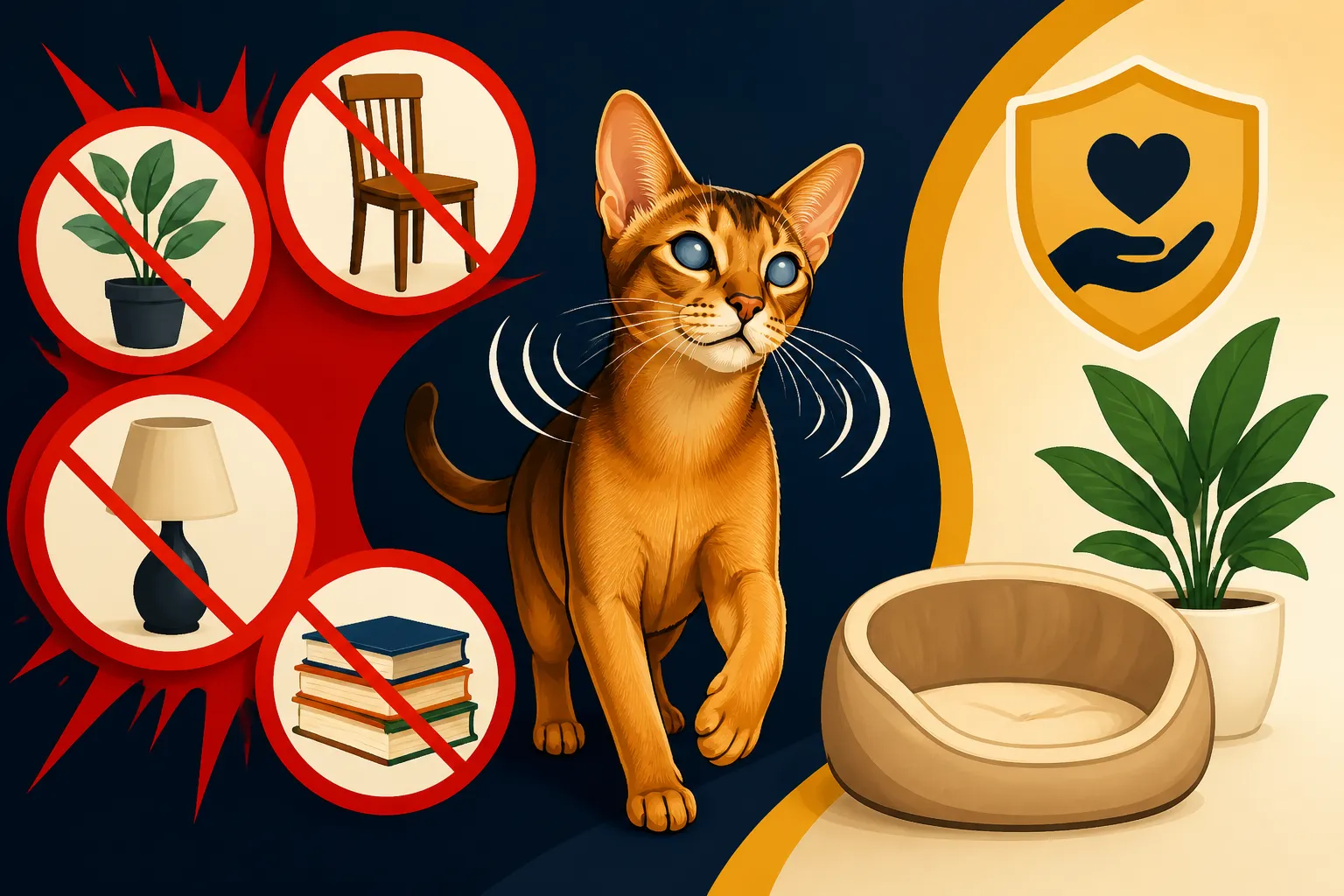
Think of your home's furniture and large objects not just as decor, but as critical beacons in your Abyssinian's internal GPS system. That favorite scratching post in the corner, the armchair by the window, the sturdy cat tree in the living room – these are not merely items; they are the fixed points that allow your cat to triangulate their position and navigate safely. Moving even a seemingly minor piece, like a side table, can disorient them completely.
For example, imagine your Abyssinian, perhaps with How a Blind Abyssinian Maps a House using its memory and senses. It knows that after rounding the sofa, turning left brings it to its feeding station. If you suddenly shift that sofa even a foot, that entire sequence is disrupted. They might bump into the new position, become confused, and freeze, unsure of where to go next. This isn't just a minor inconvenience for them; it's a source of profound stress and can lead to falls or collisions. This is why tall, sturdy structures, like their beloved cat trees or wall-mounted shelves, which Abyssinians adore, must remain absolutely static. These elevated spaces provide a sense of security and allow them to survey their territory by scent and sound, reinforcing their map. Remember, Why an Abyssinian Needs More Vertical Furniture Than Most Cats still applies even if they're blind; they crave height, but those pathways must be unwavering.
Food, Water, and Litter Stations: Essential Fixed Points
These are not just conveniences; they are survival necessities. Your Abyssinian absolutely must know where their food, water, and litter boxes are located, without fail. These stations are paramount landmarks on their mental map, and their placement should be considered sacred. Moving a food bowl, even a few inches, can lead to frustration, hunger, and dehydration if they can't locate it quickly. If they’re unable to find their litter box, accidents are inevitable, leading to stress for both of you.
Consider the anxiety of a hungry or thirsty cat who can’t find their basic resources. It's a primal fear that we can easily prevent. To enhance their findability, you might place a distinct, textured mat under their bowls, providing a tactile cue. Keeping these areas consistently clean also helps, as they rely heavily on scent. Some owners find that a small, familiar-smelling blanket placed near the water fountain can guide them. Never, under any circumstances, relocate these essential stations without a very slow, deliberate re-introduction process, and even then, only if absolutely necessary. Their immediate access to these resources directly impacts their health and psychological comfort.
Small but Significant: The Daily Hazards
While large furniture items are obvious, it's often the smaller, seemingly insignificant objects that get moved around daily that pose the greatest risk to a blind Abyssinian. These can be more treacherous because they are unpredictable and change the landscape of the floor plan unexpectedly.
Avoiding Tripping Hazards and Obstacles
Our homes are bustling places, and it's easy to forget that what might be a minor inconvenience for us can be a significant hazard for a blind cat. Shoes left by the door, laundry piles in the hallway, children's toys scattered on the rug, or even a backpack resting on the floor can become unexpected and dangerous obstacles. An Abyssinian, especially one that retains its natural speed and athleticism, might be running through a familiar space and suddenly collide with one of these items. This isn't just about a startled cat; it can result in serious injury, a fall, or a lifelong fear of moving quickly in certain areas.
Imagine your Abyssinian, confidently trotting across the living room carpet, only to be met with a forgotten sneaker in their path. The collision could disorient them, cause them to trip, or even injure a paw or joint. The stress of such an event can make them more hesitant to explore, diminishing their quality of life. Make a conscious effort to keep floors clear, especially in high-traffic areas or along their established routes. Designate specific spots for everyday items, and ensure everyone in the household understands the importance of tidiness for your cat's safety. This vigilance might seem demanding, but it’s a small price to pay for your beloved Abyssinian's security.
Rethinking Doors, Gates, and Temporary Barriers
Doors and gates, while useful for humans, can be a major source of confusion and danger for a blind Abyssinian if their state isn't consistent. A door that is usually open, allowing passage to another room, suddenly being closed can lead to a painful collision. Conversely, a door that is usually closed, suddenly left ajar, can tempt them into an unfamiliar or unsafe area. Their mental map relies on the consistent state of these openings.
If you have rooms that are off-limits, it's best to keep those doors consistently closed. For areas they frequent, try to keep doors consistently open, perhaps secured with a doorstop, to prevent accidental closure. Temporary pet gates, while well-intentioned, can be particularly problematic if they are moved frequently or left in unexpected positions. An Abyssinian, even a blind one, often still possesses a strong drive to explore, so consistent barriers are key. Consider the terror of running full tilt into a previously clear doorway that is now blocked. This isn't just about bumping their head; it can create a deep-seated fear of those passages. Establishing a predictable routine for doors and gates will significantly reduce their stress and enhance their ability to navigate confidently through their home.
Creating a Sensory-Rich, Stable Sanctuary
Beyond simply not moving things, actively cultivating a stable and sensory-rich environment will greatly benefit your blind Abyssinian. It's about empowering their remaining senses and ensuring their habitat offers both security and stimulation.
Leveraging Scent and Sound for Navigation
Your Abyssinian's nose is now one of their most powerful navigational tools. You can help them by subtly leveraging scents. Keeping familiar items like blankets or their favorite bed in consistent locations will provide strong scent markers. Some owners even use specific, cat-safe essential oil diffusers (like Feliway, which is synthetic pheromones, not essential oil, and specifically formulated for cats) in certain areas to help delineate spaces, though always ensure any scent is subtle and non-irritating to a cat's sensitive respiratory system. The key is consistency in scent. Avoid introducing strong, new, or rapidly changing odors.
Sound also becomes incredibly important. A quiet home with predictable ambient sounds is far less disorienting than one filled with sudden loud noises. You might find yourself talking to your cat more, or wearing small bells on your shoes to announce your presence. Familiar background noise, like soft music or a fan, can provide a consistent auditory landscape, but sudden, sharp noises can disorient or frighten them, making them freeze or bolt in an unsafe direction. When approaching your Abyssinian, speak softly to let them know you're there before touching them, preventing startling them. Remember, they are constantly processing their world through these acute senses.
Safe Zones and Elevated Spaces
Abyssinians are natural climbers and explorers, a trait that doesn't necessarily disappear with vision loss. Providing safe, sturdy, and unmoving climbing structures is vital for their physical and mental enrichment. Think about their Why a Blind Abyssinian Still Climbs drive – it’s instinctual! A well-placed, stable cat tree or a series of firmly secured wall shelves can provide immense joy and a sense of security from above. These elevated spots become crucial safe zones where they can rest, play, and 'survey' their territory using their enhanced hearing and smell.
It's critical that these structures are exceptionally stable and have clear, consistent pathways. If your Abyssinian used to jump onto a high shelf, ensure the path to it remains completely unobstructed, and consider adding non-slip surfaces to ledges. As they age, or if their coordination slightly diminishes, you might need to provide ramps or steps to help them access their favorite perches safely. This ensures they can still engage in their natural behaviors without the risk of falls. Regularly check the stability of all climbing furniture. Investing in high-quality, sturdy cat furniture is always a good idea, and for a blind Abyssinian, it's non-negotiable. If you're looking into costs for setting up such a space, considering options like pet insurance from Healthy Paws can help manage the overall expenses of specialized care and equipment, or even general vet visits as highlighted in What an Abyssinian's Annual Checkup Costs.
To further help organize thoughts, here's a quick rundown of areas where consistency is paramount:
| Category | Items to Keep Static | Potential Hazards to Avoid Moving Daily | How Inconsistency Impacts Your Abyssinian |
|---|---|---|---|
| Major Furniture | Sofas, chairs, beds, cat trees, shelving units, desks | – | Disorients their mental map, causes collisions, anxiety, fear of movement. |
| Essential Stations | Food bowls, water fountains, litter boxes, favorite beds | – | Leads to hunger, dehydration, accidents, severe stress, health issues. |
| Household Items | Permanent rugs, heavy potted plants | Shoes, bags, laundry, toys, small boxes | Creates tripping hazards, injuries, loss of confidence in navigation. |
| Access Points | Doors, pet gates | Changing open/closed status, temporary gates | Causes collisions, isolates them, creates distrust in pathways. |
| Personal Items | – | Backpacks, shopping bags, coats on floor | Unexpected obstacles, potential for falls. |
Maintaining a consistent environment for your blind Abyssinian is a profound act of love and care. It allows them to continue living a full, confident, and joyful life, proving that a lack of sight doesn't mean a lack of living. For more general advice on creating a safe space, you might find tips in How to Set Up a Room for an Abyssinian Home Alone useful. And while we're talking about comprehensive care, remember that unexpected health issues can arise. Having pet insurance, perhaps from a reputable provider like Healthy Paws, can be incredibly beneficial for managing ongoing veterinary needs or sudden emergencies, making it worth considering if you're evaluating Whether Pet Insurance Is Worth It for an Abyssinian.
Disclaimer
The information provided in this article is for general informational purposes only and is not a substitute for professional veterinary advice. Always consult with a qualified veterinarian for any health concerns or before making any decisions about your pet's care.