Which Papers Come With an Abyssinian Kitten
Bringing home a new Abyssinian kitten is an incredibly exciting time, full of anticipation for years of joyful, playful companionship. But amidst the excitement of meeting your furry friend, it’s easy to overlook the critical documentation that should accompany a well-bred purebred kitten. Understanding exactly which papers you should receive isn't just about proving your cat's fancy lineage; it's about verifying their health, ensuring responsible breeding practices, and protecting yourself and your new family member. This guide will walk you through every piece of paper you should expect, why each is important, and what to do if something is missing.
The Essential Registry Papers: Your Kitten's Birth Certificate
When you commit to an Abyssinian, you're not just getting a cat; you're bringing home a piece of a carefully preserved heritage. The foundation of this heritage lies in the official registration of your kitten with a recognized cat fancy association. Without these papers, your beautiful Abyssinian is, technically, just a very pretty domestic shorthair in the eyes of the cat world, and you lose crucial insight into their lineage and the breeder's practices.
Understanding the Pedigree Registry
A pedigree registry is essentially the official record-keeping body for purebred cats. In North America, the two biggest are the Cat Fanciers' Association (CFA) and The International Cat Association (TICA). In the UK, it's often the Governing Council of the Cat Fancy (GCCF). These organizations maintain databases of registered purebred cats, their parents, and their ancestors, ensuring that breeding adheres to breed standards and ethical guidelines. When a reputable breeder sells you an Abyssinian kitten, they should provide you with individual registration papers or at least proof that your kitten has been registered and that those papers will be released to you upon certain conditions being met.
It’s very common, and perfectly legitimate, for breeders to hold back the official registration papers until they receive proof that your kitten has been spayed or neutered. This "non-breeding agreement" is a standard practice designed to protect the breed and prevent indiscriminate breeding. Responsible breeders invest heavily in health testing, proper nutrition, and extensive knowledge of genetics to produce healthy, well-adjusted kittens. They want to ensure their lines are only continued by other responsible breeders who meet the same high standards, not by someone looking to make a quick buck without the necessary expertise or health clearances. So, while you might not walk out the door with the official certificate in hand, you should definitely have a clear agreement about when and how you will receive it, usually after your vet confirms the spay/neuter procedure. Knowing Which Registry an Abyssinian's Papers Come From is important, as is confirming the breeder is registered with them.
Deciphering the Pedigree Certificate
Once you receive your kitten's pedigree certificate, whether at pick-up or after their spay/neuter, it's not just a piece of paper to file away. This document is a goldmine of information about your Abyssinian's ancestry. It will typically list your kitten's registered name, date of birth, color, sex, and crucially, the names and registration numbers of their sire (father) and dam (mother). But it doesn't stop there; a comprehensive pedigree will trace these lines back several generations, often four or even five.
This detailed lineage is vital. It allows you to see the careful planning that went into your kitten's breeding. You can verify that there's no inbreeding too close in the recent past, which can increase the risk of genetic health issues. Moreover, it helps confirm the purebred status, ensuring you're truly getting an Abyssinian from established lines, not a cross-breed or a cat whose ancestry is questionable. A good breeder will be proud to show you this lineage and explain any significant cats in the pedigree, sometimes even pointing out champions or grand champions in the family tree. This deep dive into ancestry goes far beyond mere vanity; it’s a commitment to the integrity and health of the breed itself. For instance, Why an Abyssinian's Pedigree Should Go Back Four Generations reveals a lot about the breeder's commitment to avoiding issues.
Health Records and Genetic Clearances: More Than Just a Clean Bill of Health
Beyond the allure of a beautiful pedigree, the most critical documents you should receive with your Abyssinian kitten relate to their health. An ethical breeder prioritizes the health and well-being of their cats above all else, which means extensive health testing and clear communication of results. These papers are your assurance that your kitten has the best possible start in life and that common breed-specific genetic issues have been proactively addressed.
Critical DNA Test Results
Abyssinians, like many purebred cats, are prone to certain inherited conditions. Reputable breeders work diligently to eliminate or minimize these risks through genetic testing of their breeding stock. The two most prominent DNA tests for Abyssinians are for Pyruvate Kinase Deficiency (PKD) and Progressive Retinal Atrophy (PRA-rdAc). Pyruvate Kinase Deficiency affects red blood cells, leading to intermittent anemia, while PRA-rdAc causes progressive blindness in affected cats. A responsible breeder will have both the sire and dam tested for these conditions.
You should always be shown the official test results for both parents. These results will clearly state whether each parent is "clear" (meaning they don't carry the gene), a "carrier" (meaning they carry one copy of the gene but are not affected themselves), or "affected" (meaning they have two copies of the gene and will develop the condition). For a kitten to be truly clear of these conditions, at least one parent must be clear. If both parents are carriers, there's a 25% chance their kittens will be affected. Any breeder who cannot or will not provide these official test results for the parents is a red flag. Labs like Optimal Selection or Wisdom Panel are common providers for these tests. Understanding Which Two DNA Tests an Abyssinian Must Have is essential for any prospective owner. You might also want to know What a PK Deficiency Test Costs for an Abyssinian or What a Retinal Atrophy Test Costs for an Abyssinian to appreciate the breeder's investment. It's not enough to just be told; you should be able to How to Verify an Abyssinian's Test Certificate.
Comprehensive Health Guarantees and Vet Records
A health guarantee is a critical document that outlines the breeder's commitment to the health of the kitten they're selling. This isn't just a casual promise; it's a legally binding agreement. Typically, a health guarantee covers congenital defects (problems present at birth) and certain infectious diseases for a specified period, often the first few days or weeks after you take the kitten home for infectious diseases, and sometimes longer (up to a year or two) for genetic or congenital conditions. The terms will vary, but a good guarantee will explain what recourse you have if your kitten develops a covered health issue, such as a partial refund, replacement kitten, or assistance with veterinary costs.
It's crucial to read this guarantee carefully and understand its limitations. For example, while breeders test for PK Deficiency and PRA-rdAc, a significant challenge in the Abyssinian breed is Renal Amyloidosis, a kidney disease for which no genetic test currently exists. Therefore, many health guarantees will explicitly state that they do not cover this condition, as breeders cannot test for it. Instead, reputable breeders rely on extensive pedigree research and tracking kidney health within their lines. Knowing What an Abyssinian Breeder's Health Guarantee Covers is important, as is understanding Whether an Abyssinian Guarantee Covers Kidney Disease and Why an Abyssinian Guarantee Usually Excludes Amyloidosis.
In addition to the guarantee, you should receive a complete set of veterinary records. This includes a detailed vaccination history, documenting which vaccines your kitten has received and when they are due for boosters. It should also include records of deworming treatments, ensuring your kitten is free of internal parasites. Most reputable breeders will also microchip their kittens before they leave for their new homes. The microchip number and instructions on how to register it in your name should be part of these documents. These records provide your own veterinarian with a clear picture of your kitten's early health care, allowing them to continue their care seamlessly.
The Purchase Contract: Your Rights and Responsibilities
The purchase contract is more than just a receipt; it's the agreement that governs the sale of your Abyssinian kitten and outlines the responsibilities of both the buyer and the seller. This document is designed to protect all parties involved and ensure the long-term well-being of the kitten. Don't gloss over it – read every word and ask questions until you understand everything.
Understanding the Spay/Neuter Clause
For kittens sold as "pet quality" (meaning not intended for breeding), a spay/neuter clause is a standard, non-negotiable part of the contract. This clause will typically state that you agree to have your kitten surgically sterilized by a certain age, often between 5 and 8 months old. As mentioned earlier, the breeder will usually withhold the official registration papers until they receive proof from your veterinarian that the procedure has been completed. This is a crucial ethical safeguard.
The purpose of this clause is multi-faceted. Firstly, it prevents backyard breeding, which can lead to genetically unhealthy kittens and contribute to pet overpopulation. Secondly, it helps preserve the integrity of the breed by ensuring that only those with proper knowledge and commitment to health testing continue the lines. Thirdly, sterilized cats generally have fewer behavioral issues (like spraying or constant heat cycles in females) and lower risks of certain health problems (like mammary cancer or uterine infections). A responsible breeder will emphasize the importance of this clause and be happy to explain why it's there. So, don't be surprised when you see Why an Abyssinian Contract Includes a Spay Clause in your paperwork, or Why an Abyssinian Sells on a Non Breeding Agreement for that matter. It's a sign of a good breeder.
Other Key Contractual Points
Beyond the spay/neuter agreement, a comprehensive purchase contract will cover several other vital aspects. It should clearly define what happens if, for example, you can no longer care for the cat. Many contracts include a "return to breeder" clause, stipulating that if you ever need to rehome your Abyssinian, they must be returned to the breeder first. This ensures the cat doesn't end up in a shelter or an unsuitable home, giving the breeder a chance to find them a new, vetted family.
The contract will also detail any specific health guarantees, as discussed previously, outlining the conditions under which the breeder would offer a refund or replacement. It might also address responsibilities regarding ongoing veterinary care, proper nutrition, and indoor-only living requirements. If you are purchasing a kitten with breeding rights, the contract will be significantly more detailed, outlining expectations for health testing, breeding practices, and the conditions under which those rights are granted. This is why What Breeding Rights Add to an Abyssinian's Price is often a substantial sum, reflecting the additional responsibility and trust placed in the buyer. Always read and understand all terms and conditions, and don't hesitate to ask for clarification on anything unclear before signing.
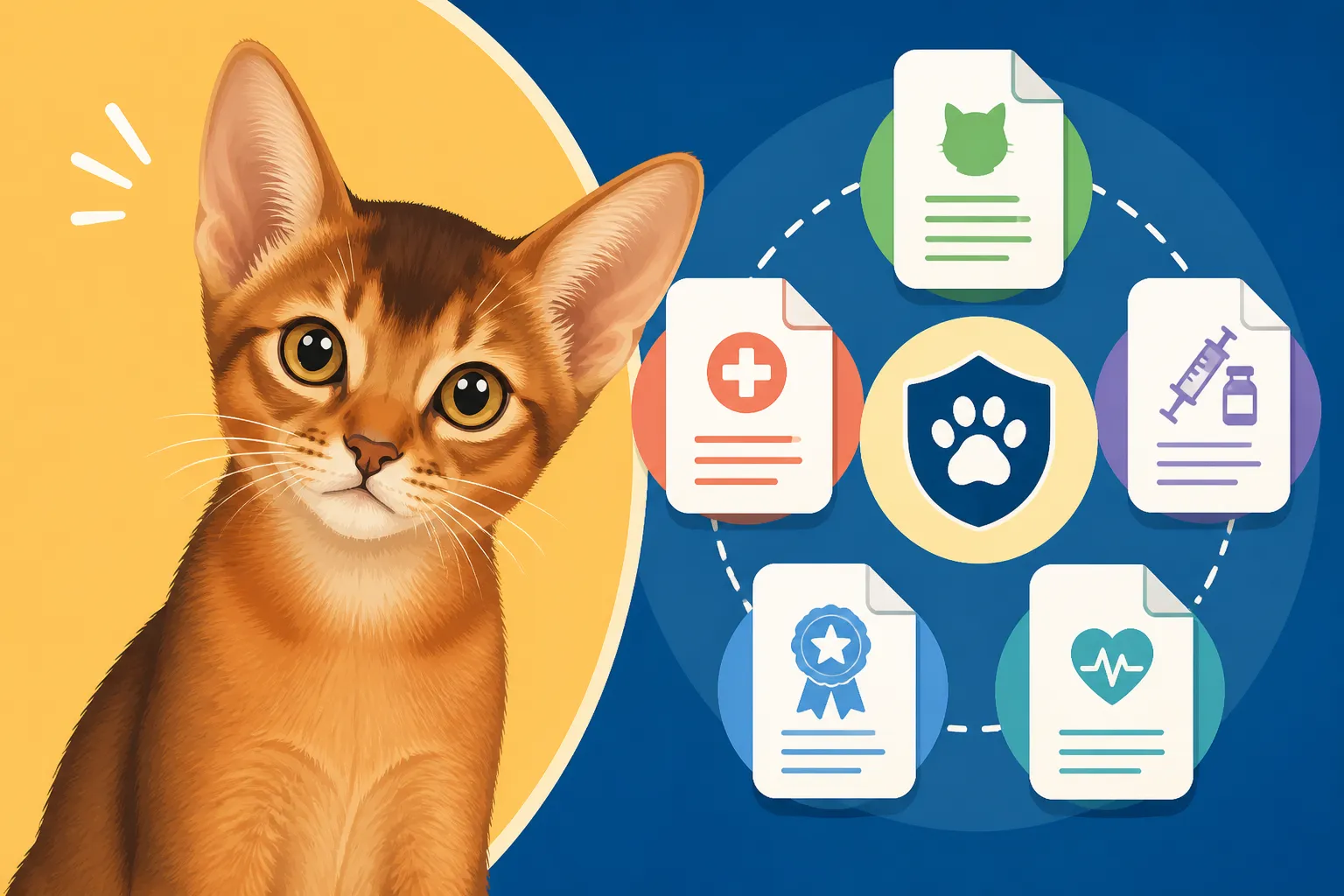
Here's a summary of the key documents you should expect:
| Document Type | Purpose | Expected Content | Why It Matters |
|---|---|---|---|
| Registry Papers | Official recognition of purebred status | Kitten's registered name, DOB, color, sex, parentage, breeder info | Verifies purebred status, supports responsible breeding, unlocks show eligibility |
| Pedigree Certificate | Detailed family tree of the kitten | Ancestry tracing back 4+ generations, names, titles, registration numbers | Confirms lineage, helps assess genetic diversity, demonstrates breeder's transparency |
| DNA Test Results (Parents) | Proof of genetic health screening for breeding stock | Clear/Carrier/Affected status for PK Deficiency & PRA-rdAc for sire/dam | Ensures kitten isn't at risk for preventable genetic diseases |
| Health Guarantee | Breeder's commitment to kitten's initial and long-term health | Coverage for congenital defects, infectious diseases, duration, recourse | Financial and emotional protection in case of early health issues |
| Veterinary Records | Documentation of kitten's early medical care | Vaccination dates, deworming dates, microchip details | Provides essential medical history for your vet, shows proper early care |
| Purchase Contract | Legally binding agreement between buyer and seller | Price, spay/neuter clause, return policy, guarantees, responsibilities | Protects both parties, outlines expectations, ensures kitten's long-term welfare |
| Care & Feeding Guide | Instructions for continuing the kitten's established routine | Current food brand/type, feeding schedule, litter, general care tips | Eases transition, prevents digestive upset, maintains consistency |
| Microchip Registration | Information to register the microchip in your name | Microchip number, company contact, registration process | Essential for identification and safe return if kitten gets lost |
Additional Documents and Important Information
While the registry papers, health clearances, and contract are the foundational documents, a truly dedicated breeder will go above and beyond to provide you with a wealth of practical information to ensure your Abyssinian kitten thrives in their new home. These additional papers and verbal guidance demonstrate a breeder's commitment to their kittens even after they leave the cattery.
Feeding and Care Instructions
One of the most valuable things a breeder can give you is a detailed guide on your kitten's established routine. Moving to a new home is stressful for a kitten, and maintaining consistency, especially around food and litter, can significantly ease their transition. You should receive clear information on the exact brand and type of food your kitten is currently eating, whether it's dry kibble, wet food, or a combination, along with the feeding schedule and portion sizes. This allows you to either continue with the same diet or, if you plan to switch, to do so gradually over several days or weeks to prevent digestive upset.
Beyond food, a good care sheet will include details on the type of litter used, which helps prevent litter box aversion in a new environment. It might also offer tips on grooming (though Abyssinians are low-maintenance, a gentle weekly brush helps!), nail trimming, and early socialization. This guidance is invaluable, particularly for first-time Abyssinian owners who might not be familiar with the breed's unique needs, such as their high energy and love for climbing. For example, knowing What an Abyssinian Kitten Should Eat in Its First Year can make a huge difference in their development.
Microchip Registration and Pet Insurance Information
Most reputable breeders will microchip their kittens before they go to their new homes. This tiny, permanent identifier is incredibly important for your cat's safety. You should receive the microchip number and instructions on how to transfer the registration from the breeder's name to yours. This usually involves contacting the microchip company directly, and often there's a small fee involved. It's paramount to complete this step as soon as possible, as a microchip is only effective if it's linked to your current contact information. This is why Whether an Abyssinian Comes Microchipped is a question every owner should ask.
Furthermore, many breeders will provide information about pet insurance. They might even recommend specific providers, or offer a short period of complimentary pet insurance through a partnership, giving you a chance to explore options. This isn't just a suggestion; it's a highly practical piece of advice. Abyssinians, like all purebreds, can be prone to certain health conditions, and vet care can be expensive. Having pet insurance in place from a young age can be a lifesaver. Companies like Healthy Paws are popular choices, and enrolling your kitten early, typically before their first birthday, can help ensure pre-existing conditions don't become an exclusion. This is why considering Why to Insure an Abyssinian Before Its First Birthday is a smart move.
The Red Flags of Missing Papers
While it might seem like a lot of paperwork, every document discussed here serves a vital purpose in ensuring you bring home a healthy, well-adjusted, and genuinely purebred Abyssinian kitten. When a breeder cannot or will not provide these papers, it's not just an inconvenience; it's a major warning sign that you should heed.
When a Breeder Offers a "Discount" for No Papers
This is perhaps the biggest and brightest red flag you can encounter. If a breeder tells you they can sell you an Abyssinian kitten for a lower price "without papers," walk away immediately. This practice is almost universally indicative of an irresponsible breeder, often a backyard breeder or even a kitten mill. They are likely cutting corners in critical areas such as health testing, proper nutrition, and even basic veterinary care for their breeding cats and kittens.
The "papers" they are withholding aren't just for showing your cat; they are the evidence of responsible breeding. A breeder who truly cares about the welfare and future of the breed invests significant time, money, and effort into genetic testing, vet check-ups, high-quality food, and appropriate housing. The cost of these things is factored into the kitten's price. If a kitten is offered cheaply without papers, it almost certainly means these vital steps have been skipped, putting your future cat's health and temperament at severe risk. You might save a small amount upfront, but you could end up paying thousands more in vet bills down the line for preventable conditions. This scenario perfectly illustrates Why an Untested Abyssinian Is Cheaper for a Reason. It's never a good deal.
The Importance of Transparency
A reputable Abyssinian breeder operates with complete transparency. They understand that prospective owners have questions, and they are not only willing but eager to provide all necessary documentation and answer any queries you might have about their breeding practices, the health of their cats, and the care of their kittens. They want you to feel confident and informed about your decision.
If a breeder seems evasive, rushes you, won't let you see the parents' genetic test results, or is vague about vaccination records, consider it a serious concern. They should be proud of their meticulous record-keeping and open about their commitments to the breed. Don't be afraid to ask specific questions about the parents' health, temperament, and genetic clearances. A good breeder will also ask you plenty of questions, as they want to ensure their kittens go to loving, appropriate homes. This two-way vetting process is essential. Knowing How to Vet an Abyssinian Breeder Before Paying and Which Questions to Ask an Abyssinian Breeder First will empower you to make the right choice and ensure you get all the proper documentation for your cherished new Abyssinian.
Disclaimer
This article is for general informational purposes only and does not constitute professional advice. Laws, prices and regulations vary by location and change over time. Consult a qualified professional for guidance on your specific situation.