What Toys an Abyssinian Gets Through in a Year
If you're an Abyssinian cat owner, you know the struggle: you bring home a new toy, full of hope, only for it to be shredded, dismembered, or completely ignored within days. It's a common frustration to feel like you're constantly replacing toys, leading to questions about how much wear and tear these energetic cats truly inflict in a year. This comprehensive guide will delve into the Abyssinian's intense play habits and help you understand and plan for their annual toy consumption.
The Abyssinian's Unique Play Style and Its Impact on Toys
Abyssinians are not your average couch potato cats. Their zest for life, insatiable curiosity, and boundless energy mean they interact with their toys in a way that can be both endearing and, let's be honest, a little destructive. Understanding why they go through so many toys is the first step to managing your expectations and your budget.
Why Abyssinians Are So Hard on Toys
It all comes down to their genetics and their brilliant minds. Abyssinians are highly intelligent, incredibly athletic, and possess a strong prey drive that makes them phenomenal hunters – even if their "prey" is just a feathered wand toy. They don't just bat at toys; they stalk, pounce, grab, and often attempt to "kill" them with a series of powerful kicks and bites. This isn't naughty behavior; it's simply an Abyssinian being an Abyssinian.
Their energy levels are consistently high, demanding prolonged and vigorous play sessions. If a toy isn't engaging enough, or if it breaks too easily, they'll quickly lose interest, or worse, try to "fix" it by tearing it apart further. They're problem-solvers, and sometimes the problem is how to get the squeaker out of that plush mouse. This intense engagement, while wonderful for their mental and physical health, simply isn't conducive to toy longevity. How Much Play an Abyssinian Needs Each Day covers just how much activity these cats require to stay happy and healthy.
Recognizing Toy Lifespans or Lack Thereof
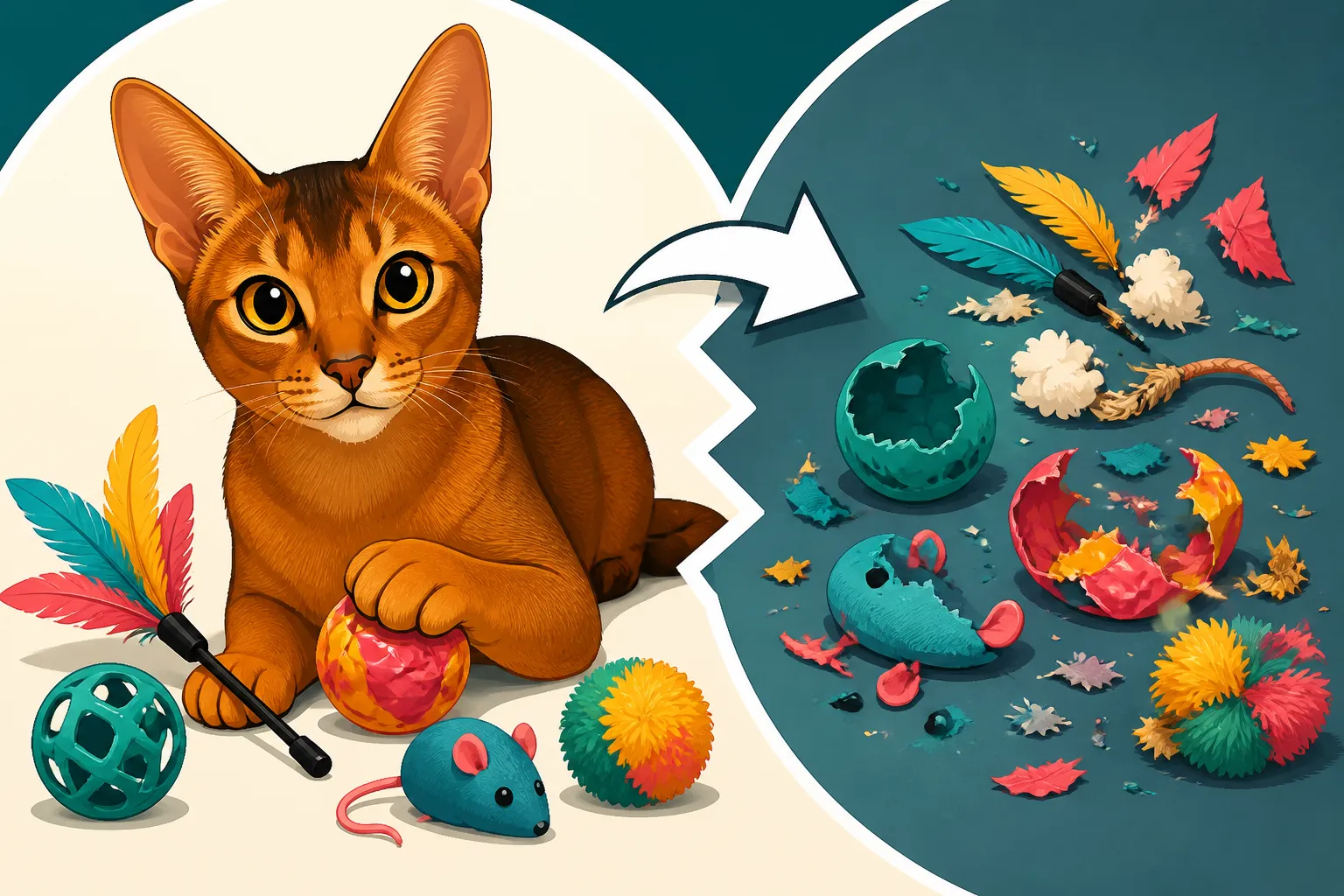
The lifespan of an Abyssinian toy can vary wildly. Some might last months, others mere minutes. It often feels like you've barely unwrapped something new from a shipment from a place like Chewy before it's already showing significant signs of wear. For wand toys, the attachments are usually the first to go, torn off during a particularly enthusiastic "kill" sequence. Plush toys might be disemboweled, their stuffing scattered across the floor like a snowy scene. Small plastic or rubber toys can be chewed into unrecognizable pieces or, more worryingly, swallowed if not designed for heavy-duty play.
The key is to become a keen observer of your Abyssinian's play style. Do they focus on shredding fabric? Are they obsessed with chewing plastic? This will help you predict which toys will last and which will be a fleeting moment of joy. Don't be surprised if that fancy, expensive toy meets its demise faster than a simple cardboard tube. It's not about the cost; it's about whether it can withstand the Abyssinian onslaught. This constant evaluation and replacement can feel like a full-time job, but it’s essential for their enrichment and your peace of mind.
Different Toy Categories and Their Annual Wear-and-Tear
Let's break down the types of toys your Abyssinian will likely interact with and what kind of turnover you can expect in a typical year. No two Abyssinians are exactly alike, but these are general patterns I've observed over years of living with these incredible cats.
Wand and Teaser Toys: The High-Turnover Essentials
These are often an Abyssinian's favorite, tapping directly into their hunter instincts. A good wand toy can simulate a bird, a bug, or a scurrying mouse, providing incredible exercise and mental stimulation. However, the attachments—feathers, ribbons, small plushies—are almost universally the first casualties. An Abyssinian will grab, tug, and bite with impressive force.
You can expect to go through several wand toy attachments each month, or at least a new one every few weeks, especially if it's a daily play item. The wands themselves, particularly those with flexible rods or telescoping features, can also break at connection points or simply wear out from repeated vigorous use. I'd budget for at least one new, sturdy wand per quarter, and a rotating supply of 6-12 attachments throughout the year. Some might last longer, but many will be shredded beyond recognition. When considering which types of attachments might last, Which Wand Toy an Abyssinian Prefers can give you some clues, but prepare for consistent replacement.
Plush and Kick Toys: The Comfort and Hunt Objects
Plush toys, often filled with catnip or crinkle material, serve a dual purpose for Abyssinians: they're either a snuggle buddy or something to perform a "bunny kick" on. Unfortunately, the more vigorous the bunny-kicking, the shorter the lifespan. These toys are prone to being torn open, their stuffing pulled out, or their sewn-on features (like eyes or ears) chewed off. It's not uncommon to find a plush toy completely decapitated after a particularly intense play session.
For Abyssinians, especially those who enjoy a good kick, consider toys made with very durable fabrics and minimal small, detachable parts. Even then, they might only last a month or two before needing replacement. For more gentle Abyssinians, they might last half a year. I'd plan for replacing 4-8 plush or kick toys annually. Small, loose toys like catnip mice can also disappear under furniture or get utterly shredded, warranting a similar replacement rate.
Puzzle and Interactive Toys: The Brain Testers
Abyssinians are incredibly intelligent, and puzzle feeders or interactive toys are fantastic for mental enrichment. These can range from simple treat-dispensing balls to multi-level mazes. Their durability varies greatly depending on the material and complexity. Sturdy plastic or wood puzzles tend to last longer than cardboard or flimsy plastic ones.
The wear and tear here isn't always outright destruction, but more about them being outsmarted or components wearing out. Your Abyssinian might quickly learn how to solve a particular puzzle, making it less engaging, or they might chew at edges if frustration sets in. You might rotate through 3-5 different puzzle toys in a year, or perhaps keep 2-3 sturdy ones and periodically introduce new challenges. The goal isn't always to replace them because they're broken, but because your clever Abyssinian has mastered them and needs a new challenge. You can explore options at retailers like Chewy for a wide variety to keep them engaged. Which Puzzle Feeders Hold an Abyssinian's Attention offers more insight into types that work well.
Laser Pointers and Electronic Toys: The Engagement Boosters
Laser pointers are a classic way to get an Abyssinian moving, but they don't involve physical interaction with the "toy" itself. The main wear and tear here involves battery replacement and accidental damage to the pointer if it's dropped or batted around. Electronic toys, like robotic mice or automated feather teasers, can also be great for independent play.
For laser pointers, it's mostly about keeping fresh batteries on hand; the device itself usually lasts. For electronic toys, durability depends heavily on the construction. Moving parts can break, internal mechanisms can fail, or the toy might just run through batteries at an astonishing rate. Plan for several sets of batteries for electronic toys throughout the year. For the toys themselves, if they're used frequently, you might find yourself replacing 1-2 per year due to mechanical failure or your Abyssinian simply losing interest after mastering its movements.
Strategies for Managing Your Abyssinian's Toy Consumption
It might feel like a never-ending cycle of buying and replacing, but there are definitely ways to get smart about your Abyssinian's toy habits without sacrificing their enrichment. It's all about balancing durability, novelty, and safety.
The Importance of Toy Rotation and Storage
One of the simplest yet most effective ways to extend the life of your Abyssinian's toys and keep them interested is through rotation. Think of it like a toy library. Instead of having every toy available all the time, keep a selection of 5-7 toys out for a week or two, then swap them out for a fresh set. This makes old favorites seem new again and prevents rapid destruction from constant use. How to Rotate an Abyssinian's Toys gives more practical tips on setting up a successful rotation system.
When not in use, store toys in a sturdy container that your Abyssinian can't easily access. This prevents them from "helping themselves" and potentially damaging toys you're trying to save for a later date. It also allows you to inspect toys before reintroducing them, ensuring no small pieces have come loose or that the toy isn't otherwise unsafe. For a cat as curious and clever as an Abyssinian, secure storage is key to preventing unscheduled play and premature wear.
Investing in Durable Options and DIY Solutions
While no toy is truly indestructible against a determined Abyssinian, some brands do focus on durability. Look for toys made with tough, tightly woven fabrics, reinforced stitching, and non-toxic materials. Hard plastic toys (ensure they're too large to be swallowed and don't have easily chewable small parts) can also stand up to more abuse than softer ones. It might cost a bit more upfront for a high-quality, durable toy, but if it lasts three times as long, you're actually saving money in the long run.
Don't forget the power of DIY! Simple items like crinkled-up paper balls, cardboard tubes, or even a robust shoelace (supervised play only, please, to prevent ingestion) can provide endless entertainment. These cost next to nothing and are easily replaced when they inevitably get destroyed. It's a great way to satisfy their need for novelty without breaking the bank. Just remember, anything they play with must be safe and non-toxic, especially given an Abyssinian's tendency to chew.
Budgeting for Your Abyssinian's Annual Toy Needs
Let's face it, providing a stimulating environment for an Abyssinian involves a financial commitment, and toys are a significant part of that. Beyond toys, consider their overall health and vitality. A well-fed Abyssinian, receiving high-quality nutrition, will have the energy to truly engage with their toys. This also feeds into why they go through toys so quickly – they're just that energetic!
When budgeting for toys, think about a monthly allowance rather than large, infrequent purchases. This helps spread the cost and ensures you always have a fresh supply on hand. Subscription boxes can be a fantastic way to ensure a steady stream of new toys and treats, often curated to a cat's play style, and many retailers like Chewy offer these. For more serious incidents, like if your Abyssinian manages to ingest a piece of a toy, pet insurance from providers like Healthy Paws can be a real lifesaver, covering unexpected veterinary costs.
Here's a general breakdown of what an Abyssinian's toy consumption might look like in a year:
| Toy Category | Typical Durability (Abyssinian) | Estimated Annual Replacements | Average Cost (Shape) |
|---|---|---|---|
| Wand & Teaser Attachments | Low (weeks to 1-2 months) | 12-24+ | Low to moderate |
| Wand Rods/Handles | Moderate (3-6 months) | 2-4 | Moderate |
| Plush/Kick Toys | Low to Moderate (1-6 months) | 4-8 | Low to moderate |
| Small Balls/Mice (catnip) | Low (days to 2 months) | 6-12+ | Very low to low |
| Puzzle/Interactive Toys | Moderate to High (3 months to 1 year) | 2-5 (due to novelty/wear) | Moderate to high |
| Electronic Toys | Moderate (6 months to 1 year) | 1-2 (due to failure/interest) | Moderate to high |
| Cardboard/DIY | Very Low (hours to days) | Countless, easily replaced | Negligible |
This table is a general guide, of course. Some Abyssinians are more intense chewers than others, and some toys are built better. The key takeaway is that your Abyssinian will absolutely go through toys, and it's a normal, healthy part of their active lifestyle. Embrace it, plan for it, and enjoy the show!
Disclaimer
This article is for general informational purposes only and does not constitute professional advice. Laws, prices and regulations vary by location and change over time. Consult a qualified professional for guidance on your specific situation.