How Much a Puzzle Feeder Costs for an Abyssinian
One of the most common frustrations for Abyssinian owners is finding ways to channel their cat's boundless energy and sharp intellect, especially when faced with a rapidly emptied food bowl and subsequent boredom-induced mischief. This comprehensive guide will delve into the world of puzzle feeders, helping you understand their true value, the factors influencing their cost, and how to choose the perfect one to keep your clever Abyssinian engaged and entertained.
Why Your Abyssinian Absolutely Needs a Puzzle Feeder
If you live with an Abyssinian, you already know they aren't your average couch potato cat. These magnificent felines are bundles of energy, curiosity, and intelligence, often earning them the nickname "Aby-sinians" for their busy nature. Leaving a bowl of kibble down for them to free-feed often means it's gone in seconds, leaving them with nothing to do for the rest of the day until the next meal. This isn't just about mealtime; it's about mental enrichment, and a lack of it can lead to all sorts of undesirable behaviors.
The Abyssinian's Innate Drive for Activity
Abyssinians are hunters at heart, even if their hunting ground is your living room. Their ancestors spent their days tracking, stalking, and working for every meal. When we simply present them with a full bowl, we bypass this crucial aspect of their natural behavior. This breed thrives on challenges and mental stimulation. Without an outlet for their keen minds and physical prowess, they can become bored, and a bored Abyssinian is often a mischievous one. You might find them opening cabinets, scaling bookshelves, or even "redecorating" your home by knocking items off shelves. What an Abyssinian Does When It Is Bored is often a direct result of unmet needs for engagement.
Preventing Boredom-Induced Mayhem and Promoting Health
A puzzle feeder isn't just a toy; it's a tool that simulates the "hunt" for food. It forces your Abyssinian to use their intelligence and problem-solving skills to retrieve their meal or treats. This not only slows down their eating, which can be beneficial for digestion and preventing scarf-and-barf episodes, but it also provides crucial mental stimulation. Think of it as giving your Abyssinian a "job." How to Give an Abyssinian a Job often involves food puzzles, making them think and work, which in turn reduces the likelihood of them inventing their own, less desirable, forms of entertainment. This engagement can actually contribute to their overall well-being and might even help manage their energy levels, preventing some of the wear and tear that leads to expensive vet visits down the line. It's a proactive step in keeping them healthy and happy for years.
Exploring the Different Kinds of Puzzle Feeders
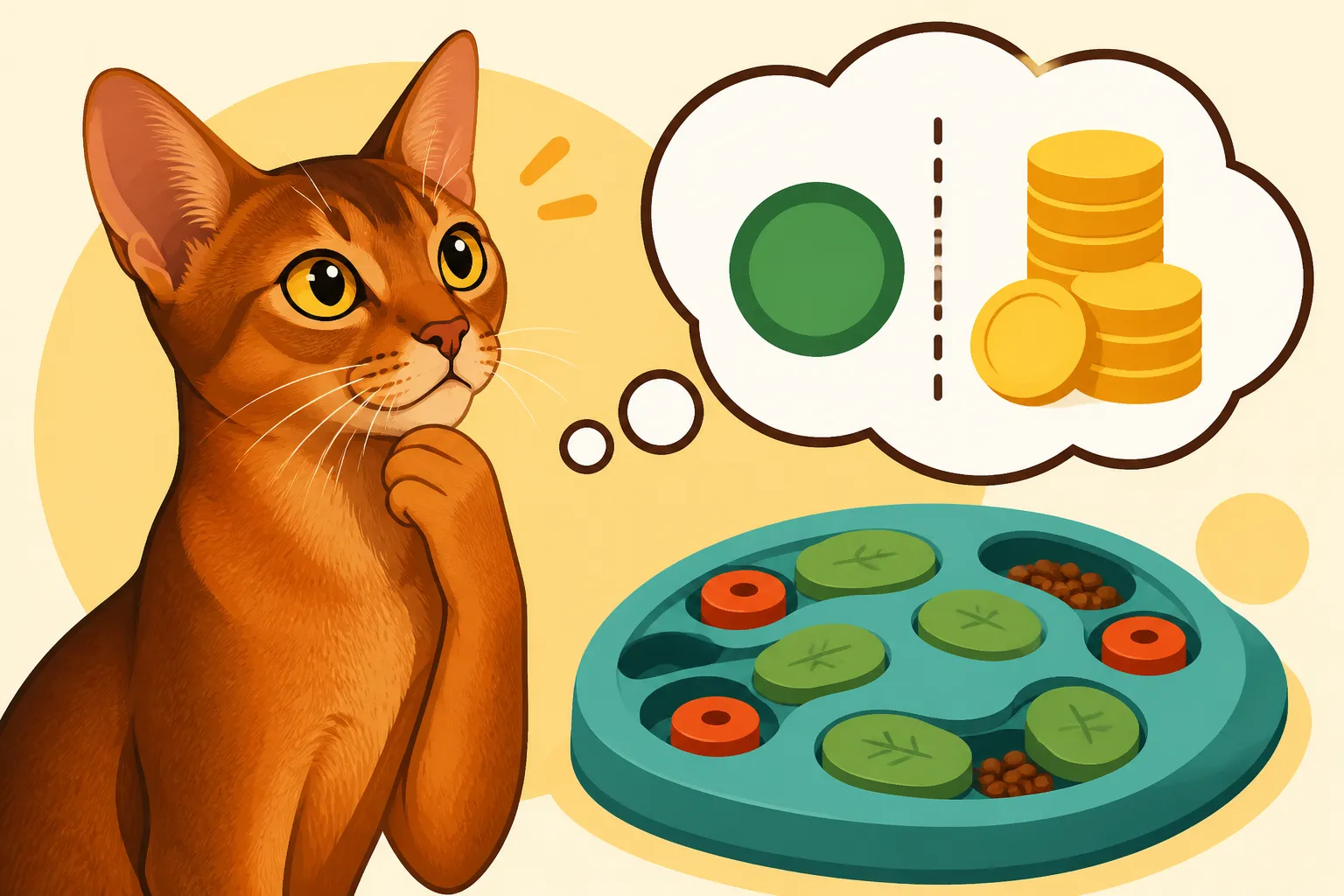
The market is flooded with various types of puzzle feeders, ranging from simple slow-feeder bowls to intricate multi-stage contraptions. Understanding the differences is key to selecting one that will genuinely engage your Abyssinian without overwhelming or frustrating them. The "cost" isn't just the price tag; it's also about the value and effectiveness for your specific cat.
Slow Feeder Bowls and Disks
These are typically the entry-level puzzle feeders. They don't involve complex mechanisms but rather feature raised ridges, mazes, or pillars within the bowl itself. The goal is to make your cat eat around obstacles, effectively slowing down their meal consumption. They're usually made of plastic, ceramic, or silicone.
- Pros: Generally affordable, easy to clean, good for cats new to puzzle feeding, helps prevent fast eating and associated digestive issues.
- Cons: Can be quickly mastered by intelligent Abyssinians, offering less long-term mental challenge. May not be stimulating enough for an advanced Aby.
- Scenario: If your Abyssinian inhales their kibble in 30 seconds flat and then immediately starts looking for trouble, a simple slow feeder can be a great starting point. It provides a foundational challenge without being too intimidating.
Treat-Dispensing Balls and Rollers
These are hollow toys, often spherical or cylindrical, with small holes or adjustable openings. You place kibble or treats inside, and as your Abyssinian bats, rolls, or nudges the toy, the food pieces fall out. Many major pet supply retailers, like Chewy, offer a wide variety of these.
- Pros: Encourages active play and movement, excellent for satisfying natural hunting instincts, provides instant gratification, often very durable.
- Cons: Can be noisy on hard floors, some cats might get frustrated if the holes are too small or too large, requiring a bit of trial and error.
- Scenario: For an Abyssinian who loves to chase and bat toys around, a treat-dispensing ball is a fantastic choice. It turns mealtime into a playful hunt, engaging their physical and mental faculties. You'll likely see them chasing it through the house, just as they might with a captured "prey."
Maze and Feeder Tree Style Puzzles
These feeders elevate the challenge, often involving multiple levels, hidden compartments, or pathways that food must travel through. Cats use their paws or noses to manipulate levers, slide doors, or fish out pieces of food from various nooks.
- Pros: Offers significant mental stimulation, can keep an Abyssinian engaged for longer periods, often more durable than simpler plastic options.
- Cons: Can be more expensive, some designs can be harder to clean, might be too complex for a beginner.
- Scenario: If your Abyssinian has aced the simpler feeders and still seems bored, a maze or feeder tree might be the next step. Brands like Catit offer popular designs in this category. They provide a graduated challenge that taps into their problem-solving skills, making them truly work for their food. Which Puzzle Feeders Hold an Abyssinian's Attention often feature this kind of complexity.
Snuffle Mats and Fabric Foraging Toys
Less about hard plastic and more about soft textures, snuffle mats are fabric mats with many strands or pockets where you can hide dry food or treats. Your Abyssinian then has to sniff and root around to find the hidden morsels.
- Pros: Engages their sense of smell, provides a different type of tactile stimulation, can be calming, often machine washable.
- Cons: Not ideal for wet food, some cats might try to chew the fabric, requires more thorough hiding of food to be effective.
- Scenario: Perfect for the Abyssinian who loves to "burrow" or is particularly scent-driven. It's a fantastic way to encourage Why Foraging Suits an Abyssinian's Mind by mimicking natural ground foraging behavior. Just ensure the fabric is durable enough for their active paws.
Here's a quick comparison of these feeder types:
| Feeder Type | Complexity Level | Typical Cleaning Difficulty | Durability | Best for |
|---|---|---|---|---|
| Slow Feeder Bowl | Low | Easy | High (plastic/ceramic) | Beginners, fast eaters |
| Treat-Dispensing Ball | Low-Medium | Easy | High (plastic) | Active players, problem solvers |
| Maze/Feeder Tree | Medium-High | Medium | High (plastic) | Experienced, intelligent cats |
| Snuffle Mat | Low-Medium | Medium (fabric) | Medium (fabric) | Scent-driven cats, calmer play |
Factors Influencing the Cost of an Abyssinian Puzzle Feeder
When you start looking for puzzle feeders, you'll quickly notice a wide range of prices. It’s not just about the brand; several factors contribute to how much you'll end up investing in these enrichment tools. While I can't give you exact figures, I can outline the key elements that drive the cost.
Materials and Construction Quality
This is often the biggest determinant of cost.
- Basic Plastic: The most common and usually the most affordable. Many treat balls and simpler slow feeders are made of durable, food-safe plastic. While generally robust, cheaper plastics can sometimes break or wear down faster, especially with an active Abyssinian who might try to chew on it.
- Ceramic or Stainless Steel: These materials are often found in higher-end slow feeder bowls. They are more durable, heavier (less likely to be pushed around), and can be more aesthetically pleasing. However, ceramic can break if dropped, and both tend to be pricier due to manufacturing and material costs.
- Wood: Some intricate maze feeders or multi-purpose enrichment stations use wood components. These can be beautiful and natural, but they typically come with a higher price tag. They also require careful cleaning to prevent bacterial growth if not properly sealed.
- Fabric: Snuffle mats and other fabric foraging toys are generally on the lower to mid-range of the price spectrum. The cost depends on the quality of the fabric and the complexity of the design.
Design Complexity and Features
Simple designs, like a basic slow-feeder bowl or a single-chamber treat ball, will naturally cost less. As you move into more elaborate designs, the price tends to increase.
- Multi-Stage Puzzles: Feeders with multiple steps, sliding parts, rotating elements, or different levels of difficulty are more complex to manufacture and often feature higher price points. These are designed to keep intelligent cats like Abyssinians engaged for longer.
- Adjustable Difficulty: Some puzzle feeders come with adjustable settings, allowing you to increase or decrease the challenge. This versatility can add to the cost but also extends the feeder's lifespan as your Abyssinian masters each level. How to Make a Puzzle Feeder Harder for an Abyssinian is a feature often found on these more advanced models.
- Interactive Elements: Features like suction cup bases to prevent tipping, non-slip feet, or modular designs that can be combined with other pieces contribute to both complexity and cost.
Brand Reputation and Specialization
Just like with anything else, certain brands specialize in pet enrichment products and have built a reputation for quality and innovation. These brands might charge a premium for their feeders, but often offer superior design, durability, and customer support. Generic or lesser-known brands might offer similar products at a lower cost, but the quality can sometimes be inconsistent.
Size and Capacity
Larger puzzle feeders, designed for more substantial meals or multiple cats, will typically cost more than smaller, single-serving ones. The amount of material used and the manufacturing processes scale with size. For an active Abyssinian, who often eats more than a larger, less active cat, you might need a feeder that can hold a decent portion of their How Many Calories an Adult Abyssinian Burns in a day.
Maximizing the Value of Your Puzzle Feeder Investment
Spending money on a puzzle feeder is an investment in your Abyssinian's well-being and your household's peace. To ensure you get the most out of your purchase, it's not just about the upfront cost, but how you integrate it into their routine.
Choosing the Right Feeder for Your Abyssinian
Every cat is an individual, even within a breed known for its intelligence. Observe your Abyssinian's play style and personality.
- Are they a persistent problem-solver who enjoys intricate challenges, or do they get frustrated easily? Start with easier puzzles and gradually increase the difficulty.
- Do they prefer batting things around, or are they more interested in using their paws to manipulate objects? This will guide you towards treat balls versus maze feeders.
- Consider their age and any physical limitations. An older Abyssinian with How Arthritis Shows in an Abyssinian That Used to Climb might struggle with puzzles requiring extensive jumping or fine motor control.
Proper Use and Rotation for Continued Engagement
The novelty of a new puzzle feeder can wear off quickly, even for an Abyssinian. To keep them interested, it's crucial to rotate their enrichment toys.
- Start Simple: When introducing a new feeder, make it easy to get the food out at first. Don't let your Abyssinian get discouraged. Why an Abyssinian Learns Faster When It Is Hungry means they'll be highly motivated!
- Rotate Regularly: Don't use the same feeder every day. Have 2-3 different types and rotate them weekly or even daily. This keeps the challenge fresh and prevents boredom.
- Vary the Contents: While kibble is great, occasionally use high-value treats or even pieces of their regular wet food (if the feeder allows for easy cleaning) to make the experience extra rewarding.
- Clean Thoroughly: Regular cleaning is essential, especially for feeders used with wet food. This prevents bacterial buildup and keeps the feeder hygienic and appealing. Some products found on sites like Chewy are designed for easy disassembly and cleaning, making this chore less daunting.
Long-Term Benefits and Potential Savings
While there's an initial cost to puzzle feeders, consider the long-term benefits.
- Reduced Destructive Behavior: A mentally stimulated Abyssinian is less likely to engage in destructive behaviors like scratching furniture or knocking items over. This can save you money on repairs or replacements.
- Improved Digestion and Weight Management: By slowing down eating, puzzle feeders can help prevent digestive upset and aid in maintaining a healthy weight, potentially reducing future vet bills associated with obesity or gastrointestinal issues. Why an Abyssinian's Weight Loss Is Never Minor and How to Read an Abyssinian's Body Condition Through That Coat are important indicators that proper feeding and activity are crucial.
- Enhanced Bond: Engaging with your Abyssinian through puzzle play can strengthen your bond, as you're providing them with an outlet for their natural instincts and showing them you understand their needs.
- Consider Pet Insurance: While not directly about puzzle feeders, investing in enrichment tools like these can help maintain your Abyssinian's overall health. If an unforeseen illness or accident does occur, pet insurance from providers like Healthy Paws can help cover significant veterinary costs. It's another aspect of responsible ownership that factors into the total cost of care. Whether Pet Insurance Is Worth It for an Abyssinian is a question many owners ponder, and a healthy, stimulated cat often makes for a happier, potentially less medically needy one.
Ultimately, the cost of a puzzle feeder for your Abyssinian is more than just a price tag; it's an investment in their happiness, health, and a calmer home environment. By understanding the options and how to best utilize them, you can provide your energetic Aby with the mental workout they truly crave.
Disclaimer
This article is for general informational purposes only and does not constitute professional advice. Laws, prices and regulations vary by location and change over time. Consult a qualified professional for guidance on your specific situation.