What a Catio Costs for an Abyssinian
One of the biggest heartbreaks for an Abyssinian owner is looking into their energetic, curious eyes and knowing they long for the great outdoors, yet the dangers are just too immense. We all want our Aby to experience the sunshine and fresh air, but the thought of them encountering traffic, predators, or getting lost is a constant worry. That's where a catio comes in, offering a safe, enriching outdoor space. This guide is here to walk you through what to expect when budgeting for a catio, from simple window boxes to elaborate custom builds, so you can give your adventurous Abyssinian the best of both worlds without breaking the bank or compromising their safety.
Why a Catio Is More Than a Luxury for an Abyssinian
Let's face it, Abyssinians aren't your typical couch potato cats. They're bundles of boundless energy, intelligent, and incredibly curious. Leaving an Abyssinian cooped up indoors without adequate stimulation can lead to all sorts of behavioral issues that are frustrating for everyone involved. You might find them scaling your curtains, systematically opening every cabinet, or even "redecorating" your shelves. This isn't naughtiness; it's often a cry for more mental and physical engagement.
The Abyssinian's Innate Need for Exploration
Our Abyssinians come from a lineage that suggests a life of exploration, even if their exact origins are debated. They have a lean, muscular build designed for climbing and jumping, and a keen intelligence that thrives on new experiences. Confining such a dynamic creature to four walls, no matter how big your house is, can feel like putting a race car in a garage permanently. They crave sensory input – the rustle of leaves, the chirping of birds, the warmth of the sun on their fur, and the smells carried on the breeze. Without an outlet for this natural drive, they can become restless, stressed, and even destructive. The Abyssinian Is the Busiest Cat in the House is no exaggeration, and that energy needs a positive channel.
Balancing Safety with Enrichment
The dilemma for many Aby owners is profound: how do you satisfy that craving for the outdoors while protecting them from very real threats? An Abyssinian's speed and agility make them excellent hunters, but also incredibly vulnerable. They're often too fearless for their own good, and their sleek, short coat offers little protection against larger animals or harsh weather. Predators like coyotes, foxes, or even aggressive dogs are a serious concern in many areas. Then there's the risk of ingesting toxins, getting hit by a car, or simply getting lost trying to chase a squirrel. A catio provides that crucial bridge, giving them a taste of the wild without any of the inherent dangers. It allows them to observe, stalk, and enjoy nature's symphony, all within a secure enclosure.
Deconstructing Catio Costs: What Drives the Price Tag
When you start looking into catios, you'll quickly discover that the price range is incredibly broad. It's not just about the size; it's about a combination of factors, from whether you're building it yourself to the materials you choose and the features you decide to include. Understanding these components will help you plan your budget more effectively.
DIY vs. Professional Installation
This is often the biggest determinant of cost. Going the DIY route can significantly reduce expenses, but it demands time, skill, and access to tools. If you're handy with a hammer and a saw, comfortable with blueprints, and enjoy a good project, building your own catio might be a rewarding experience. You'll save on labor costs, which can easily be half the total price of a professional build. However, factor in the cost of lumber, fencing, roofing, hardware, and any specialized tools you might need to purchase or rent. Remember that your Abyssinian is an escape artist in training, so security is paramount. A poorly constructed DIY catio could put your cat at risk.
On the other hand, hiring a professional catio builder offers convenience and peace of mind. They bring expertise in design, construction, and cat-proofing. They can help you navigate local building codes and ensure the structure is safe and durable. The downside, of course, is the higher price tag. Professional services usually include consultation, custom design, material sourcing, and installation. If you're not confident in your carpentry skills, or simply don't have the time, this option is often worth the investment to ensure a secure and aesthetically pleasing space for your Aby.
Size, Materials, and Features
The larger the catio, the more materials you'll need, and thus, the higher the cost. A small window box catio for a single Abyssinian will naturally be far less expensive than a multi-level, walk-in enclosure connected by a tunnel to your home. What Size Catio Suits an Abyssinian often depends on how many cats you have and how much outdoor access you want to provide.
Materials play a huge role. Treated lumber is common for framing, but you could opt for more durable (and expensive) options like cedar or even aluminum. For the mesh, heavy-duty galvanized wire or welded wire is essential to prevent your active Abyssinian from chewing through or bending it. Avoid flimsy chicken wire at all costs; it's simply not strong enough. Roofing can range from simple wire mesh for full sun exposure, to corrugated plastic or metal for weather protection, or even shingled roofs for a more integrated look.
Then there are the features. Think about what your Abyssinian truly enjoys. Climbing is non-negotiable for this breed, so shelves, ramps, and even tree branches are excellent additions. You can find sturdy cat shelves and climbing structures on sites like Chewy that can be integrated into your catio design. A water fountain keeps them hydrated and entertained, especially if your Aby likes to play with water. Consider a dedicated potty area with a litter box, feeding stations, and comfortable perches for sunbathing or napping. The more elaborate the features, the more you'll add to the overall cost.
Types of Catios and Their Estimated Cost Ranges
Let's break down the different categories of catios you might consider, from the simplest to the most ambitious, and what kind of budget you'd typically need for each. Keep in mind these are general figures; local labor rates and material costs can vary significantly.
1. Window Box Catios
These are the most basic and budget-friendly option. A window box catio is essentially a small, enclosed box that fits securely into an open window. It allows your Abyssinian to safely experience fresh air and outdoor sights and sounds without ever touching the ground. They are perfect for apartments or homes where space is limited, or if you just want to dip your toes into the catio world without a huge commitment.
- Construction: Often available as DIY kits or pre-assembled units. Many can be made with basic carpentry skills.
- Materials: Typically constructed from wood and wire mesh, sometimes with a clear top or sides for viewing.
- Features: Usually just a simple perch or two.
- Pros: Most affordable, easy to install, great for small spaces.
- Cons: Limited space, no room for extensive climbing or play, only accommodates one or two cats comfortably.
- Cost Expectation: For a DIY project using readily available materials, you might spend a few hundred dollars. Pre-made kits or professionally installed window catios could range from several hundred to around a thousand dollars, depending on size and quality.
2. Modular and Pre-fabricated Catios
These options strike a balance between DIY and full custom builds. Modular catios come in panels or sections that you assemble yourself, similar to putting together flat-pack furniture. Pre-fabricated catios are often larger, self-contained units that are delivered mostly assembled, or require minimal on-site construction. They are great for people who want more space than a window box but aren't ready for a full custom project.
- Construction: Designed for self-assembly, but some may offer professional installation as an add-on.
- Materials: Can vary widely, from treated wood and sturdy galvanized mesh to metal frames.
- Features: Often include some shelving, ramps, and platforms. Many allow for expansion later by adding more modules.
- Pros: Easier to install than a custom build, more space than a window box, can often be expanded, good quality control on materials.
- Cons: Less customization, designs might be somewhat generic, can still be heavy and require assistance for assembly.
- Cost Expectation: Expect to spend from roughly one thousand to several thousand dollars for a good-sized modular or pre-fab unit. Prices will increase with size and material quality.
3. Custom-Built and Walk-in Catios
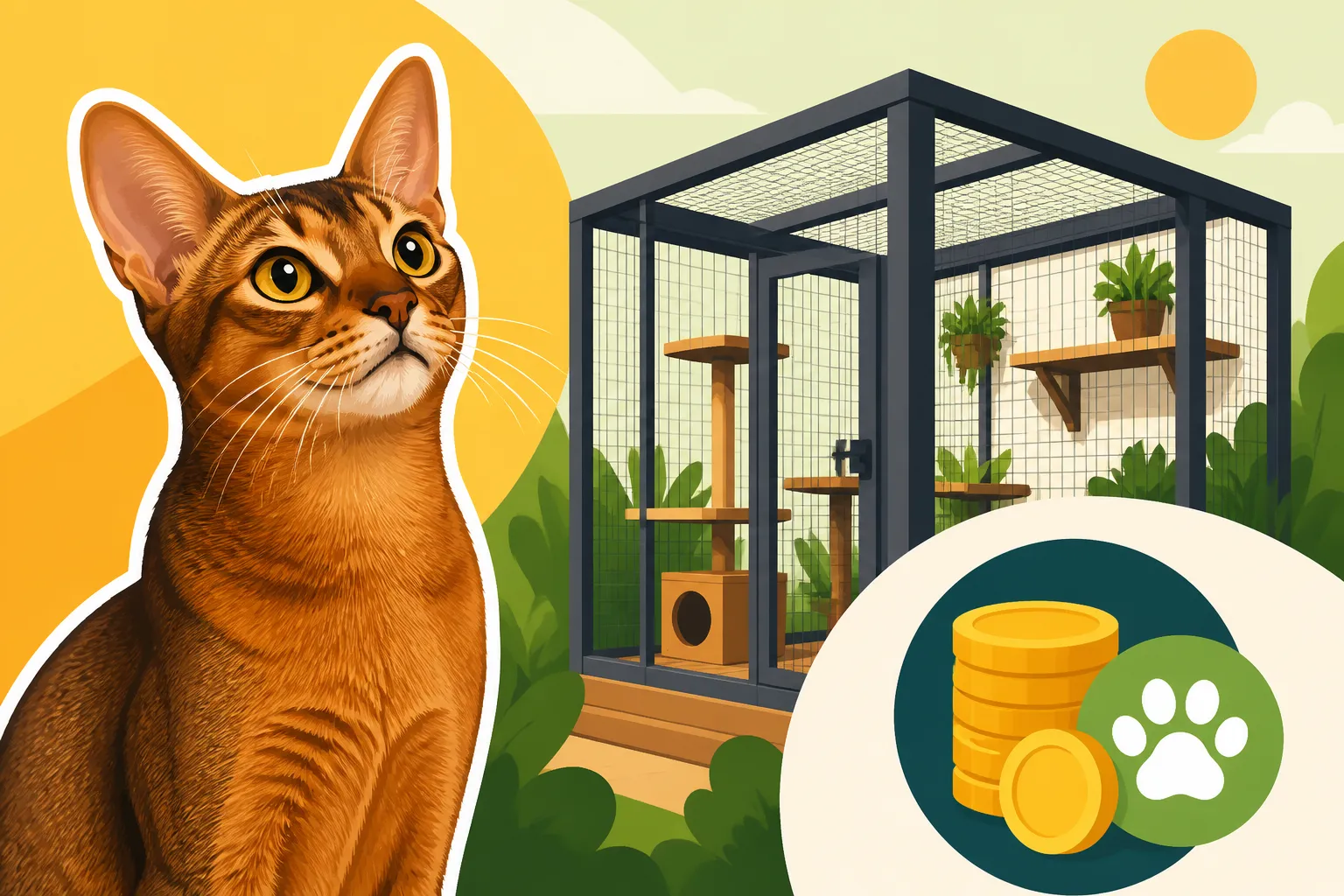
This is the crème de la crème of catio experiences, offering the most space, customization, and integration with your home. Custom catios can be standalone structures in your yard, or they can be attached directly to your house, often accessible via a cat door through a window or wall. They can be elaborate multi-level enclosures with tunnels, intricate climbing structures, and comfortable lounging spots. An Abyssinian Needs Height More Than It Needs Floor, and a custom catio can certainly deliver on vertical space.
- Construction: Designed and built specifically for your space by a professional, or by a highly skilled DIYer.
- Materials: High-quality lumber, durable heavy-gauge wire, robust roofing, and often custom-built internal features.
- Features: Unlimited possibilities! Multi-level platforms, ramps, bridges, real tree branches, integrated water features, designated litter areas, human-sized doors for easy cleaning, lighting, and even heating elements for colder climates.
- Pros: Fully customized to your home and your cat's needs, seamless integration, maximum space and enrichment, highest security.
- Cons: Most expensive option, requires significant planning, potentially involves obtaining building permits.
- Cost Expectation: This is where costs can really climb. A modest custom-built catio might start in the low thousands, but larger, more intricate designs with premium materials and professional installation can easily reach five thousand dollars or more.
Here's a quick comparison table to help visualize the differences:
| Catio Type | Complexity / Effort | Typical Materials | Key Features | Estimated Cost Range (USD) |
|---|---|---|---|---|
| Window Box | Low (DIY/Kit) | Wood, wire mesh | Small perch, fresh air | $200 – $1,000 |
| Modular Kit | Medium (DIY Assembly) | Wood or metal frame, wire mesh | Shelves, ramps, expandable | $1,000 – $4,000 |
| Custom Built | High (Professional/Skilled DIY) | Treated lumber, heavy-gauge mesh, roofing | Multi-level, tunnels, bespoke elements | $2,500 – $10,000+ |
Beyond the Build: Ongoing Costs and Value
The initial cost of building a catio is one thing, but it's important to consider what comes next. Like any home improvement, there might be some ongoing expenses, and it's also worth looking at the intangible value a catio brings to your life with an Abyssinian.
Maintenance and Accessories
Once your catio is built, it's not entirely "set it and forget it." Like any outdoor structure, it will require occasional maintenance. This might involve cleaning the surfaces, checking for any wear and tear on the mesh or framing, ensuring latches are secure, and replacing any worn-out perches or ramps. If you opted for a wooden structure, it might need staining or sealing periodically to protect against weather. These are typically minor costs, but good to keep in mind.
Then there are the fun accessories! You'll want to stock your catio with engaging toys, scratching posts, and comfy beds. Your active Abyssinian will go through toys pretty quickly, so budgeting for replacements from stores like Chewy is a good idea. Consider durable, weather-resistant toys that can withstand outdoor conditions. You might also want to add plants (cat-safe, of course!), a small water fountain, or even a camera to watch your Aby enjoying their outdoor sanctuary. Why an Abyssinian Destroys Cheap Furniture Faster applies to catio furniture too, so invest in quality pieces where you can.
The Return on Investment for You and Your Aby
While a catio is certainly an investment, the return isn't just financial. For your Abyssinian, it's an incredible boost to their quality of life. An enriched Aby is a happier, healthier Aby. You'll likely see a reduction in destructive behaviors born from boredom, and a more relaxed, content feline companion. This can indirectly save you money on damaged furniture or vet visits for stress-related issues. What an Abyssinian Costs to Keep Every Year includes these hidden costs of managing a bored or stressed cat.
For you, the owner, it offers peace of mind. Knowing your Abyssinian is safe while enjoying the sun, observing birds, and breathing fresh air is truly priceless. It strengthens your bond and allows you to enjoy their natural behaviors without the constant worry. If you travel, a catio can also make your cat sitter's job easier, as they have a safe outdoor space for your cat. This can even indirectly relate to overall pet wellness, as services like Healthy Paws pet insurance might be a consideration for managing general pet health, but a safe environment like a catio helps proactively reduce risks.
Making a Catio a Reality for Your Abyssinian
Bringing a catio to life for your Abyssinian doesn't have to be overwhelming. It starts with planning and a clear understanding of your budget, your skills, and your cat's needs.
Planning Your Catio Project
Before you even think about swinging a hammer or calling a contractor, take some time to observe your Abyssinian. Where do they like to sunbathe? What do they enjoy watching most? Do they prefer high perches or sheltered nooks? Consider your yard or apartment space. What size and shape catio will fit best? Think about sun exposure throughout the day, and how you'll ensure easy access for cleaning and interaction.
It's also crucial to check local zoning laws and homeowner association rules. Some areas have restrictions on outdoor structures, especially if they are attached to the house or are very large. Getting this cleared upfront can save you a lot of headache down the line. Sketch out your ideas, gather inspiration from online catio communities, and even collect some material samples. If you have two Abyssinians, you might even consider if Whether Two Abyssinians Are Easier Than One for a catio experience, as they can entertain each other.
Sourcing Materials and Professionals
If you're going the DIY route, start researching materials. Local lumber yards, hardware stores, and online retailers like Chewy offer a wide range of options for wood, wire mesh, and fasteners. Look for materials that are durable, weather-resistant, and non-toxic for pets. Stainless steel or galvanized wire mesh is a must for security against chewing and rust.
For those opting for professional help, start seeking out local contractors or specialized catio builders. Ask for portfolios of their work and references. Get multiple quotes and ensure they provide a detailed breakdown of costs for materials and labor. Don't be afraid to ask questions about their experience with cat-specific enclosures and how they address safety and enrichment. A good builder will understand the unique needs of an active breed like the Abyssinian.
Ultimately, a catio is more than just a fenced-in area; it's an extension of your home designed to enrich your Abyssinian's life. It's about giving them a safe, stimulating environment where they can embrace their natural instincts, watch the world go by, and enjoy the sun on their beautiful ticked coats. The investment, both of time and money, is truly a gift that keeps on giving, fostering a happier, healthier, and more contented Abyssinian.
Disclaimer
This article is for general informational purposes only and does not constitute professional advice. Laws, prices and regulations vary by location and change over time. Consult a qualified professional for guidance on your specific situation.