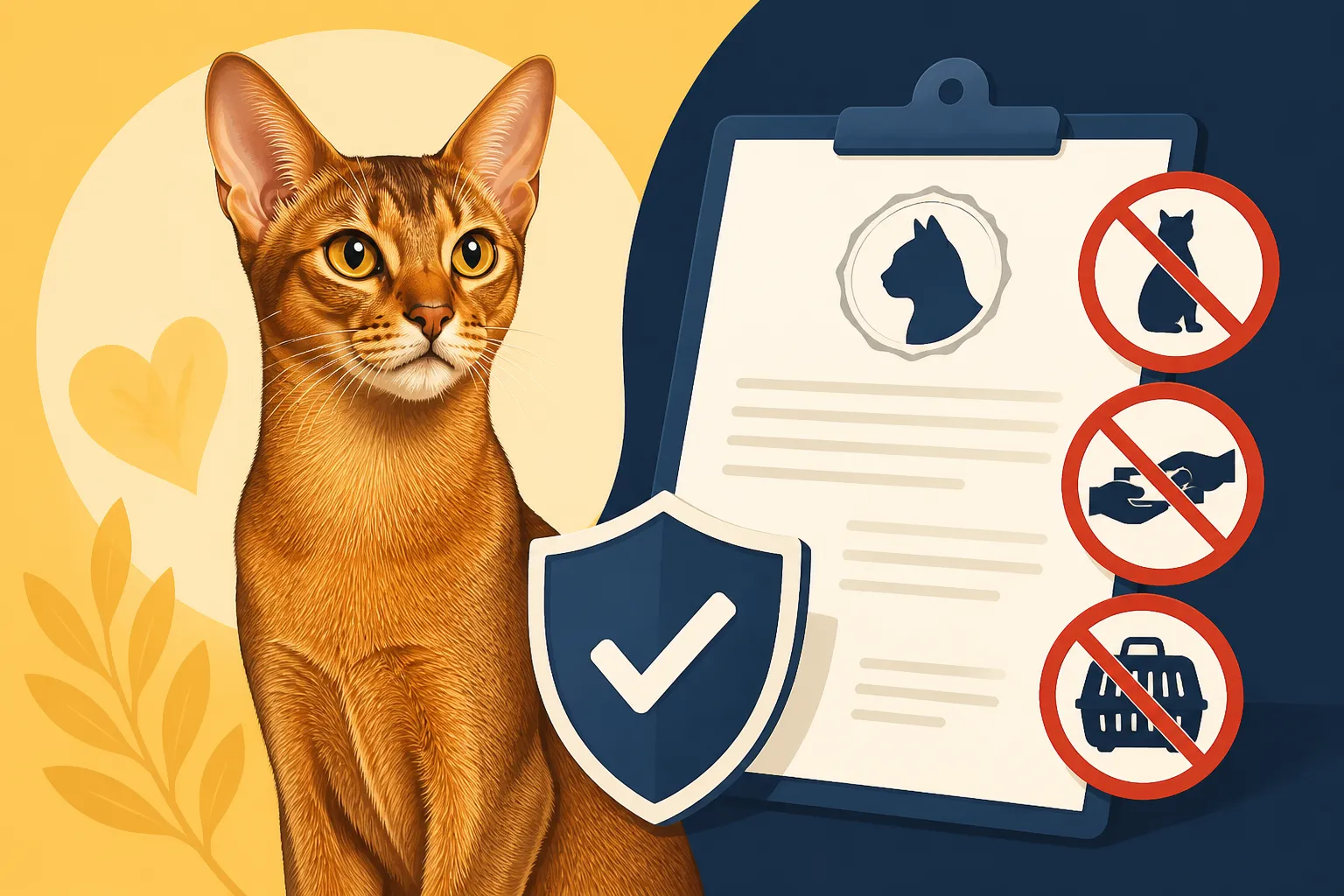
What an Abyssinian Breeder Contract Restricts
Bringing home an Abyssinian kitten is an incredibly exciting time, filled with dreams of playful antics and affectionate head-nuzzles. But before those purrs and zoomies fill your home, you'll often encounter a detailed breeder contract – a document that can sometimes feel overwhelming, confusing, and a little bit intimidating. It's completely normal to feel that way, as these agreements are designed to protect everyone involved, most importantly your new feline companion. This guide will help you understand the common restrictions found in an Abyssinian breeder contract, why they exist, and what they mean for you as a new cat parent, ensuring you enter this wonderful journey with confidence and clarity.
The Core Purpose of an Abyssinian Breeder Contract
A breeder contract isn't just a piece of paper; it's a foundational agreement that sets the stage for a healthy, happy life for your Abyssinian and ensures the integrity of the breed itself. Think of it as a shared promise between you and the breeder, outlining responsibilities and expectations long after the kitten leaves for its new home. It’s designed to be a transparent roadmap, not a trap, guiding both parties toward the best possible outcome for the cat.
Protecting the Kitten's Well-being
At its heart, every clause in a reputable breeder contract should funnel back to the well-being of the kitten. Responsible breeders invest countless hours, resources, and emotional energy into raising healthy, well-socialized Abyssinians. Their contracts reflect this deep commitment, often including provisions about the kitten's age before it can leave its mother and littermates, ensuring it has adequate time to develop crucial social skills and a robust immune system. You'll find stipulations regarding veterinary care, nutrition, and environmental enrichment, all aimed at giving your new Abyssinian the very best start.
For instance, a contract might specify that the kitten must be kept indoors, protecting it from traffic, predators, and infectious diseases common to outdoor cats. It might also detail the type of food the kitten has been raised on, suggesting a continuation or a slow transition to a new diet to prevent stomach upset. A good breeder cares deeply about where their kittens go and how they are cared for, and the contract is their way of formally extending that care and guidance to you, the new owner.
Safeguarding the Breed and Cattery Reputation
Beyond the individual kitten, a breeder contract serves to protect the Abyssinian breed as a whole and the cattery's hard-earned reputation. This is especially true for clauses related to breeding. Most pet-quality kittens are sold with strict non-breeding agreements to prevent accidental litters or unethical breeding practices by inexperienced individuals. Breeders dedicate years to understanding genetics, health screening, and temperament, aiming to produce Abyssinians that conform to breed standards and are free from inheritable diseases. They want to ensure their lines are only continued responsibly.
The contract helps maintain the quality and health of the breed by controlling who can breed and under what conditions. It's also a testament to the breeder's ethical standards. A contract that clearly outlines health guarantees, return policies, and the breeder's ongoing support speaks volumes about their commitment to the cats they produce. It ensures that if a situation arises where a cat needs to be rehomed, it comes back to the person most invested in its welfare and the future of the breed.
Establishing Clear Expectations for Both Parties
One of the most valuable aspects of a comprehensive contract is its ability to lay out clear expectations for both you, the buyer, and the breeder. It's a mutual understanding, designed to prevent misunderstandings down the line. For example, a contract will often detail Which Papers Come With an Abyssinian Kitten, ensuring you know exactly what documentation you will receive. It clarifies who is responsible for what, from initial vet visits to microchipping, and what happens in unforeseen circumstances like a kitten falling ill shortly after coming home.
This clarity fosters a strong, trusting relationship between you and your breeder. You understand your commitments regarding the cat's care, and the breeder understands their obligations in terms of support, health guarantees, and guidance. This ongoing relationship can be invaluable, especially for first-time Abyssinian owners who might have questions about everything from typical behavior to dietary needs. It means you always have an experienced resource to turn to.
Common Restrictions You'll Encounter in an Abyssinian Contract
While every breeder's contract will have unique wording, there are several key restrictions and clauses that are nearly universal when purchasing a pet-quality Abyssinian. Understanding these ahead of time can make the signing process much less stressful and help you feel more prepared for the responsibilities ahead.
Spay/Neuter Agreements and Timelines
Almost universally, pet-quality Abyssinians are sold with a mandatory spay or neuter clause. This is a critical component of responsible breeding and pet ownership. Most contracts will specify an age by which the procedure must be performed, often between 5 to 7 months, or before sexual maturity. The contract will usually require proof from a licensed veterinarian that the procedure has been completed, sometimes asking for a copy of the surgical certificate.
The reason for this restriction is multi-faceted. Firstly, it prevents accidental pregnancies, which can contribute to pet overpopulation and introduce kittens without proper health screening or pedigree documentation into the gene pool. Secondly, spaying or neutering early can offer significant health benefits to your Abyssinian, reducing the risk of certain cancers and behavioral issues like spraying in males or heat cycles in females. It's such a common and important clause that you'll often see titles like Why an Abyssinian Contract Includes a Spay Clause in breed-specific literature. Some breeders even perform early spay/neuter before the kitten leaves their home, which simplifies things for you.
Non-Breeding Clauses and Penalties
Closely tied to the spay/neuter agreement is the non-breeding clause. Unless you are specifically purchasing a cat with breeding rights – which is a completely different type of contract and comes with a significantly higher price tag and extensive vetting – your Abyssinian will be sold as a "pet-only." This clause explicitly prohibits you from breeding your cat, whether intentionally or accidentally. Why an Abyssinian Sells on a Non Breeding Agreement is a key piece of information every potential owner should understand.
Breeding responsibly requires extensive knowledge, time, and financial investment, including genetic testing, proper housing, and veterinary care for both the parents and the kittens. Breeders want to ensure that their carefully cultivated lines, which are tested for specific health conditions like Pyruvate Kinase Deficiency and progressive retinal atrophy, are not compromised by unknowledgeable breeding. Contracts often outline severe penalties, sometimes financial, if this clause is violated. It reinforces the ethical commitment to preserving the health and integrity of the Abyssinian breed.
Rehoming and Return-to-Breeder Policies
Life happens, and sometimes, despite best intentions, circumstances change, making it impossible to keep a beloved pet. A responsible Abyssinian breeder will always include a clause that requires you to return the cat to them if you can no longer care for it, rather than selling it, giving it away, or surrendering it to a shelter. This isn't about control; it's about providing a safety net for the cat.
Breeders feel a lifelong responsibility for the animals they bring into the world. They know their cats' history, temperament, and health needs, making them the best-equipped individuals to find a suitable new home if necessary. This policy ensures the cat avoids the stress and uncertainty of a shelter environment and guarantees it will be rehomed with someone who understands and appreciates the unique needs of an Abyssinian. It also prevents the cat from ending up in situations where it might be exploited for breeding by unscrupulous individuals.
Indoor-Only Requirements and Outdoor Access Limitations
Abyssinians are incredibly intelligent, curious, and athletic cats, but their energetic nature also makes them susceptible to the dangers of the outdoors. Most breeder contracts will include a strict indoor-only clause. This is for the cat's safety and longevity. An indoor Abyssinian is protected from:
- Traffic accidents: Abyssinians are often so focused on exploring that they might not perceive the danger of a moving vehicle.
- Diseases: Outdoor cats are exposed to feline leukemia, feline immunodeficiency virus, parasites, and other infectious diseases.
- Predators: Coyotes, larger dogs, or even less friendly neighborhood cats can pose a threat.
- Theft: Purebred cats, especially attractive and friendly ones like Abyssinians, can be targets for theft.
- Getting lost: Even microchipped cats can be difficult to recover if they wander far from home.
Some contracts may allow for supervised outdoor access on a leash or within a secure “catio” (a cat enclosure), recognizing the Abyssinian's need for stimulation and fresh air. However, direct, unsupervised outdoor roaming is almost universally prohibited. Keeping your Abyssinian indoors also helps you manage its diet, ensuring it gets quality nutrition without scavenging potentially harmful substances.
Health Guarantees and Breeder Responsibilities
When you invest in a purebred Abyssinian, you're hoping for a healthy companion that will be with you for many years. A good breeder contract reflects this hope with clear health guarantees, outlining the breeder's commitment to the kitten's health at the time of sale and often for a period afterward.
Understanding Health Warranties and What They Cover
Health guarantees are a cornerstone of a responsible breeder's contract. They typically cover the kitten for a short period (e.g., 48-72 hours) against common infectious diseases, requiring a vet check within that timeframe. More importantly, many contracts offer a longer-term guarantee against specific congenital or genetic conditions, which is crucial for a breed like the Abyssinian. What an Abyssinian Breeder's Health Guarantee Covers is a vital piece of information to fully grasp before you sign.
These longer guarantees often focus on inheritable diseases known to affect Abyssinians, such as Pyruvate Kinase Deficiency (PKD) and Progressive Retinal Atrophy (PRA-rdAc). The contract might state that if a kitten is diagnosed with a severe, untreatable genetic disease within a specified timeframe (e.g., one to two years), the breeder will offer a replacement kitten or a refund. It's important to understand that these guarantees usually have limitations; they typically don't cover accidents, illnesses contracted outside the breeder's care (unless directly linked to the kitten's initial health status), or conditions like kidney disease which do not have a genetic test.
Genetic Testing and Disclosure Requirements
One of the most valuable protections in an Abyssinian contract relates to genetic testing. Reputable breeders will explicitly state that the kitten's parents have been screened for known inheritable diseases. You should expect to see details about tests for Pyruvate Kinase Deficiency (PKD) and Progressive Retinal Atrophy (PRA-rdAc). These DNA tests can identify if a cat is clear, a carrier, or affected by these conditions. Which Two DNA Tests an Abyssinian Must Have is non-negotiable for responsible breeding.
A good contract will usually promise that you will receive copies of the parents' (and sometimes the kitten's) DNA test results. It's your right to ask for these, and a trustworthy breeder will readily provide them. Furthermore, the contract might specify How to Verify an Abyssinian's Test Certificate through an independent lab database, adding an extra layer of assurance. This transparency is key; it demonstrates the breeder's commitment to breeding healthy cats and helps you understand the genetic background of your new companion. Remember, while there are tests for some conditions, The Abyssinian Has Three DNA Tests and One Disease With None hints at the ongoing challenges and importance of careful breeding practices and family history.
Vaccination and Microchipping Mandates
Every contract will detail the initial health care provided to the kitten before it leaves the cattery. This typically includes age-appropriate vaccinations and deworming. The contract will specify What Vaccinations an Abyssinian Kitten Arrives With and usually outline the schedule for follow-up vaccinations that you, as the new owner, will be responsible for.
Most breeders also microchip their kittens before they go to their new homes. The contract will confirm Whether an Abyssinian Comes Microchipped and provide details about the microchip company and registration. This is an essential safety measure, offering the best chance of reunification if your Abyssinian ever gets lost. The contract might also stipulate that you are responsible for updating the microchip registration with your contact information immediately after adoption. These are preventative measures that savvy owners will appreciate, often coupled with pet insurance plans from providers like Healthy Paws for comprehensive coverage.
| Contract Restriction | Purpose for Kitten's Well-being | Purpose for Breed Integrity | Buyer's Responsibility |
|---|---|---|---|
| Spay/Neuter Clause | Prevents unwanted pregnancies, reduces certain health risks (cancers, infections), minimizes behavioral issues. | Controls population, prevents dilution of carefully bred lines, maintains breed standard. | Ensure procedure by specified age, provide vet proof. |
| Non-Breeding Clause | Ensures genetic health screenings and ethical practices for all litters. | Prevents irresponsible breeding, protects cattery reputation. | Do not breed the cat under any circumstances. |
| Rehoming Clause | Provides a safe, known fallback if owner can no longer care for cat. | Prevents cats from entering shelters, ensures proper rehoming. | Return cat to breeder if unable to keep it. |
| Indoor-Only Clause | Protects from traffic, disease, predators, theft. | Prevents spread of disease, maintains pedigree status (less risk of stray breeding). | Provide safe indoor environment, secure outdoor access if permitted. |
| Health Guarantee | Offers recourse if kitten develops specified genetic/congenital issues. | Reinforces commitment to healthy lines, encourages diligent testing. | Obtain vet check-up within timeframe, follow vet advice. |
| Genetic Test Results | Provides transparency on parents' health, informs future health monitoring. | Ensures genetic health of breeding stock, helps eradicate inheritable diseases. | Review provided results, understand implications. |
| Vaccinations/Microchip | Ensures initial disease protection, aids identification if lost. | Reduces disease risk within the breed, promotes responsible ownership. | Follow up with booster shots, register/update microchip. |
What to Look Out For and Questions to Ask
Approaching a breeder contract isn't just about reading; it's about active engagement. You are making a significant, long-term commitment, and it's vital to ensure that the contract, and the breeder behind it, aligns with your expectations and ethical standards.
Red Flags in a Contract
While most Abyssinian breeders operate with integrity, it's wise to be vigilant. Several red flags in a contract could indicate a less-than-reputable breeder. Firstly, a contract that is vague or overly simplistic, especially regarding health guarantees or genetic testing, should raise concerns. If there's no mention of PK deficiency or PRA-rdAc testing for the parents, or if the breeder dismisses these as unimportant, it's a major warning sign. Similarly, a contract that doesn't include a return-to-breeder clause could suggest they don't take lifelong responsibility for their cats.
Another red flag is a breeder who demands full payment upfront without providing a clear contract or who refuses to let you review the contract thoroughly before the pick-up date. Any pressure to sign quickly, or an unwillingness to answer questions about specific clauses, should make you pause. And if the breeder refuses to provide What to Do If an Abyssinian Breeder Refuses Test Results, or states the kitten is too young to be tested (when it's older than 8-10 weeks), that's a clear indication to walk away. Responsible breeders are transparent and confident in their practices.
Important Clarifications Before Signing
Before you put your signature on that dotted line, take the time to ask every question that comes to mind. There are no silly questions when it comes to bringing a new family member home. Some important clarifications you might want to seek include:
- Lifetime Support: Does the breeder offer ongoing support and advice for the life of the cat? Many reputable breeders see themselves as a lifelong resource.
- Veterinary Expectations: Are there specific veterinary care requirements in the contract that you should be aware of, beyond standard vaccinations?
- Dietary Guidance: What food has the kitten been eating, and what are their recommendations for continued nutrition? Brands like Chewy often have excellent selection, and knowing the kitten's current diet helps you select compatible options.
- Environmental Needs: Are there any specific recommendations for enriching your home environment to suit an Abyssinian's energetic nature?
- What if something goes wrong? What is the exact process for invoking the health guarantee, or what steps should you take if you face a rehoming situation?
A good breeder will patiently address all your concerns. You can find more comprehensive prompts by looking at resources like Which Questions to Ask an Abyssinian Breeder First. This proactive approach ensures you feel completely comfortable and informed.
The Value of a Reputable Breeder and a Strong Contract
Ultimately, a strong, clear, and fair breeder contract is a hallmark of a reputable Abyssinian breeder. It’s not just about protecting the breeder; it’s about protecting you and, most importantly, the kitten. When a breeder meticulously screens their cats for genetic diseases, ensures proper socialization, and provides comprehensive health guarantees, they are demonstrating an unparalleled commitment to the breed and to responsible pet ownership.
Choosing to buy from a reputable breeder, one who uses a robust contract, means you're gaining a partner in your Abyssinian's journey. They've done their due diligence, from careful pairing of parents to early veterinary care. This investment on their part often translates into a healthier, happier, and better-adjusted cat for you. It builds a foundation of trust and provides peace of mind, knowing you have a dedicated resource if any questions or challenges arise. Learning How to Vet an Abyssinian Breeder Before Paying will equip you with the tools to find such a partner, and understanding their contract is a key part of that vetting process.
Disclaimer
This article is for general informational purposes only and does not constitute professional advice. Laws, prices and regulations vary by location and change over time. Consult a qualified professional for guidance on your specific situation.