What to Do If an Abyssinian Breeder Refuses Test Results
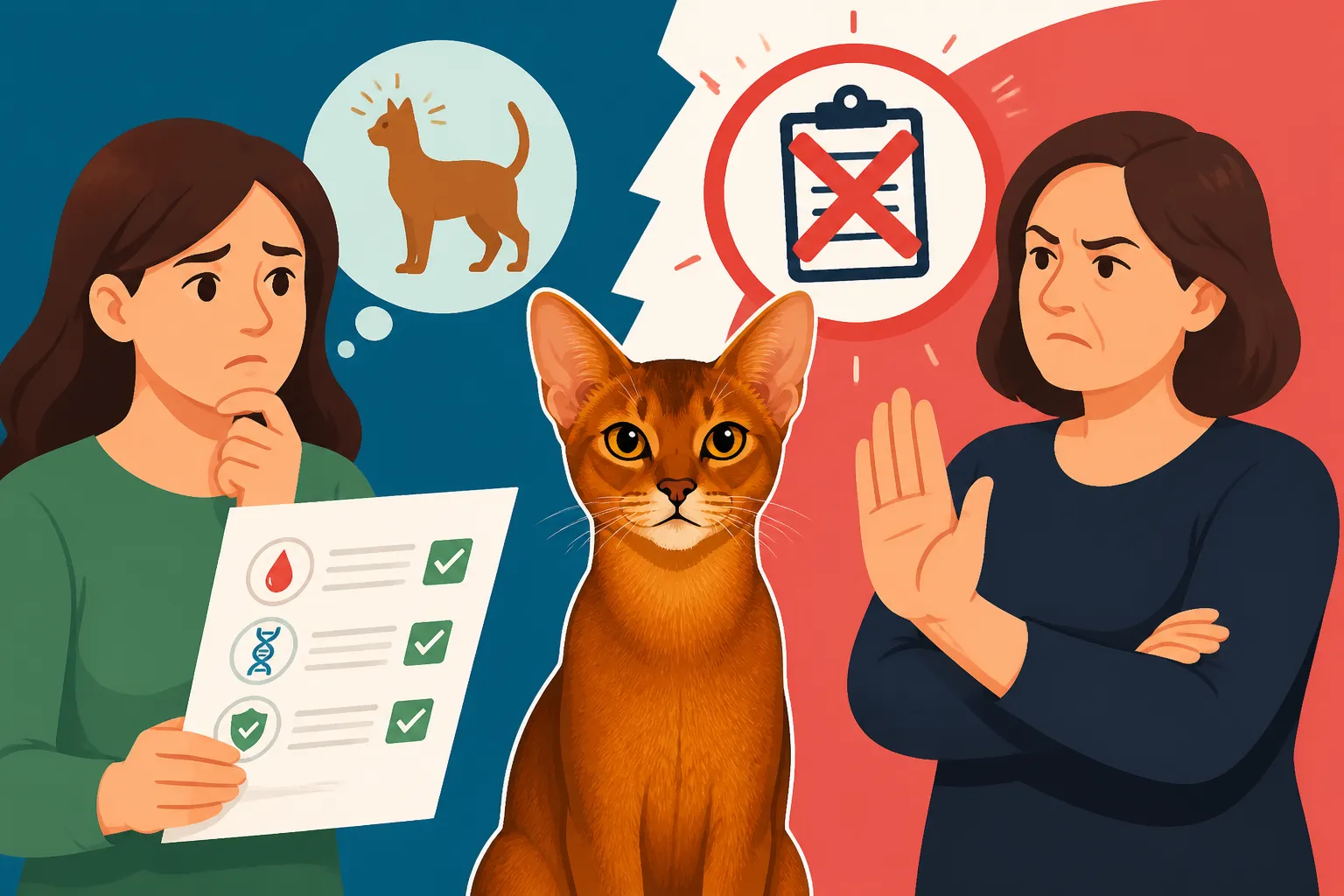
It's incredibly frustrating, isn't it? You've fallen head over heels for the pictures of an adorable Abyssinian kitten, imagined all the fun and mischief it will bring into your home, only to hit a wall when you ask about health testing. A breeder who refuses to share crucial health information is a giant red flag, and it can feel disheartening and confusing. This guide is here to walk you through exactly what those test results mean, why they're non-negotiable for a healthy Abyssinian, and what steps you absolutely must take when a breeder isn't transparent.
Understanding the Importance of Health Testing for Abyssinians
When you bring an Abyssinian into your home, you're not just getting a cat; you're welcoming a vibrant, intelligent, and energetic family member. But unlike a generic domestic shorthair, pedigree breeds like the Abyssinian can carry genetic predispositions to certain health conditions. This isn't a fault of the breed itself, but a consequence of careful breeding to maintain specific traits, which can sometimes concentrate less desirable genes. That's why health testing isn't just a "nice-to-have"; it's a fundamental pillar of responsible breeding and a safeguard for your future companion.
Why Health Testing Isn't Optional for This Breed
For an Abyssinian, health testing is absolutely paramount. These cats are generally robust, but they do have known genetic conditions that can cause significant suffering and expense if not screened for. Think of it like buying a house; you'd never skip a home inspection, right? Health tests are your Abyssinian's pre-purchase inspection. Reputable breeders invest in these tests precisely because they care deeply about the welfare of the kittens they produce and want to ensure they're sending healthy, well-adjusted pets into the world. They understand that a few hundred dollars on testing now can prevent thousands in vet bills and heartbreak later.
It's about minimizing risk wherever possible. While no test can guarantee a cat will never get sick, ruling out known genetic diseases like Pyruvate Kinase Deficiency or progressive retinal atrophy is a huge step. These aren't minor issues; they can lead to chronic illness, blindness, or even premature death. A breeder who dismisses these concerns is essentially telling you they're willing to gamble with a kitten's health and your emotional and financial well-being.
The Specific Tests Your Abyssinian Should Have
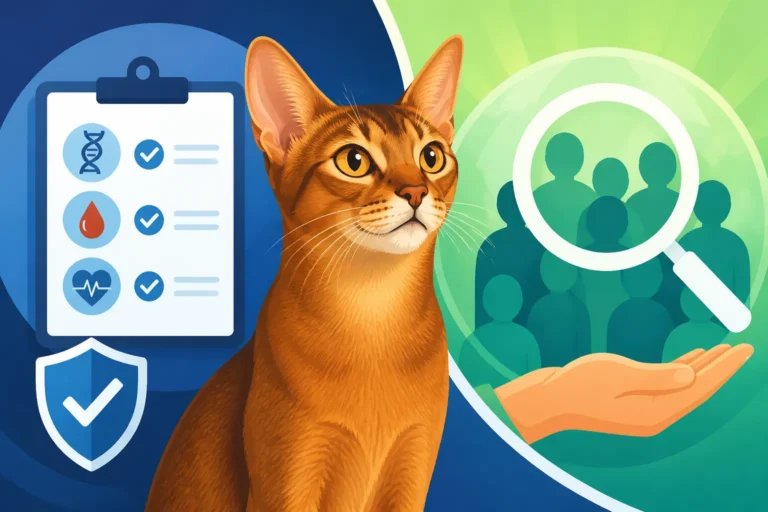
When it comes to Abyssinians, there are two primary DNA tests that every parent cat should have before breeding. These are easily done via a cheek swab and are non-invasive.
Firstly, there's the test for Pyruvate Kinase Deficiency (PK Deficiency). This is a red blood cell disorder that can lead to intermittent or chronic anemia. An affected cat might be fine one day, then suddenly lethargic and pale the next. It’s a serious condition, and you really need to understand What PK Deficiency Does to an Abyssinian's Red Cells. Secondly, there's the test for Progressive Retinal Atrophy (PRA-rdAc). This is an inherited eye disease that causes the retina to degenerate over time, leading to blindness. It's heartbreaking to watch a vibrant cat lose its sight, and knowing if your kitten's parents are clear for this is vital. You can learn more about How PRA-rdAc Blinds an Abyssinian Slowly.
Beyond these DNA tests, there's another significant concern for Abyssinians: Renal Amyloidosis. This is a devastating kidney disease where abnormal proteins called amyloid are deposited in the kidneys, leading to kidney failure, often at a tragically young age. The tricky part? There's no specific gene test for this condition. For Renal Amyloidosis Is the Abyssinian Problem Nobody Can Test For, a breeder's transparency about the health history of their breeding lines – especially grandparents and great-grandparents – is absolutely critical. They should be able to discuss longevity and causes of death within their lines. A good breeder will freely tell you What an Abyssinian Breeder Should Have Tested Before You Buy.
For DNA tests, results usually come back as "Clear" (meaning the cat doesn't carry the gene), "Carrier" (the cat carries one copy of the gene but is unaffected itself), or "Affected" (the cat has two copies of the gene and will develop or has the disease). A reputable breeder will only ever breed a carrier to a clear cat to prevent affected kittens.
Decoding a Breeder's Refusal and What It Might Mean
When a breeder hedges or outright refuses to provide health test results, your alarm bells should be ringing louder than a cat knocking over a stack of tins. It’s not just a minor inconvenience; it's a serious indicator that something might be amiss, and it puts your potential future cat at significant risk.
Common Excuses and Why They Don't Hold Up
You'll hear all sorts of excuses, but none of them are valid when it comes to responsible breeding:
- "The parents are healthy, so no need to test." This is perhaps the most common, and most dangerous, excuse. A cat can be a carrier for a genetic disease like PK Deficiency or PRA-rdAc and appear perfectly healthy its entire life. It might never show symptoms, but it can absolutely pass on the faulty gene to its kittens. If two carriers are bred together, statistically, 25% of their offspring will be affected by the disease. This excuse shows a fundamental misunderstanding, or worse, willful ignorance, of basic genetics.
- "It's too expensive/too much trouble." The cost of an Abyssinian kitten is already substantial, reflecting the breeder's investment in quality care, breeding stock, and registration. The cost of a DNA panel for an Abyssinian is a small fraction of the kitten's purchase price and an even smaller fraction of what treating an affected cat would cost. You can look into How Much an Abyssinian DNA Panel Costs. This excuse suggests a lack of commitment to ethical breeding practices. Ordering the tests is as simple as a cheek swab and mailing it to a lab. It's neither expensive nor particularly troublesome for a dedicated breeder.
- "My vet said it's fine." A general veterinary check-up is wonderful for overall health, but it does not replace specific DNA testing for genetic diseases. Unless the vet performed the specific genetic tests (and provided the lab results), this statement is irrelevant. It's a deflection, implying their vet's opinion is enough when it clearly isn't for inherited conditions.
- "We don't believe in those tests." This is a huge red flag. Genetic science isn't a matter of belief; it's factual. Breeders who say this are either deeply misinformed, or they are intentionally avoiding testing because they know their cats carry undesirable genes and they don't want to disclose that information. This kind of attitude is completely unacceptable in responsible animal husbandry.
Red Flags Beyond Just Missing Test Results
A breeder's refusal to provide test results often isn't an isolated incident. It can be part of a larger pattern of questionable practices. Look out for these other red flags:
- No Contract or Health Guarantee: A reputable breeder will always provide a written contract outlining responsibilities, including a health guarantee for genetic conditions. This protects both you and the kitten. If there's no contract, or the health guarantee is vague or non-existent, run, don't walk. You should familiarize yourself with What an Abyssinian Health Guarantee Actually Promises.
- Kittens Leaving Too Young: Abyssinian kittens should never leave their mother before 12-14 weeks of age. This allows them crucial time for socialization, vaccination, and weaning. If a breeder is pushing kittens out the door at 8 or 10 weeks, they're prioritizing quick sales over proper development.
- Unclean or Overcrowded Cattery: When you visit (and you should always visit!), pay attention to the environment. Is it clean? Do the cats seem well-cared for? Are there too many cats for the space? A cramped, unhygienic environment is a breeding ground for illness and stress.
- Inability to Meet Parents (Especially the Mother): A responsible breeder will be proud to show you the kitten's mother (and ideally, the father or proof of his health tests if he's off-site). If they make excuses about why you can't see the queen, it could mean she's unhealthy, poorly socialized, or not even truly the mother.
- Pressure to Buy Immediately: High-pressure sales tactics are a major warning sign. A good breeder wants the best home for their kittens, not just a quick sale. They will ask you questions to ensure you're a good fit.
- Unusually Low Price: While Abyssinian kittens are definitely an investment, an impossibly low price for a pedigree cat is almost always too good to be true. As the saying goes, Why an Abyssinian Sold Cheap Is Usually Untested. These breeders are cutting corners, and health testing is often the first thing to go.
Your Action Plan When a Breeder Won't Cooperate
It's a tough spot to be in, feeling excited about a kitten but encountering resistance from a breeder. Your instinct might be to make excuses for them or hope for the best, but when it comes to the health and well-being of a living creature, hoping isn't a strategy. You need a clear plan of action to protect yourself and, more importantly, the kitten.
Politely Insisting on Transparency
Your first step should be to clearly and politely reiterate your request for health test documentation. Be specific: you need to see the official lab results for both the sire (father) and dam (mother) for PK Deficiency and PRA-rdAc. Ask for copies of the certificates. A breeder with nothing to hide will be happy to provide these. In fact, most reputable breeders will proactively offer them and discuss their health program at length.
If they continue to deflect or make excuses, you can try offering to cover the cost of the tests yourself, if you truly believe they're simply unorganized rather than deceitful. However, this is a rare scenario. Most dedicated breeders already have a testing regimen in place. If they hesitate at this point, or still refuse, it's a very strong indicator that you should walk away. Remember, you're looking for verifiable proof, not just a verbal assurance. You're simply asking to How to Verify an Abyssinian's Test Certificate properly.
This insistence isn't about being difficult; it's about being a responsible pet owner. You are advocating for the health of an animal that cannot advocate for itself. A reputable breeder will respect your diligence and your commitment to ensuring a healthy start for your new family member.
Walking Away and Finding a Reputable Source
This is often the hardest part, especially if you've already bonded with pictures or met a kitten. But you must be prepared to walk away. The emotional and financial cost of bringing home an Abyssinian with a serious genetic illness can be devastating. What might seem like a "deal" on an untested kitten can quickly become tens of thousands of dollars in veterinary bills, not to mention the immense heartache of watching your beloved pet suffer. Think about How Much an Abyssinian's First Year Adds Up To, and then imagine those costs multiplied by chronic illness.
Instead, invest your time and energy into finding a truly reputable breeder. Start with breed clubs, like The Cat Fanciers' Association (CFA) or The International Cat Association (TICA), which often have lists of member breeders who adhere to their ethical guidelines. These organizations also provide valuable resources on How to Vet an Abyssinian Breeder Before Paying. Ask for references from previous kitten buyers. Be patient; good breeders often have waiting lists, but it’s worth the wait for a healthy, well-socialized kitten.
Don't forget to consider adoption! Sometimes, adult Abyssinians end up in rescue. A good Abyssinian rescue organization will also health screen their cats, provide known history, and ensure they're matched with the right home. This can be a wonderful option for getting a purebred cat without supporting potentially unethical breeding practices.
When you do find a reputable breeder, consider pet insurance like Healthy Paws. While it won't cover pre-existing conditions (which is why testing is so vital!), it can be a lifesaver for unexpected accidents or illnesses. Checking Whether Pet Insurance Is Worth It for an Abyssinian is always a good idea. Also, be prepared to provide a high-quality diet; active Abyssinians burn a lot of calories. Premium cat foods and fresh meal subscriptions can certainly impact Which Food Budget Suits a High Energy Abyssinian. These are considerations for any healthy Abyssinian, let alone one with potential health issues.
Verifying Health Claims and Protecting Your Investment
Once you've found a breeder who does provide test results, your job isn't quite over. Just like any important document, it's wise to know how to verify its authenticity and understand what it truly means for your kitten. This diligence is part of protecting your long-term investment in your Abyssinian's health and happiness.
How to Verify Test Certificates
When a breeder presents you with health test certificates, take a moment to examine them closely.
- Look for Official Lab Headers: The document should clearly state the name of the genetic testing laboratory, such as Optimal Selection, Wisdom Panel, or similar recognized veterinary genetics labs. It shouldn't be a generic printout or a handwritten note.
- Check for Unique Identifiers: Each certificate should have a unique case number, sample ID, or certificate number. This allows for traceability.
- Match Cat Details: Ensure the cat's registered name, breed, and microchip number (if applicable) on the certificate match the information provided for the parents.
- Review the Results: Confirm that both parents are "Clear" for both PK Deficiency and PRA-rdAc, or that at least one parent is "Clear" if the other is a "Carrier" for a specific condition. Remember, two carriers should never be bred together as that risks "Affected" kittens.
- Public Databases: Some genetic testing labs and breed registries maintain public databases where you can search for a cat's test results using their registered name or microchip number. Ask the breeder if their cats' results are publicly verifiable, as many responsible breeders ensure they are.
If anything looks suspicious, or if the breeder provides something that seems unprofessional or incomplete, ask for clarification. Don't be shy about requesting the actual lab reports, not just summaries. A transparent breeder will appreciate your thoroughness.
The Real Cost of Skipping Health Checks
It’s tempting to look at a cheaper, untested kitten and think you're saving money upfront. However, this is almost always a false economy that leads to far greater costs down the line – both financially and emotionally.
Consider a hypothetical scenario: You purchase an Abyssinian kitten from a breeder who refused to show you test results. A few years later, your energetic Aby starts showing signs of extreme lethargy, pale gums, and a lack of appetite. A trip to the vet reveals severe anemia, and after extensive diagnostics, your cat is diagnosed with PK Deficiency. Treatment might involve blood transfusions, ongoing medication, and possibly even a splenectomy, all of which come with significant costs that can quickly add up to thousands of dollars. These are not one-off expenses; managing a chronic condition like this requires continuous veterinary care and commitment.
Similarly, if your Abyssinian starts bumping into furniture and slowly losing its sight due to PRA-rdAc, while the emotional toll is immense, the financial costs might include specialist ophthalmologist visits, ongoing management, and adjustments to your home to ensure their safety. Whether Anything Slows Retinal Atrophy in an Abyssinian is a common question, and unfortunately, there's often little that can be done.
These scenarios illustrate why the initial savings from an untested kitten are dwarfed by the potential long-term costs. A good health guarantee from a reputable breeder can sometimes provide recourse for genetic conditions that emerge early, but if you skip the testing and buy from a questionable source, you'll have little to no protection. It's an investment in peace of mind, knowing that you've done everything you can to ensure your Abyssinian has the best possible start in life and the greatest chance for a long, healthy future.
| Feature | Reputable Breeder | Questionable Breeder (Red Flags) |
|---|---|---|
| Health Testing | Provides verifiable DNA results (PK, PRA) for parents; discusses amyloidosis lines. | Refuses, makes excuses, claims "vet said okay." |
| Transparency | Welcomes questions, allows visits, shows all paperwork. | Avoids questions, pushes for quick sale, hides parents/cattery. |
| Contract & Guarantee | Comprehensive written contract with health guarantee. | No contract, vague, or no guarantee. |
| Kitten Age at Placement | 12-14 weeks minimum, fully vaccinated. | Sells kittens at 8-10 weeks or younger. |
| Cattery Environment | Clean, spacious, well-socialized cats. | Unclean, overcrowded, poorly socialized cats. |
| Price | Reflects investment in health, care, and breeding lines. | Unusually low, often to attract buyers quickly. |
| Support After Sale | Offers ongoing advice and support. | Disappears after sale, offers no post-purchase help. |
| Registries/Clubs | Members of recognized breed clubs (CFA, TICA). | Unaffiliated or claims obscure registries. |
Disclaimer
This article is for general informational purposes only and does not constitute professional advice. Laws, prices and regulations vary by location and change over time. Consult a qualified professional for guidance on your specific situation.