Why Abyssinian Breeders Test for Long Hair
It can be quite a surprise for prospective Abyssinian owners to learn that their beloved short-haired, ticked-coat marvel can, in fact, produce kittens with long hair. While the Abyssinian is renowned for its sleek, close-lying coat, the genetics behind it hold a fascinating secret. This guide will walk you through why Abyssinian breeders diligently test their cats for the long hair gene, ensuring the preservation of the breed's distinct characteristics and managing unexpected outcomes.
The Genetic Dance of the Abyssinian Coat
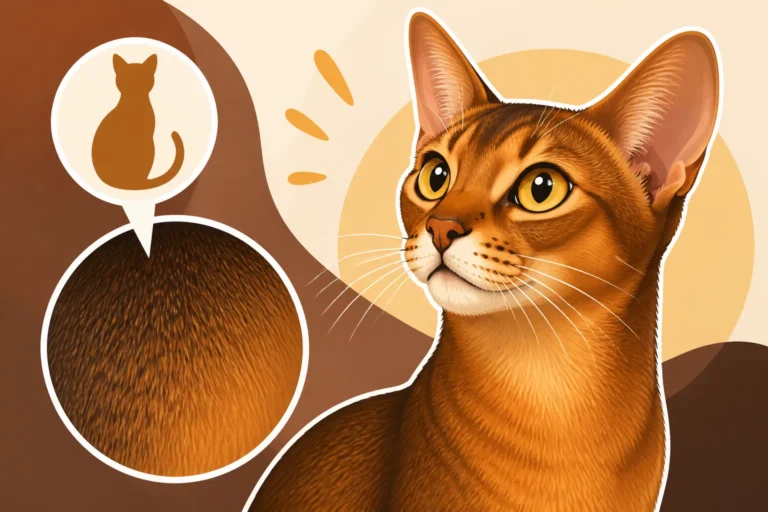
The Abyssinian's signature short, finely ticked coat isn't just a matter of appearance; it's deeply rooted in its genetic makeup. Understanding these genetic underpinnings is crucial for breeders aiming to maintain the breed standard and for owners who simply want to know more about their feline companions.
Understanding the Short Hair Dominance
In the world of cat genetics, the short hair trait is almost universally dominant. This means that a cat only needs one copy of the "short hair" gene to display a short coat. We often refer to these genes as alleles, and for coat length, they are typically denoted as 'L' for short hair (dominant) and 'l' for long hair (recessive). If an Abyssinian inherits even one 'L' allele, its coat will be short.
This is why, on the surface, you might have two beautiful, perfectly standard Abyssinians with short coats. They look every bit the part, with that characteristic shimmering, banded fur. However, without genetic testing, there’s no way to know if they carry a hidden secret. They could be genetically LL (two copies of the short hair gene), or they could be Ll (one short, one long). The Ll cat, despite having a short coat, is a carrier of the long hair gene. This genetic subtlety is a huge part of the challenge and fascination for dedicated breeders.
The Recessive Long Hair Gene
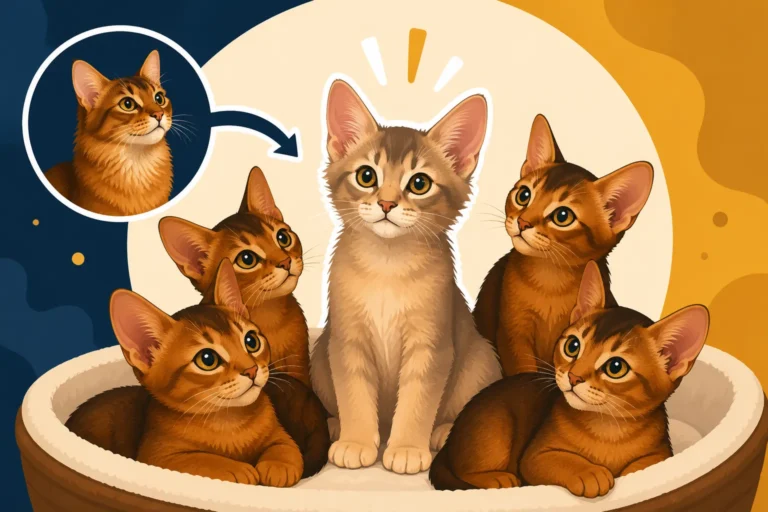
The intrigue truly begins with the recessive 'l' allele. If an Abyssinian inherits two copies of this recessive gene – one from each parent – it will express long hair. This can lead to a truly unexpected sight: a litter of typical short-haired Abyssinian kittens, with one or two fluffy, long-haired siblings nestled among them. Imagine the surprise! Breeders often find this initially perplexing if they haven't tested their breeding cats.
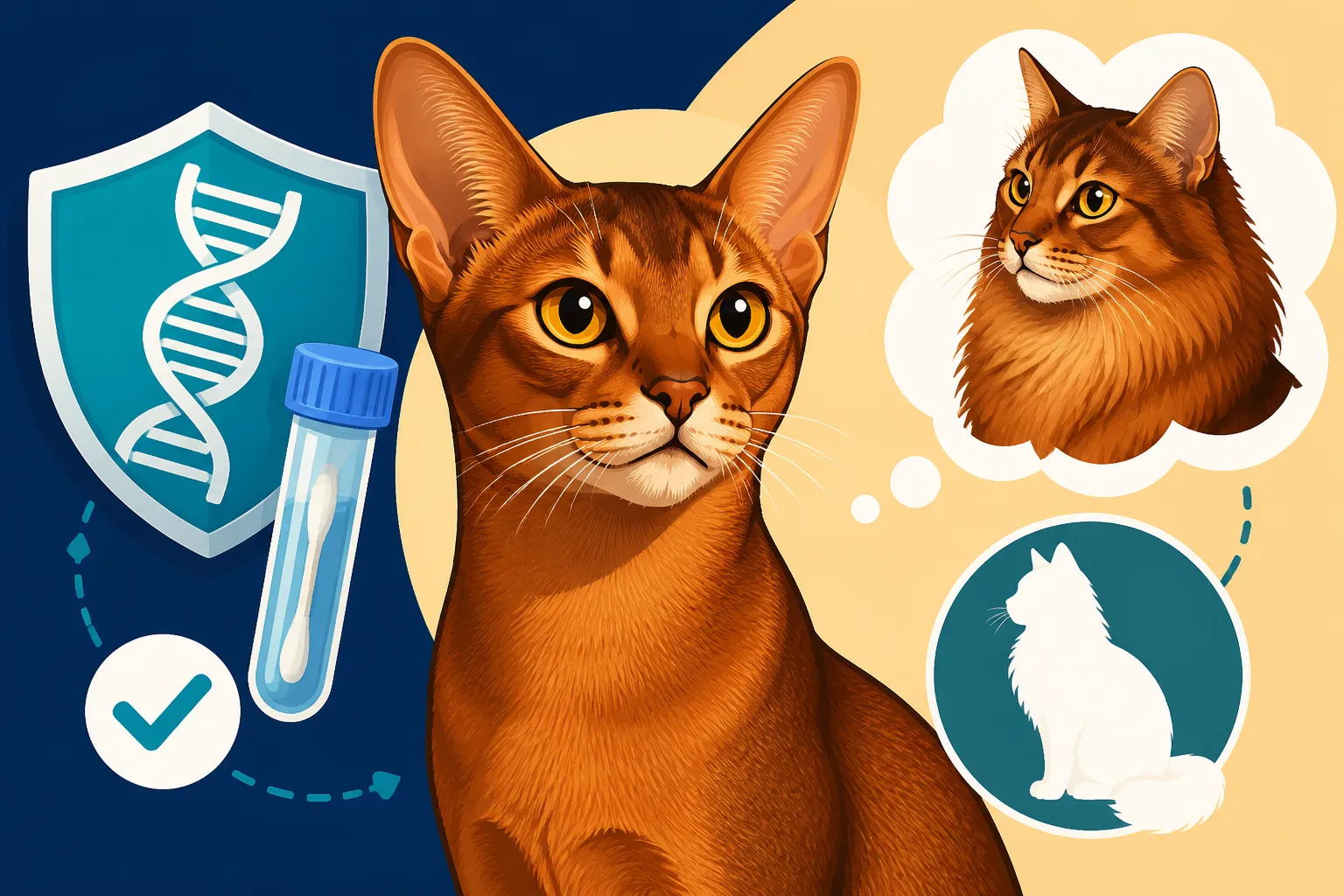
These long-haired kittens, while undeniably adorable, are genetically identical to the breed we know as the Somali. In fact, the Somali breed itself originated from Abyssinians that carried and expressed this recessive long-hair gene. For a breeder dedicated to producing Abyssinians, the appearance of a Somali-type kitten can be a moment of confusion, especially if they weren't expecting it. It's a clear signal that both parents, despite their short coats, were carriers of the long hair gene (Ll x Ll). This is a prime example of why understanding genetics goes beyond just what you can see. You can delve deeper into this phenomenon by reading How a Somali Turns Up in an Abyssinian Litter.
Why the Long Hair Gene Matters to Abyssinian Breeders
For responsible Abyssinian breeders, genetic testing for coat length isn't just a casual exercise; it's a fundamental part of their breeding program and commitment to the breed. It impacts everything from maintaining breed standards to managing expectations for new owners.
Maintaining Breed Standard Purity
The Abyssinian breed standard, set by major cat registries like the Cat Fanciers' Association (CFA) and The International Cat Association (TICA), is very specific. It unequivocally calls for a short, fine, close-lying coat with a distinct ticking pattern. Long hair is considered a disqualifying fault in the show ring. This means an otherwise perfect Abyssinian, if it displayed long hair, could not compete as an Abyssinian.
Breeders pour immense time, effort, and resources into producing kittens that adhere to this standard. They select breeding pairs based on conformation, temperament, and health, all with the goal of improving the breed. To inadvertently produce long-haired kittens goes against the very essence of what they are trying to achieve for the Abyssinian breed. It's about upholding the integrity of the breed's defining characteristics, ensuring that what makes an Abyssinian an Abyssinian is consistently passed down. The effort to maintain that precise, short, ticked coat is paramount. You can learn more about the desired coat characteristics by checking out What an Abyssinian's Coat Should Feel Like in the Ring.
Preventing Accidental Somali Litters
The Somali cat is often called "the long-haired Abyssinian," and for good reason—they share the same genetic lineage, with the Somali simply expressing the recessive long-hair gene. While Somalis are a wonderful breed in their own right, an Abyssinian breeder is focused on producing Abyssinians. If long-haired kittens appear in an Abyssinian litter, they cannot be registered or sold as Abyssinians. They may be registered as Somalis, if the breeder is also working with that breed, or simply sold as "pet quality" long-haired Abyssinians, often at a different price point than their short-haired siblings. This can complicate placement and might confuse new owners who specifically sought a short-haired Abyssinian.
The financial and reputational implications for a breeder are significant. An unexpected long-haired kitten might be harder to place, and if a buyer was expecting a traditional Abyssinian, it could lead to disappointment. This is why many Abyssinian breeders will test their breeding cats for the long hair gene to proactively prevent such surprises. Knowing the genetic status allows breeders to make informed pairing decisions to either avoid the long hair gene entirely or to responsibly plan for Somali offspring if that is part of a separate, intentional breeding program. This history is quite fascinating, and you can read Why the Long Hair Gene Was in Abyssinians All Along for more context.
The Practicalities of Long Hair Testing
Given the importance of maintaining breed standards and managing genetic traits, modern Abyssinian breeders rely heavily on DNA testing. It's a straightforward process that offers invaluable insight into their cats' genetic makeup.
How the DNA Test Works
Thankfully, determining an Abyssinian's long hair status is incredibly simple thanks to modern genetic science. Breeders typically take a small, non-invasive cheek swab from their cats. This sample contains enough DNA for laboratories to analyze. The test specifically looks for mutations in the FGF5 gene, which is known to be responsible for long hair in cats.
The results are usually clear-cut and will tell a breeder one of three things:
- L/L (Homozygous Short Hair): This cat carries two copies of the dominant short hair gene. It will always have short hair and cannot pass on the long hair gene to its offspring.
- L/l (Heterozygous Short Hair/Carrier): This cat has a short coat but carries one copy of the recessive long hair gene. It will pass on the long hair gene to approximately half of its offspring.
- l/l (Homozygous Long Hair): This cat has two copies of the recessive long hair gene, meaning it will have long hair. All of its offspring will receive at least one copy of the long hair gene.
These results empower breeders to make smart decisions. Reputable genetic testing labs offer comprehensive panels that include tests for other important Abyssinian health concerns, such as Pyruvate Kinase Deficiency and PRA-rdAc. How the Abyssinian's DNA Panel Is Ordered provides a deeper look into this process. These panels can often be ordered through various suppliers, with many breeders finding reliable options through retailers like Chewy, who sometimes offer or partner with testing services for convenience.
Breeding Decisions Based on Test Results
Once a breeder has the genetic test results, they can make highly informed decisions about breeding pairs. This proactive approach helps them control the genetic outcome of their litters.
For example, if a breeder's goal is exclusively Abyssinians with short coats, they will ideally breed two L/L cats together. This pairing guarantees that all kittens will be L/L and therefore short-haired, with no risk of carrying the long-hair gene. Another safe option is to breed an L/L cat with an L/l carrier. In this scenario, all kittens will have short coats (50% L/L, 50% L/l), but half of them will be carriers. These carriers can then be selectively bred only with L/L partners in the future to ensure no long-haired kittens are produced.
The critical pairing to avoid, if aiming solely for short-haired Abyssinians, is two L/l carriers. This combination carries a 25% chance of producing l/l (long-haired) kittens, a 50% chance of producing L/l (carrier) kittens, and a 25% chance of producing L/L (clear) kittens. While these long-haired kittens are perfectly healthy, they don't fit the Abyssinian breed standard.
This table illustrates the potential outcomes:
| Parent 1 Genetic Status | Parent 2 Genetic Status | Offspring Possibilities (Phenotype) | Offspring Possibilities (Genotype) |
|---|---|---|---|
| LL (Short Hair) | LL (Short Hair) | 100% Short Hair | 100% LL |
| LL (Short Hair) | Ll (Short Hair Carrier) | 100% Short Hair | 50% LL, 50% Ll |
| Ll (Short Hair Carrier) | Ll (Short Hair Carrier) | 75% Short Hair, 25% Long Hair | 25% LL, 50% Ll, 25% ll |
| LL (Short Hair) | ll (Long Hair) | 100% Short Hair | 100% Ll |
| Ll (Short Hair Carrier) | ll (Long Hair) | 50% Short Hair, 50% Long Hair | 50% Ll, 50% ll |
| ll (Long Hair) | ll (Long Hair) | 100% Long Hair | 100% ll |
Reputable breeders embrace this testing as an ethical responsibility. It's not just about avoiding "mistakes," but about being transparent with potential buyers and ensuring the health and integrity of the Abyssinian breed. This level of diligence provides confidence for new owners, knowing their kitten comes from a carefully planned litter. Why a Breeder Should Show You the Abyssinian Parents' Results goes into more detail about this transparency.
The Impact of Not Testing for Long Hair
Choosing not to test breeding Abyssinians for the long hair gene can have a ripple effect, impacting not just the breeder but also the future owners and the breed itself. It introduces an element of unpredictability that modern, responsible breeding practices aim to eliminate.
Unpredictable Litters and Unexpected Costs
Without genetic testing, a breeder risks having an entire litter of Abyssinian-looking cats suddenly produce one or more long-haired kittens. This isn't a health concern, but it does mean those kittens cannot be marketed or sold as standard Abyssinians. Instead, they might be offered as "pet quality" long-haired Abyssinians, or if the breeder has connections to Somali registries, potentially as Somalis. This often translates to a different pricing structure, and sometimes, difficulty finding suitable homes for cats that don't fit the expected short-haired Abyssinian mold. Why a Longhair Abyssinian Kitten Is Priced Apart explains more about this differentiation in pricing.
Beyond the initial sale, owners of these long-haired Abyssinians might face slightly different care requirements. While Abyssinians are known for their minimal grooming needs, a long-haired variant will naturally require more brushing to prevent mats and keep their coat healthy. This could be an unexpected adjustment for a new owner who was specifically seeking the low-maintenance grooming of a short-haired Abyssinian. While generally healthy, ensuring overall wellness for any purebred is critical, and pet insurance providers like Healthy Paws can offer peace of mind for unexpected veterinary costs, regardless of coat length.
Maintaining Buyer Confidence
Today's pet owners are more informed than ever, and they expect transparency and rigorous health screening from reputable breeders. Testing for the long hair gene, alongside essential health checks like those for Pyruvate Kinase Deficiency (PKD) and Progressive Retinal Atrophy (PRA-rdAc), is a hallmark of a responsible Abyssinian breeder. Which Two DNA Tests an Abyssinian Must Have covers the critical genetic tests.
When a breeder can provide documentation confirming the genetic status of their breeding cats and the absence of the long hair gene in their Abyssinian lines, it instills significant confidence in potential buyers. It assures them that they are getting a purebred Abyssinian that meets the breed standard, free from genetic surprises regarding coat length. Conversely, a breeder who shrugs off genetic testing might raise red flags, suggesting a lack of commitment to the breed's integrity or potentially cutting corners. For many, the investment in a purebred Abyssinian kitten is substantial, and knowing the breeder has done their due diligence, including genetic screening, makes that investment feel much more secure. This transparency is key to building trust and ensuring happy, well-matched placements for every kitten.
Disclaimer
This article is for general informational purposes only and does not constitute professional advice. Laws, prices and regulations vary by location and change over time. Consult a qualified professional for guidance on your specific situation.