Why Ten Minutes of Play Is Not Enough for an Abyssinian
If you've ever owned an Abyssinian, you know they are magnificent, energetic creatures. But many new owners quickly learn that a quick ten-minute flutter of a feather wand just isn't cutting it for these dynamic felines, leading to frustrated cats and bewildered humans. This guide will dive deep into why your Abyssinian demands more than minimal playtime and offer realistic strategies to keep their brilliant minds and agile bodies truly engaged.
The Abyssinian's Innate Drive for Activity
The Abyssinian isn't just a cat; it's a whirlwind of energy, curiosity, and intelligence wrapped in a sleek, ticked coat. They are often called the "Clowns of the Cat World" or "Dogs of the Cat World" for good reason – their activity levels far surpass many other breeds, and their minds are constantly seeking stimulation. To understand why a mere ten minutes of play is insufficient, you first need to appreciate the inherent nature of this breed.
A Legacy of Relentless Energy
Imagine a cat that’s perpetually in motion, always observing, always planning its next adventure. That's an Abyssinian. Their lean, muscular bodies are built for speed, agility, and endless exploration. Unlike some of their fluffier, more sedentary cousins, Abyssinians possess a genetic predisposition for high activity, a trait that’s been carefully preserved through generations of breeding. They don't have the heavy undercoat that might slow down other breeds, meaning they can sustain bursts of energy without easily overheating. This means they can keep going, and going, and going, long after a short play session has ended. They seem to pull energy out of thin air, and a quiet Abyssinian is often a cause for concern, not a sign of a well-rested cat. How Many Hours a Day an Abyssinian Stays Active delves into just how much activity they need.
Their high metabolic rate and keen senses mean they are always "on." They track every movement, every sound, and are constantly processing their environment. This isn't just about physical exercise; it's about channeling that inherent drive. If their energy isn't directed constructively, it will find its own outlets, often in ways that are less than ideal for your household items or your peace of mind. Keeping them in peak physical condition also contributes to their overall health, as Why a Lean Abyssinian Hides Illness Longer Than a Heavy Cat explains, their lithe build can mask illness effectively.
More Than Just Physical Exercise
While zoomies and aerial acrobatics are a big part of an Abyssinian's day, their play needs extend far beyond simple physical exertion. These are incredibly intelligent cats, and their minds need just as much stimulation as their bodies. Think of them as tiny, furry problem-solvers. They thrive on challenges, puzzles, and activities that mimic hunting and foraging in the wild. A repetitive back-and-forth with a laser pointer, while engaging for a moment, doesn't satisfy their deeper cognitive needs.
True enrichment for an Abyssinian involves engaging their hunting instincts, their natural curiosity, and their capacity for learning. This means incorporating games that require them to strategize, explore, and "earn" their rewards. Without this mental workout, even a physically tired Abyssinian can quickly become bored, leading to the kind of restless energy that manifests in less desirable ways. Why Foraging Suits an Abyssinian's Mind is a great resource if you're looking for more ways to engage their natural intelligence.
The Pitfalls of Insufficient Playtime
When an Abyssinian isn't given adequate opportunities to express its natural energy and intelligence, problems inevitably arise. It's not about being "naughty" or "stubborn"; it's a direct symptom of unmet needs. Understanding these consequences can help owners recognize the signs and adjust their approach before frustration builds on both sides.
Destructive Behaviors and Misdirected Energy
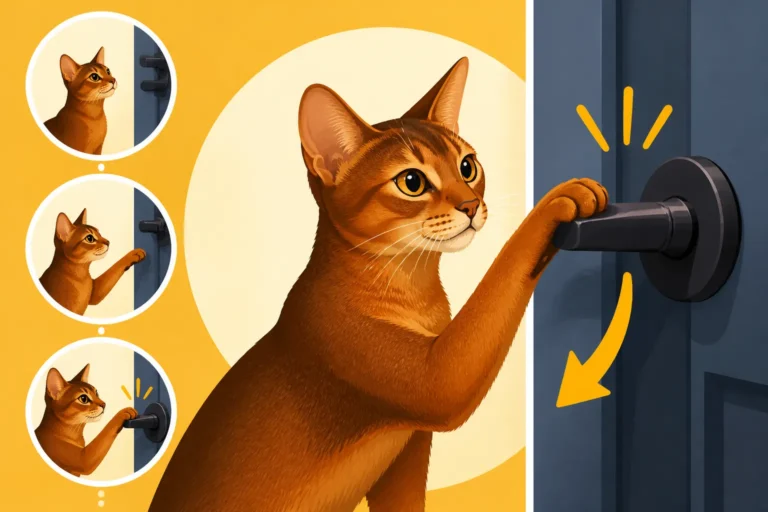
An under-stimulated Abyssinian doesn't simply lie down and accept its fate. Instead, it becomes a furry, four-legged force of nature, finding its own ways to entertain itself – often at your expense. This commonly manifests as destructive behaviors around the house. You might find your usually pristine shelves suddenly devoid of ornaments, or your favorite houseplant inexplicably shredded. They are master climbers and explorers, and without appropriate outlets, your kitchen counters, bookshelves, and even the tops of your cabinets become their personal playgrounds. Why an Abyssinian Ends Up on Top of the Fridge is a testament to their climbing prowess!
Chewing on inappropriate items, like electrical cords or furniture corners, is another common sign of boredom. Why an Abyssinian Chews Cables outlines the dangers and reasons behind this behavior. They might also develop a penchant for "collecting" small, shiny objects, hiding them away in secret stashes. What an Abyssinian Steals and Hides details this quirky habit that, while sometimes amusing, can be a nuisance if your keys or jewelry go missing. These aren't malicious acts; they are desperate attempts to engage their keen minds and agile bodies in the absence of structured, stimulating play. Providing plenty of appropriate outlets, like sturdy cat trees and interactive toys, is key. You can find a wide range of durable climbing structures and puzzle toys on Amazon.
The Silent Toll of Boredom
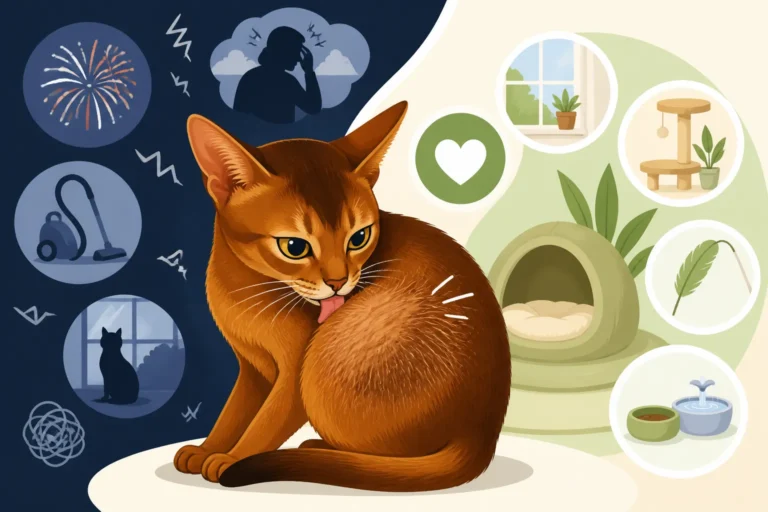
Beyond the visible chaos, insufficient play takes a silent, yet significant, toll on an Abyssinian's well-being. A perpetually bored cat can become stressed, anxious, and even withdrawn. While Abyssinians are known for their vivacious personalities, a subtle shift in their demeanor can signal an underlying issue. They might start overgrooming, licking patches of fur excessively until the skin is irritated, as a self-soothing mechanism. Why a Stressed Abyssinian Overgrooms highlights this often-overlooked symptom.
Some Abyssinians might become more vocal, incessantly meowing or chirping for attention, not because they are hungry, but because they are craving engagement. Others might become unusually quiet or lethargic, a red flag for any Abyssinian owner, as these cats are rarely still for long. What a Quiet Abyssinian Is Telling You is an important read for recognizing these subtle signs of distress. Over time, chronic boredom and stress can contribute to a weakened immune system, leading to other health issues. It's a stark reminder that play isn't just a luxury for Abyssinians; it's a fundamental component of their physical and psychological health.
Crafting an Effective Abyssinian Play Schedule
The good news is that meeting your Abyssinian's play needs doesn't require you to quit your job and become a full-time cat entertainer. It's about smart, consistent engagement that integrates seamlessly into your daily life. The key is understanding how to structure play sessions and diversifying the types of activities you offer.
Understanding the "Play Session" Concept
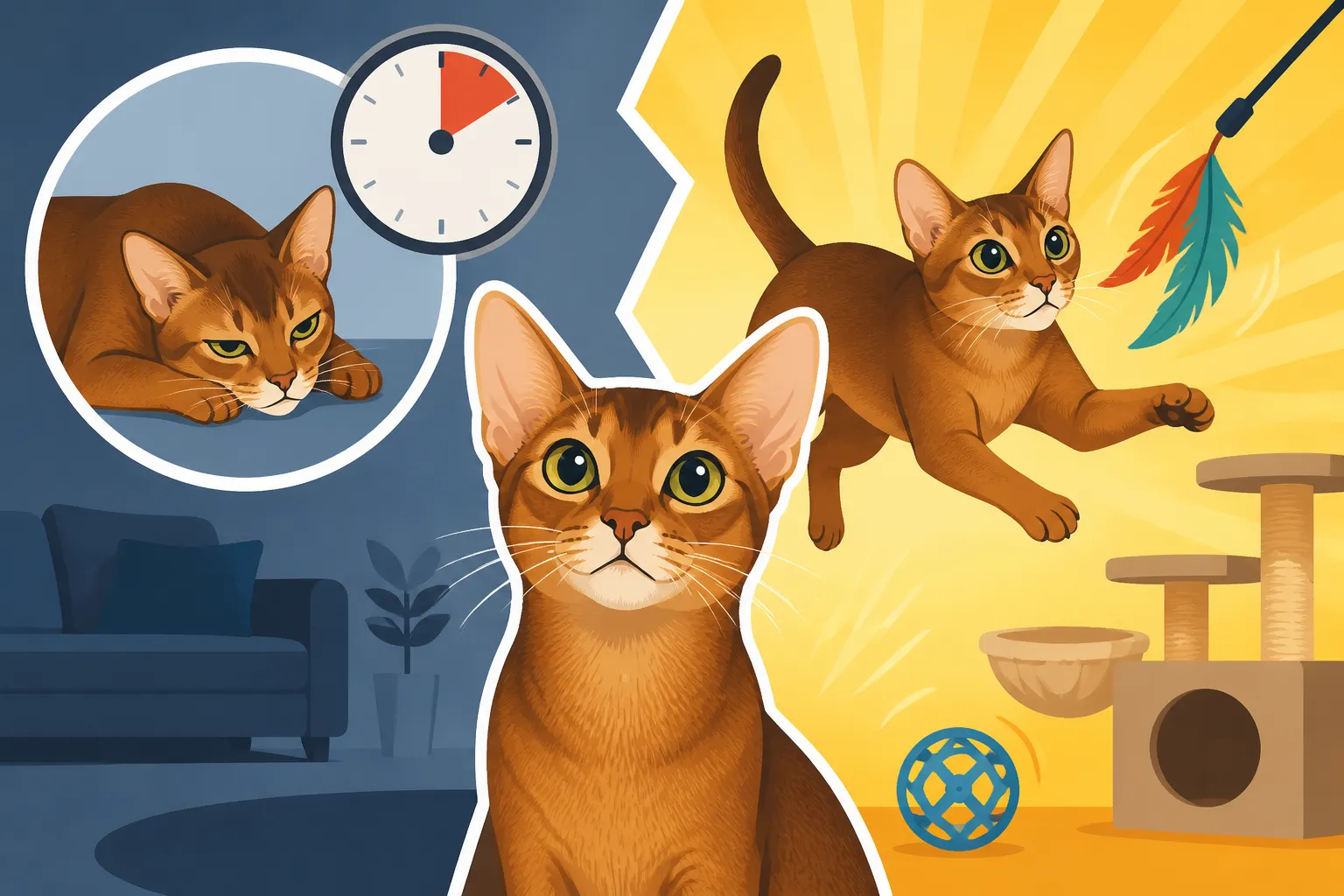
For an Abyssinian, one long, drawn-out play session is often less effective than several shorter, more intense bursts of activity spread throughout the day. Think about a wild cat's hunting patterns: short, explosive efforts followed by periods of rest. Your Abyssinian's predatory instincts mirror this. A single ten-minute session simply isn't enough to satisfy their intrinsic drive.
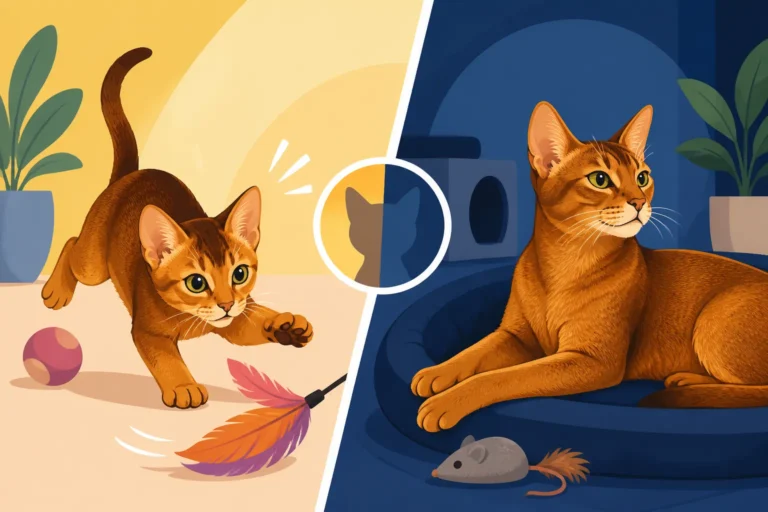
Instead, aim for multiple play sessions, ideally three to five, each lasting at least 10-15 minutes. These sessions should be high-intensity and engaging, allowing them to chase, pounce, and "kill" their prey (the toy). A good rule of thumb is to play until your Abyssinian is visibly tired, panting slightly, or has lost interest, then let them "win" by catching the toy before concluding the session. This provides mental closure and boosts their confidence. Try to schedule these sessions around their natural energy peaks, often in the morning and evening. How to Split an Abyssinian's Play Into Sessions offers more detailed strategies for structuring these interactions.
Here’s a basic framework you might consider:
| Session Time | Duration (Minutes) | Focus | Example Activity |
|---|---|---|---|
| Early Morning | 10-15 | Wake-up hunt, energy release | Wand toy (feather or crinkle ball) |
| Mid-day | 5-10 | Mental challenge, light physical activity | Puzzle feeder, treat chase (Amazon has great options) |
| Late Afternoon | 10-15 | Wind-down hunt, connection | Laser pointer (with a final "catch" on a toy), fetch |
| Evening | 15-20 | Peak energy burn, bond building | Interactive toy, agility course, new toy introduction |
| Before Bed | 5-10 | Final small hunt, calm play | Small plush toy toss, quiet wand play |
Remember, consistency is far more important than any single long session.
Beyond the Wand Toy: A Variety of Enrichment
While wand toys are fantastic for engaging an Abyssinian's predatory instincts, relying solely on one type of toy can lead to boredom and a lack of full mental stimulation. Abyssinians thrive on novelty and variety. Think about rotating their toys, keeping some out for a few days, then stashing them away to be rediscovered later. How to Rotate an Abyssinian's Toys has tips on how to do this effectively.
Consider introducing:
- Puzzle Feeders: These are excellent for mental stimulation and slow down eating, which is good for their digestion. Look for sturdy, multi-level puzzle feeders on Amazon that challenge your Abyssinian to work for their kibble or treats. Which Puzzle Feeders Hold an Abyssinian's Attention can guide your choices.
- Fetch Games: Many Abyssinians love to fetch! A small, lightweight toy that’s easy for them to carry in their mouth can turn into an engaging game of retrieve. Which Retrieve Toys an Abyssinian Brings Back can give you ideas for the perfect fetching items.
- Agility Courses: Simple DIY courses made from household items like cardboard boxes, tunnels (often found in pet stores or on Amazon), and low obstacles can provide a fun physical and mental challenge. They love to jump and weave.
- Interactive Toys: Battery-operated toys that move unpredictably or have lights can keep them entertained when you're busy, but remember, these are supplements, not replacements for human interaction.
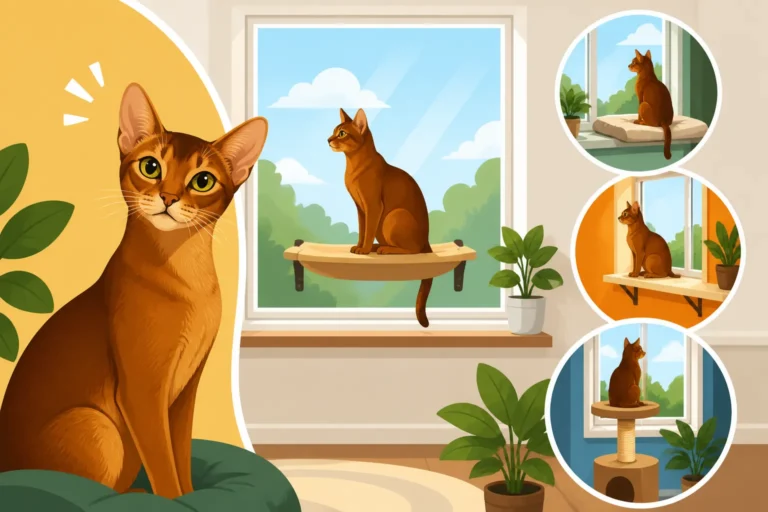
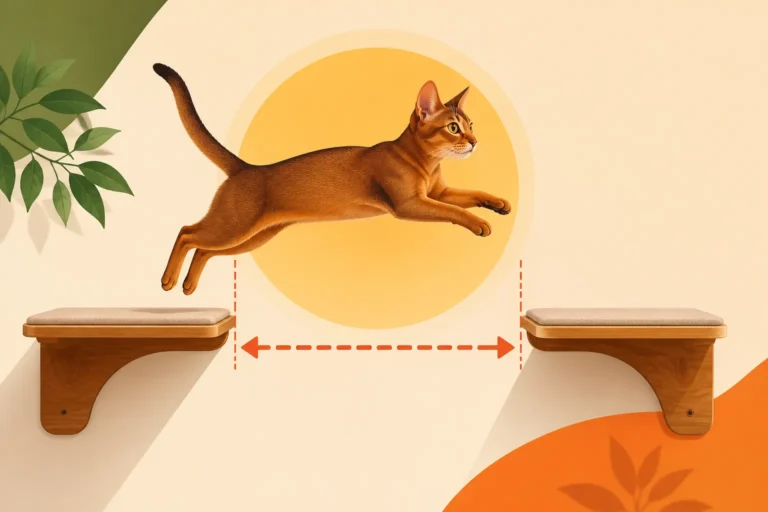
- Climbing Structures: Abyssinians are natural climbers and enjoy surveying their domain from above. Investing in tall, stable cat trees or wall-mounted shelves can provide invaluable vertical territory and exercise. Why an Abyssinian Needs a Tall Cat Tree and What Wall Shelves for an Abyssinian Cost to Install highlight the importance of vertical space.
- "Hunting" Games: Hide treats or small toys around the house for them to discover. This taps into their foraging instincts and makes mealtime or treat time an adventure.
Diversifying their play environment and their toys keeps them guessing, engaged, and prevents them from getting bored with the same old routine.
Integrating Play into Your Daily Life
It might seem daunting to fit so much activity into a busy schedule, but with a little creativity, it's entirely possible to provide the enrichment your Abyssinian craves without feeling overwhelmed. It's about making the most of every interaction and sometimes, recognizing when you need a little help.
Making Every Interaction Count
Even small moments throughout your day can be opportunities for engagement. While you're waiting for your coffee to brew, toss a small toy for a quick game of fetch. While watching TV, keep a wand toy beside you for spontaneous interaction. Use meal times as a chance for mental work by serving food in puzzle feeders instead of a bowl. Even talking to your Abyssinian and acknowledging their presence fulfills their need for connection. They thrive on being part of your life, not just observers.
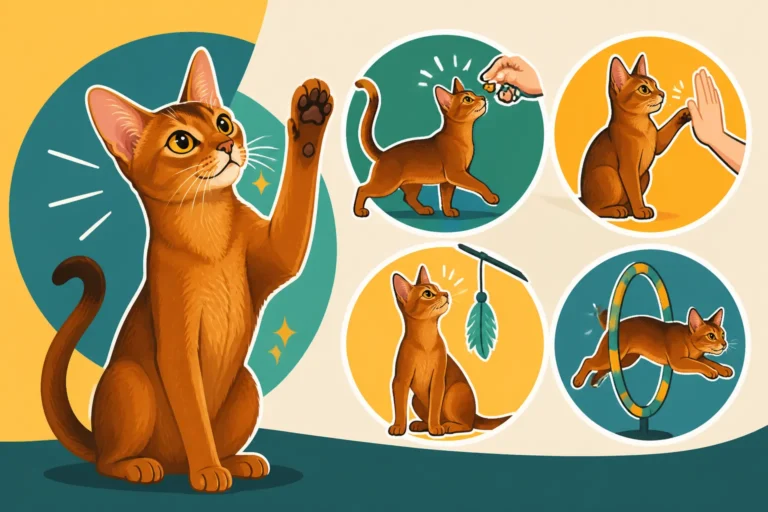
Consider incorporating training sessions into your routine. Abyssinians are highly intelligent and can learn a variety of tricks, from sitting and staying to high-fives. Which Tricks an Abyssinian Learns Fastest might surprise you. Clicker training is particularly effective with this breed. These short, focused sessions provide excellent mental stimulation and strengthen your bond. Even a quick five-minute training burst can be incredibly rewarding for both of you.
The Benefit of a Companion
For many Abyssinian owners, especially those with demanding work schedules, the best solution to ensure adequate playtime and companionship is to bring another cat into the home. Abyssinians are generally very social creatures and thrive in the company of other cats, particularly another Abyssinian or a similarly high-energy breed. A companion cat can provide constant entertainment, play-wrestling, and mutual grooming, filling many of the hours you might be away or otherwise occupied. Why a Second Cat Suits an Abyssinian provides a deep dive into this topic.
While it's not a substitute for human interaction, a feline companion can significantly reduce boredom and the associated behavioral problems. They can chase, stalk, and wrestle with each other in ways a human simply cannot replicate. If you're considering expanding your feline family, researching Whether Two Abyssinians Are Easier Than One might give you the insights you need. Just be sure to introduce them slowly and thoughtfully to ensure a smooth transition and a harmonious household. Two Abyssinians might seem like double the trouble, but often, they simply entertain each other, leading to a much calmer, happier household overall.
Disclaimer
This article is for general informational purposes only and does not constitute professional advice. Laws, prices and regulations vary by location and change over time. Consult a qualified professional for guidance on your specific situation.