Why Each Abyssinian Hair Carries Three or Four Bands
When you first lay eyes on an Abyssinian, you're often struck by their vibrant, almost wild appearance, a rich tapestry of color that seems to shift with every movement. Yet, many people don't realize that this breathtaking effect isn't due to stripes or spots, but to a hidden marvel on each individual hair shaft. This guide will unravel the fascinating secret behind the Abyssinian's coat, explaining why every single hair is a miniature work of art, banded with three or four distinct colors, and what that means for both its stunning looks and its care.
Unraveling the Abyssinian's Ticked Coat Mystery
The Abyssinian coat is famously described as "ticked," a term that often puzzles those accustomed to the more common patterns like stripes, spots, or solid colors found in most cat breeds. What does "ticked" truly mean in the context of a cat's fur, and why does it make the Abyssinian stand out so dramatically? It's not just a fancy word; it's the key to their entire aesthetic.
Beyond the Stripes: What is Ticking?
Most people picture cat coats as having clear, defined patterns—think of the swirling marble pattern of a classic tabby or the distinct stripes of a mackerel tabby. But an Abyssinian defies these expectations. When you observe an Abyssinian, you'll notice a distinct lack of these traditional markings on their body. There are no stripes on their legs, no rings around their tail (save for a darker tip), and certainly no obvious spots or blotches across their torso. This absence of visible pattern is the first clue to understanding ticking.
Ticking, in essence, is a scattering of color, rather than a clumping or outlining of it. Instead of the pigment forming stripes or patches across the cat's body, the pattern manifests within each individual hair. This unique distribution creates an illusion of a solid, yet incredibly rich and dynamic, coat. It's almost as if the conventional tabby pattern has been broken up and redistributed in a more intricate, micro-level design.
This sophisticated genetic trick gives Abyssinians their distinctive "wildcat" look. Many wild species, like pumas and cougars, exhibit a similar ticked or agouti pattern, which serves as excellent camouflage in their natural habitats. For the Abyssinian, it lends an air of untamed elegance, making them appear like miniature versions of their larger, wilder cousins, a trait many enthusiasts find utterly captivating.
The Illusion of Uniformity: How it Appears Solid
From a distance, a Ruddy Abyssinian might just look like a beautifully shaded brown cat, or a Sorrel Abyssinian like a deep cinnamon. Their coat can appear remarkably uniform, almost like a solid color, perhaps with subtle shading. This initial perception is part of the clever illusion created by their ticked fur. The human eye, when viewing the multitude of tiny, multi-banded hairs together, tends to blend the alternating dark and light segments, interpreting them as a smooth, harmonious wash of color.
However, this apparent uniformity is precisely why a closer inspection of an Abyssinian's coat is so rewarding. As you draw nearer and run your hand against the grain of their fur, you'll begin to discern the true complexity. Each hair, rather than being a single, unchanging hue, reveals itself as a miniature masterpiece, intricately painted with different shades. It’s not monochromatic; it’s a symphony of color playing out on every strand.
This mesmerizing effect is akin to a finely woven textile, where individual threads of varying colors combine to create a coherent, richly textured fabric. Because the ticking is so fine and evenly distributed, the coat catches and reflects light in a way that makes it seem alive. It's this deep, almost shimmering quality that sets the Abyssinian apart, transforming what could be a "plain" coat into something truly extraordinary. It's a subtle beauty that rewards careful observation and highlights why Abyssinians are often considered feline supermodels, even without overt patterns.
The Genetic Magic Behind Multi-Banded Hairs
Understanding the Abyssinian's breathtaking coat means taking a peek into their genetic makeup. Specifically, we're talking about the agouti gene, a fascinating piece of DNA that acts as the architect of their unique fur pattern. It's the reason each hair isn't just one color but a miniature spectrum.
The Agouti Gene's Influence
At the very core of the Abyssinian's distinctive ticked coat lies the dominant agouti gene. This isn't some rare or exotic genetic anomaly; it's a fundamental gene found across many species, responsible for the banded hair seen in countless wild mammals, from rabbits in your garden to deer in the forest. For cats, the agouti gene is the master switch that dictates whether a tabby pattern is expressed or suppressed, and in the Abyssinian, it’s working overtime to create that incredible ticking.
The agouti gene essentially controls the production and deposition of pigment along the length of each individual hair shaft. Think of it like a tiny, biological dimmer switch that turns pigment synthesis on and off as the hair grows. Instead of a continuous, uninterrupted flow of a single color, the gene causes periods of intense pigment production to alternate with periods of reduced or no pigment production. This creates a visually stunning series of bands along each hair.
While the agouti gene is responsible for the banding itself, other genes then determine the colors within those bands. This is why you see Ruddy Abyssinians, Sorrel, Blue, and Fawn – the base agouti ticking remains, but the colors that fill those bands are modified. It's a complex interplay, but the agouti gene is undeniably the primary conductor of this intricate genetic symphony, giving the Abyssinian its signature wild appearance.
Eumelanin and Pheomelanin: The Color Architects
To truly appreciate the multi-banded Abyssinian hair, we need to understand the two primary types of pigment that cats produce: eumelanin and pheomelanin. Eumelanin is responsible for black and brown pigments, while pheomelanin produces red and yellow tones. The agouti gene doesn't just turn pigment production on and off; it orchestrates which pigment is expressed and when.
On a single Abyssinian hair, you'll typically observe an alternation between darker, eumelanin-rich bands and lighter, pheomelanin-rich bands. For example, in a Ruddy Abyssinian, the darker bands will be a rich black-brown, while the lighter bands will be a warm, golden orange. In a Sorrel, the darker bands will lean towards a warm cinnamon or chocolate, contrasted with bands of rich apricot. The beauty lies in this precise, rhythmic deposition of color.
The magic happens as each hair grows from the follicle. The agouti gene instructs the melanocytes (pigment-producing cells) to alternate between producing a dense amount of eumelanin, then a lesser amount or even pheomelanin, and then back to eumelanin. This creates the visual effect of "bands" or "ticking" along the hair shaft. The distinctness, number, and width of these bands are what define the quality and depth of the Abyssinian's coat. It’s an incredibly precise genetic dance that, when executed perfectly, results in a coat that shimmers with an almost iridescent quality, making the Abyssinian truly unique among feline breeds.
Decoding the Three or Four Bands on Each Hair
When we talk about an Abyssinian's hair having "three or four bands," it can sound a bit abstract. It’s not always obvious to the naked eye at first glance, but understanding this detail is key to appreciating the depth and complexity of their coat. Let's get up close and personal with a single strand of Abyssinian fur.
The Hair Shaft Up Close
Imagine you could pluck a single hair from your Abyssinian – perhaps from their back, where the ticking is usually most prominent – and examine it under a magnifying glass or even a low-power microscope. What you would not see is a uniform, solid strand of color from root to tip. That's the coat of a solid-colored cat.
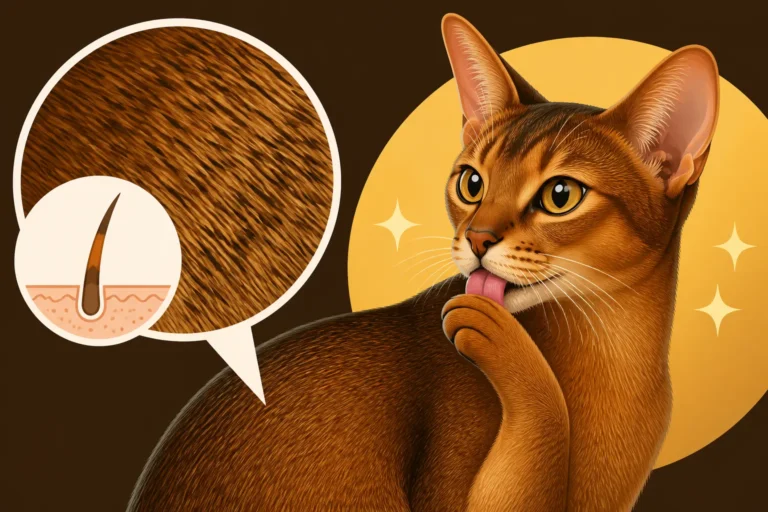
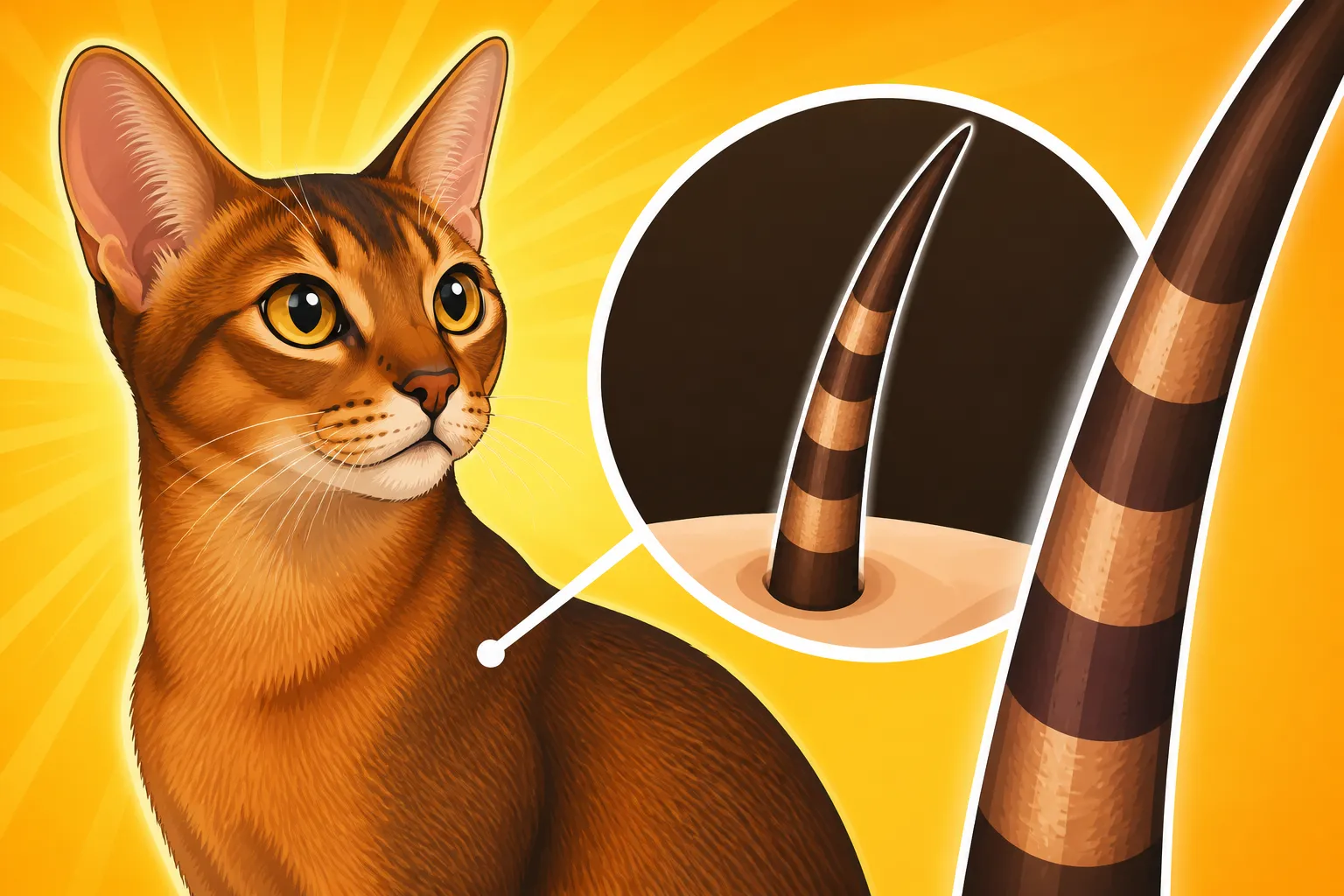
Instead, what would unfold before your eyes is a stunning, miniature gradient of color. You would observe distinct segments, or bands, where the pigment concentration varies. These bands alternate between darker, more saturated hues and lighter, warmer tones. It's like a tiny, intricate zebra pattern, but with a much softer, more subtle transition. The very tip of the hair is usually, though not exclusively, the darkest band. This dark tip contributes significantly to the overall rich, deep appearance of the coat when viewed from above, creating that characteristic intensity.
This close-up view reveals the true artistry of the Abyssinian's genetics. It’s a design principle that applies to virtually every guard hair on their body, each one contributing to the overall visual effect. The absence of these distinct bands would mean you have a solid-colored cat or a different tabby pattern, not a true Abyssinian ticked coat. How an Abyssinian's Agouti Banding Works delves even deeper into this fascinating mechanism.
Counting the Colors: More Than Meets the Eye
When breeders and enthusiasts refer to "three or four bands," they're quantifying these distinct color zones along the length of a single hair shaft. These aren't just vague shifts in shade; they are discernible segments of color that appear in sequence. For example, a common pattern might look something like this: a dark tip, followed by a lighter, golden band, then another darker band, and finally, a lighter band closer to the root. This sequence accounts for the "three or four" color changes or distinct bands you'd identify.
The precise number and distribution of these bands are critical to the Abyssinian's show standard and overall appeal. A well-ticked Abyssinian will have clear, distinct banding that allows for that famous shimmer. If the bands are too blurry or indistinct, the coat can lose its vibrancy and appear duller. The cumulative effect of thousands upon thousands of these intricately banded hairs is what creates the Abyssinian's famed "shimmer." As the cat moves, light catches these different bands at varying angles, creating an optical illusion of constant, subtle color change and depth.
This intricate layering is why an Abyssinian's coat appears different in every light. Under bright sunlight, the lighter bands will sparkle, while in softer indoor light, the darker tones provide richness and warmth. It's a living, breathing canvas of color, all thanks to the remarkable detail present on each individual hair. How an Abyssinian's Coat Shimmers When It Moves perfectly illustrates this dynamic quality.
The Unique Appeal and Practicality of the Abyssinian Coat
Beyond its sheer beauty, the Abyssinian's ticked coat holds significant cultural and practical value. It's a hallmark of the breed, linking them to their ancient past and influencing how we care for them today.
A Wild Ancestor's Legacy
The ticked coat is far more than just a pretty pattern; it's a living echo of the Abyssinian's wild ancestry. Many believe this coat pattern is a direct link to the camouflage found in various wild felids, allowing them to blend seamlessly into environments like grasslands or forests. The broken-up coloration on each hair helps to obscure their outline, making them harder to spot by prey or predators. This primal connection is one of the most compelling aspects of the Abyssinian's appearance.
For owners, this means having a cat that carries an undeniable air of the wild within their domestic setting. An Abyssinian on the prowl in your living room, with its shifting, shimmering coat, evokes images of its ancestors gracefully navigating ancient landscapes. This distinctive look, devoid of the bold stripes or spots common in many domestic breeds, sets the Abyssinian apart and contributes heavily to its unique identity. It’s a constant reminder of the natural elegance and understated power inherent in the breed.
This strong connection to a wild appearance is a huge draw for many prospective owners. It’s not just a cat; it’s a tiny, elegant predator, beautifully adapted by nature, sitting on your sofa. This blend of wild aesthetics and domestic charm is a significant part of what makes the Abyssinian so beloved.
The Shimmer and Depth Effect
The most striking visual quality of the Abyssinian's ticked coat is undoubtedly its incredible shimmer and depth. This isn't a static color; it's dynamic, almost liquid. As an Abyssinian moves—whether they're racing through the house, leaping onto a cat tree, or simply stretching out for a nap—their coat seems to ripple and change, catching the light in a thousand different ways. The alternating dark and light bands on each hair are responsible for this optical phenomenon.
This play of light and shadow creates an illusion of constant movement and vibrancy. In one moment, the coat might appear a rich, deep hue; in the next, as they shift, a lighter, more golden or apricot tone will flash into view. It gives the impression that the color isn't just painted on the surface but emanates from within the very depths of their fur. This iridescence is a key differentiator from cats with solid or even striped coats, which tend to have a flatter, more uniform appearance.
Breeders spend years carefully selecting for strong, clear ticking precisely because it contributes so much to this stunning effect. The well-defined bands on each hair ensure that the light can interact with the different pigment zones effectively, maximizing the shimmer. It’s a defining characteristic that contributes significantly to the breed's striking allure and is often the first thing people comment on when they see an Abyssinian in person. The coat is alive with color and movement, a truly captivating feature.
The Art of Grooming to Preserve Ticking
Caring for an Abyssinian's coat is generally quite straightforward, thanks to its unique structure. However, understanding the specific needs of their ticked fur can help ensure it always looks its absolute best, maintaining that beautiful shimmer and depth. It's less about intensive grooming and more about gentle preservation.
Gentle Care for a Delicate Coat
One of the most defining characteristics of the Abyssinian's coat, besides its ticking, is the almost complete absence of an undercoat. Unlike many cat breeds that have a dense, fluffy layer of shorter hairs beneath their outer guard hairs, Abyssinians possess a single, short coat that lies very close to their body. This means their hair is fine, soft, and relatively delicate. This lack of an undercoat contributes to their sleek silhouette and their almost year-round 'indoor' feel, but it also dictates a specific approach to grooming.
Because there's no thick underlayer to shed or to provide insulation, the primary goal of grooming an Abyssinian isn't heavy de-shedding. Instead, it's about gently removing loose hairs from the outer layer and enhancing the natural luster of those beautifully banded strands. Using harsh brushes or vigorous scrubbing can actually be detrimental. Overzealous grooming can damage the delicate guard hairs that proudly display the ticking, or worse, flatten the coat, diminishing its natural spring and vibrant sheen. An Abyssinian Needs Brushing Once a Week and No More is often more than sufficient to keep their coat in prime condition without causing damage.
The key to Abyssinian grooming is a light touch. You're not battling mats or dense fur; you're simply performing a routine maintenance that supports the health and appearance of their unique coat. Think of it as polishing a precious gem, rather than scrubbing a dirty pot.
Recommended Tools and Techniques
Given the Abyssinian's fine, short, and thinly undercoated fur, the choice of grooming tools is crucial. You want something that will gently remove loose hairs without stripping or damaging the banded outer coat. Forget the heavy-duty de-shedding rakes you might use for a Maine Coon or a Persian; those are entirely unsuitable and can actually ruin an Abyssinian's beautiful ticking. Why the Wrong Brush Flattens an Abyssinian's Ticking explains the pitfalls of using incorrect tools.
For most Abyssinians, a soft rubber grooming mitt is the hero tool. These mitts, often available at pet stores like Chewy or Amazon, are designed to conform to your cat's body, gently massaging the skin and catching loose hairs with their soft nubs. It's a soothing experience for your cat and effective for their coat type. A fine-toothed comb can also be used, particularly to gently work through any stray hairs or for a quick touch-up, but always use it with extreme care. The goal is to lift loose hairs, not to tug or pull at the skin.
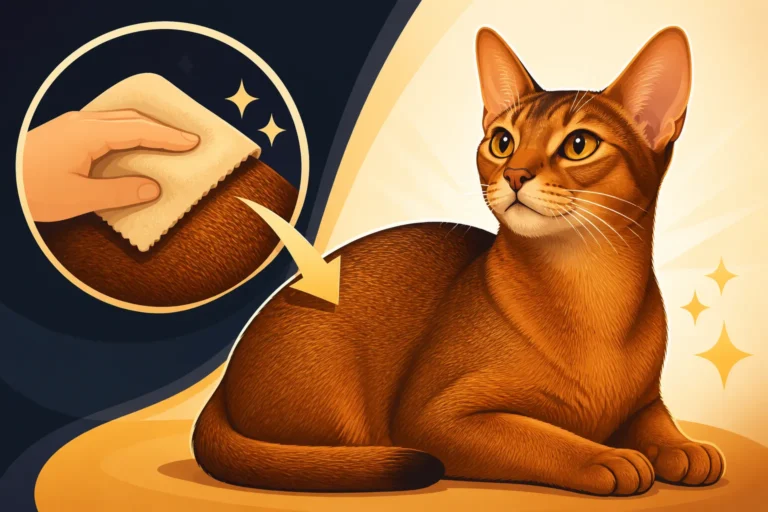
After a gentle brushing, the final touch for an Abyssinian's coat is often a quick rub-down with a chamois cloth. This seemingly simple step does wonders for bringing out that famous Abyssinian shimmer and shine. The chamois polishes the individual hair shafts, smoothing them down and allowing the light to reflect off those distinct bands with maximum brilliance. It enhances the depth and vibrancy, making their coat truly sparkle. How a Chamois Brings Up an Abyssinian's Shine is a testament to the power of this simple technique. With these gentle tools and a light hand, you can keep your Abyssinian's ticked coat looking magnificent without any fuss.
Shedding Light on Abyssinian Coat Misconceptions
Despite their rising popularity, Abyssinians still carry some common misconceptions, especially concerning their unique coats. Clearing up these misunderstandings is important for both prospective and current owners to truly appreciate this remarkable breed.
"They're Just Plain Brown Cats"
One of the most frequent misconceptions people have about Abyssinians, particularly the Ruddy variety, is that they are "just plain brown cats." This initial impression often comes from seeing them at a distance or in photos where the intricate ticking isn't easily discernible. Without the obvious stripes or spots of a tabby, or the stark uniformity of a solid-colored cat, their sophisticated coat pattern can be easily overlooked by an untrained eye.
However, this perception quickly vanishes upon closer inspection. The magic of the Abyssinian's ticked coat lies in its subtlety and depth. What appears "plain" from afar transforms into a rich, shimmering tapestry of color when you get up close. The individual hairs, with their alternating dark and light bands, create an optical illusion of movement and texture that is anything but plain. A true Abyssinian enthusiast knows that there's a universe of color and pattern hidden within their seemingly simple coat.
Educating people about the banded hair and the unique characteristics of the agouti gene is often necessary to truly appreciate the Abyssinian's beauty. Once explained, the "plain brown cat" becomes a captivating marvel, revealing itself as a testament to nature's artistry. It’s a coat designed for elegance and camouflage, not for flashy, overt patterns.
"They Don't Shed"
Ah, the "non-shedding cat" myth – a hopeful dream for many allergy sufferers and tidy housekeepers! While it's true that Abyssinians are often perceived as low-shedders, it's a misconception to believe they don't shed at all. The reality is that all cats shed. There is no truly "hypoallergenic" or non-shedding cat breed, simply some that shed less or produce fewer allergens.
Abyssinians do, however, have certain characteristics that make their shedding far less noticeable than many other breeds. Primarily, it's their minimal to non-existent undercoat. Breeds with a dense undercoat, like Persians or even many domestic shorthairs, often "blow" their coat, resulting in significant amounts of visible fur around the house. Abyssinians, with their single, fine coat, simply don't have that bulk of fur to shed. This means the amount of hair they lose is generally much less. Why an Abyssinian's Single Ticked Coat Barely Sheds sheds more light on this.
Furthermore, the individual hairs of an Abyssinian are typically quite fine and short, and their ticked pattern means they are a blend of colors. This combination makes shed hairs less conspicuous. They tend to blend into upholstery and flooring more easily than the longer, often solid-colored hairs of other breeds. So, while you'll still find Abyssinian hairs, they often aren't the daunting tumbleweeds that can accumulate with other cats. Regular, gentle grooming helps manage this natural shedding, keeping the coat looking its best and reducing the amount of loose hair around your home.
Watching the Ticked Coat Evolve: From Kitten to Adult
The beauty of an Abyssinian's ticked coat isn't fully formed at birth. It's a journey, a fascinating transformation from a rather unassuming kitten coat to the vibrant, shimmering splendor of an adult. Understanding this development is key to appreciating your Abyssinian’s unique progression.
The Blotchy Kitten Phase
If you've ever seen an Abyssinian kitten, you might have noticed that their coat doesn't quite match the polished look of an adult. Often, Abyssinian kittens are born with what's sometimes described as a "kitten coat" that can appear somewhat blurry, less defined, or even a bit "blotchy" or vaguely striped. The intricate ticking that makes the adult Abyssinian so striking isn't fully developed yet. It's perfectly normal for a young Abyssinian to look a little less refined in their early months, and sometimes even a bit scruffy.
This initial, less distinct appearance is entirely part of their natural growth process. The genetic mechanisms responsible for the precise banding on each hair shaft, while present, haven't yet reached their full expression. Think of it as a canvas that's been sketched out but not yet fully painted. The individual hairs might have fewer distinct bands, or the contrast between the light and dark segments might not be as sharp, leading to an overall softer, less vibrant look.
Prospective owners shouldn't be alarmed by this phase. It's a natural part of their development and a temporary stage. The full depth and brilliance of their adult ticking simply needs time to mature, much like a child's hair color can change significantly as they grow older. Patience and good nutrition are all that's required to let nature take its course.
The Maturation of Ticking
The transition from the fuzzy kitten coat to the brilliant adult ticking is a gradual, fascinating process. Typically, around six months of age, and often continuing up to a year or even longer, an Abyssinian's coat will begin its remarkable refinement. You'll notice the individual bands on each hair becoming more distinct, the colors gaining intensity, and the overall shimmer becoming increasingly pronounced. It's during this period that the Abyssinian truly starts to come into its own, revealing the majestic coat that the breed is known for. When an Abyssinian Kitten's Adult Ticking Arrives provides more insight into this specific timeline.
This maturation isn't just about the colors becoming clearer; it's also about the texture of the coat. The kitten fluff gives way to a sleek, fine coat that lies close to the body, enhancing the visibility of the ticking. The contrast between the dark and light bands sharpens, making the "zebra stripes" on each hair much more evident. This improved clarity allows for greater light reflection, intensifying that characteristic Abyssinian shimmer and depth.
Watching this developmental process unfold is one of the joys of raising an Abyssinian. What started as a rather indistinct, soft kitten fur transforms into a sophisticated, dynamic coat that seems to glow with an inner light. It's a testament to the powerful genetics at play and the inherent beauty that develops with time and proper care. This evolving beauty adds another layer of appreciation for what is already a truly captivating breed.
Nourishing the Coat from Within: Diet and Overall Health
A truly vibrant, shimmering Abyssinian coat isn't just about genetics and grooming; it's a reflection of their overall health, starting from the inside out. What you feed your Abyssinian and how well you manage their general well-being has a profound impact on the quality and brilliance of their distinctive banded hairs.
Nutrition for a Luminous Coat
The adage "you are what you eat" holds especially true for a cat's coat. The cells that make up hair are constantly growing and regenerating, and they require a steady supply of high-quality nutrients to do so effectively. For an Abyssinian, whose coat is a defining feature, optimal nutrition is paramount for maintaining that luminous sheen and clear ticking.
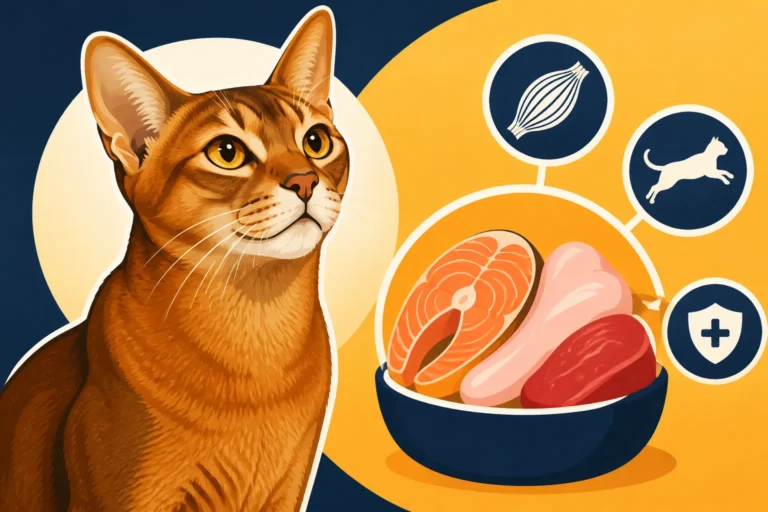
A diet rich in high-quality animal protein is fundamental. Cats are obligate carnivores, meaning they thrive on meat. Protein provides the essential amino acids needed for keratin production, the main structural component of hair. Look for cat foods where animal protein sources (chicken, turkey, fish, beef) are listed as the first few ingredients. Beyond protein, essential fatty acids, particularly Omega-3s and Omega-6s, play a crucial role. These healthy fats support skin health, reduce inflammation, and contribute to a shiny, supple coat. Many premium cat foods focus on high-quality ingredients and balanced fatty acid profiles designed to support skin and coat health. Even good quality kibble brands found on Chewy will highlight their Omega content.
Conversely, a diet lacking in these critical nutrients can quickly manifest in a dull, brittle, or excessively shedding coat. The vibrant ticking might appear faded, and the hair itself could feel coarse or sparse. It's a clear visual signal that something might be amiss with their diet, potentially impacting their skin, hair follicles, and overall vitality.
Hydration and Overall Health Impact
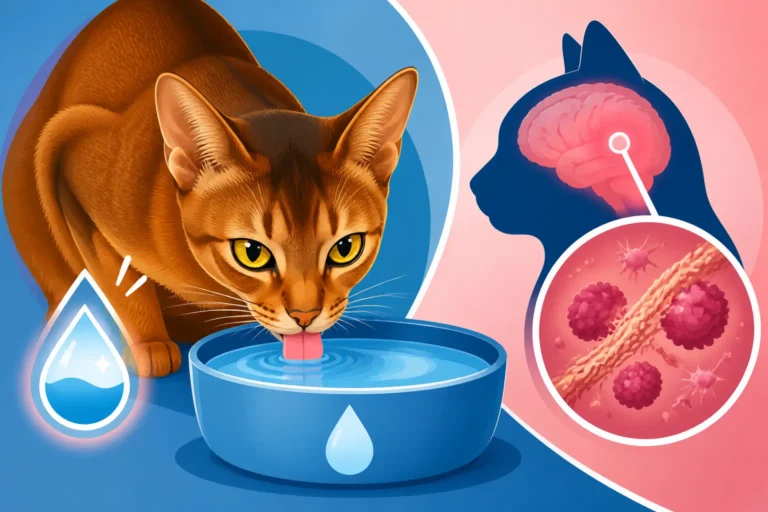
Beyond solid food, adequate hydration is another cornerstone of a healthy, lustrous Abyssinian coat. Water is essential for every bodily function, including skin integrity and hair growth. Dehydration can lead to dry, flaky skin and a dull, lackluster coat that simply doesn't reflect light with the same brilliance. For a cat breed that already has a minimal undercoat and can be prone to certain kidney issues, ensuring ample water intake is doubly important.
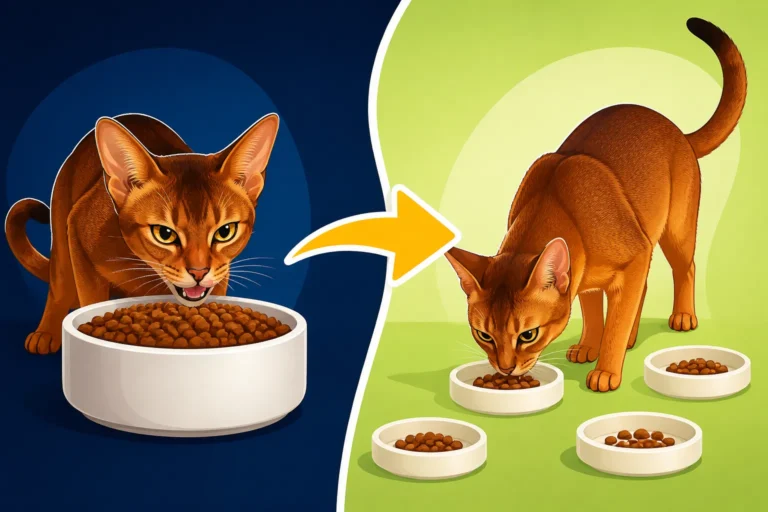
Encourage your Abyssinian to drink plenty of fresh water. This can mean keeping multiple water bowls around the house, ensuring they are always clean and filled. Many Abyssinians are fascinated by running water, so a cat fountain can be an excellent investment—you can find a wide variety of these on Amazon. Supplementing dry kibble with wet food is also a fantastic way to boost their daily water intake, as wet food contains a high percentage of moisture.
Finally, remember that a healthy coat is often a barometer for overall health. If your Abyssinian's coat suddenly changes in texture, becomes dull, or shows excessive shedding, it could be a sign of an underlying health issue. Conditions like thyroid imbalances, kidney disease, or even parasites can all impact coat quality. If you notice persistent changes, a visit to your veterinarian is always recommended. A well-hydrated, well-nourished Abyssinian will typically boast a gorgeously defined, shimmering ticked coat that is a testament to their vibrant health.
Comparing Ticked vs. Tabby Coats
To truly appreciate the unique beauty of the Abyssinian's ticked coat, it's helpful to understand how it differs from more common tabby patterns. While both involve the agouti gene, their expression creates vastly different visual effects.
| Feature | Abyssinian (Ticked) | Classic/Mackerel Tabby |
|---|---|---|
| Hair Pigmentation | Multiple bands of alternating dark and light color on each individual hair shaft, from root to tip. | Solid bands of color along portions of the hair, or mostly solid colored hairs that form patterns. |
| Overall Pattern | Appears largely uniform and shimmering, often described as "agouti" or "wild" looking. No obvious stripes, spots, or swirls on the body. | Distinct stripes, spots, or swirls visible from a distance (e.g., mackerel stripes, classic blotches, spotted rosettes). |
| Undercoat | Minimal to no undercoat; single, fine coat lies close to the body. | Typically has an undercoat, which can vary in density depending on the breed. |
| Visual Effect | Creates depth, shimmer, and an iridescent quality. Coat appears to shift color with movement and light. | Clear, defined patterns that stand out against the background color. |
| Forehead Marking | No distinct "M" marking on the forehead, though faint traces can sometimes occur in poor ticking. | A distinct "M" marking on the forehead is a characteristic trait of most tabbies. |
Disclaimer
This article is for general informational purposes only and does not constitute professional advice. Laws, prices and regulations vary by location and change over time. Consult a qualified professional for guidance on your specific situation.