Whether an Abyssinian Uses a Cardboard Scratcher
It's a common struggle for Abyssinian owners: you want to provide your high-energy, inquisitive feline companion with all the right outlets for their natural behaviors, but sometimes, what works for other cats just doesn't cut it. One of the biggest questions that pops up is around scratching surfaces – specifically, "Will my Abyssinian actually use a cardboard scratcher, or will it just become another neglected dust collector?" This guide is here to unravel that mystery, delve into the Abyssinian's unique scratching habits, and help you decide if cardboard is a viable part of your cat's claw care regimen.
The Abyssinian's Innate Need to Scratch: Why It's More Than Just a Habit
Before we even get to cardboard, it’s crucial to understand why Abyssinians scratch. It's not out of spite or a desire to ruin your furniture (though it can certainly feel that way sometimes!). Scratching is a deeply ingrained, essential feline behavior, and for a breed as active and intelligent as the Abyssinian, satisfying this instinct is paramount for their physical and mental well-being. Denying them appropriate outlets will inevitably lead to frustration for both you and your cat, and likely, shredded sofas.
Understanding the Instinct: Scent Marking, Claw Conditioning, Stretching
At its core, scratching serves multiple vital functions. First, it's a form of communication. Your Abyssinian's paw pads contain scent glands, and when they drag their claws down a surface, they're leaving behind a "calling card" – a visual and olfactory signal to themselves and any other cat that might pass by. This scent marking establishes territory and helps them feel secure in their environment. It’s their way of saying, "This is my space, I was here!"
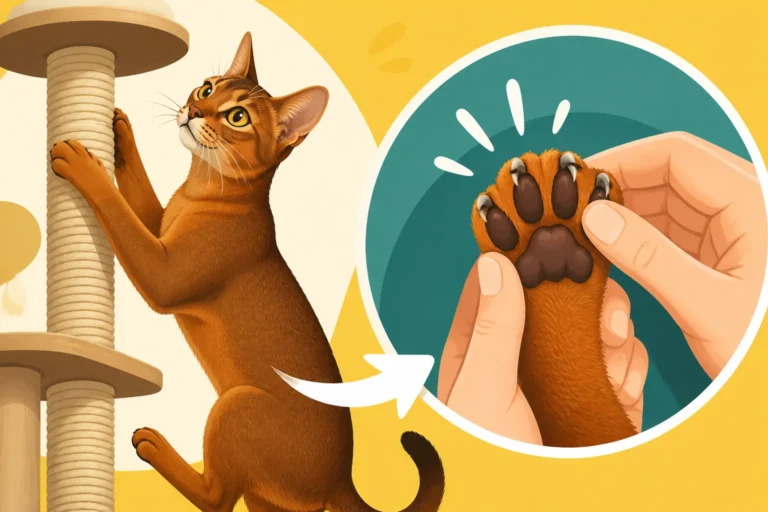
Beyond communication, scratching is also essential for maintaining healthy claws. As your Abyssinian pulls their claws down a rough surface, the outer, dull layers are shed, revealing the sharp, new claw underneath. This is a natural process, often called "husk shedding" or "declawing" in a natural sense. Without suitable scratching posts, these old husks can build up, leading to uncomfortable or even painful ingrown claws, which could require a trip to the vet. This active grooming keeps their tools sharp and ready for climbing, playing, and exploring. How to Trim a Climbing Abyssinian's Claws is another great read on this topic.
Finally, scratching is a fantastic full-body stretch. Have you ever watched your Abyssinian really go at a scratcher? Their back arches, their muscles extend, and they pull their entire body taut. This movement helps to flex their muscles, work out stiffness, and maintain their incredible agility. For a breed that loves to leap and climb, keeping their body limber and strong is incredibly important. A good, satisfying stretch before or after a nap is pure bliss for an Abyssinian, just as it is for us.
Abyssinian Specific Preferences: Vertical vs. Horizontal, Material, Height
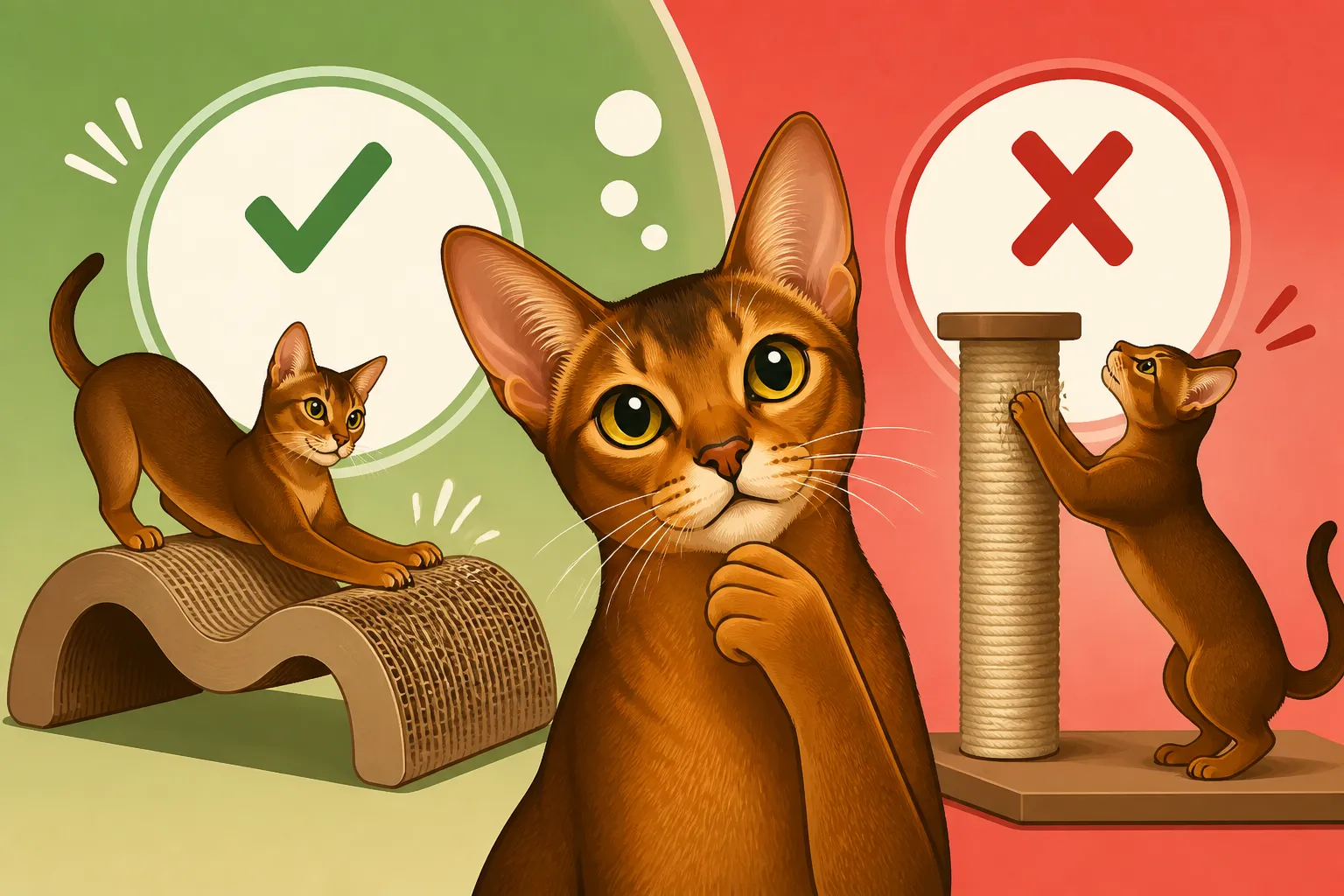
Abyssinians, being the acrobatic little athletes they are, often have distinct preferences when it comes to scratching. While many cats enjoy a mix of vertical and horizontal scratching, Abyssinians tend to favor vertical surfaces that allow them to stretch to their full, magnificent length. Think of how they scale cat trees or leap onto high shelves – they need to be able to mimic that full-body extension when they scratch. A tiny, flimsy post just won't cut it. Why an Abyssinian Prefers a Tall Sisal Post touches on this further.
The material itself also plays a huge role. Cats generally prefer something with a texture that offers resistance and allows them to really sink their claws in, pulling off those dead outer sheaths. Different cats have different opinions on what's "best." Some prefer the rough, fibrous texture of sisal rope or fabric, others might gravitate towards carpet, and yes, many are utterly captivated by cardboard. The key is that it must be sturdy enough to withstand their energetic attack and not wobble or tip over, which can deter them from using it again.
Consider the height and stability too. An Abyssinian needs to be able to stretch up, not just scratch a small section. If a vertical scratcher is too short, they won't get that satisfying full-body stretch and may look elsewhere (like your doorframes). Horizontal scratchers need to be heavy enough that they don't slide across the floor when an Aby really puts their weight into it. These cats are dynamic in their movements, and their scratching apparatus needs to match their intensity.
Cardboard Scratchers: An Abyssinian Owner's Dilemma and Delight
Cardboard scratchers have become a staple in many cat households, and for good reason. They're often affordable, widely available, and many cats absolutely adore them. But are they the perfect solution for an Abyssinian, a breed known for its boundless energy and strong claws? It's a bit of a mixed bag, offering both definite advantages and some notable drawbacks.
The Allure: Why Cats Love Them, Initial Appeal, Cost-Effectiveness
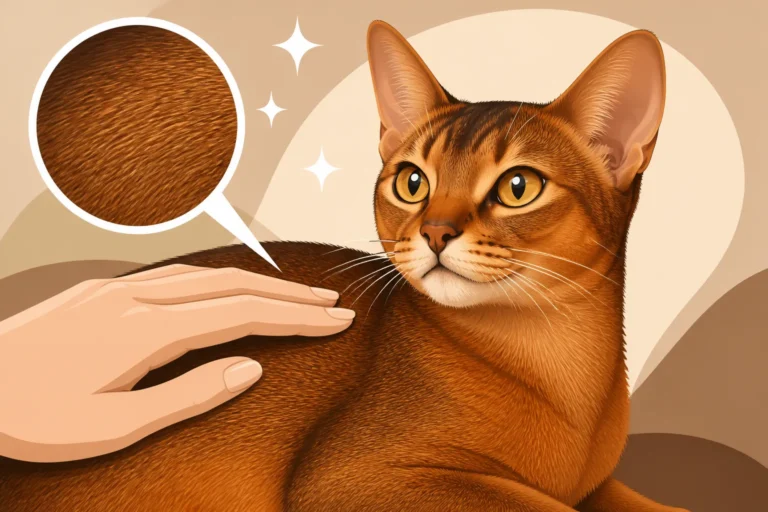
There's something undeniably satisfying about a fresh cardboard scratcher. The corrugated texture provides excellent resistance, allowing cats to really dig their claws in and shred away, satisfying that primal urge. The sound of tearing cardboard can also be incredibly gratifying for them, a clear signal of their "success" in conditioning their claws. Many cats find the scent of new cardboard appealing, especially if it's infused with catnip. The sheer joy an Abyssinian can get from a good cardboard session is often palpable.
From an owner's perspective, the initial appeal is often the price point. Cardboard scratchers are generally much less expensive than sisal poles or carpeted cat trees. This makes them a great entry-level option, or a way to pepper multiple scratching spots around the house without breaking the bank. They're also lightweight and easy to move, so you can experiment with different placements to see where your Abyssinian prefers to scratch. Brands like Chewy and Amazon offer a vast selection, making it easy to try out various shapes and sizes.
Another benefit is their disposability. Once a cardboard scratcher is thoroughly worn out and shredded, you can simply toss it and replace it. This can be more hygienic than trying to clean a heavily used carpeted post. For households with multiple cats, or a particularly zealous Abyssinian, the ability to frequently replace a primary scratching surface can be a real plus.
The Reality Check: Durability, Mess, Stability Issues for an Active Aby
Now for the flip side. While Abyssinians might adore cardboard, their enthusiasm can be its downfall. These are incredibly active, powerful cats. Their strong claws and vigorous scratching can quickly reduce a new cardboard scratcher to a pile of confetti. What might last a placid domestic shorthair for months could be decimated by an Abyssinian in a matter of weeks, or even days, if they really take to it. This means frequent replacement, which, over time, can start to negate the initial cost-effectiveness.
The mess is another undeniable reality. As your Abyssinian shreds the cardboard, tiny pieces and dust will accumulate around the scratcher. This can be a daily vacuuming task, especially if your cat is an enthusiastic scratcher. While not a huge deal, it's something to consider for those who prefer a tidy home. What an Abyssinian's First Year Actually Costs often includes these little recurring expenses!
Furthermore, stability can be an issue. Many cheaper or smaller cardboard scratchers are too light to withstand an Abyssinian's energetic attack. If a scratcher slides away or tips over every time your Aby tries to use it, they'll quickly lose interest and seek out a more stable (and likely less desirable) surface, like your favorite armchair. Vertical cardboard scratchers, in particular, need to be either very heavy or securely mounted to prevent this. For an Abyssinian that likes to launch themselves into a scratch, stability is key.
Different Types and How They Stack Up: Flat Pads, Inclined, Houses, Refillable
Cardboard scratchers come in a surprising variety of shapes and sizes, each offering a slightly different experience for your Abyssinian.
- Flat Pads: These are the most basic and often the cheapest. They lie flat on the floor, providing a horizontal scratching surface. Some Abyssinians might enjoy these, especially if placed strategically in their favorite lounging spots. They're great for a quick stretch and claw hone. However, they don't offer the full vertical stretch many Abyssinians crave.
- Inclined/Wedge Scratchers: These offer a sloped surface, often with a toy or catnip compartment. The angle can be appealing for cats who enjoy a varied scratching posture. They're a good compromise between vertical and horizontal and often feel more stable than a flat pad.
- Cardboard Houses/Tunnels: These combine scratching surfaces with a hiding or play space. Abyssinians, being curious and loving small spaces, might enjoy the novelty of these. They provide both an interior scratching area and often a roof or side for scratching. Just make sure the openings are large enough for your Aby to comfortably maneuver through.
- Refillable Scratchers: Some models feature a frame (often plastic or wood) where you can insert replaceable cardboard inserts. These are a great option for reducing waste and potentially cutting down on long-term costs, as you only replace the cardboard, not the entire unit. The frame also adds stability, which is a big plus for an active Abyssinian. You can find these easily on platforms like Chewy, offering various designs to fit your space.
Each type has its merits, but for an Abyssinian, prioritize stability and the ability to get a good, full-body stretch. Experimentation is key to discovering which specific cardboard design resonates most with your particular cat.
Making Cardboard Scratchers Work for Your Abyssinian
So, your Abyssinian shows some interest in cardboard, but you want to maximize its utility and ensure it's a valuable part of their enrichment rather than a fleeting novelty. There are several strategies you can employ to make cardboard scratchers a roaring success in your home, and just as importantly, recognize when they might not be the primary answer.
Strategic Placement for Maximum Engagement: Where in the Home
Placement is everything when it comes to cat scratchers. Cats don't just scratch anywhere; they prefer areas that are significant to them. For an Abyssinian, this often means high-traffic zones where they can "mark" their territory and feel like they're part of the action. Don't relegate a scratcher to a forgotten corner of the house and expect it to be used.
Consider placing cardboard scratchers near your Abyssinian's sleeping areas, at the entrance to a room, or right next to your furniture – especially if they've shown an interest in scratching that particular couch arm. Where to Put an Abyssinian's Scratching Posts goes into detail on this. The idea is to redirect their natural instinct towards an acceptable surface. If they wake up from a nap and need a good stretch, having a scratcher immediately accessible is far more effective than hoping they'll trek across the house to find it. You might need multiple scratchers in different locations to cater to all their preferred spots.
Also, think about vertical placement for inclined or house-style scratchers. Abyssinians love elevation, so if you have wall-mounted shelves or other cat-friendly vertical spaces, consider how a cardboard scratcher might be incorporated, perhaps as a landing pad or an entrance to another level. Just ensure it's incredibly secure.
Enhancing Appeal and Longevity: Catnip, Rotation, Pairing
Even the best-placed scratcher can lose its luster over time. To keep your Abyssinian engaged, consider a few enhancement strategies. Catnip is the obvious choice for many cats. A sprinkle of fresh catnip on a new (or newly rotated) cardboard scratcher can make it irresistible. If your Abyssinian isn't a fan of catnip, some cats respond to silvervine or valerian root sprays, which can be found at most pet stores or online retailers like Chewy.
Another tactic is toy rotation. Cats, especially intelligent Abyssinians, get bored easily. Don't leave the same scratcher out indefinitely until it's destroyed. Instead, have a few different types of scratchers (cardboard, sisal, etc.) and rotate them. Put one away for a week or two, then bring it back out. It will feel new and exciting to your cat, increasing their engagement. This also allows the scratcher to "rest" and potentially prolong its lifespan slightly.
Finally, consider pairing. Instead of thinking of a cardboard scratcher as a standalone solution, view it as part of a larger scratching ecosystem. Place a cardboard scratcher next to a sisal post, or under a wall-mounted scratching panel. This gives your Abyssinian choices and can make the cardboard a supplementary, rather than primary, scratching surface, thereby extending its useful life and giving your Abyssinian a richer environment. What an Abyssinian Does When It Is Bored often relates directly to a lack of enrichment, and multiple scratching options are a great start.
When Cardboard Isn't Enough: Recognizing Limitations and Diversifying
While cardboard scratchers can be a valuable part of an Abyssinian's scratching repertoire, it's crucial to understand their limitations. If your Abyssinian is shredding through multiple cardboard scratchers a week, or if you find them still trying to scratch your furniture despite having cardboard available, it's a clear sign that cardboard alone isn't meeting their needs.
The cost of constant replacement can quickly add up, making the initially cheap option surprisingly expensive over time. The mess can also become unbearable for some owners. More importantly, if your Abyssinian's claws aren't staying healthy and well-conditioned, or if their need for a full, vigorous stretch isn't being met, they will simply look elsewhere.
This is when diversification becomes essential. Abyssinians thrive on variety and challenge. If cardboard isn't doing the trick, it's time to invest in other, more durable scratching solutions that can stand up to their impressive strength and energy. Don't view it as a failure of the cardboard, but rather an opportunity to provide even better enrichment for your intelligent companion.
Beyond Cardboard: A Holistic Approach to Abyssinian Scratching Needs
For an Abyssinian, effective scratching management isn't about one single solution; it's about creating an entire environment that caters to their natural instincts. Cardboard scratchers can certainly be a part of that, but they rarely stand alone as the complete answer. Think of it as building a comprehensive "claw care castle" for your energetic friend.
The Importance of Variety: Sisal, Carpet, Wood, Multi-level
To truly satisfy an Abyssinian, you need to offer a range of scratching materials and orientations.
- Sisal Rope/Fabric: This is often considered the gold standard for cat scratching posts. The woven texture of sisal is incredibly appealing to cats, providing excellent resistance and allowing them to really strip those claw husks. Sisal poles should be tall enough for your Abyssinian to stretch completely, and ideally very sturdy. Many cat trees feature sisal-wrapped posts, and you can also find standalone sisal poles or even wall-mounted sisal scratchers (often available on Amazon).
- Carpet: While some shy away from carpeted scratchers because it mimics household carpet, for some cats, it's exactly what they prefer. If your Abyssinian has shown a penchant for scratching your rugs or carpet, a dedicated carpeted scratcher might be a good redirect. Just ensure the carpet is securely attached and durable.
- Wood: Some cats adore scratching raw, untreated wood. You can find specialized wood scratching posts or even offer a sturdy log for outdoor (or adventurous indoor) cats. The rough bark provides a unique and natural texture that some Abyssinians might find irresistible.
- Multi-level Scratching: Cat trees that incorporate scratching surfaces at various heights are excellent for Abyssinians. These allow them to combine their love for climbing and exploring with their need to scratch, often on sisal-wrapped posts. The higher levels also offer great vantage points, which Abyssinians cherish. Why an Abyssinian Needs More Vertical Furniture Than Most Cats highlights their need for these climbing opportunities.
By offering a mix of these textures and allowing your Abyssinian to choose their preferred material, you're much more likely to keep their claws off your prized possessions.
Integrating Solutions for a Busy Household: Cat Trees, Wall-Mounted
In a busy household with an active Abyssinian, integrating scratching solutions seamlessly into your living space is key. It's not just about giving them a place to scratch, but multiple, well-placed options that become part of their daily routine.
Large, sturdy cat trees are often a fantastic investment. They provide not only vertical scratching posts (usually sisal), but also climbing opportunities, perches, and sometimes even hidey-holes that an Abyssinian will adore. Look for trees that are heavy and stable, with wide bases, to prevent wobbling when your agile Aby launches themselves upwards. You can often find high-quality, multi-level cat trees on Chewy or other online retailers that cater to active breeds.
Wall-mounted scratchers are another excellent option, especially for smaller spaces. These can be sisal panels, vertical carpet strips, or even cardboard inserts in a wall-mounted frame. The advantage here is that they are incredibly stable (when properly installed) and allow your Abyssinian to stretch to their full height without taking up floor space. You can arrange them in a "staircase" fashion, leading up to a shelf or cat walkway, further enriching their environment and providing a consistent scratching opportunity along their climbing routes. Why an Abyssinian Needs a Post at Every Climbing Level discusses the benefits of this integrated approach.
Don't forget about simpler solutions too. A sturdy, vertical sisal mat hung on a door or wall can also work wonders. The goal is to make the "right" scratching surfaces more appealing and accessible than the "wrong" ones.
Long-Term Investment in Claw Health and Home Preservation
Ultimately, providing ample and appropriate scratching opportunities for your Abyssinian is a long-term investment. It's an investment in their physical health, ensuring their claws stay trimmed and comfortable. It's an investment in their mental well-being, allowing them to express a natural, essential behavior in a positive way. And let's be honest, it's a huge investment in preserving your furniture!
While cardboard scratchers can certainly play a role, especially for initial interest or supplementary scratching, they often aren't the sole solution for the vigorous, intelligent Abyssinian. Be prepared to offer a variety of sturdy, appealing options, and don't be afraid to experiment to find what your individual cat prefers. By being proactive and understanding their needs, you can ensure your Abyssinian is happy, healthy, and keeps their magnificent claws exactly where they belong.
Disclaimer
This article is for general informational purposes only and does not constitute professional advice. Laws, prices and regulations vary by location and change over time. Consult a qualified professional for guidance on your specific situation.