How Many Calories an Abyssinian Kitten Needs
Bringing home a tiny Abyssinian kitten is an absolute joy, but it also comes with a flurry of questions, especially around feeding. You might look at this whirlwind of energy, with its slender frame and boundless curiosity, and wonder how on earth such a small creature can burn through so much fuel. It's a common worry for new owners, as the calorie needs of an Abyssinian kitten are far from typical; they're unique little athletes, and getting their nutrition right from the start is paramount for their long-term health and vibrant personality. This guide will walk you through understanding their specific energy demands, how to calculate their calorie intake, and best practices for feeding your active little Abyssinian.
The Abyssinian Kitten's Unique Energy Demands
Abyssinian kittens aren't just cute; they're bundles of pure, unadulterated energy. Unlike many other cat breeds that might spend a good portion of their day napping in sunbeams, an Abyssinian kitten is likely exploring, climbing, and pouncing. This intense activity level, combined with their rapid growth, means their caloric requirements are significantly higher than you might expect for their size. It’s easy to underestimate just how much fuel they need to sustain their antics and build strong bones and muscles.
Why Abyssinians Burn Calories So Rapidly
Their high metabolism is the first thing that sets them apart. Imagine a tiny sports car that's always in motion, even when it appears to be resting – that's your Abyssinian kitten. They have an innate drive to be active, constantly investigating their surroundings, and engaging in energetic play sessions. This isn't just a phase; it's deeply ingrained in their breed's nature. This constant movement translates directly into calories burned, hour after hour, day after day. It's why they seem to be able to eat a surprising amount without ever gaining an ounce of excess weight. They truly are miniature athletes.
Beyond their activity, their unique coat plays a subtle but significant role. The Abyssinian has a very fine, close-lying coat with almost no undercoat, which means they don't have the insulating layer that many other cat breeds possess. While this makes for easy grooming, it also means their bodies work a little harder to maintain their core temperature, especially in cooler environments. This constant thermoregulation, though subtle, also contributes to their overall caloric expenditure. It's a small detail, but when every calorie counts for a growing kitten, it's worth considering. You might notice them seeking out the warmest spots in the house, a behavior directly tied to this lack of insulation. Why a Coat With No Undercoat Leaves an Abyssinian Cold provides more insight into this characteristic.
Growth Spurts and Developmental Milestones
An Abyssinian kitten goes through several distinct growth spurts in its first year, much like human children. During these periods, their bodies are rapidly developing, laying down bone structure, muscle mass, and organ systems. This intense cellular activity requires a tremendous amount of energy and specific nutrients. A kitten's early months are critical for establishing a strong foundation for their adult health. Skimping on calories or providing inadequate nutrition during these times can have lasting consequences, impacting their size, energy levels, and even their immune system.
The first six months are particularly crucial. From tiny, wobbly creatures, they transform into agile, confident climbers in a remarkably short time. Their skeletal system is strengthening, their muscles are developing, and their coordination is rapidly improving. They’re also busy learning about the world, which takes mental energy too. A diet that supports this explosive growth isn't just about quantity but also quality, ensuring they get the right balance of proteins, fats, and essential micronutrients. Missing these vital building blocks can lead to a less robust adult cat, which no owner wants.
Estimating Calorie Needs for Your Growing Abyssinian
Estimating calorie needs can feel a bit like guesswork, especially since every kitten is an individual. However, there are general guidelines and a few calculations that can help you get started. It's not about being absolutely precise to the calorie, but about having a solid starting point and then being observant to adjust as needed. The goal is to provide enough fuel for healthy growth without overfeeding or underfeeding.
General Guidelines by Age and Weight
For kittens, calorie needs are often expressed per pound of body weight, and they are significantly higher than for adult cats. As a rough starting point, many veterinarians suggest around 20-30 calories per pound of body weight for kittens up to one year old. However, Abyssinian kittens, with their exceptionally high metabolism, often lean towards the higher end of this range, or even slightly above, especially during peak growth.
Let's break that down a bit more:
- Up to 4 months old: These tiny babies are growing incredibly fast. They might need closer to 30-35 calories per pound of body weight, sometimes even more if they're particularly active or going through a rapid growth spurt.
- 4 to 6 months old: Growth is still very rapid, but they're getting a bit bigger. Their overall calorie intake will increase, but the per-pound rate might start to slightly taper, perhaps to 25-30 calories per pound.
- 6 months to 1 year: They're still growing, but at a slightly slower, more steady pace. They're also often at their peak activity level, so their calorie needs remain high. Expect around 20-25 calories per pound, depending on their individual activity and lean muscle mass.
These are starting points, not rigid rules. Your kitten's individual activity level, metabolism, and even the weather can influence their daily needs. It's crucial to consult with your veterinarian for tailored advice, especially after their Abyssinian Kitten's Early Vet Visit.
Reading Food Labels and Calculating Portions
Once you have an estimated daily calorie target, the next step is to translate that into actual food portions. This is where reading food labels becomes absolutely essential. Most high-quality kitten foods will list the caloric content, usually in "kilocalories per cup" (kcal/cup) for dry food, or "kcal per can/pouch" for wet food. Remember, "kilocalories" are the same as "calories" when referring to pet food.
To calculate:
- Find the kcal/cup (or kcal/can) on your kitten's food label. Let's say your dry food has 400 kcal/cup.
- Determine your kitten's daily calorie need. If your 5-pound Abyssinian kitten needs 25 calories/pound, that's 5 lbs * 25 kcal/lb = 125 kcal per day.
- Divide daily needs by food's caloric density. 125 kcal / 400 kcal/cup = 0.31 cups per day.
This gives you a starting portion. Most food bags also have a feeding guide based on age and weight, which can be a good cross-reference. However, these are generic and may not fully account for the Abyssinian's unique energy levels. Always prioritize your vet's recommendation and your kitten's body condition. Many brands, available on platforms like Chewy or Amazon, make this information readily accessible on their product pages, allowing you to compare options effectively.
Here's a quick reference table for estimated daily calorie needs for an active Abyssinian kitten:
| Age (Months) | Approximate Weight (lbs) | Estimated Daily Calorie Range (kcal) |
|---|---|---|
| 2-3 | 2-3 | 60-105 |
| 3-4 | 3-4 | 90-140 |
| 4-6 | 4-6 | 100-180 |
| 6-9 | 6-8 | 120-200 |
| 9-12 | 7-9 | 140-225 |
Note: These are estimates for active Abyssinian kittens. Individual needs will vary. Always consult your vet.
Factors Influencing Calorie Intake and How to Adjust
While guidelines are helpful, your Abyssinian kitten isn't a static calculation. Their calorie needs will ebb and flow based on various factors throughout their first year. Being a keen observer of your kitten's body condition and behavior is just as important as knowing the numbers.
Activity Levels and Growth Plateaus
An Abyssinian kitten’s activity level isn't always linear. There will be days, or even weeks, where they seem to have an extra spring in their step, engaging in more intense play sessions, zoomies, and climbing marathons. During these times, they're burning more calories and might genuinely need a slight increase in their food. Conversely, there might be brief periods where they're a little less active, perhaps during a short illness or just a quieter week. It’s a good idea to slightly adjust their portions up or down based on these observations. How Many Hours a Day an Abyssinian Stays Active illustrates just how busy these cats are.
Similarly, growth plateaus can occur. While kittens are generally growing, there might be short phases where their growth seems to slow before another spurt. During these plateaus, their caloric demand might slightly dip, while during rapid growth, it will spike. The key is to monitor their body condition closely. Are their ribs easily felt but not visibly prominent? Do they have a discernible waist? Are they maintaining their high energy levels? These are all indicators that their current caloric intake is appropriate. Don't be afraid to make minor adjustments, perhaps by a tablespoon or two of food, and reassess after a few days.
Impact of Spaying or Neutering
Spaying or neutering your Abyssinian kitten typically happens around six months of age, or sometimes a bit earlier or later depending on your vet's recommendation and your breeder's contract. This procedure, while routine and beneficial, has a significant impact on a cat's metabolism and subsequent calorie needs. Hormonal changes after spaying or neutering often lead to a decrease in metabolic rate and a tendency to gain weight if their food intake isn't adjusted.
It's a common trap for owners to continue feeding the same amount after the surgery, only to find their once-lean kitten starting to put on a bit of pudge. While Abyssinians are generally lean cats, even a small amount of extra weight can put strain on their joints and predispose them to other health issues later in life. Post-surgery, you'll likely need to reduce their caloric intake by 10-20% to prevent weight gain. Your vet can provide precise guidance on this adjustment. This is also why many kitten foods are often phased out for adult or "all life stages" formulas around this time, as How Many Calories a Neutered Abyssinian Needs shows.
Health Conditions and Stress
Even the most robust Abyssinian kitten can face minor health challenges or periods of stress that can affect their appetite and energy needs. A temporary bout of stomach upset, a dental issue like early gingivitis, or even the stress of a move to a new home can cause them to eat less or burn calories differently. If your kitten experiences a sudden drop in appetite, seems lethargic, or starts losing weight, it's always a red flag that warrants a vet visit. These highly energetic cats tend to hide illness well, so any deviation from their normal exuberance needs prompt attention. Why a Lean Abyssinian Hides Illness Longer Than a Heavy Cat emphasizes this crucial point.
Chronic health conditions, though less common in kittens, would also necessitate careful dietary management under veterinary guidance. For instance, some Abyssinians can be prone to certain genetic conditions, and while usually not expressed in kittenhood, understanding their family history and potential predispositions can help you make informed dietary choices. A veterinarian can help you understand if any underlying issues are at play, or if environmental stressors are impacting their feeding habits.
Choosing the Right Food and Feeding Schedule
Providing the correct number of calories is one thing, but making sure those calories come from a high-quality, balanced diet, and are delivered on a consistent schedule, is just as vital for your Abyssinian kitten's health and happiness.
High-Quality Kitten Food: Wet vs. Dry
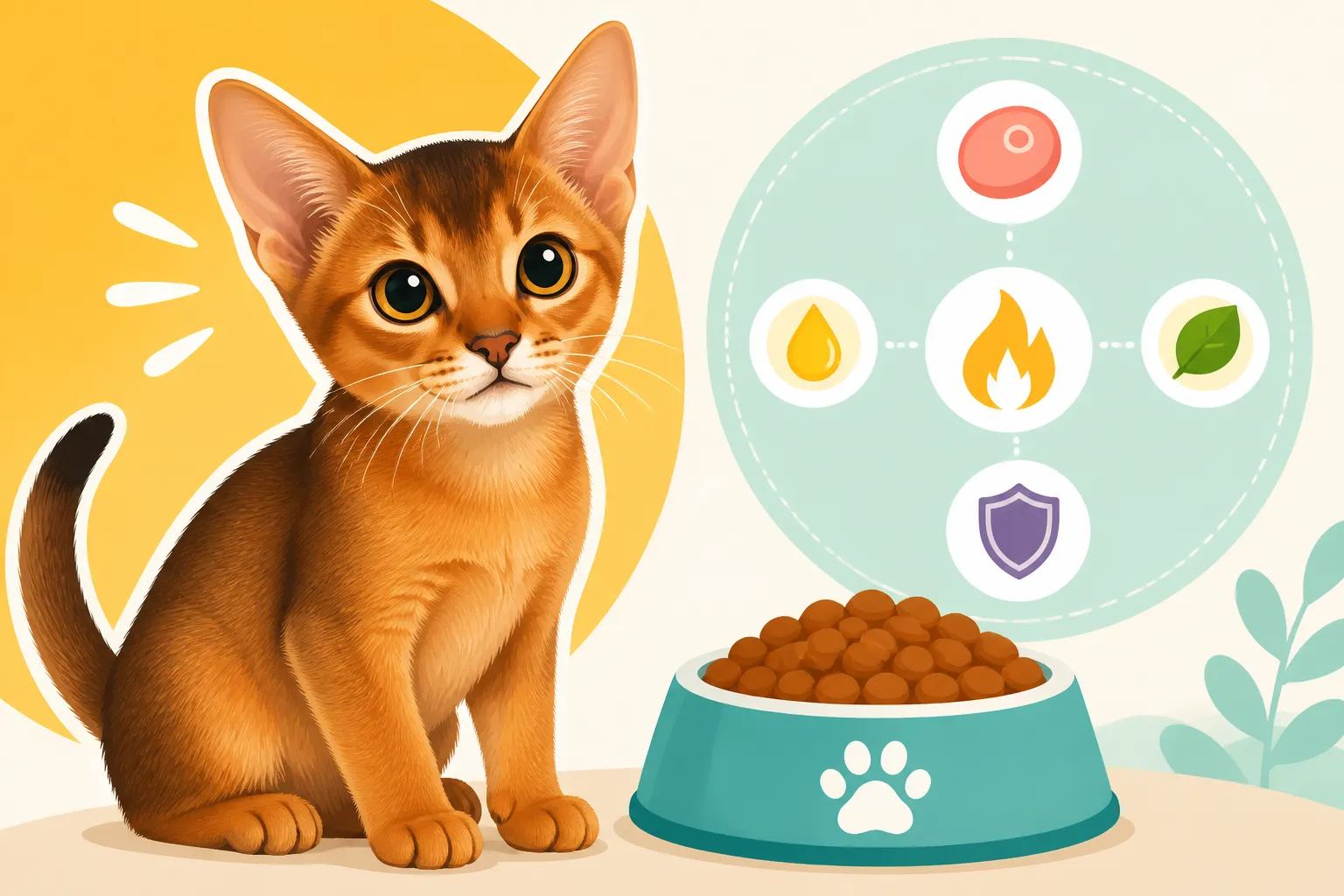
When selecting food for your Abyssinian kitten, prioritize high-quality kitten-specific formulas. These foods are specifically designed to meet the intense nutritional demands of growing felines, with higher protein levels, appropriate fat content, and essential vitamins and minerals like taurine, which is critical for feline heart and eye health. Look for animal protein (chicken, turkey, fish, etc.) as the first ingredient, and avoid foods with excessive fillers or artificial additives. Which Protein Percentage an Abyssinian Needs goes into more detail on this.
The debate between wet and dry food is ongoing, but for an Abyssinian, a combination often works best.
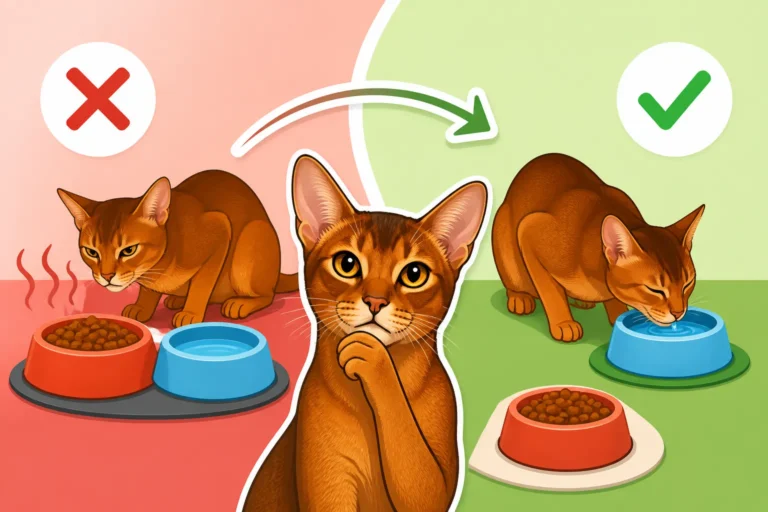
- Wet Food: This is an excellent source of hydration, which is incredibly important for kidney health, especially in a breed like the Abyssinian that can have predispositions later in life. Wet food is often highly palatable, which can be great for ensuring your kitten gets enough calories.
- Dry Food: Convenient and often more cost-effective, dry kibble can be left out for shorter periods (though free-feeding isn't recommended for Abyssinians, as we'll discuss). It also provides some dental benefits, though not as much as dedicated dental care.
A good approach is to offer a mix, perhaps wet food for one or two meals, and a small portion of dry kibble for enrichment or as part of a puzzle feeder. Remember, Why Kibble Alone Leaves an Abyssinian Short of Water highlights the importance of supplemental moisture.
Establishing a Consistent Feeding Schedule
For Abyssinian kittens, free-feeding (leaving food out all day) is generally not recommended, even if they're burning a lot of calories. While they might self-regulate better than some breeds, controlled meals offer several advantages:
- Portion Control: Ensures they get the right amount of calories and prevents overeating, which can lead to rapid weight gain or stomach upset.
- Monitoring Intake: You can easily track how much your kitten is eating, which is vital for spotting appetite changes that might indicate illness.
- Digestive Health: Regular meals help establish a routine for their digestive system, potentially reducing issues like vomiting or diarrhea.
- Behavioral Enrichment: Meal times can be positive reinforcement opportunities and can be integrated with training or puzzle feeding.
Ideally, an Abyssinian kitten should be fed three to four small meals a day until they are around six months old, and then transition to two to three meals a day. This frequent feeding helps to sustain their high energy levels and ensures a steady supply of nutrients for growth. Think of it like fueling a high-performance engine throughout the day rather than just once or twice. Why Three Meals Suit an Abyssinian explains the benefits of this approach.
The Role of Puzzle Feeders and Enrichment
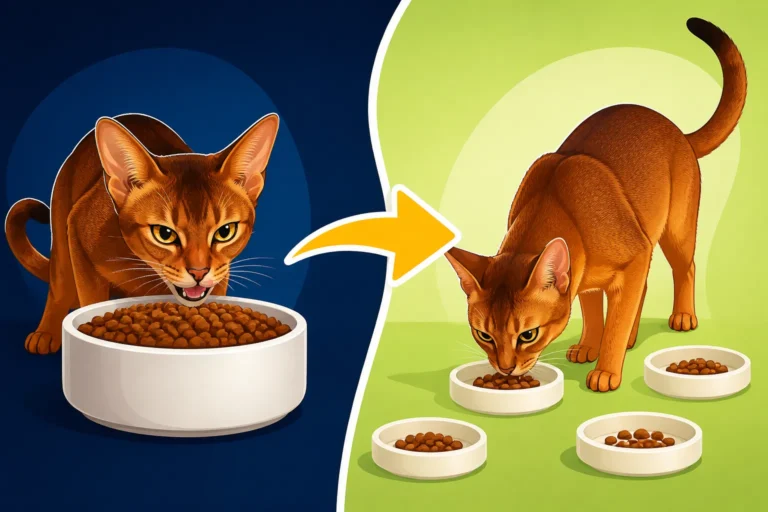
Abyssinian cats are incredibly intelligent and need mental stimulation just as much as physical exercise. This is where puzzle feeders really shine for kittens. Instead of simply putting their dry kibble in a bowl, place it in a puzzle feeder that requires them to "work" for their food. This satisfies their natural hunting instincts, slows down their eating, and provides valuable mental enrichment.
You can find a wide variety of puzzle feeders on Amazon or other pet supply stores, ranging from simple balls that dispense kibble to more complex mazes. Introducing these early can help your kitten develop problem-solving skills and prevent boredom, which can sometimes manifest as destructive behavior. Even hiding small portions of their daily kibble around the house can turn mealtime into a fun treasure hunt, further engaging their active minds and bodies. Which Puzzle Feeders Hold an Abyssinian's Attention offers more suggestions.
Ultimately, feeding an Abyssinian kitten successfully involves a blend of science, observation, and a good understanding of their unique breed characteristics. By focusing on high-quality nutrition, a consistent feeding schedule, and plenty of mental and physical enrichment, you'll be well on your way to raising a healthy, happy, and vibrant Abyssinian companion.
Disclaimer
This article is for general informational purposes only and does not constitute professional advice. Laws, prices and regulations vary by location and change over time. Consult a qualified professional for guidance on your specific situation.