Whether a Silver Abyssinian Is Recognized
A silver Abyssinian may look unmistakably like an Abyssinian, yet still be treated differently in a show ring or pedigree registry. That’s confusing when breeders, websites, and cat owners use “silver” as if it means the same thing everywhere. This guide explains which registries recognize silver, what the color describes, and what to check before relying on a listing or pedigree.
Is a silver Abyssinian an officially recognized color
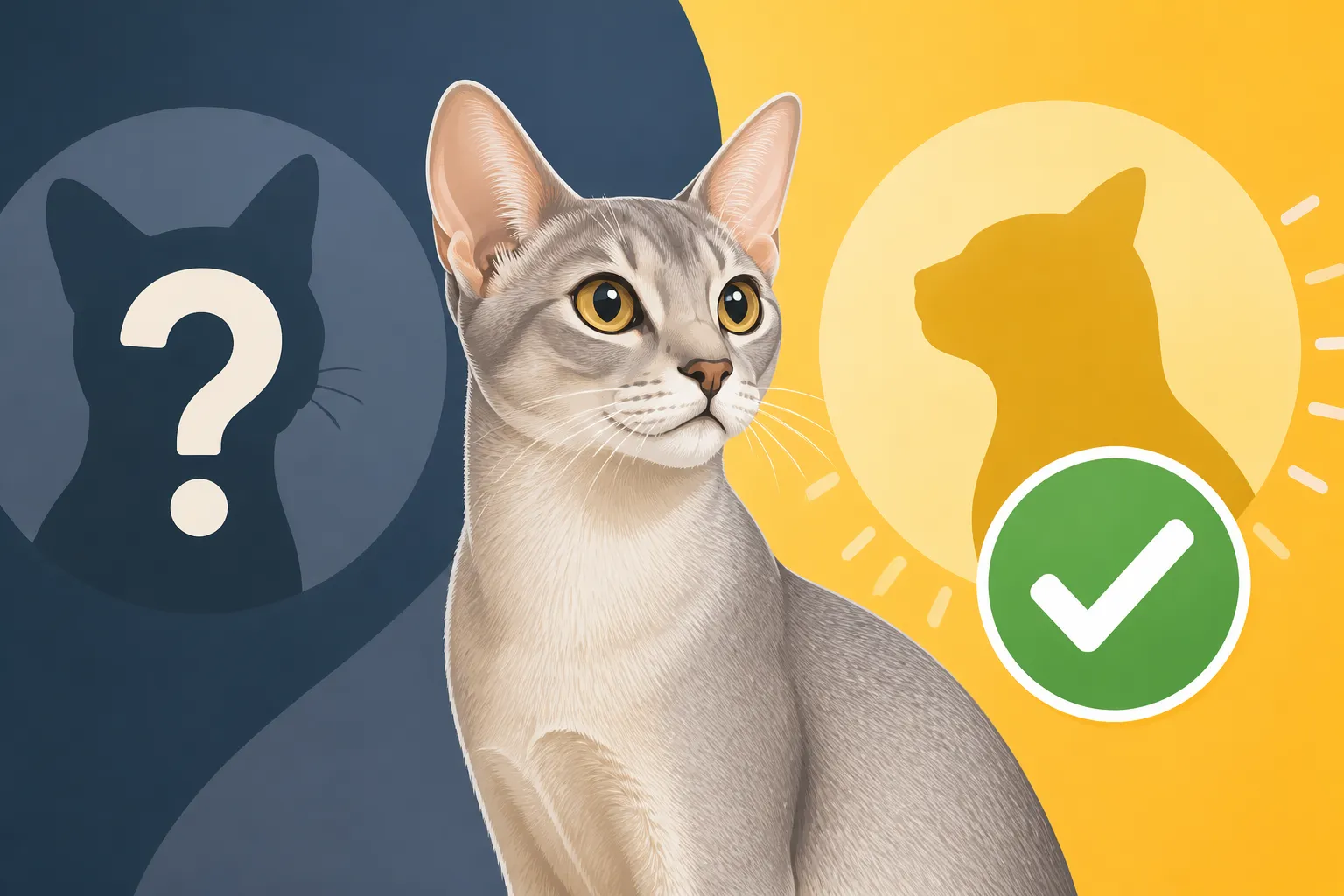
There isn’t one worldwide answer: recognition depends on the cat registry and the standard used for registration or showing. The Cat Fanciers’ Association does not include silver among its recognized Abyssinian colors. Some other registries recognize silver varieties, so a silver Abyssinian may be eligible under one organization’s rules and not another’s.
This difference doesn’t mean that a silver-looking cat is not an Abyssinian. It means the registry’s accepted color list may not include that coat color. For a show, breeding record, or pedigree, the relevant question is not simply “Is silver recognized?” but “Is silver recognized by the registry governing this particular cat?”
Why registry standards can differ
Cat registries set their own breed standards and color descriptions. They may use different names for similar shades, recognize different color varieties, or apply different rules to registration and competition. A color can therefore be permitted by one registry and excluded from another without either organization making a claim about whether the cat is affectionate, healthy, or a genuine member of the breed.
For example, CFA recognizes the traditional Abyssinian colors ruddy, red, blue, and fawn. Silver is not on its recognized Abyssinian color list. If you’re comparing those accepted colors, Which Abyssinian Colors CFA Recognizes explains the standard colors in more detail. Other registries may accept silver varieties, but you’ll want to check the organization’s own current standard rather than assume its rules match CFA’s.
That distinction matters most when a breeder says a kitten is “registered,” “show quality,” or “recognized.” Ask which registry they mean and what color is recorded on the kitten’s official paperwork. A verbal description or a social-media post isn’t a substitute for registration details, especially if the kitten may be shown or later used in a breeding program.
What recognition does and does not mean
Recognition is an administrative and show-standard issue. It tells you whether a registry accepts a color under its rules; it does not, by itself, establish a cat’s ancestry. Similarly, an unrecognized color doesn’t automatically make a cat unhealthy or less deserving of a loving home. It may simply mean the cat cannot be shown in that color class under a particular organization’s standard.
A cat’s appearance alone also cannot verify its pedigree. Silver coats can attract attention, and the color may be described in different ways in online listings. If the question is whether a cat is an Abyssinian, look for reliable pedigree documentation and breeder records, not just a striking coat. The history and standards behind the breed are covered in What the Abyssinian Show Standard Asks For.
This is also why retail descriptions are not evidence of registry status. A Chewy listing or other product page might use breed names to help shoppers find food, toys, or grooming items, but it can’t confirm that a cat’s color is officially recognized. Treat a retailer’s wording as a shopping label, not a pedigree record.
| Question | What to check |
|---|---|
| Is silver accepted for show or registration? | The specific registry’s Abyssinian color standard |
| Is this cat pedigreed? | Registration documents and pedigree information |
| What color is recorded officially? | The color listed on the registration paperwork |
| Does an online description prove recognition? | No; confirm directly with the registry |
| Does unrecognized mean unhealthy? | No; color recognition is not a health assessment |
What silver looks like on an Abyssinian
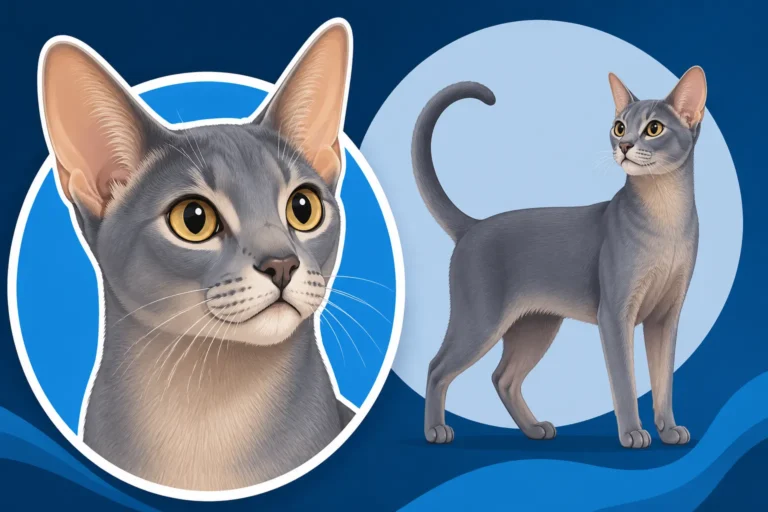
A typical Abyssinian coat is “ticked”: individual hairs have bands of color rather than forming the familiar stripes of a mackerel tabby. Silver Abyssinians have a pale, often cool-looking ground color with darker ticking. The exact contrast and shade can vary, and the word “silver” may refer to more than one color combination.
Silver varieties are sometimes described by the color of the ticking, such as black silver or blue silver. The naming system can differ among registries, which is another reason to check the official description instead of relying on a seller’s shorthand. A silver-looking coat is a visual description; the recognized color name is whatever the relevant registry records.
Silver compared with the traditional colors
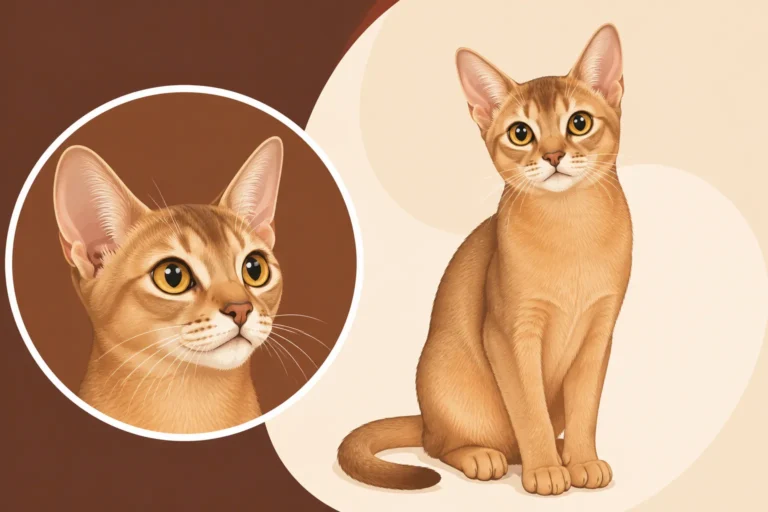
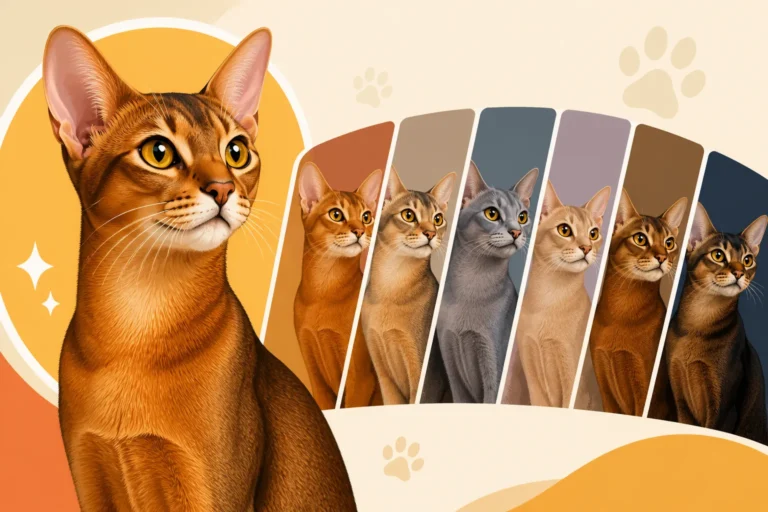
Ruddy Abyssinians usually have warm brown coloring with darker ticking. Sorrel cats tend to look warmer and more coppery or cinnamon-toned. Blue and fawn are diluted colors, with softer, cooler or paler appearances than ruddy. You can compare the traditional examples in What a Ruddy Abyssinian Actually Looks Like, What a Sorrel Abyssinian Looks Like, What a Blue Abyssinian Looks Like, and What a Fawn Abyssinian Looks Like.
Silver differs mainly in the impression created by the pale ground color and the contrast of the ticking. Someone seeing a silver cat for the first time may describe it as gray, white, or unusually pale. Those everyday descriptions aren’t necessarily the formal color name, though. Lighting, age, and the individual coat can change how the silver appears in a photograph or across a room.
Be cautious about judging from a single image. Indoor lighting can make a coat look warmer or cooler, while a phone camera may flatten subtle bands into one overall shade. If color classification matters to you, ask for clear photographs in natural light and the registered color name. For a show entry or pedigree question, the registry’s written standard takes precedence over a casual color label.
Silver is not the same as every pale or gray coat
A pale gray-looking cat is not automatically a silver Abyssinian. “Silver” refers to a coat-color description used within breed and registry systems; it isn’t a general synonym for gray. Likewise, a cat that looks lighter than a typical ruddy Abyssinian might be a recognized traditional color, a silver variety, or simply photographed under unusual light.
The Abyssinian’s distinctive ticking is central to the breed’s look. A kitten’s coat can also change as it matures, so an early photograph may not show the finished adult appearance. If a seller calls a kitten silver, ask how that color was determined, how the parents are registered, and how the kitten will be recorded. The basics of this process are explored in How an Abyssinian's Coat Color Is Registered.
The term “silver” should also not be confused with a promise of a particular show outcome. A cat can have an attractive coat and still not meet every detail of a registry’s breed standard. Conversely, a cat whose color is not accepted by a certain registry can still have the Abyssinian’s characteristic body, coat texture, and active personality.
How to verify a silver Abyssinian’s registration
If you’re considering a kitten, begin with the breeder’s paperwork and the registry named on it. Ask for the registered color of both parents, the kitten’s expected registration color, and whether that color is eligible for showing under the registry’s rules. Clear answers should be specific; “all registries accept it” is not specific enough.
A careful breeder should be able to tell you which registry they use and show you the relevant documents. If you’re unsure how to read a pedigree, ask the registry to explain the color designation or confirm whether the variety is accepted. It is sensible to do this before paying a deposit if show eligibility or breeding rights are important to you.
Questions to ask a breeder or registry
Keep the conversation practical. You don’t need to know every detail of feline color genetics, but you do need to know what the paperwork will say and what that means for your plans. Consider asking:
- Which registry is the kitten registered with, or will be registered with?
- What color is listed on the registration documents?
- Does that registry accept silver Abyssinians for registration?
- If showing is a goal, can this color be entered in the registry’s Abyssinian classes?
- Can I see the parents’ registration information and pedigrees?
- Is the breeder describing the kitten’s appearance informally, or using the registry’s official color designation?
Pay attention to the answer as much as the paperwork. A responsible breeder should be comfortable explaining the difference between appearance, registration, and show eligibility. If the breeder avoids naming the registry or insists that every organization uses identical rules, contact the registry directly before making a decision.
The same care applies to online listings. A listing can use “silver Abyssinian” as a descriptive phrase without establishing the cat’s registration status. Chewy and other retailers can be useful when you’re shopping for routine cat supplies, but their product categories are not a source for pedigree verification. For a kitten’s formal status, rely on its breeder’s records and the registry.
What to do if you already own a silver-looking cat
If you already have a silver Abyssinian, there’s no need to treat a registry’s color rules as a judgment of your cat. If you want to know whether the cat can be registered or shown, gather the pedigree and registration details you have, then contact the relevant organization. A registry can explain its own requirements more reliably than a general online label.
If you adopted your cat without pedigree paperwork, it may be impossible to establish official breed registration from appearance alone. That doesn’t change the care your cat needs or the bond you share. You can still describe the coat as silver-looking in everyday conversation, while being careful not to present that description as confirmed registration status.
For grooming, focus on the cat’s coat and comfort rather than trying to enhance a particular shade. A gentle grooming mitt or comb may help remove loose hair, but harsh tools or unnecessary products won’t make a coat more officially silver. Chewy may be one convenient place to browse ordinary grooming supplies; choose products suited to a short, close-lying coat and stop if grooming irritates your cat’s skin. If you’re unsure what the coat needs, ask your veterinarian or a groomer familiar with cats.
What to remember when you see a silver Abyssinian advertised
A silver Abyssinian can be a real, silver-looking cat, while its formal recognition depends on the registry. CFA does not recognize silver as an Abyssinian color; some other registries accept silver varieties. So the useful answer is not a universal yes or no: find out which registry applies and what its written rules say.
When comparing kittens, separate three questions that are often blurred together: what the coat looks like, what color the cat is registered as, and whether that color is eligible for showing. Ask for the paperwork, verify the registry, and don’t let a retailer’s breed label or a flattering photo stand in for documentation. Chewy can help with day-to-day supplies, but a registry—not a shopping page—determines its own color categories.
If your interest is simply in the cat as a companion, registry recognition may not affect your decision at all. It becomes more important if you plan to show the cat, breed it, or need the color recorded accurately in formal documents. A clear conversation with the breeder and registry can prevent a disappointing surprise later, especially when the word “silver” is being used casually.
Disclaimer
This article is for general informational purposes only and does not constitute professional advice. Laws, prices and regulations vary by location and change over time. Consult a qualified professional for guidance on your specific situation.