How PRA-rdAc Blinds an Abyssinian Slowly
Discovering your beloved Abyssinian is losing its sight due to a genetic condition like Progressive Retinal Atrophy, specifically the rdAc variant, can feel like a punch to the gut. It's heartbreaking to imagine such an active, observant cat slowly losing its most crucial sense, especially when their world is so much about exploring and interacting. This comprehensive guide will walk you through what PRA-rdAc is, how it progresses, how it's diagnosed, and how we, as dedicated Abyssinian parents, can support our feline companions through this challenging journey.
What is PRA-rdAc and How It Impacts Abyssinians?
It’s truly devastating when a genetic condition like Progressive Retinal Atrophy (PRA) targets a cat as vibrant and engaged as an Abyssinian. While "Progressive Retinal Atrophy" sounds like a mouthful, it essentially means the cells in the retina – the part of the eye that detects light and sends signals to the brain – slowly die off over time. For Abyssinians, the most common form of PRA is known as rod-cone degeneration (rdAc), and it's a condition that we need to understand deeply to protect our furry family members.
The Genetics Behind Progressive Retinal Atrophy
At its core, PRA-rdAc is a heritable disease, meaning it's passed down through generations. It's caused by a specific mutation in the CEP290 gene. This gene is vital for the proper development and function of both rod and cone photoreceptor cells in the retina. Rods are primarily responsible for vision in low light and detecting movement, while cones handle color vision and sharp details in bright light. When this gene is faulty, these crucial cells begin to degenerate.
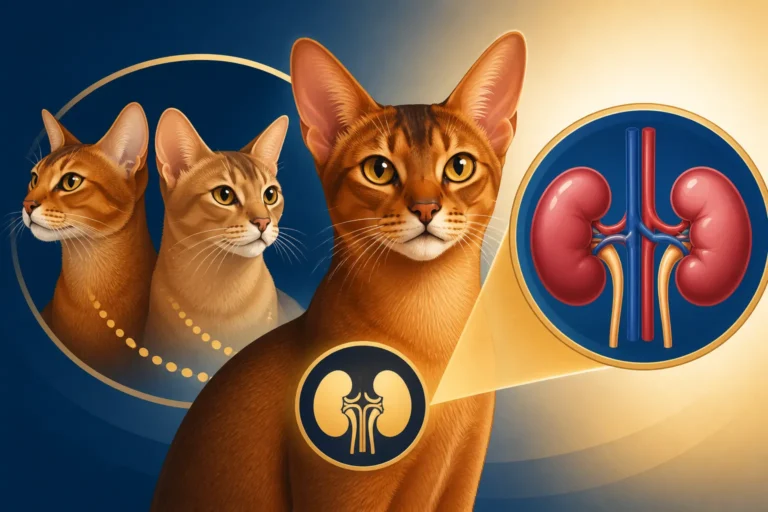
It operates on an autosomal recessive basis. What does that mean for us pet parents? It means that a cat must inherit two copies of the mutated gene—one from each parent—to actually develop the disease. If a cat inherits only one copy, it's considered a "carrier." A carrier Abyssinian won't show any signs of the disease itself, and its vision will be perfectly normal. However, if two carriers are bred together, each kitten in the litter has a 25% chance of being affected, a 50% chance of being a carrier, and a 25% chance of being completely clear. This genetic lottery is why responsible breeding practices are so incredibly important, as we'll discuss later. You can learn more about how this inheritance works in detail by reading about How a Carrier Abyssinian Differs From an Affected One.
How PRA-rdAc Specifically Affects the Abyssinian Retina
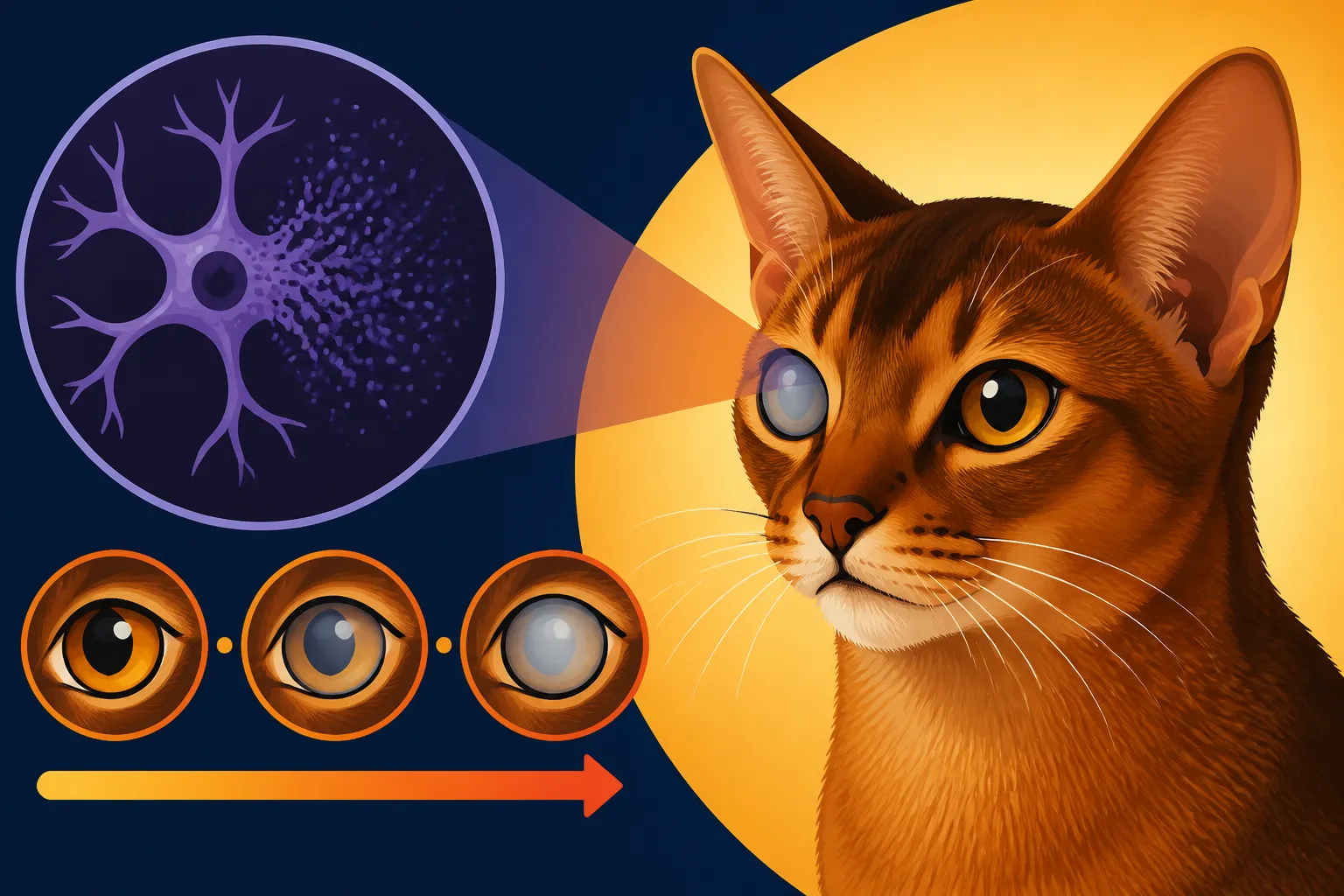
For our active Abyssinians, the impact of PRA-rdAc is particularly cruel. The rod and cone cells, which are already delicate, start to break down and die prematurely. Initially, it's often the rod cells that are affected first, which explains why an affected Abyssinian will typically experience a decline in night vision before any other obvious signs. Imagine trying to navigate your home in the dark when you once could see every shadow and contour – that’s essentially what they're going through.
As the disease progresses, the cone cells also begin to degenerate, leading to a more generalized loss of vision, even in well-lit environments. This isn't a sudden, acute blindness, but a slow, insidious process. The retina essentially thins out and loses its ability to convert light into electrical signals that the brain can interpret. This gradual decline can be especially hard to notice in a cat as agile and adaptable as an Abyssinian, who often finds ways to compensate for their worsening sight. The heartbreaking reality is that by the time overt signs are noticeable to us, significant retinal damage has already occurred. This relentless progression is why understanding PRA-rdAc Takes an Abyssinian's Sight by Five is such vital knowledge for any owner.
Recognizing the Subtle Early Signs of Vision Loss
One of the most frustrating aspects of PRA-rdAc in Abyssinians is how subtly it begins. These cats are masters of adaptation, and their keen senses of hearing and smell, coupled with their incredible athleticism, can mask early vision problems for quite some time. It often takes a very observant owner to pick up on the initial, quiet clues that something is amiss.
Initial Changes in Behavior and Navigation
Typically, the very first signs of PRA-rdAc revolve around a decline in night vision. You might notice your Abyssinian, usually a fearless explorer of dark hallways, hesitating more at dusk or in dimly lit rooms. Perhaps they're bumping into furniture that's been moved, or even familiar objects, especially in low light conditions. This isn't just clumsiness; it's a sign that their world is literally getting darker. They might be more reluctant to jump onto surfaces they usually navigate with ease, or they might misjudge distances.
Think about their usual routine: are they still leaping onto the highest shelves or chasing laser pointers with the same ferocity after dark? If your Abyssinian, who once ruled the night, suddenly prefers to stay put or navigates with greater caution when the lights are low, it's a significant red flag. They might become more startled by sudden movements or noises, as their reduced visual input makes them more reliant on their other senses, leading to heightened sensitivity. They start relying more on memory and whiskers, sometimes tracing the walls with their bodies as they walk. These are some of the first indicators of What an Abyssinian Does First as Its Sight Goes.
Observing Ocular Clues and Night Vision Issues
Beyond behavioral shifts, there are sometimes subtle changes in the eyes themselves, though these usually appear later in the disease progression. One of the most common physical signs is a noticeable dilation of the pupils, even in normal lighting. This happens because the retina isn't receiving enough light, so the iris compensates by opening wider to let in more, almost like trying to see more clearly in a perpetually dim room.
You might also notice a subtle change in the "tapetum lucidum," which is the reflective layer behind the retina that gives cats their excellent night vision and makes their eyes glow in photographs. As the retinal cells degenerate, this reflective layer can become more prominent or take on a greenish-yellow sheen, visible as a stronger eye-shine. An ophthalmologist, using specialized equipment, can detect these retinal changes much earlier than the naked eye. Regular vet check-ups, especially as your Abyssinian approaches its middle years, become even more critical because early detection can help you prepare and adapt, even if there isn't a cure.
The Unfolding Progression of Blindness
Once PRA-rdAc begins its insidious work, it follows a generally predictable, albeit slow, trajectory. It’s not a sudden event, but a gradual dimming of their world, which can make it particularly challenging for owners to pinpoint exactly when the problem truly set in.
Gradual Deterioration to Advanced Stages
The process starts with night blindness, as the rod cells, which are crucial for low-light vision, begin to fail. Imagine your Abyssinian, usually a blur of motion at twilight, now hesitating at the edge of a dark room, or bumping into a floor lamp it's always known. Over months, or even a couple of years, this progresses to affect their daytime vision as the cone cells also degenerate. This is when things become undeniably noticeable to most owners. They might start bumping into familiar objects even in well-lit spaces, struggle to track moving toys, or become disoriented in new environments.
The pace of deterioration can vary slightly between individuals, but eventually, most affected Abyssinians will become functionally blind. This typically occurs by the age of 3 to 5 years, though some may show signs earlier or later. During this period, their pupils will likely remain permanently dilated, and their eye-shine might become even more pronounced. It’s a heartbreaking decline, watching an animal renowned for its agility and keen senses slowly lose its ability to navigate its world visually. However, it's important to remember that blindness doesn't mean the end of a happy, fulfilling life for your Abyssinian; it simply means adjustments are needed.
How an Abyssinian's Other Senses Compensate
The remarkable thing about cats, especially intelligent breeds like the Abyssinian, is their incredible capacity for compensation. As their vision fades, their other senses — hearing, smell, and touch (especially through their whiskers) — become exquisitely sharpened. They essentially remap their world using these alternative inputs. They memorize the layout of your home, noting every piece of furniture, every doorway, every stair. This is why Why a Blind Abyssinian Still Climbs is such an important insight; they don't lose their inherent desire to explore, just their primary tool for doing so.
Their whiskers become like sophisticated radar, helping them detect obstacles and navigate tight spaces. Their sense of smell allows them to identify people, other pets, and even changes in the environment. Their hearing becomes incredibly acute, allowing them to pinpoint the source of sounds and understand their surroundings. Owners often report that their blind Abyssinians still play, chase sounds, and seem perfectly content, a testament to their resilience. It's truly amazing to witness how these cats adapt, teaching us a powerful lesson about living in the moment and making the most of what you have. This inherent adaptability is why a secure home environment becomes paramount, allowing them to rely on these heightened senses without fear.
Diagnosing PRA-rdAc and the Role of Genetic Testing
When you suspect your Abyssinian might be experiencing vision loss, getting a proper diagnosis is the first crucial step. You need clarity to understand the situation and make informed decisions for their care.
Veterinary Examinations and Ophthalmic Assessments
Your journey will likely start with your regular veterinarian, who can perform a general physical exam and an initial assessment of your cat's eyes. They'll check for pupil responses, overall eye health, and might use an ophthalmoscope to look at the retina. However, for a definitive diagnosis of PRA, especially in its early stages, a referral to a veterinary ophthalmologist is usually necessary. These specialists have advanced equipment and expertise to thoroughly examine the retina.
An ophthalmologist can perform several key tests:
- Electroretinography (ERG): This is the gold standard for diagnosing retinal degeneration. It measures the electrical activity of the retinal cells in response to light, similar to how an EKG measures heart activity. In cats with PRA, the ERG results will show a significantly reduced or absent electrical response, confirming the retinal cells are not functioning correctly.
- Ophthalmoscopy: Using a specialized scope, the ophthalmologist can visualize the retina directly, looking for characteristic changes like thinning of the retinal layers, changes in the optic nerve, or increased reflectivity of the tapetum lucidum. How a Vet Confirms Retinal Atrophy in an Abyssinian often involves these advanced tools and techniques.
These examinations help distinguish PRA-rdAc from other causes of vision loss, such as glaucoma, cataracts, or infections, ensuring your Abyssinian receives the correct diagnosis and appropriate care.
Understanding the Genetic Test Results
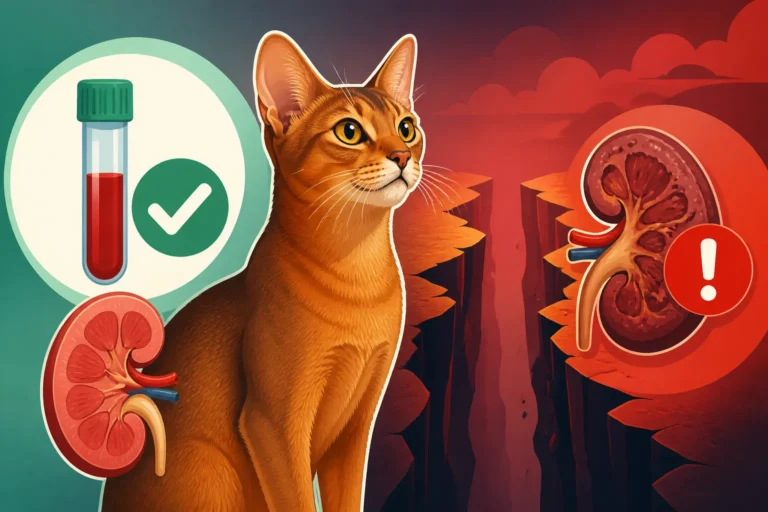
Beyond the clinical examination, genetic testing is absolutely essential for PRA-rdAc in Abyssinians. Unlike some conditions, we have a clear, reliable DNA test that can identify affected cats and carriers. This test specifically looks for the CEP290 gene mutation responsible for rdAc. Knowing your cat's genetic status is incredibly powerful information, whether you're a breeder or a pet owner.
The test results will typically come back as one of three classifications:
- Clear/Normal: The cat has two normal copies of the gene and will not develop PRA-rdAc, nor will it pass the mutated gene to its offspring.
- Carrier: The cat has one normal copy and one mutated copy of the gene. It will not develop the disease itself but can pass the mutated gene on to its offspring.
- Affected: The cat has two mutated copies of the gene and will develop PRA-rdAc and experience vision loss. It will pass one mutated gene to all of its offspring.
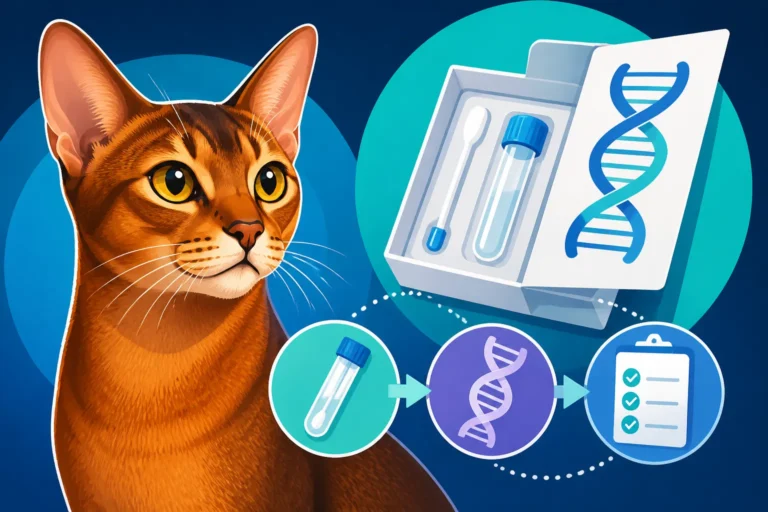
This genetic test, often referred to as How the CEP290 Test Clears an Abyssinian, is usually performed using a simple cheek swab, which is non-invasive and can be done at any age, even on young kittens. For breeders, this information is paramount in making informed decisions to prevent the spread of the disease. For pet owners, if you know your Abyssinian is affected, it allows you to prepare for their eventual blindness and proactively adapt their environment. Knowing the genetic status helps you understand the future and plan accordingly, reducing stress for both you and your cat.
Supporting Your Abyssinian Through Vision Loss
Watching your once-sighted Abyssinian navigate a world that is slowly fading can be heart-wrenching. But here's the good news: blind cats, especially intelligent and adaptable ones like Abyssinians, can lead incredibly happy, full lives with the right support and a loving owner. It's about shifting your perspective and proactively creating a safe, consistent environment.
Adapting the Home Environment for Safety and Comfort
The single most important thing you can do for a blind Abyssinian is to maintain consistency in their environment. Imagine constantly having to re-learn your surroundings; it would be incredibly stressful. So, the first rule is: don't move furniture around unnecessarily. Keep their food and water bowls, litter boxes, and favorite sleeping spots in the same, easy-to-access locations.
Consider these practical adaptations:
- Create "safe zones": Designate specific areas that are uncluttered and easy to navigate. Use different textures of mats or rugs to indicate pathways to important resources like food or litter.
- Protect from hazards: Block off stairs or dangerous heights with baby gates until your cat has fully mapped them, or if they struggle with depth perception. Pad sharp corners on furniture.
- Vertical space is still crucial: Abyssinians love to climb, and a blind Abyssinian is no exception. Invest in sturdy cat trees or wall shelves with broad, stable platforms. Ensure easy, consistent routes up and down. Remember, Why a Blind Abyssinian Still Climbs is about their instinct, so help them do it safely.
- Sound cues: You can use subtle sound cues, like a crinkly mat near the food bowl or a bell on your shoe, to help them locate things or know where you are.
- Enhanced water access: Ensure multiple water sources, perhaps a fountain or wide bowls in various spots, to encourage hydration. This is always important for Abyssinians, especially given their general propensity for kidney issues.
These adjustments might seem extensive at first, but they quickly become routine, and your Abyssinian will thrive on the predictability and security you provide. Pet insurance providers like Healthy Paws can be a real lifeline here, as adapting your home might require some investment, and any future vet visits related to the ongoing condition or age-related issues can add up.
Maintaining Quality of Life and Emotional Well-being
Beyond physical adaptations, nurturing your Abyssinian's emotional well-being is paramount. They still need mental stimulation and affection.
- Interactive play: While laser pointers are out, wand toys with feathers or crinkly bits are fantastic. Squeaky or rattling toys can engage their acute hearing. Puzzle feeders that release treats based on scent or touch are also excellent for mental enrichment.
- Verbal communication: Talk to your Abyssinian frequently. Use their name often, and let them know you're approaching before you touch them. A gentle touch on their back or shoulder is better than a sudden pet to the head.
- Consistent routine: Keep feeding times, playtimes, and cuddle sessions consistent. This predictability reduces anxiety and builds trust.
- Safe outdoor access (with supervision): If your Abyssinian enjoyed supervised outdoor time in a catio, they can still enjoy it. The fresh air, sounds, and smells are highly enriching. Just ensure the space is completely secure and free of hazards.
- Bonding and affection: More than ever, your blind Abyssinian needs your presence and reassurance. Regular grooming sessions (even just gentle petting), cuddles, and quiet time together strengthen your bond and provide comfort.
It's natural to feel sad or protective, but try not to pity them. Instead, celebrate their resilience and adaptability. They will continue to be the playful, affectionate companions they always were, just with a different way of experiencing the world. Investing in their ongoing care and enrichment is key, and having a good pet insurance plan from a provider like Healthy Paws can offer significant peace of mind for their long-term health needs.
Preventing PRA-rdAc Through Responsible Breeding
For a genetic condition like PRA-rdAc, prevention is truly the best medicine, and this burden falls heavily on the shoulders of responsible breeders. Their commitment to health testing and ethical breeding practices is the frontline defense against the continued spread of this heartbreaking disease.
The Importance of Screening Breeding Cats
The genetic test for PRA-rdAc is readily available and highly accurate. Any Abyssinian intended for breeding should absolutely be tested for the CEP290 mutation before being considered for a breeding program. This isn't an optional step; it's a fundamental responsibility. Breeders need to know the genetic status of every single cat in their cattery to make informed decisions.
A responsible breeder will:
- Test all breeding cats: This includes both queens and studs, and often even kittens they are considering retaining for future breeding. They should be able to provide documentation, such as official certificates from reputable labs, for both parents of any kitten you purchase.
- Avoid breeding affected cats: Abyssinians that test as "affected" should never be used for breeding, as they will pass on a mutated gene to all of their offspring.
- Strategically manage carriers: While carrier Abyssinians do not develop the disease, they carry one copy of the faulty gene. Responsible breeders can use carriers in their programs, but only if they are bred to a "clear" mate. This ensures that no affected kittens are produced, as all offspring would either be clear or carriers. Why Two Clear Abyssinian Parents End the Problem is a perfect example of this principle in action, guaranteeing healthy litters.
- Be transparent: A good breeder will openly discuss the genetic health of their lines and readily share test results with potential buyers. If a breeder is evasive or claims testing isn't necessary, it's a huge red flag.
By diligently screening all breeding cats, breeders can significantly reduce, and eventually eliminate, the incidence of PRA-rdAc in the Abyssinian population. It takes effort and commitment, but it's a crucial step toward ensuring the health and well-being of the breed for generations to come.
The Ethical Responsibilities of Breeders
Beyond simply conducting tests, ethical breeding involves a deeper commitment to the long-term health of the Abyssinian breed. This means prioritizing health over other factors, such as specific aesthetic traits or perceived rarity. It means understanding that responsible breeding is not just about producing beautiful kittens, but about producing healthy kittens.
Here are some key ethical considerations for breeders:
- Educating buyers: Breeders have a responsibility to educate prospective owners about PRA-rdAc, its implications, and the importance of continued health testing for their own pets if they plan to breed them (which, for pet-quality cats, should be discouraged via a spay/neuter contract).
- Maintaining accurate records: Keeping meticulous records of all genetic tests, breeding pairs, and the health outcomes of their offspring helps breeders track the disease and make better decisions in the future.
- Contributing to research: Some responsible breeders participate in research studies or contribute to broader efforts to understand and eradicate genetic diseases within the breed.
- Avoiding "backyard breeders": These individuals often prioritize profit over health, skip essential genetic testing, and contribute to the proliferation of genetic diseases like PRA-rdAc. It's vital for potential owners to do their homework and only purchase from reputable, ethical breeders. Why an Abyssinian Stud Must Be Cleared Before Use underscores the critical role of every individual breeding cat in preventing the spread of inherited conditions.
Choosing a reputable breeder is perhaps the most impactful decision a prospective Abyssinian owner can make to ensure they bring home a healthy kitten. This commitment to ethical practices safeguards the future of this magnificent breed against preventable genetic conditions.
Navigating Life with a Visually Impaired Abyssinian
Even with the best preventative measures, some Abyssinians may still be diagnosed with PRA-rdAc, or other conditions might lead to vision impairment later in life. When this happens, our role as their caretakers shifts from prevention to proactive support, ensuring their quality of life remains high. It's a journey that requires patience, understanding, and a willingness to adapt alongside them.
Creating a Secure and Predictable Home Landscape
A visually impaired Abyssinian thrives on predictability. Their home becomes their carefully mapped territory, and any sudden changes can lead to disorientation and anxiety. Imagine if someone rearranged your entire house every few days – you'd feel pretty lost, wouldn't you? This is why maintaining a consistent environment is paramount.
- Minimizing clutter and obstacles: Keep floors clear of tripping hazards like shoes, bags, or small toys. Ensure furniture is stable and won't easily tip over if bumped. Consider child-proofing latches on low cabinets, as a curious Abyssinian might explore by scent or touch, accidentally getting into something harmful.
- Scent marking: Believe it or not, subtle scents can act as markers for your cat. You can lightly spray different essential oils (cat-safe ones like lavender or chamomile, heavily diluted) near their food bowl, litter box, or favorite sleeping spots. Just be sure the scents are very mild and consistent, as an overly strong smell can be overwhelming.
- Utilizing textures: Different textures can help your Abyssinian "feel" their way around. A rug leading to the litter box, a carpet runner to the feeding station, or a designated blanket on their favorite chair can provide tactile cues.
- Consistent feeding and litter stations: These essential areas should never be moved. If you have multiple floors, consider having a litter box and water bowl on each level they frequent. Abyssinians are generally clean cats, and a visually impaired one will appreciate easily accessible amenities.
Remember, an Abyssinian's strength lies in its athleticism and intelligence. By creating a well-structured, predictable environment, you empower them to navigate confidently, reducing frustration and maintaining their independence. This proactive approach helps them continue to enjoy their active lifestyle, even without full sight.
Enrichment and Engagement for Blind Abyssinians
Just because an Abyssinian can't see doesn't mean their vibrant personality and need for engagement diminish. In fact, providing sensory enrichment becomes even more critical to prevent boredom and maintain their mental well-being. Their keen senses of hearing, smell, and touch are now their primary tools for interacting with the world.
- Sound-based toys: Forget the laser pointer; think jingle balls, crinkly toys, and anything that makes noise. Toys that dangle from a wand and rustle or squeak are fantastic for interactive play, allowing you to guide their pounces and chases by sound. You might even find they develop an uncanny ability to catch a tossed soft toy by tracking its sound.
- Scent-based games: Hide treats around a room and encourage them to sniff them out. Use puzzle feeders that require them to use their nose and paws to extract kibble. These activities tap into their natural hunting instincts and provide mental stimulation.
- Vertical exploration (safely): Abyssinians are climbers! Ensure any cat trees or wall shelves are incredibly sturdy, have clearly defined, safe pathways up and down, and perhaps soft landings at the bottom. Start with lower heights and gradually introduce them to more complex structures as they gain confidence. It's truly amazing Why a Blind Abyssinian Still Climbs – it's instinctual, and we can help them fulfill it safely.
- Vocal interaction and touch: Engage with your Abyssinian frequently. Talk to them, call their name, and give gentle, reassuring strokes. Physical contact, like brushing or cuddling, becomes an even more important form of bonding. These interactions reaffirm your presence and comfort, making them feel secure in their world.
- Outdoor Catios: If you have a secure catio, a visually impaired Abyssinian can still immensely enjoy the fresh air, scents, and sounds of the outdoors in a safe, enclosed space. Just ensure the layout is consistent and free of potential hazards they might stumble over.
The key is to remember that your blind Abyssinian is still the same intelligent, playful cat underneath. They simply need a little extra help and creativity from you to experience the joys of life fully. And while this journey might seem daunting, it's incredibly rewarding to witness their resilience and adaptability. Having a robust pet insurance plan, such as one from Healthy Paws, can certainly help manage any unexpected health issues that might arise during their lifetime, allowing you to focus on their well-being without financial stress.
Comparative Table: PRA-rdAc vs. Other Abyssinian Vision Issues
To truly understand PRA-rdAc, it's helpful to see how it stacks up against other potential vision problems an Abyssinian might face. While PRA-rdAc is genetic and progressive, not all vision issues share these characteristics.
| Feature | PRA-rdAc (rdAc Variant) | Glaucoma (Primary or Secondary) | Cataracts | Retinal Detachment |
|---|---|---|---|---|
| Cause | Genetic mutation (CEP290 gene), autosomal recessive inheritance | Increased intraocular pressure, genetic, injury, or secondary | Clouding of the lens, genetic, diabetes, trauma, aging | Trauma, inflammation, underlying disease, genetic |
| Onset | Early to mid-life (often signs by 2-5 years) | Can be sudden or gradual, any age | Can be congenital or develop with age | Usually sudden onset |
| Progression | Slow, progressive, irreversible degeneration of retinal cells | Rapid or gradual, irreversible damage to optic nerve | Progressive clouding, can be surgically treated | Acute, often complete vision loss in affected eye |
| Primary Effect | Rod/cone degeneration, night blindness first, then day vision | Optic nerve damage, pain, total blindness if untreated | Opaque lens, blurred vision, eventually blindness | Separation of retina from blood supply, acute blindness |
| Pain | No pain associated with vision loss | Often very painful (head pressing, squinting, pawing at eye) | Generally not painful unless secondary issues arise | No pain, but disorientation/stress from sudden vision loss |
| Genetic Test Available | Yes (CEP290 gene) | Sometimes (e.g., specific breeds), often multifactorial | Yes (e.g., some breeds), often multifactorial or acquired | No specific genetic test for detachment itself |
| Treatment/Management | Supportive care, environmental adaptation, no cure | Emergency veterinary care, medications, surgery, enucleation | Surgical removal (phacoemulsification) to restore vision | Emergency surgery, laser therapy, prognosis variable |
Understanding these distinctions can help you and your vet narrow down possibilities if your Abyssinian starts showing signs of vision trouble. While PRA-rdAc is a specific genetic issue, other problems like glaucoma or cataracts require different, often urgent, interventions.
Disclaimer
The information provided in this article is for general informational purposes only and does not constitute veterinary advice. Always consult with a qualified veterinarian or a veterinary ophthalmologist for any health concerns or before making any decisions about your Abyssinian's care. Genetic testing and veterinary examinations are essential for accurate diagnosis and management of conditions like PRA-rdAc.