Why No Test Covers an Abyssinian’s Kidneys
It can be incredibly disheartening, and frankly, quite confusing, to learn about the health predispositions of your beloved Abyssinian only to discover that for one of the most serious conditions, there's no clear-cut DNA test available. You've heard about genetic screening for other breeds, or even other issues within Abyssinians, and you naturally expect the same for something as critical as kidney health. This guide is here to unravel that mystery, explaining why, despite incredible advancements in feline genetics, we still don't have a definitive test for a devastating kidney disease that impacts our vibrant Abyssinians.
Understanding Abyssinian Kidney Health: The Known vs. The Unknown
When you bring an Abyssinian into your home, you're welcoming a whirlwind of energy, intelligence, and affection. As a responsible cat parent, you naturally want to understand their unique health profile. For many breeds, and indeed for some conditions in Abyssinians, genetic tests offer powerful tools for breeders and owners. We can easily test for conditions like Pyruvate Kinase Deficiency or progressive retinal atrophy, giving us clear answers about a cat's genetic status. However, when it comes to kidney health, specifically a devastating condition known as renal amyloidosis, the path isn't nearly as straightforward, and there's no simple "clear" or "affected" result to rely on.
The Clear Answers from DNA Tests
For certain genetic conditions, the science is beautifully precise. We know the exact gene mutation responsible, and a quick cheek swab can tell you if your Abyssinian is clear, a carrier, or affected. For instance, Pyruvate Kinase Deficiency Is the Abyssinian's Best Known Test screens for a blood disorder that can cause intermittent anemia. Similarly, PRA-rdAc Takes an Abyssinian's Sight by Five refers to a form of progressive retinal atrophy that can lead to blindness. These tests are invaluable, allowing ethical breeders to make informed decisions and prevent affected kittens from being born, thereby reducing the prevalence of these diseases in the breed. When you're looking at a breeder, they should be able to show you the results for these specific conditions.
The Unanswerable Questions of Renal Amyloidosis
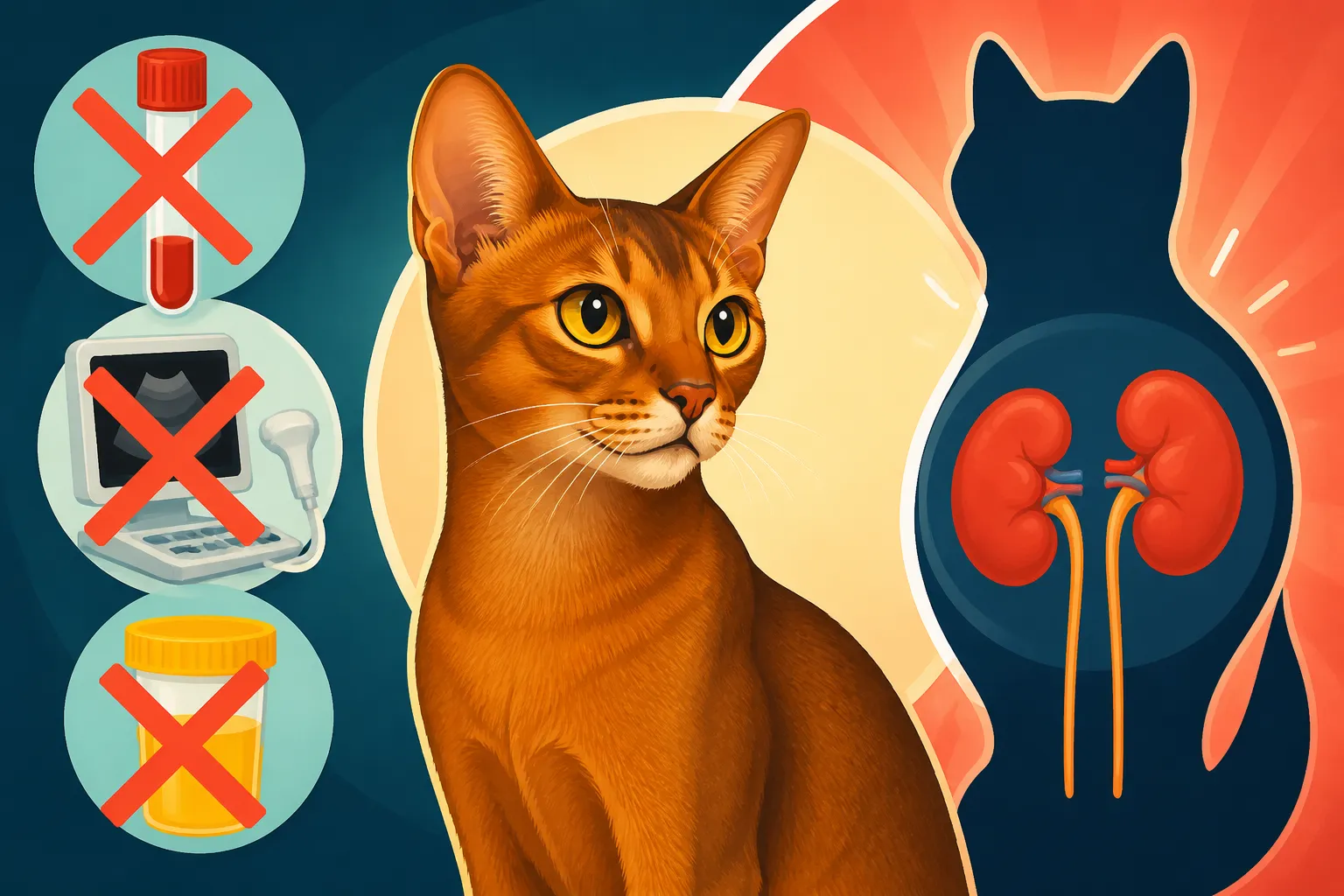
Unfortunately, not all diseases fit neatly into the "single gene mutation" box. Renal amyloidosis, a cruel and insidious disease that targets the kidneys of many Abyssinians, is one such condition. Unlike the clear-cut genetic tests we have for PK Deficiency or PRA-rdAc, there is currently no DNA test available to identify Abyssinians at risk or predisposed to developing renal amyloidosis. This lack of a genetic marker leaves breeders and owners in a difficult position, grappling with uncertainty and the heartbreaking reality that a cat can develop this condition without any forewarning from a genetic panel. It’s a huge frustration for dedicated Abyssinian lovers who want to do everything possible to ensure the health of their cats. This is truly Renal Amyloidosis Is the Abyssinian Problem Nobody Can Test For, and it underscores the complexity of genetic health beyond what a simple DNA kit can reveal.
What is Renal Amyloidosis and How Does it Affect Abyssinians?
Understanding what renal amyloidosis actually is helps shed light on why it's such a complex problem to tackle from a genetic standpoint. It's not a common cold or a bacterial infection; it's a systemic disorder with grave consequences for kidney function. This disease is particularly prevalent in Abyssinians, making it a significant concern for anyone who loves and lives with this wonderful breed.
The Insidious Nature of Amyloid Deposits
At its core, renal amyloidosis involves the abnormal deposition of a specific protein, called amyloid, within the tissues of the body, most critically in the kidneys of Abyssinians. Think of amyloid as a sticky, insoluble substance that begins to build up in the spaces between cells, disrupting the normal architecture and function of the organ. In Abyssinians, the target organ is almost exclusively the kidneys, where these deposits interfere with the delicate filtering units. Over time, as more and more amyloid accumulates, the kidneys simply cannot perform their vital function of filtering waste products from the blood, leading to progressive kidney failure. This accumulation isn't a quick process; it's slow, silent, and destructive, often showing no outward signs until a significant amount of damage has already occurred. This gradual destruction explains What Renal Amyloidosis Deposits in an Abyssinian's Kidney and its severe consequences.
The Onset and Progression of Kidney Failure
The cruelest part of renal amyloidosis in Abyssinians is often its timing and rapid progression once symptoms appear. While kidney disease is often associated with older cats, amyloidosis can strike surprisingly early, leading to How Young an Abyssinian Can Lose Its Kidneys. We're not talking about a cat in its golden years; Abyssinians can show signs of kidney failure as young as two to five years old, a time when they should be in the prime of their lives. The early symptoms are often subtle and non-specific: a slight increase in thirst, perhaps a little more urination, or a subtle decrease in appetite. These can easily be missed or attributed to other, less serious issues. As the disease progresses, signs become more pronounced: weight loss, vomiting, lethargy, and a dulling coat. By the time these overt symptoms appear, a significant portion of kidney function has usually been lost, and the prognosis can be quite bleak. It's a race against time, and without a genetic test, the starting gun is often fired before anyone even knows the race has begun.
The Scientific Challenges: Why No Genetic Test Exists
It's natural to wonder, in an age of advanced genetic mapping and DNA testing, why this particular disease remains elusive to a simple swab test. The answer lies in the complex nature of the disease itself and the limitations of current genetic science when dealing with conditions that aren't caused by a single, identifiable mutation.
Polygenic Inheritance and Environmental Factors
The primary reason we don't have a genetic test for Abyssinian renal amyloidosis is that it's largely believed to be a polygenic disease, possibly with significant environmental influences. What does "polygenic" mean? Instead of being caused by a single faulty gene, like PK Deficiency, polygenic diseases are influenced by multiple genes acting in concert. Imagine a symphony where the overall sound isn't just one instrument playing a wrong note, but a subtle discord among many instruments. Identifying the precise combination of genes that predispose an Abyssinian to amyloidosis, and then developing a test for all those genes, is an incredibly complex undertaking. It's like trying to find a needle in a haystack, except the needle is actually a handful of specific straw types scattered throughout. Furthermore, environmental factors — diet, stress, concurrent illnesses, even exposure to certain triggers — may play a role in whether a genetically predisposed cat actually develops the disease, or how severely. This interaction makes it even harder to pinpoint a simple genetic "cause" and develop a predictive test. This intricate interplay is a core reason Why No Gene Test Exists for Abyssinian Amyloidosis.
The Difficulty of Identifying Specific Markers
Researchers have been tirelessly working to identify genetic markers associated with amyloidosis in Abyssinians, but progress has been slow. The challenge isn't just finding a gene, but finding the gene or the combination of genes that reliably predicts disease development. Even if a genetic predisposition is identified, it might not be a direct cause, but merely a risk factor. This means a cat with certain genetic markers might only have a higher chance of developing the disease, not a guarantee. This ambiguity makes it incredibly difficult to create a useful, definitive diagnostic test. For a DNA test to be truly effective and widely adopted, it needs to be highly accurate, with very few false positives or false negatives. Until that level of precision can be achieved, breeders and owners are left without a reliable genetic tool for prevention.
The Breeder's Role and Responsibilities: Navigating the Unknown
Given the absence of a direct genetic test, the responsibility for minimizing the risk of renal amyloidosis falls heavily on ethical breeders. This is where a truly dedicated breeder distinguishes themselves, going above and beyond simple DNA panels to ensure the health and longevity of their lines.
Meticulous Pedigree Analysis and Health History
Without a genetic test, the most powerful tool an Abyssinian breeder has against renal amyloidosis is meticulous pedigree analysis and transparent health tracking. Good breeders delve deep into their cats' family trees, not just looking at official titles, but at the health and lifespan of every ancestor, aunt, uncle, and sibling. They actively track causes of death and age of onset for any kidney issues. If there's a pattern of cats in a particular line developing kidney failure at a young age, especially if consistent with amyloidosis, a responsible breeder will make the difficult decision to remove those cats from their breeding program, even if they themselves appear healthy. This commitment to tracking lineage health is Why Abyssinian Lines Are Judged on Family History Instead of just individual health clearances. When you talk to a breeder, don't be afraid to ask about kidney health in their lines, going back several generations. A reputable breeder will be open and honest about any concerns and what they've done to address them.
Ethical Breeding Practices and Transparency
Beyond pedigree research, ethical Abyssinian breeders practice transparency and prioritize the long-term health of the breed over short-term gains. This means being upfront with potential buyers about the risks of renal amyloidosis and explaining why a genetic test isn't available. They will discuss the measures they take, such as yearly bloodwork for breeding cats, even if those tests can only detect the disease once it has begun to manifest. They understand that The Abyssinian Has Three DNA Tests and One Disease With None, and they educate owners accordingly. You should look for a breeder who actively participates in breeder groups dedicated to health research, contributes to data collection, and isn't afraid to talk about the challenges. They will also typically have a strong health guarantee, though it's important to understand what those guarantees can and cannot cover in the face of an untestable disease.
Managing Renal Amyloidosis: What Owners Can Do
While the lack of a genetic test is frustrating, it doesn't mean owners are powerless. There are proactive steps you can take to monitor your Abyssinian's kidney health and provide supportive care if amyloidosis does develop. Early detection and vigilant management are key to maximizing your cat's quality of life.
Early Detection and Regular Veterinary Monitoring
Since there's no preventative genetic test, early detection through regular veterinary check-ups and specific screenings becomes paramount. Your vet is your best ally here. For Abyssinians, especially those reaching middle age, annual (or even semi-annual) bloodwork and urine tests are crucial. Key indicators like the SDMA (Symmetric Dimethylarginine) test can often detect kidney problems much earlier than traditional creatinine levels. The urine protein:creatinine ratio (UPC) is another vital tool, as proteinuria (protein in the urine) can be an early warning sign of kidney damage, including from amyloidosis. Being proactive with these tests can help catch the disease in its very earliest stages, allowing for interventions that can slow its progression. Make sure your vet is aware of the Abyssinian's predisposition to amyloidosis and knows Which Blood Values Catch an Abyssinian's Kidneys Early.
Supportive Care and Lifestyle Adjustments
If your Abyssinian is diagnosed with renal amyloidosis or early-stage kidney disease, the focus shifts to supportive care to manage symptoms and slow progression.
- Diet: A low-protein, phosphorus-restricted kidney-specific diet is often recommended to reduce the workload on the kidneys. Brands like Purina Pro Plan Veterinary Diets or Royal Canin Renal offer prescription options. Fresh or home-prepared options should only be considered with your vet's guidance, to ensure optimal nutrition while minimizing renal stress.
- Hydration: Maintaining excellent hydration is critical. Encourage water intake with multiple water bowls, filtered water, or a pet fountain. Many Abyssinians love to play with water, so this can sometimes be made into a game! Incorporating wet food into their diet is also incredibly beneficial for increasing overall water consumption. Consider a variety of wet food options available on platforms like Chewy to find what your Abyssinian enjoys most.
- Medication and Supplements: Your vet may prescribe medications to manage symptoms like nausea, high blood pressure, or anemia, and supplements to support kidney function. Regular fluid therapy, administered subcutaneously at home, can also significantly improve quality of life and slow disease progression once kidneys are compromised. This kind of ongoing care is vital for How a Vet Manages an Abyssinian in Kidney Failure.
The Financial Reality: Costs Associated with Untestable Diseases
The lack of a genetic test for renal amyloidosis has significant implications, not just for the cat's health, but for the owner's wallet. Managing a chronic, progressive disease that can't be genetically screened for means potential for substantial, ongoing veterinary expenses.
The Cumulative Cost of Diagnosis and Monitoring
When a disease lacks a specific genetic test, diagnosis often comes through a series of expensive diagnostic procedures once symptoms appear. This might involve multiple blood tests, urinalysis, ultrasounds of the kidneys, and potentially even kidney biopsies to confirm amyloidosis. These initial investigations can add up quickly. Once diagnosed, ongoing monitoring is essential, meaning regular vet visits, repeat bloodwork, and possibly blood pressure checks. These aren't one-off costs; they become a recurring part of your Abyssinian's care budget for the rest of their life. For many families, this can be a shocking and unexpected financial burden, particularly if the cat is still relatively young.
Long-Term Management and Emergency Care Expenses
Beyond diagnosis and monitoring, the long-term management of renal amyloidosis can be substantial. Prescription diets, medications, and at-home fluid therapy kits are ongoing expenses. If your cat progresses to advanced stages, emergency veterinary care for acute kidney crises, hospitalization, or even blood transfusions (though less common for amyloidosis itself, but potentially for complications) can lead to truly staggering bills. It’s during these times that the value of pet insurance becomes undeniably clear. Companies like Healthy Paws offer coverage that can help offset the costs of such chronic conditions, provided your policy is in place before the diagnosis. Discussing Whether Pet Insurance Is Worth It for an Abyssinian early in your cat's life can literally be a lifesaver for both your Abyssinian and your finances. Planning for the possibility of significant vet costs is a harsh reality for Abyssinian owners.
Comparison of Genetic Screening vs. Symptomatic Management
To illustrate the difference between testable genetic conditions and those managed through symptomatic care, let's look at a quick comparison:
| Feature | Testable Genetic Condition (e.g., PK Deficiency, PRA-rdAc) | Renal Amyloidosis (No Genetic Test) |
|---|---|---|
| Genetic Test Available? | Yes, specific DNA test identifies carrier/affected status | No, specific gene mutation not identified |
| Breeding Control | Can eliminate disease by selective breeding of clear cats | Relies on pedigree history & culling affected lines |
| Early Detection | Possible pre-symptom via DNA test, even in kittens | Only possible symptomatically via vet screenings |
| Screening Method | Cheek swab DNA test | Regular bloodwork (SDMA, creatinine), urinalysis (UPC), ultrasound |
| Prevention | Can be prevented by avoiding carrier x carrier matings | No true prevention, only risk reduction and management |
| Financial Impact | Upfront cost for DNA test; less expense if disease avoided | Potentially high ongoing costs for monitoring and treatment once symptomatic |
| Prognosis | Avoidable if bred responsibly, manageable if affected | Progressive, often ultimately fatal; management aims to slow progression |
The Future of Abyssinian Kidney Research
While the current situation with renal amyloidosis can feel disheartening, research is continually advancing. Scientists are always exploring new genetic markers, more sophisticated sequencing techniques, and a deeper understanding of polygenic diseases. The hope is that one day, a breakthrough will lead to a genetic test that can identify Abyssinians at risk for amyloidosis, allowing for true preventative measures in breeding programs. Until then, vigilance, excellent veterinary care, and the dedication of responsible breeders remain our strongest tools in protecting these magnificent cats. Your commitment to understanding their health challenges and acting proactively can significantly impact your Abyssinian's well-being and help them live the longest, happiest life possible, ideally reaching The Twelve to Fifteen Years an Abyssinian Usually Gets.
Disclaimer
This article is for general informational purposes only and does not constitute professional advice. Laws, prices and regulations vary by location and change over time. Consult a qualified professional for guidance on your specific situation.