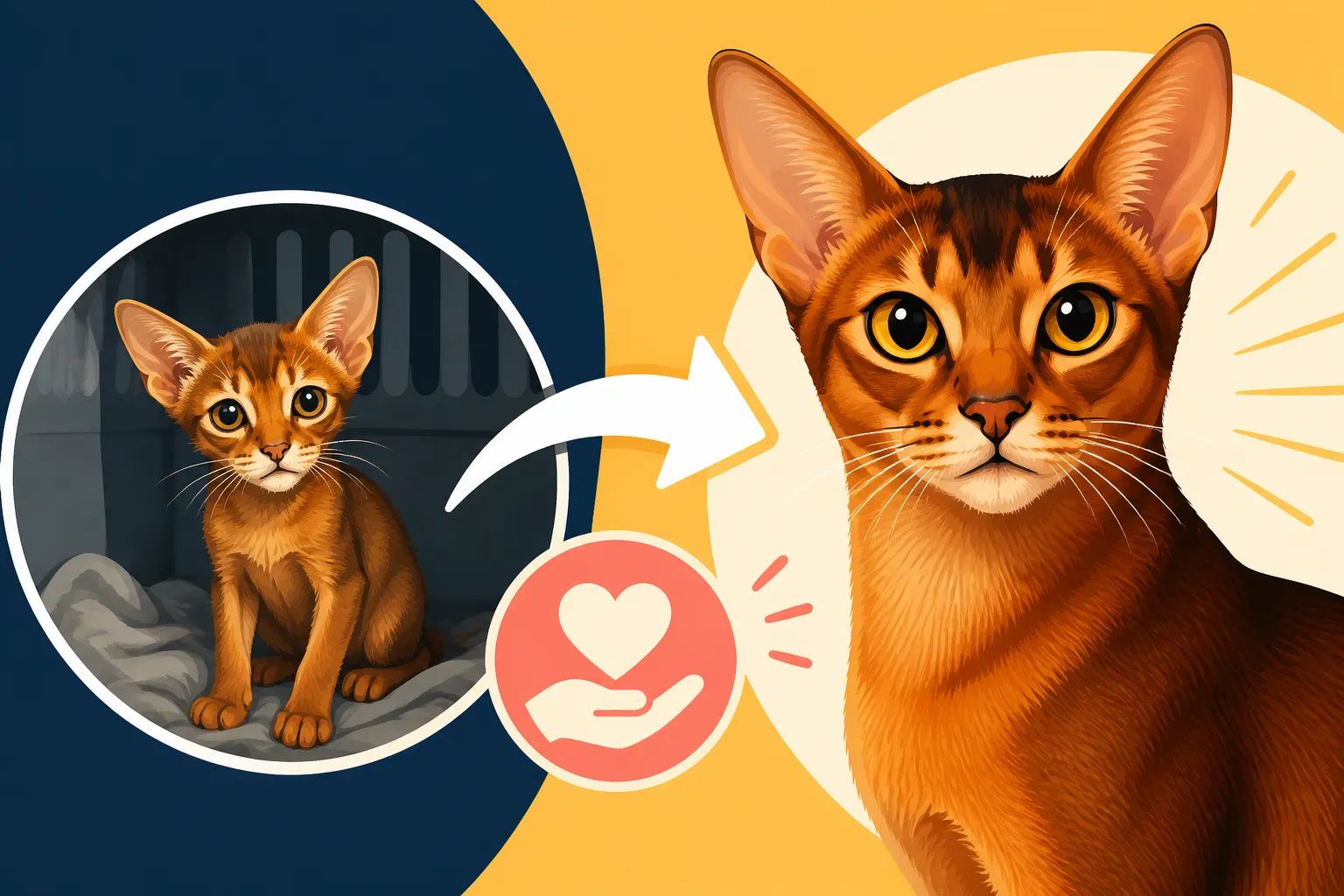
Why Abyssinians Turn Up in Rescue at Two
It's a heartbreaking reality that many Abyssinian cats find themselves in rescue organizations around their second birthday. Often, people fall in love with their sleek looks and playful kitten antics, only to discover that the "kitten energy" doesn't quite fade with age as expected, leading to a mismatch between owner expectations and the energetic, intelligent reality of living with an Abyssinian. This guide will delve into the common reasons these wonderful cats end up needing a new home at what should be the prime of their lives and help you understand what it truly means to welcome an Aby into your family for the long haul.
The Misunderstood "Kitten" Phase: A Lifelong Vibe
Many cat owners are accustomed to kittens being bundles of boundless energy that eventually mellow into sedate, nap-loving adults. While most cats certainly calm down after their first year, the Abyssinian often defies this common trajectory, maintaining a vibrant, almost perpetual kitten-like enthusiasm well into adulthood. This isn't a phase that just passes; it's the core of who an Aby is, and it can be a significant surprise for owners who aren't prepared.
When the Kitten Energy Doesn't Fade
Imagine bringing home an adorable, bright-eyed Abyssinian kitten. They're climbing curtains, chasing toys with relentless abandon, and exploring every nook and cranny of your home. You smile, thinking, "Oh, they'll grow out of this." Then, two years roll around, and your Aby is still scaling your tallest bookshelf, batting at dust motes near the ceiling, and demanding vigorous play sessions multiple times a day. This is the reality for many Abyssinian owners. Their energy levels are famously high, earning them the nickname "clowns of the cat kingdom." They thrive on activity and engagement, and if that innate drive isn't channeled, it can manifest in ways that are perceived as disruptive. It’s not just about running around; it’s about a constant mental and physical need to do something. The Abyssinian Is the Busiest Cat in the House for a reason!
This isn't to say they don't have their quiet moments – they certainly do, often curled up close to their favorite human – but these moments are interspersed with bursts of intense activity. Owners who anticipated a docile, decorative cat are often overwhelmed by the sheer volume of interaction and supervision an Aby requires. They might start to feel guilty or frustrated, believing they've failed to "train" their cat to be calmer, when in fact, the cat is simply expressing its fundamental nature. This difference in expectation is a major contributor to Abyssinians ending up in rescue.
The Intelligence That Becomes a Challenge
Abyssinians are not just energetic; they are incredibly intelligent and curious creatures. This sharp mind needs constant stimulation, much like a bright toddler who is always asking "why?" or trying to figure out how things work. An Aby will quickly master puzzle toys, learn how to open cabinets and doors, and even figure out how to operate certain household items if left unsupervised. This cleverness, while endearing in small doses, can become a significant challenge for owners who aren't ready to engage their cat on an intellectual level daily.
For example, an Aby might learn to open the pantry door to investigate the crunchy sounds inside, or systematically dismantle child locks on cabinets. They might figure out how to turn on a faucet for a drink or "fish" items out of the trash bin. This isn't malicious behavior; it's an intelligent animal exploring its environment and solving problems. If an owner views this as misbehavior rather than a cry for mental engagement, frustration can build on both sides. The cat becomes bored and destructive, and the owner feels they can't control their pet.
Why "Busy" Can Overwhelm an Unprepared Owner
The term "busy" might sound charming when applied to a tiny kitten, but when it describes a fully grown, two-year-old cat that never truly sits still, it can be exhausting. An Abyssinian isn't content to simply watch the world go by from a window perch; they want to be an active participant in everything you do. They will "help" you fold laundry by pouncing on socks, "assist" with cooking by supervising from the counter, and "read" over your shoulder as you work. This constant involvement can be incredibly endearing for those who cherish an interactive companion, but for others, it can feel like an invasion of personal space and a relentless demand for attention.
This constant "busyness" isn't something you can easily train out of an Aby. It's an intrinsic part of their personality. They thrive on being part of the family's daily rhythm, not just a quiet observer. Owners expecting a more independent or aloof feline are often taken aback by the sheer presence of an Abyssinian. They might find themselves constantly redirecting the cat, only to have it immediately find a new mischief to get into. This relentless need for engagement, both physical and mental, can simply wear down owners who anticipated a more low-key pet, leading them to consider rehoming when the cat reaches its full, active adult potential around age two.
Unmet Needs Leading to Behavioral Issues
When an Abyssinian's fundamental needs for activity, interaction, and mental stimulation aren't met, they don't just sit quietly and mope. Their inherent intelligence and energy will find an outlet, and more often than not, that outlet manifests as behaviors that owners perceive as "naughty" or "destructive." It’s crucial to understand that these aren't signs of a bad cat, but rather a cat signaling that something in its environment or routine isn't working for it.
The Call of the Wild Indoors
Abyssinians possess a strong instinct to climb, explore, and survey their territory from great heights. They are agile and incredibly athletic, making short work of vertical spaces that other cats wouldn't even consider. If your home doesn't offer adequate climbing structures, tall cat trees, or secure wall shelves, an Aby will create their own opportunities. This means your bookshelves, curtain rods, kitchen cabinets, and even the tops of your doors become prime real estate for exploration. An Abyssinian Needs Height More Than It Needs Floor, and they will find it, one way or another.
By the age of two, an Abyssinian has usually perfected its climbing skills and knows every inch of its vertical domain. An owner who hasn't provided appropriate outlets might find their cat constantly on forbidden surfaces, knocking items over, or even getting into dangerous situations. The solution isn't to punish the cat for climbing, but to provide acceptable, stimulating alternatives. Without these, the Aby’s natural instincts, which are so vital to their well-being, become a source of conflict in the home, leading to frustration for both pet and owner.
Destructive Behaviors Born of Boredom
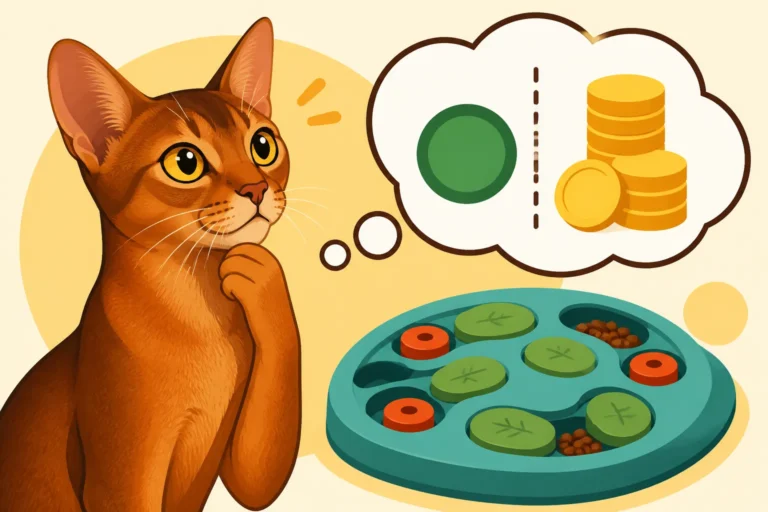
A bored Abyssinian is a destructive Abyssinian. This isn't a judgment; it's a simple truth. Their high intelligence and energy mean they need constant mental and physical challenges. If they don't get enough play, puzzle toys, or interactive sessions, they will find ways to entertain themselves, and those ways rarely align with human preferences for intact furniture or quiet evenings. This might involve scratching furniture to shreds (even with scratching posts available, if they're not engaging enough), systematically knocking objects off shelves, chewing on electrical cords, or "redecorating" by pulling things off counters. What an Abyssinian Does When It Is Bored can be quite extensive and costly.
These behaviors are often the breaking point for owners who haven't understood the depth of an Aby's needs. They see a shredded sofa or a broken vase and blame the cat, when the root cause is often a lack of appropriate stimulation. By the two-year mark, these habits can be deeply ingrained, and retraining requires immense patience, consistency, and a significant investment in enrichment. Using interactive feeders, rotating toys frequently, and scheduling dedicated playtimes can mitigate these issues, but without that commitment, the destructive cycle can lead to owners feeling overwhelmed and opting to rehome their pet. Check out some great puzzle feeders and durable toys on Chewy to keep those busy Aby minds occupied!
The Social Butterfly Left Alone
Abyssinians are incredibly social cats. They thrive on interaction with their human families and often form strong bonds, following their owners from room to room. They are not typically solitary creatures content to be left alone for long stretches. This isn't to say they can't be left alone for a workday, but it means they need significant engagement when their people are home, and ideally, they might even do better with another cat or a very cat-friendly dog to keep them company. Why an Abyssinian Should Not Be Left Alone All Day is a crucial consideration.
If an Abyssinian is consistently left alone for extended periods without sufficient mental and physical enrichment, they can develop anxiety, depression, or an escalation of the destructive behaviors mentioned above. They might become overly clingy or, conversely, withdrawn. Many owners acquire an Abyssinian thinking it will be fine as an "only cat" in a busy household, only to find that the cat demands more companionship than they can realistically provide. At two years old, if an Aby has spent a significant amount of time feeling undersocialized, these issues become more pronounced and can be challenging to reverse, contributing to the decision to rehome them.
Owner Expectations vs. Abyssinian Reality
One of the biggest factors leading to Abyssinians entering rescue is a fundamental mismatch between what a prospective owner expects from a cat and the unique personality and needs of the Abyssinian breed. People are drawn to their beautiful looks and spirited nature, but sometimes fail to fully research the implications of living with such an active and intelligent companion.
The Lap Cat Myth vs. the Shoulder Cat Reality
Many people dream of a cat that will curl up on their lap for hours, purring contentedly. While some Abyssinians might indulge in a brief snuggle, they are far more often "shoulder cats" or "interactive cats" than true lap ornaments. They want to be with you, observing, participating, and engaging, but often not in a sedentary way. They might perch on your shoulder while you walk around the house, sit on the arm of your chair, or weave through your legs demanding attention, but prolonged lap-sitting is often not their preferred mode of affection. Why an Abyssinian Will Not Sit on Your Lap delves into this common misconception.
By the age of two, this aspect of their personality is fully formed. Owners who bought an Abyssinian expecting a cuddly, sedentary companion might feel disappointed or even rejected when their cat consistently opts for active engagement over quiet snuggles. They might misinterpret the Aby's affectionate nudges and playful pounces as "too much" or not truly loving, when in fact, the cat is expressing its devotion in its own unique, energetic way. This difference in affectionate styles can lead to an owner feeling unfulfilled by the relationship, ultimately prompting them to seek a different type of companion.
Financial Surprises Beyond the Purchase Price
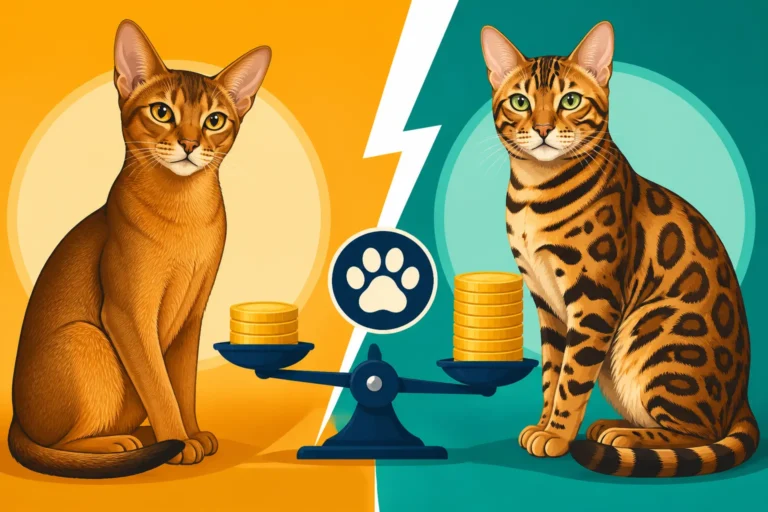
While Abyssinians can have a higher initial purchase price from a reputable breeder, the ongoing costs of ownership can be a significant surprise for some. These aren't just about food and litter; they encompass the unique needs of an active and potentially health-prone breed. By two years old, any initial "kitten" budget has likely worn off, and owners are faced with the full reality of annual costs.
For example, Abyssinians are unfortunately prone to certain health issues like Pyruvate Kinase Deficiency (PKD), progressive retinal atrophy (PRA-rdAc), and most notably, juvenile gingivitis and renal amyloidosis. The dental care alone can be a substantial expense. Why Abyssinian Dental Work Is the Biggest Line in the Budget is a fact many new owners don't fully grasp. Regular professional cleanings, and potentially gingivectomies or extractions for those prone to gum disease, can add up quickly. These health considerations mean higher vet bills than anticipated. Many owners might not have budgeted for these specific breed needs, and by age two, these costs might start accumulating. Investing in pet insurance, like plans offered by Healthy Paws, early on can help mitigate some of these financial shocks, but if an owner hasn't prepared, the expenses can become overwhelming. When faced with significant vet bills for a cat that also feels like "too much work," rehoming can sadly become an option.
Life Changes and the Abyssinian's Sensitivity
Life happens. People get new jobs, move to smaller homes, have children, or experience other major life shifts. While any pet can be impacted by these changes, the sensitive and highly social nature of the Abyssinian can make these transitions particularly challenging. A sudden decrease in attention, a change in routine, or a new, loud family member (like a baby) can be incredibly stressful for an Aby.
By two years old, an Abyssinian is deeply bonded to its home and family. If an owner, perhaps unexpectedly, finds themselves with less time, space, or financial resources, the Aby may be one of the first pets to show distress. A highly active cat suddenly confined to a smaller space or receiving less playtime might start exhibiting destructive behaviors born of stress and boredom. Similarly, a formerly "only child" Aby might struggle to adjust to a new baby or puppy vying for attention. These are not failures on the part of the cat, but rather a reflection of its needs not being met in a changed environment. Owners, feeling unable to adequately provide for their beloved pet under new circumstances, often turn to rescue as a last resort, hoping for a home better suited to their Aby's needs.
Finding a Second Chance: Rescue and Rehoming
While it's heartbreaking to see an Abyssinian in a rescue situation, it also highlights the dedication of these organizations to find these wonderful cats a loving, appropriate home. Understanding the process and what rescues look for can help potential adopters and even current owners facing difficult decisions.
The Heartbreak of a Relinquished Abyssinian
When an Abyssinian turns up in a rescue, it's often due to the very reasons we've discussed: an owner unprepared for their energy and intelligence, unmet behavioral needs leading to perceived destruction, or unforeseen life changes making continued ownership impossible. These cats, by nature, form deep attachments, so being relinquished can be a traumatic experience for them. They may exhibit signs of stress, such as overgrooming, hiding, or changes in eating habits. It takes time, patience, and understanding for a rescue Aby to decompress and begin to trust again.
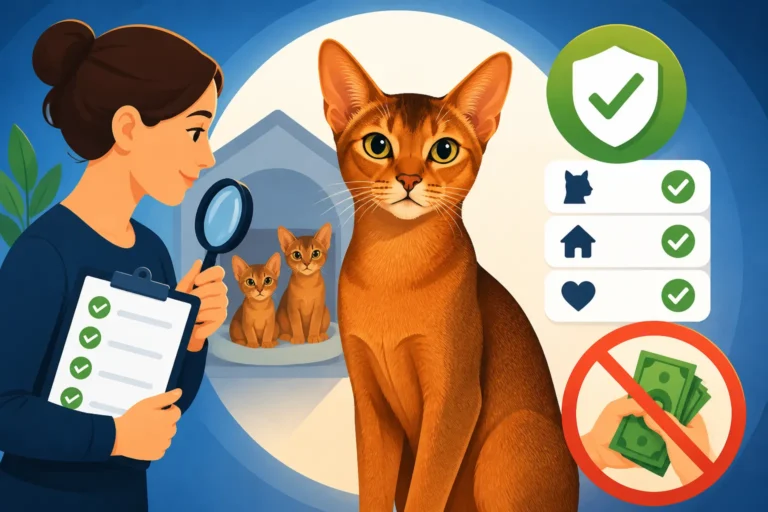
Rescue organizations, whether breed-specific Abyssinian rescues or general humane societies, invest heavily in the physical and emotional rehabilitation of these cats. They assess their health, temperament, and try to gather as much history as possible from the previous owners to understand the context of the relinquishment. Their goal is always to find a "forever home" that truly understands and can meet the unique demands of this vibrant breed. This often means carefully screening potential adopters to ensure the next home is truly the right fit, and that the Aby won't end up back in the system.
What Rescue Organizations Look For in New Homes
Rescue organizations are meticulous about placing Abyssinians because they want to ensure the second home truly is the last home. They understand the breed's specific needs and often look for adopters who have prior experience with active or intelligent cat breeds, or who have thoroughly researched the Abyssinian temperament. Expect a detailed application process, often including questions about your lifestyle, other pets, and how you plan to provide enrichment.
They'll want to know:
- Your Activity Level: Are you an active person who can dedicate time to play and interaction?
- Home Environment: Do you have ample vertical space, or are you willing to create it with cat trees and shelves?
- Commitment to Enrichment: Are you prepared to use puzzle toys, conduct regular interactive play sessions, and engage their intelligent minds?
- Financial Preparedness: Are you aware of potential dental and other health costs, and willing to invest in quality food and vet care? Many rescues suggest pet insurance, and a provider like Healthy Paws can be a good option for covering unexpected medical bills.
- Time Commitment: Are you home enough, or do you have another pet that can provide companionship?
- Patience and Understanding: Are you prepared to work through any behavioral quirks that might have developed from past trauma or unmet needs?
They are essentially trying to avoid another mismatch, ensuring that the Aby goes to a home that celebrates its vivacious personality rather than becoming overwhelmed by it.
Preparing to Adopt a Two-Year-Old Abyssinian
Adopting a two-year-old Abyssinian from a rescue can be an incredibly rewarding experience, as you're giving a deserving cat a second chance. However, it's important to approach it with realistic expectations and thorough preparation. These cats have already developed their personality and habits, and possibly some anxieties from their previous experience.
Here’s what you should consider:
- Patience is Key: A rescue Aby might take time to adjust. Provide a quiet, safe space for them initially, gradually introducing them to the rest of your home and family members. Don't rush the bonding process.
- Enrichment is Non-Negotiable: Have tall cat trees, wall shelves, and a variety of puzzle toys ready. Invest in a good selection of wand toys and schedule dedicated play sessions every day. You can find many options for high-quality, engaging toys and climbing structures on Chewy.
- Consistent Routine: Abyssinians thrive on routine. Consistent feeding times, play times, and litter box cleaning can help them feel secure and adjust faster. Consider using an automatic feeder for consistent meal delivery, though remember an Aby will probably still demand your attention for food!
- Health Check-up: Even if the rescue has provided vet records, schedule a comprehensive check-up with your own veterinarian soon after adoption. Discuss any known health predispositions of the breed, such as dental issues or kidney concerns. Maintaining a healthy, high-quality diet can also support their overall well-being.
- Understanding Their Past: If the rescue provides any history, pay close attention to it. This can offer valuable insights into potential triggers, preferences, or behavioral patterns you might need to address with extra care. For example, if they were relinquished due to destructive scratching, ensure you have plenty of appropriate scratching outlets in various textures and locations.
Adopting an Abyssinian, especially one who needs a second chance, means committing to an active, intelligent, and deeply affectionate companion for many years to come. By understanding why they often end up in rescue around age two, you can be better prepared to offer them the stimulating and loving home they truly deserve.
| Reason for Rehoming (Around Age 2) | Owner Expectation vs. Reality | Necessary Owner Commitment | Potential Solutions/Mitigations |
|---|---|---|---|
| High Energy | Expected mellowing with age | Daily active play, mental stimulation, regular interaction | Scheduled play, puzzle feeders, cat wheels, another active pet |
| High Intelligence | Expected typical cat behavior | Constant engagement, challenge, proofing the home | Child locks, secured cabinets, advanced puzzle toys, trick training |
| Social Needs | Expected independent pet | Significant daily interaction, companionship | Multiple daily interaction sessions, another cat, human presence |
| Destructive Behavior | Expected well-behaved pet | Providing appropriate outlets, redirecting, home-proofing | Tall cat trees, wall shelves, variety of scratching surfaces, durable toys |
| Financial Burden | Underestimated vet/dental costs | Budget for ongoing care, emergency fund, pet insurance | Pet insurance (e.g., Healthy Paws), savings, annual vet checks |
| Life Changes | Expected stable environment | Adaptability, understanding, professional support during transitions | Gradual introductions (e.g., new baby), Feliway, professional behaviorist |
Disclaimer
This article is for general informational purposes only and does not constitute professional advice. Laws, prices and regulations vary by location and change over time. Consult a qualified professional for guidance on your specific situation.