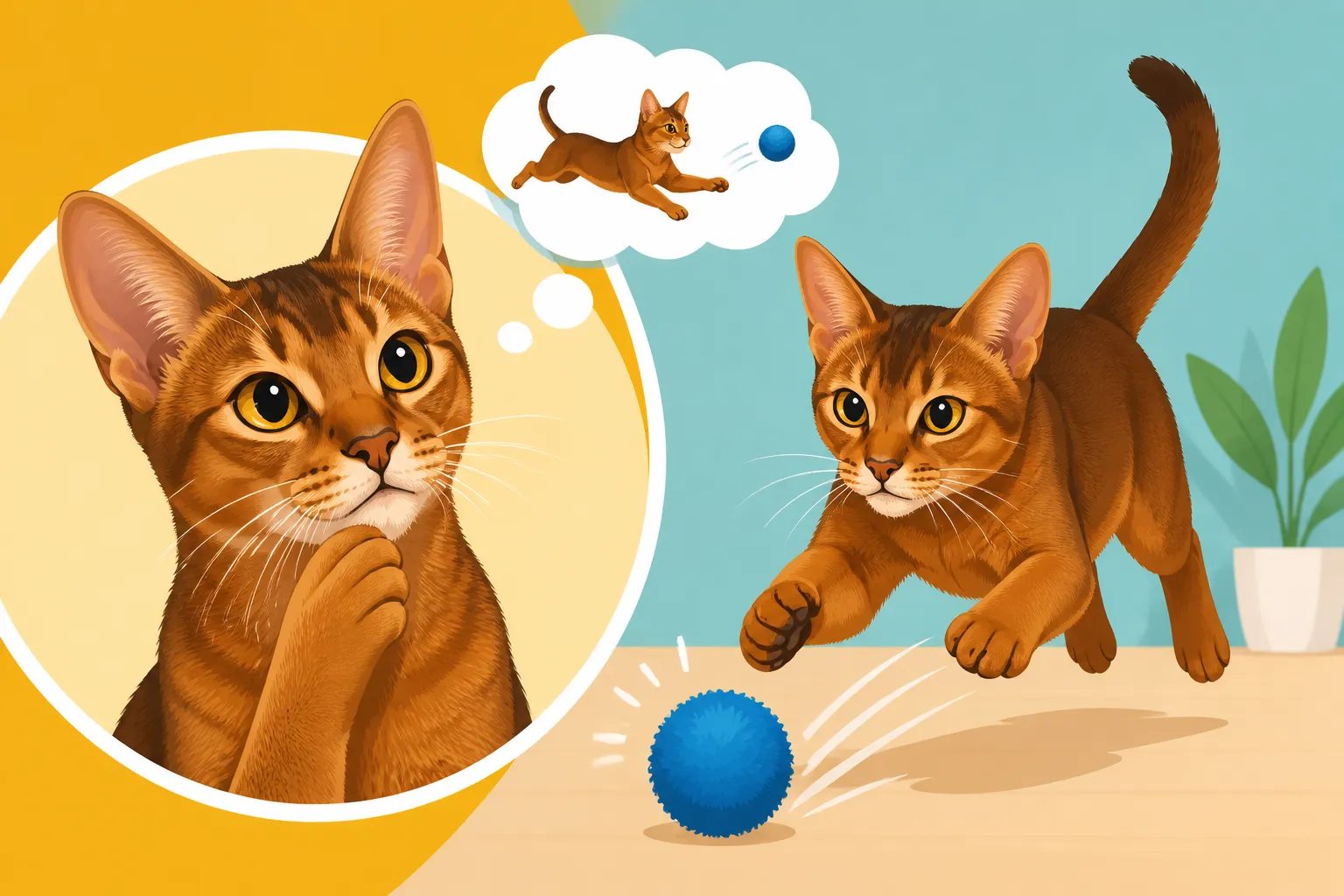
Whether an Abyssinian Fetches Naturally
It’s a common scenario: you watch your energetic Abyssinian dart around the house, an endless well of curiosity and playfulness, and you wonder, "Could my cat fetch?" While Abyssinians are renowned for their dog-like personalities and incredible intelligence, the idea of them instinctively bringing a toy back to you like a Golden Retriever can seem a little far-fetched. This guide will dive into the Abyssinian's natural inclinations, explain why some take to fetching more readily than others, and offer practical advice on how you can encourage this delightful behavior in your own busy companion.
Understanding the Abyssinian's Natural Play Instincts
Let's be clear upfront: fetching isn't an innate behavior for most cats in the way it is for many dog breeds. Cats are hunters, stalkers, and pouncers by nature. Their play mimics these ancestral survival skills. So, when your Abyssinian bats a toy around or chases a laser pointer, they're engaging their prey drive. The act of retrieving something and bringing it back to you, the "pack leader," isn't typically part of their wild repertoire. However, Abyssinians are not your typical house cats, and their unique blend of intelligence, curiosity, and high energy can often bridge this gap.
The Abyssinian's Innate Drive to Hunt and Chase
Abyssinians are a whirlwind of activity, constantly exploring, climbing, and engaging with their environment. They have an incredibly strong prey drive, which means they are utterly captivated by anything that moves, dangles, or rolls. This isn't just about amusement; it's deeply wired into their being. When they pounce on a toy mouse, they're not just playing; they're enacting a miniature hunt. This instinct is what makes them such fantastic interactive playmates. They crave engagement that simulates the hunt, from the stalk to the capture. This inherent drive is the foundation you'll build upon when trying to teach them to fetch, as they already love chasing and capturing objects. It’s just the "bringing it back" part that needs a little human guidance. Indeed, The Abyssinian Is the Busiest Cat in the House, so channeling that energy effectively is key.
Why They Bring Things Back… Sometimes
You might have already noticed your Abyssinian bringing you a "present" – perhaps a treasured toy, or even a stray sock they've liberated from the laundry basket. This isn't quite fetching in the traditional sense, but it’s a crucial step. This behavior often stems from a combination of their hunting instinct and their social bond with you. In the wild, a mother cat might bring prey back to her kittens. When your Abyssinian brings you a toy, it can be an offering, an invitation to play, or even a demonstration of their hunting prowess. They're sharing their "kill" with you, their trusted companion. The trick is to take this natural inclination to present objects and shape it into a consistent fetching routine. They already have the first two steps down – chasing and picking up. We just need to add the third: return.
Training Your Abyssinian to Fetch: The Key to Engagement
While not all Abyssinians will become champion fetchers, many have the intelligence and drive to learn with patience and positive reinforcement. Think of it less as forcing a behavior and more as a collaborative game where you guide their natural instincts. This breed genuinely thrives on mental stimulation, and learning new tricks like fetching can be incredibly enriching for them. You might be surprised at how quickly an intelligent Abyssinian can pick up on new cues, especially when there's a tasty reward involved! Training an Abyssinian Is Easier Than Stopping It is a truth that applies here – once they understand the game, they'll often engage eagerly.
Starting Early with Positive Reinforcement
The earlier you start, the better, ideally when your Abyssinian is a playful kitten. Begin with a lightweight, appealing toy that's easy for them to carry. Think crinkle balls, small stuffed mice, or even a rolled-up piece of paper. You can find excellent selections of these kinds of toys on platforms like Amazon.
Here's a step-by-step approach:
- Initiate the Chase: Toss the toy a short distance, just a few feet away. Your Abyssinian's natural instinct will be to chase it down and "capture" it.
- Encourage Retrieval: As soon as they pick up the toy, praise them enthusiastically! Wiggle another toy or offer a treat to entice them to come back to you. The moment they drop the toy near you, even if it's just a foot away, that's your cue for massive praise and a high-value treat. Repeat this many times.
- Add a Verbal Cue: Once they consistently bring the toy closer, start adding a verbal cue like "fetch!" or "bring it!" as you toss the toy.
- Gradual Distance: Slowly increase the distance you throw the toy. The key is never to make it so far that they lose interest or simply drop the toy and walk away.
- Patience and Consistency: Some sessions will be better than others. Keep it fun, keep it short (5-10 minutes tops), and always end on a positive note. Never punish them for not fetching; simply end the game. Remember, Why an Abyssinian Learns Faster When It Is Hungry can be a great motivator, so timing your training sessions before meals can be highly effective.
| Training Stage | Action | Reward | Key Focus |
|---|---|---|---|
| Stage 1: Chase | Toss toy a short distance. Cat chases and 'captures'. | Verbal praise, excitement | Engaging natural prey drive. |
| Stage 2: Retrieve | Cat picks up toy. Lure back with treat/second toy. Cat drops toy near you. | High-value treat, enthusiastic praise, petting | Associating dropping toy with positive outcome. |
| Stage 3: Cue | Add verbal cue ("Fetch!") before tossing. Repeat Stage 2 actions. | High-value treat, enthusiastic praise | Linking verbal command to desired action. |
| Stage 4: Distance | Gradually increase throw distance, maintaining consistency of return. | Consistent high-value treat and praise | Generalizing behavior across different distances and scenarios. |
Choosing the Right "Fetch" Toys
The type of toy makes a huge difference. Abyssinians are discerning, and not just any old toy will do. They need something that appeals to their hunting instincts and is easy for their nimble jaws to pick up and carry.
Look for:
- Lightweight and Portable: Think small crinkle balls, soft pom-poms, or lightweight felt mice. Many sets of these are available on Amazon, offering variety. Heavy or awkwardly shaped toys are less likely to be carried back.
- Irresistible Texture/Sound: Crinkle toys, those with feathers, or toys made of natural materials often grab their attention. The rustle of a crinkle ball can mimic the sound of prey in tall grass. Which Retrieve Toys an Abyssinian Brings Back will often be the ones that are light, intriguing, and easy to mouth.
- Disposable Options: Sometimes, the best "toy" is a crumpled piece of paper or a pipe cleaner. These are novel, make interesting sounds, and can be replaced when they lose their charm or get too soggy.
Avoid toys that are too large, too heavy, or have a strong scent that might deter them. Remember, Abyssinians are active, intelligent creatures, and a rotation of toys helps keep them engaged. How to Rotate an Abyssinian's Toys ensures that their play environment remains stimulating and prevents boredom.
Beyond Fetch: Channeling the Abyssinian's Energy
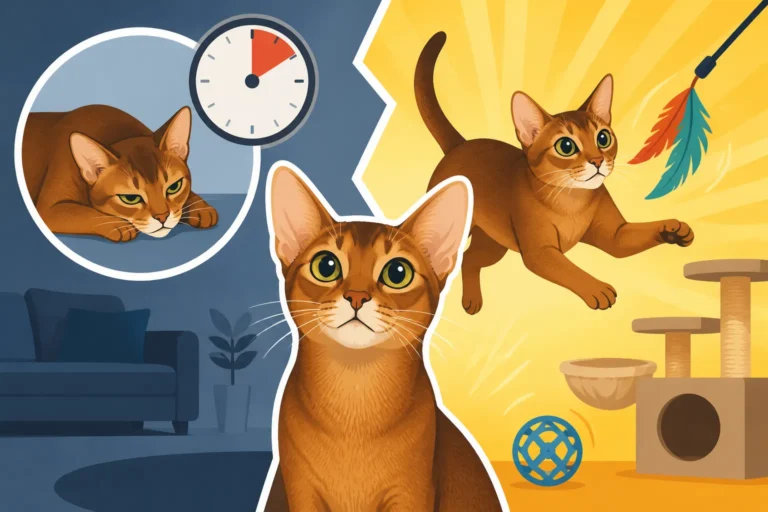
Even if your Abyssinian doesn't become the next fetching superstar, there are countless ways to keep their sharp minds and energetic bodies fully engaged. Abyssinians thrive on interaction and challenges. If they're not adequately stimulated, you might find them making their own "fun" – which often involves rearranging your belongings or exploring restricted areas of your home. They are incredibly smart, and a bored Abyssinian is a recipe for mischief.
The Importance of Interactive Play
Interactive play with wand toys is perhaps the most effective way to satisfy an Abyssinian's prey drive. These toys allow you to mimic the erratic movements of prey, from fluttering birds to scurrying rodents. How Much Play an Abyssinian Needs Each Day is a lot – several short, intense sessions are usually better than one long, drawn-out one. Aim for at least 10-15 minutes, two to three times a day. Let them stalk, chase, pounce, and "kill" the toy at the end of each session to satisfy their hunting sequence.
Think about laser pointers too, but always end a laser session by directing the beam onto a physical toy they can capture. This prevents frustration and gives them the satisfaction of a successful hunt. Investing in a variety of high-quality wand toys, perhaps from a reputable pet supplier on Amazon, can keep things fresh. Which Wand Toy an Abyssinian Prefers often depends on the individual cat, but those with feathers, crinkly parts, or long tassels are generally big hits.
Mental Stimulation for the Abyssinian Brain
Beyond physical play, Abyssinians crave mental challenges. Their intelligence needs an outlet, and without it, they can become destructive or simply restless.
Consider:
- Puzzle Feeders: These are fantastic for making mealtime a game. Instead of just eating from a bowl, your Abyssinian has to work to extract their kibble or treats. This taps into their problem-solving skills and satisfies their foraging instincts. There's a huge range of puzzle feeders available, from simple treat-dispensing balls to more complex multi-stage puzzles, easily found on platforms like Amazon. Which Puzzle Feeders Hold an Abyssinian's Attention are usually those that offer a good challenge without being too frustrating, gradually increasing in difficulty as your cat masters them.
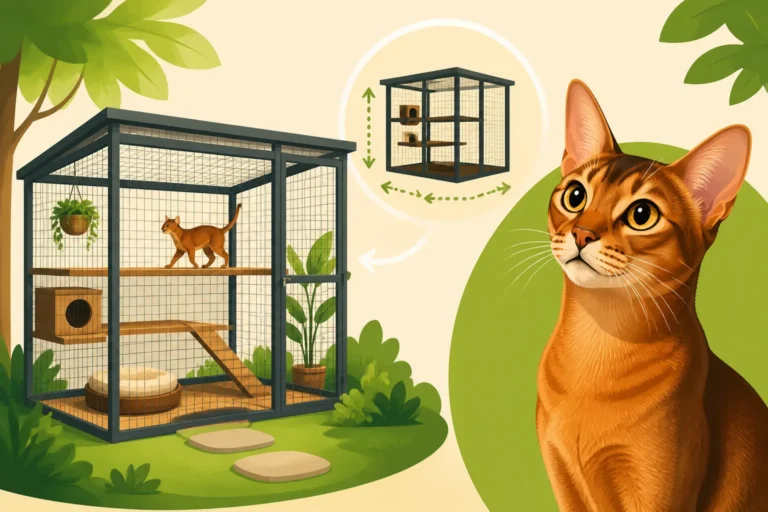
- Vertical Space: Abyssinians are climbers by nature. Providing ample vertical territory – cat trees, wall shelves, catio structures – allows them to survey their domain from on high, fulfilling a deep-seated feline need. Why an Abyssinian Needs Height More Than It Needs Floor is a crucial point for this breed, as they adore being up high.
- Training Beyond Fetch: Abyssinians can be clicker trained to learn a wide array of tricks, from "sit" and "stay" to walking on a leash. Why Clicker Training Works on an Abyssinian is because it provides clear, immediate feedback, which this intelligent breed responds to exceptionally well. These activities strengthen your bond and provide immense mental engagement.
- Window Perches: Giving them a view of the outside world, especially if there are birds or squirrels to watch, can be hours of entertainment. This passive stimulation is still very valuable for their mental well-being.
By understanding your Abyssinian's core instincts and providing a rich, interactive environment, you'll ensure they are happy, healthy, and a joy to live with, whether they become champion fetchers or simply enjoy a vigorous game of "chase the feather."
Disclaimer
This article is for general informational purposes only and does not constitute professional advice. Laws, prices and regulations vary by location and change over time. Consult a qualified professional for guidance on your specific situation.