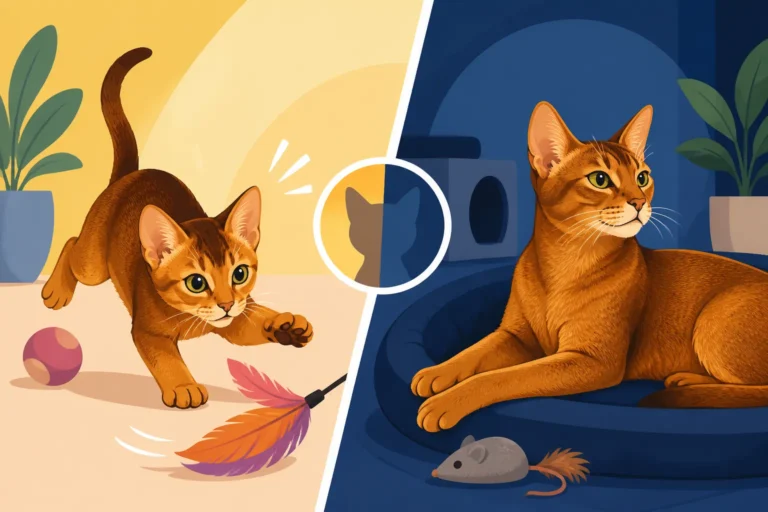
How Long an Abyssinian Takes to Trust a Stranger
It’s a common scenario for Abyssinian owners: you know your Aby is a vibrant, curious, and incredibly social cat with you, but as soon as a new face walks through the door, they vanish. This can be frustrating and even a little embarrassing when you've talked your friends' ears off about your cat's amazing personality, only for them to witness a fleeting glimpse of a reddish-brown blur. This guide will explore the nuances of Abyssinian trust, what influences their reactions to strangers, and practical ways to help your beloved Aby feel more comfortable and confident with new people.
Understanding the Abyssinian Personality and Trust
Abyssinians are a breed celebrated for their intelligence, athleticism, and deeply engaging personalities. They're often described as "dog-like" in their devotion to their human companions, following them from room to room, supervising every activity. However, this intense bond with their inner circle doesn't always translate into immediate warmth for outsiders. It's not necessarily shyness, but a complex mix of curiosity, caution, and a strong sense of personal space that can dictate how quickly they warm up to a new face.
Initial Reserve vs. True Shyness
Many Abyssinian owners are surprised by their cat’s initial reserve around strangers. Your Aby might be the life of the party when it's just you two, chasing toys, chattering away, and demanding attention. But when guests arrive, suddenly your outgoing companion transforms into a phantom, disappearing under the bed or behind the sofa. This isn't usually true shyness in the sense of being timid or fearful of everything; it's more about their assessment period. They are watching, listening, and gathering information before deciding whether a new person poses a threat or offers an interesting opportunity.
Their curiosity is immense – Abyssinians are known for being incredibly active and inquisitive, truly The Abyssinian Is the Busiest Cat in the House. This drive to explore and understand their environment means they want to know about this new human. However, they also possess a primal instinct for self-preservation, which means they prefer to observe from a safe distance before committing to an interaction. They're weighing the pros (new smells, potential new playmate) against the cons (loud noises, sudden movements, unknown intentions). It's a calculated risk assessment, not simply being scared.
Factors Influencing an Abyssinian's Trust Timeline
The speed at which an Abyssinian accepts a stranger isn't a fixed measure; it's a dynamic process influenced by several critical factors. One of the most significant is their early life experiences and socialization. A kitten exposed to a variety of sights, sounds, and gentle people during its crucial developmental window (roughly 3 to 12 weeks of age) is far more likely to approach strangers with an open, if still cautious, mind. Kittens raised in isolation, or those with limited positive human interaction, might carry that initial trepidation much further into adulthood.
Beyond early socialization, past experiences with unfamiliar people play a huge role. If your Abyssinian has had negative encounters – perhaps loud, boisterous guests, or someone who tried to pick them up when they weren't ready – they will naturally be more guarded. Conversely, if every new person has respected their boundaries and offered pleasant, low-pressure interactions, their confidence will grow. Individual personality also shines through; just like people, some Abyssinians are naturally bolder and more gregarious, while others are inherently more sensitive and require more time and a gentler approach. The temperament of the guest themselves, whether they are loud and direct or calm and patient, can also profoundly impact the initial impression your Aby forms.
The Stages of Abyssinian Acquaintance
Warming up to an Abyssinian isn't like a light switch; it's more like watching a sunrise. There are distinct stages they often go through, each marked by subtle shifts in their behavior as they process new information and slowly lower their guard. Understanding these phases can help both you and your guests appreciate the journey and avoid pushing your Aby too far, too fast.
The "Observe from a Distance" Phase
This is the initial stage, and it can last anywhere from a few minutes to several hours, or even repeat over multiple visits depending on the individual cat and the frequency of new people. When a stranger enters the home, your Abyssinian's first instinct is often to retreat to a safe vantage point. This might be under a bed, atop a tall cat tree, or even just behind a piece of furniture where they have a clear line of sight. From this secure position, they will observe. Their large, intelligent eyes will track every movement, every gesture, every vocalization of the new person. They are assessing the threat level, listening to your interactions with the guest, and trying to decipher the visitor's energy.
It's crucial during this phase not to force interaction. Dragging your cat out from their hiding spot or encouraging your guest to chase after them will only set back the trust-building process significantly. An Abyssinian's intelligence means they remember these negative experiences. Instead, advise your guests to largely ignore your cat for a while. Let your Aby be the one to initiate contact, on their own terms. Ensure they have plenty of vertical spaces, as An Abyssinian Needs Height More Than It Needs Floor, which provides them a sense of security and control.
The "Cautious Approach" Phase
Once your Abyssinian has completed their initial observation and deemed the stranger to be non-threatening, they might enter the "cautious approach" phase. This is where their inherent curiosity starts to win out over their initial reserve. You might notice them emerging from their hiding spot, perhaps darting quickly across a room, only to disappear again if the stranger makes a sudden move. They might linger just outside the room where the guest is, twitching an ear in their direction or peeking around a corner.
A significant step in this phase is when they start to investigate the stranger’s scent. They might sniff an empty chair where the guest was sitting, or perhaps even an item of clothing or a bag left on the floor. This is a crucial data-gathering mission for your Aby, helping them build a more complete picture of this new individual. They're still not seeking direct contact, but their presence in the same space, even at a distance, is a huge sign of progress. It shows they are starting to feel comfortable enough to exist in the same environment as the unfamiliar human.
The "Acceptance and Engagement" Phase
This is the phase every Abyssinian owner dreams of when guests are over: your Aby not just tolerating, but actively engaging with the stranger. This can start subtly, perhaps with your cat staying in the same room, eventually allowing the guest to get closer without bolting. They might make direct eye contact without fear, or even approach an outstretched hand for a tentative sniff. Once they reach this point, play often becomes the ultimate bridge to trust. A guest who engages in a calm, interactive play session with a wand toy, allowing the Aby to "hunt" and "catch" the toy, can quickly become a favorite. How Much Play an Abyssinian Needs Each Day cannot be overstated, as it's a vital part of their mental and physical well-being and a great way to bond.
Eventually, if all goes well and the interactions remain positive and respectful, your Abyssinian may move to full acceptance. This could mean rubbing against the guest's legs, accepting gentle pets, or even settling down for a nap in their vicinity. It’s a beautiful thing to witness, a testament to your Aby's discerning nature and the power of patience. Remember, this stage isn't guaranteed on the first visit, especially with a particularly cautious Aby. It might take several encounters before they fully embrace a new friend.
Strategies for Fostering Trust with New People
While every Abyssinian has its own unique personality and trust timeline, there are several effective strategies you and your guests can employ to help your Aby feel more secure and accelerate the bonding process. These methods focus on respecting their boundaries, engaging their natural instincts, and creating a positive association with new faces.
Creating a Welcoming Environment
When you know you'll have guests, setting up your home to be Aby-friendly is paramount. First and foremost, aim to keep noise levels down and advise guests to avoid sudden, jarring movements. A boisterous entrance can send a cautious Abyssinian scurrying for hours. Make sure your cat has plenty of escape routes and designated safe spaces, ideally high up. This could be a tall cat tree, shelves mounted on the wall, or even just an open closet where they can retreat and observe from safety. Providing these elevated perches allows them to feel secure while still being able to monitor the situation, rather than feeling trapped.
Consider using a feline pheromone diffuser in the main living areas. While not a magic bullet, these can create a generally more calming atmosphere that might help reduce anxiety for some cats. Ensure their favorite toys, scratching posts, and water bowls are easily accessible in areas they frequent, even if guests are present, so their routine isn't entirely disrupted. A comfortable, familiar environment goes a long way in making a new situation less stressful.
The Art of Indirect Interaction
The golden rule for earning an Abyssinian’s trust is simple: let the cat come to the person. Advise your guests to largely ignore your Aby at first. It might sound counterintuitive, but a cat that feels no pressure to interact is more likely to eventually investigate on its own terms. If a guest wants to try a gentle interaction, indirect play is usually the best bet. A wand toy, especially one with feathers or a soft lure, allows the guest to engage your Aby from a distance, without direct physical contact. The cat can focus on the "prey" rather than the person, building a positive association. You can find a fantastic array of Which Wand Toy an Abyssinian Prefers on sites like Amazon, ready for delivery.
Another effective tool is high-value treats. Instead of trying to hand-feed, suggest your guest gently toss a few treats across the floor, gradually closer to themselves if the cat seems receptive. This creates a positive reinforcement loop: "stranger equals delicious snacks." Again, no pressure, just an offering. If the Aby chooses to approach and take the treat, that’s a huge win. Remember, the goal is to make the new person a source of good things, not a source of fear or unwanted attention.
Consistency and Patience are Key
There is no fixed timeline for how long an Abyssinian takes to trust a stranger, and it's essential to manage expectations for both yourself and your guests. For some Abyssinians, a calm, patient visitor might be accepted within an hour; for others, it could take several repeated visits over weeks or even months. The key is consistency. If your Aby has repeated positive, low-stress experiences with the same "stranger," they are far more likely to build trust. Even short, calm visits are more beneficial than long, overwhelming ones.
Patience is a virtue when it comes to Abyssinians. Trying to rush the process, forcing interaction, or getting frustrated with your cat's reserve will only backfire. Celebrate the small victories: the first time they stayed in the same room, the first time they made eye contact, the first time they accepted a tossed treat. These are all significant steps on their journey to accepting a new friend. This patience is a skill that translates across many aspects of owning an Aby, much like How Long It Takes to Clicker Train an Abyssinian.
Here’s a quick overview of the trust-building stages:
| Stage | Abyssinian Behavior | Guest/Owner Action | Typical Duration (Varies Greatly) |
|---|---|---|---|
| Observe & Retreat | Hiding, watching from afar, darting for cover. | Ignore the cat, speak softly, provide safe zones. | Minutes to hours (or multiple visits) |
| Cautious Approach | Peeking, staying in the room at a distance, sniffing guest's items. | Maintain calm, avoid direct eye contact, offer tossed treats. | Hours to days (or multiple visits) |
| Acceptance & Engage | Allowing proximity, playing indirectly, accepting treats, eventually seeking interaction. | Gentle, indirect play; soft vocalizations; slow, open hand. | Days to weeks (or multiple visits) |
When an Abyssinian's Fear Becomes a Concern
While a degree of initial reserve is normal for many Abyssinians, there’s a difference between cautious observation and chronic, debilitating fear. It’s important to recognize when your cat's reactions to strangers might be indicative of a deeper issue that warrants attention, potentially even professional help.
Signs of Chronic Stress or Fear
If your Abyssinian consistently hides for the entire duration of a guest's visit, even after multiple calm encounters, or if they exhibit signs of extreme distress, it's time to take note. Chronic stress or fear can manifest in several ways beyond just hiding. You might observe aggression, such as hissing, growling, or swatting, if a stranger gets too close. Some stressed Abyssinians may resort to inappropriate elimination, urinating or defecating outside the litter box as a protest or a sign of severe anxiety.
Other signs can include changes in eating habits, such as refusing to eat when guests are present, or conversely, stress-eating. Excessive vocalization, constant pacing, or even over-grooming to the point of bald patches can also be red flags that your Aby is deeply unhappy or stressed. Why a Stressed Abyssinian Overgrooms is often a clear indicator that something in their environment is making them anxious, and strangers can definitely be a trigger. If these behaviors become consistent, it's a clear signal that your cat is struggling.
Seeking Professional Guidance
If you've tried all the gentle introduction methods and your Abyssinian continues to exhibit severe fear or stress reactions to strangers, it's wise to consult with your veterinarian. The first step is always to rule out any underlying medical issues that could be contributing to their behavioral changes. Pain or discomfort can make even the most confident cat withdrawn or aggressive. Your vet might recommend blood work or other diagnostics to ensure your Aby is physically healthy.
If health issues are ruled out, your vet may refer you to a certified feline behaviorist. These professionals specialize in understanding cat behavior and can help you identify the root cause of your Aby's fear, develop a tailored modification plan, and provide strategies for managing anxiety. They can offer insights into desensitization and counter-conditioning techniques that are specifically designed to help your Abyssinian gradually overcome their fear and build confidence around new people. Remember, seeking help for behavioral issues is a sign of a responsible pet owner, not a failure.
Disclaimer
This article is for general informational purposes only and does not constitute professional advice. Laws, prices and regulations vary by location and change over time. Consult a qualified professional for guidance on your specific situation.