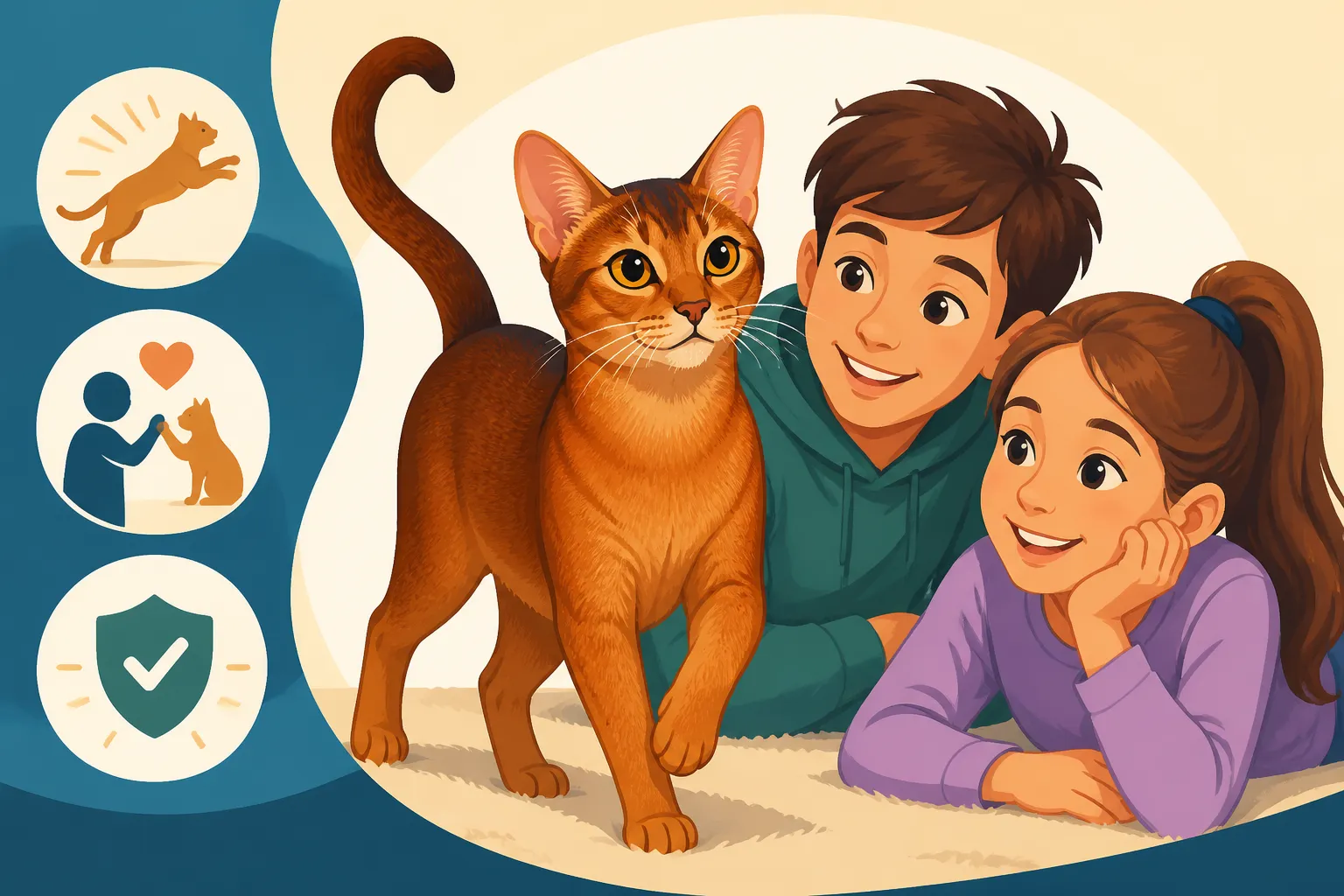
Why an Abyssinian Suits a Household With Older Children
Bringing a new pet into a home with children can sometimes feel like adding another layer of chaos to an already bustling household. Many families worry about finding a cat that can not only tolerate the energy and noise of kids but actually thrive in it. Fortunately, the Abyssinian cat often proves to be an ideal companion for families with older children, their dynamic personalities and playful spirits blending seamlessly with the lively rhythm of such a home. This guide will walk you through why this breed shines in these environments, and how to foster a harmonious relationship for everyone involved.
The Abyssinian's Energetic Match with Older Children
One of the most common misconceptions about cats is that they are aloof and independent, perfectly content to nap all day. While some breeds fit this description, the Abyssinian is definitely not one of them! These cats are bundles of boundless energy, curiosity, and intelligence, often described as having a dog-like devotion and playfulness. This active nature, far from being a drawback, is precisely what makes them such a fantastic fit for families where the kids are past the toddler stage and are ready to engage in more sophisticated play.
Matching Play Styles and Stamina
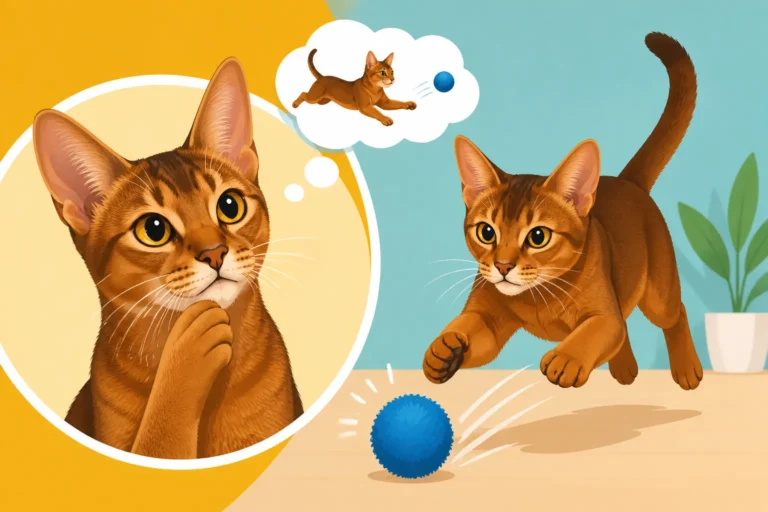
Older children, typically seven years and up, have moved beyond the grab-and-toddle phase, developing finer motor skills and a better understanding of how to interact gently and appropriately with animals. They can hold a wand toy with a feathered lure, understand the concept of taking turns, and even learn to read a cat's body language – crucial for a high-energy, intelligent cat like the Abyssinian. An Abyssinian thrives on interactive play, and a child who is old enough to participate in lengthy, engaging sessions can become their favorite playmate. You'll find your Abyssinian chasing laser pointers (always ensure the game ends with a physical catch to avoid frustration), pouncing on toys, and even learning to fetch, often bringing the toy right back to your child. How Much Play an Abyssinian Needs Each Day is substantial, and older children often have the sustained interest to meet this demand.
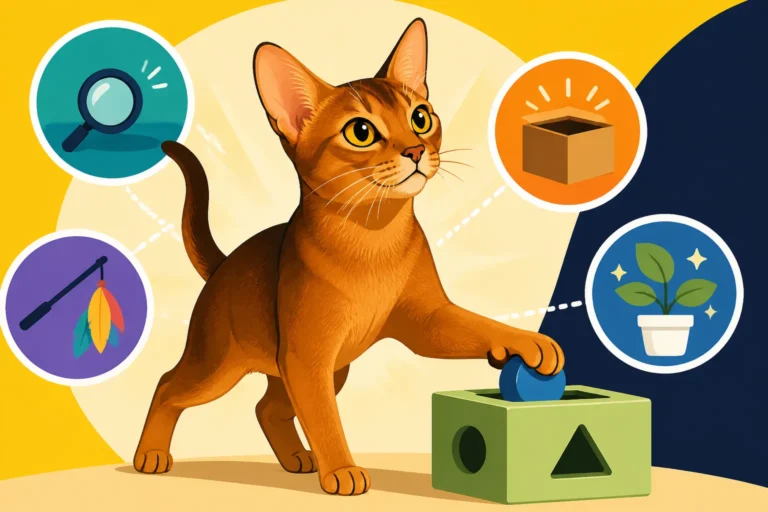
Unlike younger children who might quickly lose interest, or who might not be able to differentiate between a cat's play and genuine distress, older kids can sustain a game, making it more rewarding for the Abyssinian. They appreciate the challenge of a cat that thinks, plans, and then executes its "attack" on a toy. Imagine your child setting up a complex obstacle course for their Abyssinian using pillows and blankets, or hiding treats in a puzzle feeder they assembled together – these are the kinds of enriching activities that both child and cat can enjoy, fostering a unique bond.
Tolerating Noise and Activity Levels
Let's be honest, homes with older children can be loud. There's laughter, shouts of excitement, music, video games, and the general bustle of daily life. Many cats would seek refuge under a bed, emerging only when the house quiets down. Abyssinians, however, are often far more tolerant of noise and activity. They are incredibly observant creatures, often preferring to be in the thick of family life, watching everything that unfolds. This isn't to say they don't appreciate peace and quiet, but they are less likely to be stressed by the regular commotion of a busy family home.
Their high energy means they often view sudden movements or boisterous play not as threats, but as potential invitations to join in the fun (within safe boundaries, of course). They might even follow the kids from room to room, perching on a bookshelf or the back of a couch to observe the antics. This tolerance is a huge relief for parents, as it means the cat isn't constantly hiding or stressed by the natural vibrancy of a child-filled home. This inherent curiosity helps them integrate into the family dynamic rather than remaining an isolated member.
Building Boundaries and Respect: Abyssinian and Child Dynamics
While Abyssinians generally adapt well to active households, it's paramount to teach both the cat and the children how to interact respectfully and safely. Boundaries are not just for humans; cats need them too, especially an intelligent and curious breed like the Abyssinian. Establishing clear rules from the start ensures a long-lasting, positive relationship.
Teaching Children to Respect Cat Space
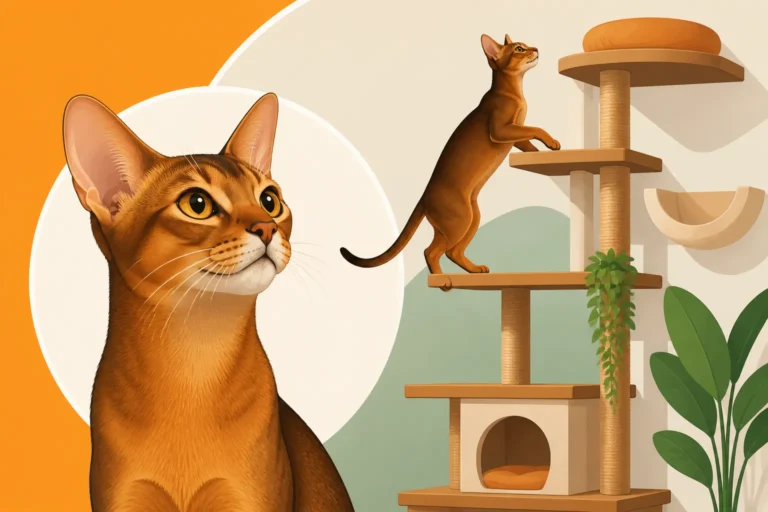
Even the most social Abyssinian needs its own personal space and quiet time. Older children can understand and respect this concept much better than toddlers. It's crucial to teach them that when the cat is eating, sleeping, or using its litter box, it should be left undisturbed. Creating designated "cat zones" – perhaps a tall cat tree in a quiet corner or a comfy bed on a high shelf – where the cat can retreat and be guaranteed peace is essential. Abyssinians love height, so providing vertical spaces where they can observe without being constantly handled is perfect. An Abyssinian Needs Height More Than It Needs Floor is a good article to review for ideas on this.
It's also important to instruct children on proper handling. While Abyssinians are affectionate, they generally prefer interactive play and shoulder perching to prolonged lap-sitting. Why an Abyssinian Will Not Sit on Your Lap explains this well. Show children how to pet gently, avoiding the belly area, and how to recognize signs that the cat might be overstimulated or wants to disengage, such as a flicking tail, flattened ears, or a stiff body. Empowering children with this knowledge not only protects the cat but also teaches them empathy and responsible pet ownership.
Managing Play Biting and Scratching
Abyssinians, especially as kittens, are incredibly playful and can sometimes engage in rough play that might involve nipping or swatting. With older children, it's easier to teach both parties how to manage this. Children need to understand that hands and feet are not toys. Instead, they should always use appropriate toys – like wand toys, kickers, or plush mice – during play sessions. When an Abyssinian gets too rough, the immediate response should be to stop play, redirect them to an appropriate toy, or simply walk away.
A simple table for kids on cat body language can be incredibly helpful:
| Cat Body Language Sign | What it Means | Recommended Action |
|---|---|---|
| Tail flicking quickly | Agitated, annoyed | Give space, stop petting |
| Ears flattened | Scared, angry | Leave alone, move away slowly |
| Dilated pupils | Excited, scared, playful | Observe context, use wand toy for play |
| Hissing/Growling | Warning, feeling threatened | Retreat immediately, give maximum space |
| Slow blink | Content, trusting | Blink back slowly, gentle interaction okay |
| Rubbing against legs | Affectionate, marking you | Gentle pets okay, speak softly |
| Playful pounce | Wants to play | Redirect to toy, engage in interactive play |
This helps children quickly interpret their cat's mood and respond appropriately, minimizing misunderstandings and potential scratches. Consistent boundaries are key; everyone in the household, including adults, must reinforce these rules.
Enrichment for Two: Keeping Both Kids and Abys in Harmony
The beauty of having an Abyssinian in a household with older children lies in the shared opportunities for enrichment. These aren't just activities that keep the cat busy; they're ways for children to bond with their pet, learn responsibility, and engage their own creativity. It's about turning daily interactions into valuable learning and fun experiences for everyone.
Interactive Play and Training Sessions
Older children can be fantastic partners in providing the interactive play and mental stimulation that Abyssinians crave. They can learn to operate various puzzle feeders found on Amazon, which tap into the Abyssinian's natural foraging instincts and intelligence. Which Puzzle Feeders Hold an Abyssinian's Attention is a great resource here. Imagine your child teaching the Abyssinian to retrieve a toy, or to sit on command using clicker training – a method Abyssinians respond incredibly well to. These short, positive training sessions are not just fun; they strengthen the bond between child and cat and help the Abyssinian channel its intelligence productively.
Consider setting up a dedicated play routine where children lead a game with a wand toy for 10-15 minutes before homework or dinner. This structured playtime allows the Abyssinian to burn off energy and satisfy its hunting instincts. How to Split an Abyssinian's Play Into Sessions can offer guidance on maximizing these interactions. The shared experience of achieving a trick or having a successful play session builds mutual respect and enjoyment.
Cat-Friendly Home Design and Shared Spaces
Given the Abyssinian's love for heights and exploration, older children can even get involved in creating a cat-friendly environment. They can help brainstorm and set up wall shelves, cat trees, or even a secure catio that caters to the Abyssinian's adventurous spirit. Websites like Amazon offer a wide array of cat furniture, from multi-level cat trees to window perches, that children can help select and even assemble (with adult supervision, of course!). This not only provides enrichment for the cat but gives children a sense of ownership and responsibility for their pet's well-being.
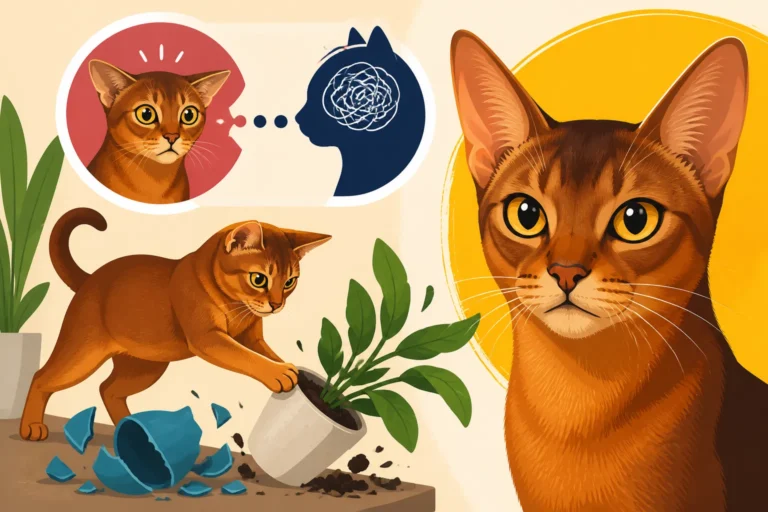
By involving them in these decisions, children learn about the cat's natural behaviors and needs, fostering a deeper understanding. For instance, they'll quickly realize Why an Abyssinian Opens Doors and Cabinets and learn to secure childproof latches on anything important or potentially dangerous. Cable management, too, becomes a shared responsibility: How to Cable Manage a Room for an Abyssinian to protect both the curious cat and valuable electronics. This shared effort in creating a safe and stimulating home strengthens family bonds around the pet.
Why a Well-Adjusted Abyssinian Thrives in an Active Family
Ultimately, an Abyssinian's inherent personality traits make them uniquely suited to integrate into a household with older children. Their combination of energy, intelligence, social nature, and adaptability means they are less likely to be overwhelmed and more likely to become a cherished, active member of the family unit.
Their Social and Observant Nature
Abyssinians are incredibly social cats, thriving on interaction with their human companions. While they might not be lap cats, they love to be involved in whatever you're doing. This means they will often follow the kids around the house, watching them play, do homework, or even just read a book. They love to observe, and their keen intelligence means they're constantly learning the family's routines and habits. This makes them feel like a true participant in family life, rather than just an observer.
Their social drive also means they appreciate companionship. If your older children are home after school or during holidays, the Abyssinian will relish the extra attention and play opportunities. This helps prevent the boredom that can sometimes lead to destructive behaviors when an Abyssinian is left alone for long stretches. What an Abyssinian Does When It Is Bored can range from opening cabinets to scaling curtains, so having active human companions around is a huge benefit.
Adaptability and Reslience
Abyssinians are generally adaptable cats, capable of adjusting to changes in routine and environment, especially when introduced gradually and with positive reinforcement. The hustle and bustle of a family home, with its changing schedules and varying noise levels, might stress a more sensitive breed. However, the Abyssinian's resilient nature allows them to take it all in stride. They are often quick to learn, quick to forgive, and always ready for the next adventure.
This doesn't mean they're immune to stress, but their high intelligence and energetic disposition equip them to navigate an active environment with more ease than many other breeds. When children understand the Abyssinian's needs for play, mental stimulation, and respectful boundaries, the cat truly blossoms. The result is a vibrant, interactive family pet that adds immense joy and a unique personality to the home. It's truly a win-win situation where the Abyssinian gets the stimulation it craves, and the children gain a playful, intelligent, and affectionate companion.
Disclaimer
This article is for general informational purposes only and does not constitute professional advice. Laws, prices and regulations vary by location and change over time. Consult a qualified professional for guidance on your specific situation.