Whether an Abyssinian Uses Its Claws in Play
It's a common worry among Abyssinian owners: will these energetic, acrobatic cats use their claws during play, potentially turning a fun session into a painful one? The short answer is yes, they absolutely will, but not out of malice. Abyssinians are bundles of intelligent, primal energy, and understanding this innate behavior is key to ensuring playtime is safe and enjoyable for both of you. This guide will walk you through why Abyssinians use their claws, how to manage it, and how to create a play environment that respects their natural instincts without sacrificing your skin.
The Abyssinian's Instinctive Play with Claws
Abyssinians are known for their athleticism, their incredible pounces, and their general zest for life. This isn't just a playful personality; it's a reflection of their deeply ingrained predatory instincts. When they play, they're not just batting at a toy; they're enacting a miniature hunt, and in that scenario, claws are a natural and necessary tool. It’s not about aggression; it’s about being a cat, a very active and effective cat at that.
Mimicking the Hunt: Pounces, Batting, and Bunny Kicks
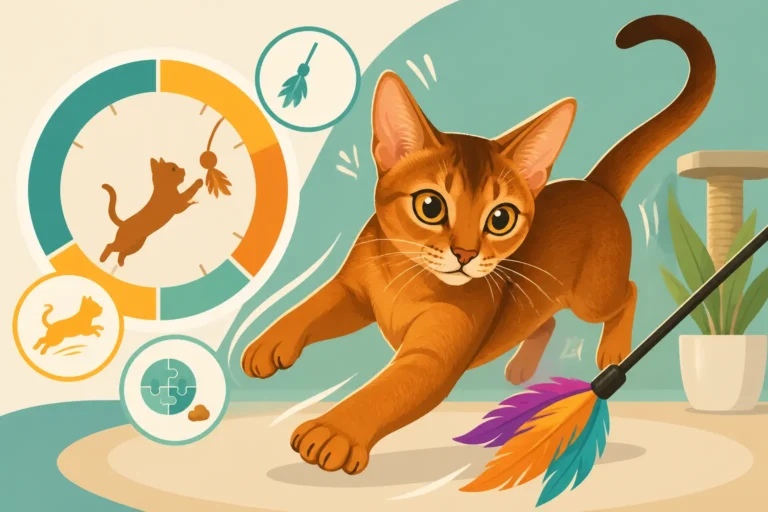
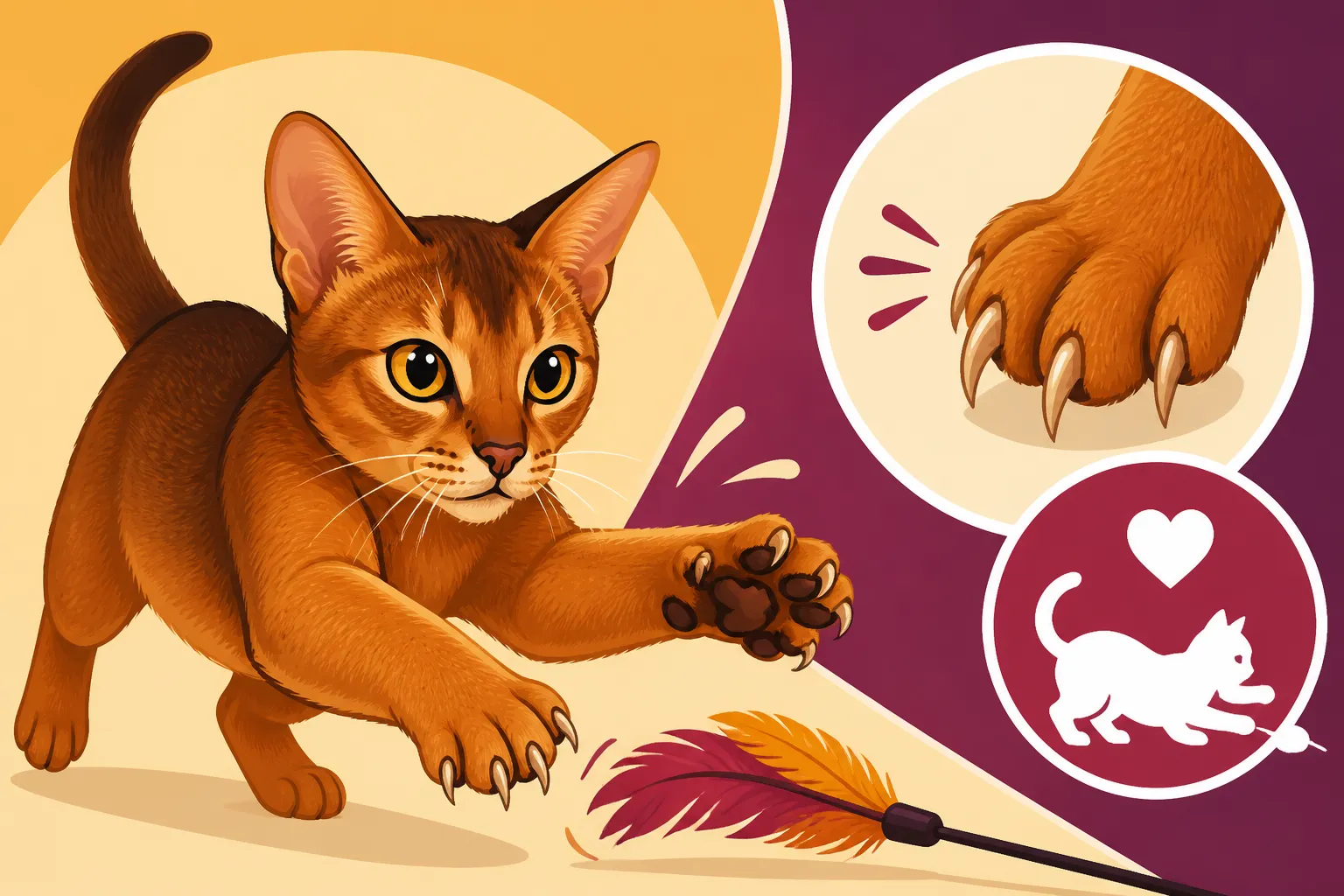
Think about how a wild cat hunts. There's stalking, pouncing, capturing, and "killing" the prey. Your Abyssinian, even if they've never seen a mouse in their life, is wired for this sequence. When you dangle a wand toy, they might stalk it with intense focus, then launch themselves with surprising speed. That pounce often involves extending their front claws to "catch" the toy. It’s a natural reflex to grasp and secure their "prey."
Then comes the batting. Abyssinians have incredibly dexterous paws, and they use them to bat and manipulate objects, often with their claws partially extended to get a better grip. If the "prey" (toy) is particularly exciting, they might even roll onto their back and deliver a rapid-fire "bunny kick" with their powerful hind legs. Those hind claws, designed for disemboweling prey in the wild, are very much in action here. It’s all part of the game for them, a thrilling reenactment of their ancestral behaviors. How Many Hours a Day an Abyssinian Stays Active really highlights just how much energy they have to channel into these activities.
Understanding Front Claws vs. Back Claws in Play
It’s important to distinguish between how your Abyssinian uses their front claws versus their back claws during play. The front claws are primarily for swatting, gripping, and climbing. They’re like their multi-tool, used for everything from scaling a cat tree to batting a feather toy mid-air. When they pounce on a toy, they’ll often use their front paws to grab and hold it. This can feel sharp if your hand is inadvertently too close to the action.
The back claws, on the other hand, are typically deployed during that intense "bunny kick" move. This happens when they've "captured" their toy and are holding it close to their belly, then use their powerful hind legs to simulate tearing into their prey. While it's usually directed at a toy, if your arm or leg becomes the accidental target during an overzealous play session, those back claws can deliver quite a powerful scratch. This isn't aggression, but rather an instinctive response to having something "captured" in their paws. It just feels a lot less pleasant when it's your flesh rather than a plush toy!
Why Play Biting and Scratching Can Escalate
While a bit of claw contact is normal in Abyssinian play, there are situations where it can become more frequent, more intense, or even painful. Often, this escalation is not because your Abyssinian is trying to hurt you, but because they're either overstimulated, haven't learned appropriate boundaries, or lack suitable outlets for their energy. It's crucial to understand these triggers to prevent playtime from becoming a source of nips and scratches.
When Play Gets Too Intense or Lacks Outlets
Abyssinians are incredibly intelligent and energetic cats. If they don't get enough mental and physical stimulation, or if their play sessions become too chaotic without proper redirection, things can easily get out of hand. Imagine a child who isn't given enough playground time; they might start getting rough with siblings indoors. It's similar with an Abyssinian. If they're bored, under-exercised, or simply over-excited, their natural play instincts can become amplified and misdirected.
This is especially true if you have a single Abyssinian who looks to you for all their entertainment. They need multiple play sessions throughout the day, not just one quick flick of a wand toy. Without sufficient outlets for their energy, they might start targeting your feet or hands as "prey," escalating their play and using their claws more vigorously. How Much Play an Abyssinian Needs Each Day explores this in detail, emphasizing the importance of consistent and engaging activity. An Abyssinian needs to work for their "kill," so simply tossing a toy isn't always enough to satisfy their deep-seated hunting drive.
The Misstep of Using Hands and Feet as Toys
This is perhaps the most common reason why an Abyssinian might use their claws too much during play. It’s incredibly tempting when you have a tiny, adorable kitten to let them pounce on your wiggling fingers or attack your moving toes under a blanket. They're so small and cute, and it seems harmless at the time. However, what starts as a gentle pat with soft paws quickly teaches your Abyssinian that human hands and feet are perfectly acceptable playthings.
As they grow, their claws get sharper, their bites get stronger, and their energy intensifies. That "cute" behavior now results in painful scratches and nips. It’s a tough habit to break once established, both for you and for your cat. They genuinely don't understand why something that was fun and encouraged as a kitten is now suddenly off-limits. This is why consistent boundaries from day one are absolutely essential to teach them that human skin is not a toy. How to Stop an Abyssinian Play Biting offers more insights into this specific challenge.
Strategies for Managing Claw Use in Play
Since we can't completely train the natural instinct out of an Abyssinian to use their claws during play, our best approach is to manage how and where those claws are used. This involves a combination of providing appropriate outlets, consistent training, and preventative measures that keep both you and your cat happy and safe.
Providing Appropriate Toys and Interactive Play
The golden rule for Abyssinian play is simple: never use your hands or feet as toys. Instead, invest heavily in a variety of interactive toys that allow them to fulfill their hunting instincts safely. Wand toys with feathers, ribbons, or small stuffed animals attached are fantastic because they create a safe distance between your hands and their claws. Look for durable, flexible wands on Amazon that can withstand an enthusiastic Abyssinian's pounces and tugs. Rotate these toys regularly to keep things fresh and exciting, preventing boredom. Which Wand Toy an Abyssinian Prefers provides some great ideas for engaging these intelligent cats.
Laser pointers can be great for getting them to run and jump, but always, always end a laser session by pointing it at a physical toy they can "catch" and "kill." This prevents frustration from never actually succeeding in the hunt. Puzzle feeders are another excellent tool, engaging their minds and paws in a non-aggressive way. They have to bat, dig, and manipulate the feeder to get treats, channeling their energy constructively. You can find a huge selection of durable puzzle feeders on Amazon that will challenge your clever Abyssinian.
The Importance of Regular Nail Trimming
This might seem obvious, but regularly trimming your Abyssinian's claws is one of the most effective ways to mitigate the impact of accidental scratches during play. Even if they do make contact, a blunt nail is far less damaging than a needle-sharp one. Aim for weekly or bi-weekly trims, just taking the very tip of the claw. This also helps keep their nails healthy and prevents them from getting snagged on furniture or carpets.
Start this habit when they are kittens to get them accustomed to the process. Make it a positive experience with treats and praise. If your Abyssinian isn't a fan, try doing it when they're sleepy or relaxed, perhaps after a meal. You can also break it up into short sessions, doing just one paw at a time. There are many excellent, safe cat nail clippers available on Amazon, often with safety guards to prevent cutting too far back. If you're unsure, ask your vet or a professional groomer to show you how to do it safely. For more detailed guidance, check out How to Trim a Climbing Abyssinian's Claws.
Redirecting Unwanted Claw-Play
When your Abyssinian gets too rough, it’s important to redirect their behavior immediately and consistently. If they lunge at your feet or try to bat at your hands with extended claws, do not engage. Do not yell, do not punish, and absolutely do not continue to play. Instead, let out a firm "ouch!" or "no," pull your hands or feet away, and immediately disengage from play. Walk away and ignore them for a few minutes. This teaches them that rough play ends the fun.
After a short break, you can re-engage with an appropriate toy, like a wand toy. This reinforces that acceptable play means interacting with the toy, not your body. Consistency is key here. Every single time they get too rough, the game ends. It might take time, especially if they've learned bad habits, but with patience, your Abyssinian will begin to understand the boundaries. Remember, their minds are always active, so give them plenty of approved activities to keep them busy and well-behaved.
Cultivating a Safe and Stimulating Play Environment
Beyond direct training and appropriate toys, the overall environment you create for your Abyssinian plays a huge role in how they channel their boundless energy and, by extension, how they use their claws. Abyssinians thrive in environments that challenge them physically and mentally, offering ample opportunities for climbing, scratching, and exploring.
The Essential Role of Vertical Space and Scratching Surfaces
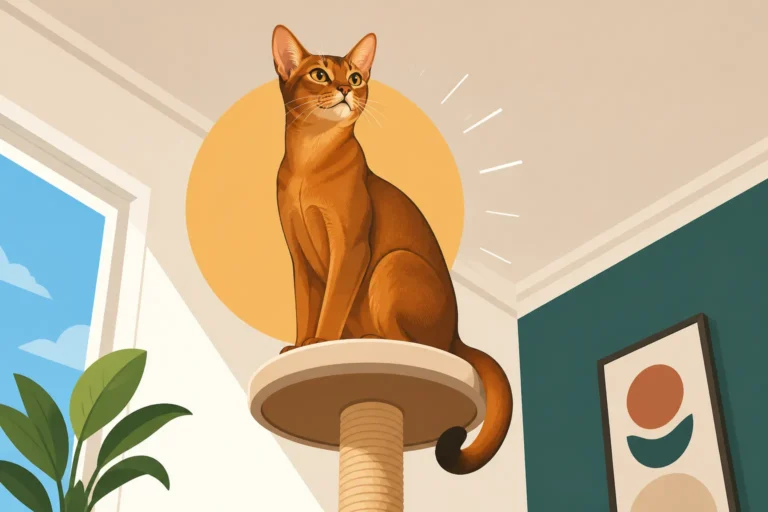
Abyssinians are natural climbers. They want to be up high, observing their kingdom from above, and engaging their powerful leg muscles. Providing plenty of vertical space is paramount. This means tall cat trees – the taller the better – and wall-mounted shelves or cat perches. These structures give them legitimate places to climb, jump, and survey, satisfying their instinct to scale heights.
Crucially, these vertical spaces should also include scratching surfaces. Sisal-covered posts, cardboard scratchers, and even carpeted ramps on cat trees are essential. Why an Abyssinian Needs More Vertical Furniture Than Most Cats explains this perfectly. When they climb, they often stretch and scratch, honing their claws on appropriate materials rather than your sofa. Make sure these scratching posts are sturdy and tall enough for them to stretch their full body length. A wobbly or too-short post is often ignored in favor of something more satisfying (like your armchair). Consider a variety of textures and orientations – horizontal, vertical, and angled – to cater to their preferences. You can find durable, multi-level cat trees and wall-mounted cat furniture kits on Amazon to suit any home.
Understanding Your Abyssinian's Body Language
Learning to read your Abyssinian's body language is a huge advantage in preventing play from getting too rough. They will almost always give you signals that they're becoming overstimulated or about to escalate their play. Look for:
- Dilated pupils: A sign of excitement or heightened arousal.
- Wiggling rear end: The classic "prey stalk" wiggle before a pounce.
- Flattened ears: Can indicate intense focus or slight irritation.
- Tail twitching rapidly: A sign of excitement, or sometimes irritation. What an Abyssinian's Tail Says delves into this in more detail.
- Tension in their body: They might become rigid just before launching themselves.
If you notice these signs and your cat is getting too focused on your hands or feet, it's time to interrupt and redirect. Toss a favorite wand toy across the room, or give them a puzzle feeder to distract them. The goal is to catch them before they make contact and redirect that intense energy into an appropriate outlet. This proactive approach is far more effective than trying to correct them after they’ve already scratched or nipped.
Creating a Clear Play Schedule
Abyssinians thrive on routine, and establishing a consistent play schedule can make a world of difference. Rather than waiting for them to demand play, initiate sessions at predictable times, ideally when they are naturally most active – often in the early morning and evening. Short, intense bursts of play (5-10 minutes each) multiple times a day are often more effective than one long, drawn-out session. This helps them burn off energy in a structured way and reduces the likelihood of them seeking out inappropriate play.
Using a variety of toys during these sessions also keeps them engaged. Start with a fast-paced chase with a wand toy to get their cardio going, then transition to a puzzle toy for mental stimulation. End each session on a positive note, perhaps with a treat or a cuddle, and put the interactive toys away. This makes the toys special and reinforces that playtime is a designated activity, not a free-for-all that involves your body parts.
Common Play Behaviors and Solutions
To help you navigate your Abyssinian's spirited play, here's a quick reference for common claw-related scenarios and how to respond.
| Scenario | Abyssinian Behavior | Your Response | Why It Works |
|---|---|---|---|
| Overly enthusiastic pounce | Jumps at your hand/foot with extended claws. | Withdraw immediately, say "ouch!", ignore for a few minutes. | Teaches that painful play ends the interaction. |
| Bunny kicking your arm | Grabs your arm, rolls onto back, delivers hind-claw kicks. | Gently but firmly disengage, replace arm with a sturdy kick-toy. | Satisfies the instinct on an appropriate object. |
| Stalking feet under blanket | Hides, then pounces on wiggling toes beneath covers. | Use thick socks or shoes. Redirect with a wand toy outside the blanket. | Protects skin while teaching "feet are not prey." |
| Climbing you like a tree | Scales your leg/back with claws during excitement. | Immediately pick them up and place them on an appropriate cat tree or shelf. | Reinforces that climbing is for designated structures, not people. |
| Playing too rough with other pets | Repeatedly ambushes or swats with claws at another cat/dog. | Separate them, redirect the Abyssinian to individual playtime with a toy. | Prevents injury and teaches boundaries with housemates. |
This consistent and thoughtful approach will ensure that your Abyssinian's energetic play remains a joy rather than a challenge. They want to play, and with the right guidance, they can learn to do it safely.
Disclaimer
This article is for general informational purposes only and does not constitute professional advice. Laws, prices and regulations vary by location and change over time. Consult a qualified professional for guidance on your specific situation.