Why an Abyssinian Pesters a Quieter Cat
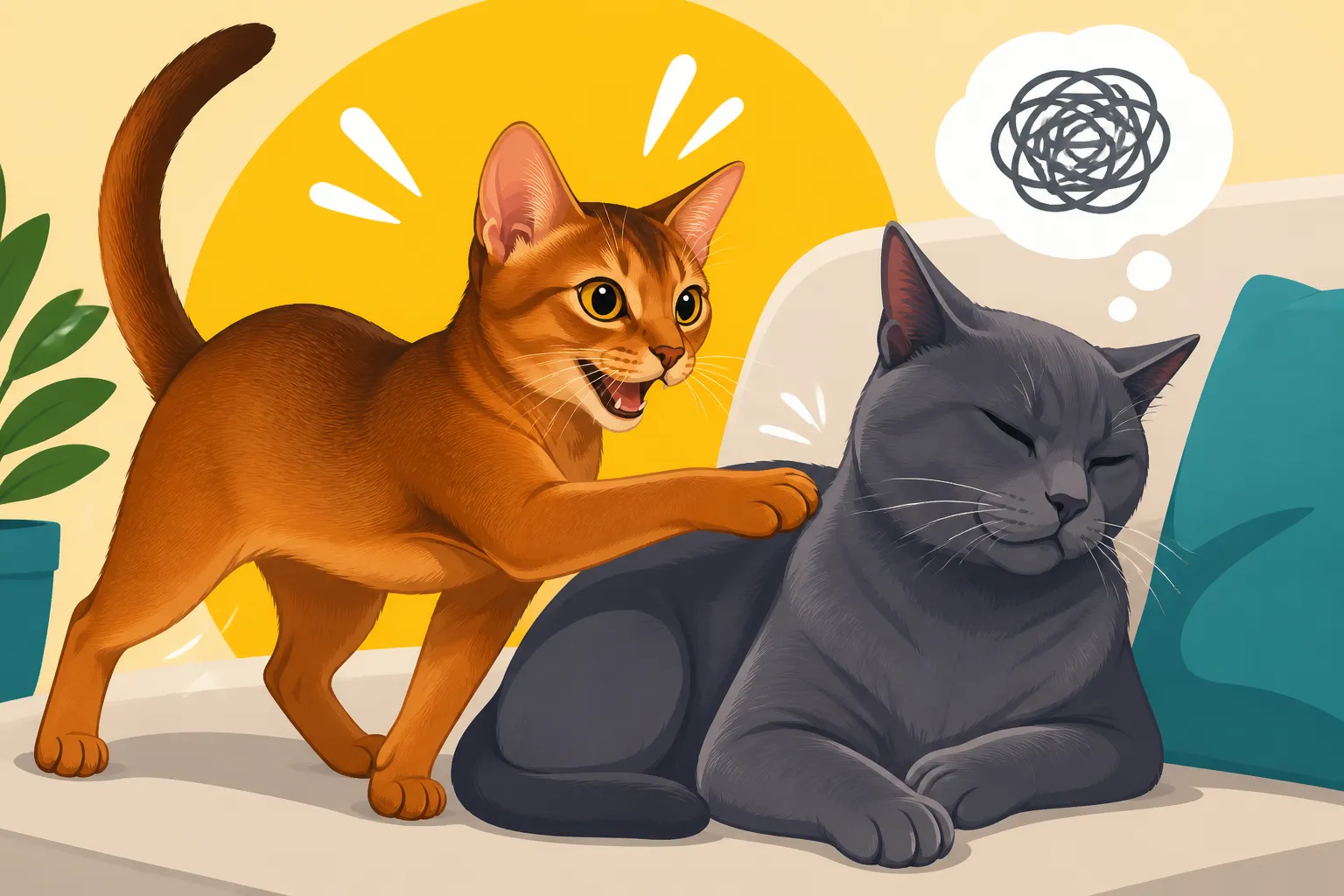
It’s a scene many Abyssinian owners know all too well: your energetic, curious Aby relentlessly stalking, pouncing on, or simply bothering your other, much calmer cat. This guide will dive deep into why your Abyssinian acts like a tiny, furry tormentor and, more importantly, offer actionable strategies to create a more harmonious multi-cat household.
Understanding the Abyssinian's Innate Drive for Interaction
Abyssinians are not your typical lounge-lizard cats. They’re renowned for their boundless energy, sharp intellect, and an almost dog-like need for engagement. When they "pester" another cat, it's often not out of malice, but an overwhelming desire to play, explore, and simply do something. They see another living, breathing creature as an invitation for adventure, whether that creature wants to join or not.
The Abyssinian's High-Octane Personality
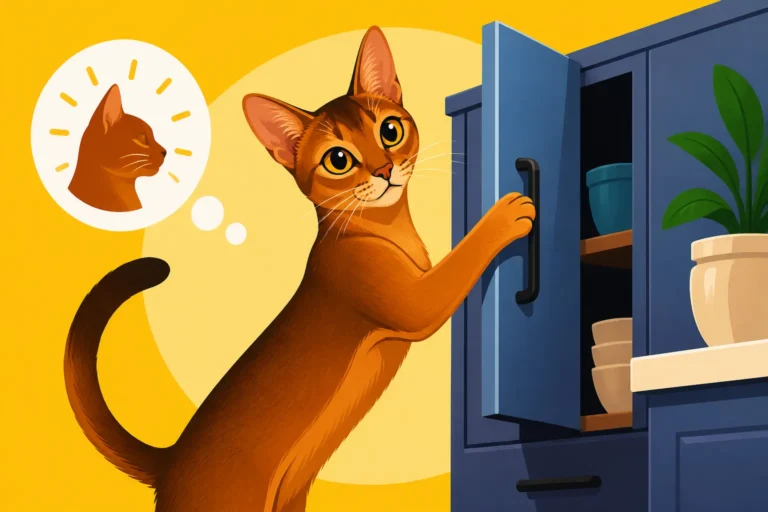
Imagine living with a tiny, perpetual motion machine that also happens to be brilliant. That's an Abyssinian in a nutshell. They don't just sit and observe; they participate. They're wired for constant activity, whether it's scaling your tallest cat tree, investigating a closed cabinet, or chasing a rogue dust bunny with the intensity of a cheetah. This innate drive means that downtime, to an Abyssinian, is often a call to action. They wake up ready to go, and if their environment doesn't offer enough outlets for their energy, they'll create their own, often with your other pets as unwilling participants. Their idea of fun might involve a full-speed chase through the house, while your more sedate cat might prefer a quiet nap in a sunbeam.
This isn't a cat that's content to simply coexist. They want to interact, to stimulate, to engage. Their high intelligence also plays a huge role; they quickly learn patterns, understand cause and effect, and use these skills to get what they want. If pestering the quieter cat yields any reaction – a hiss, a run, even an annoyed glance – it's a win for the Aby, because it means interaction. They see the other cat as a fellow player in their grand scheme of daily adventures, even if the other cat would much rather be a spectator. For more insights into their active nature, consider How Many Hours a Day an Abyssinian Stays Active.
The Quest for Mental and Physical Engagement
A bored Abyssinian is a recipe for household chaos, and often, a pestered housemate. These cats are descendants of highly active, intelligent felines, and their instincts are still very much intact. They need to hunt, stalk, climb, and solve problems. If you don't provide sufficient outlets for these natural behaviors, they will find their own, and that often involves turning their quieter companion into a living, breathing toy. It's not personal; it's instinct. They're not trying to be mean; they're trying to entertain themselves in the most exciting way they know how, and a moving target is far more interesting than a stationary one.
Think of it this way: your Aby isn't just seeking physical exercise; they're seeking a "job." They thrive on challenges and mental stimulation. If their environment isn't offering enough intriguing puzzles, high places to survey their domain, or engaging play, they’ll recruit their housemates. This could manifest as nudging, tail-chasing, or even swatting at a sleeping cat. They're essentially saying, "Hey, I'm bored! Let's do something!" The quieter cat, unfortunately, often becomes the most accessible and consistently available source of this engagement, however unwelcome it might be. This relentless pursuit of engagement is a core part of The Abyssinian Is the Busiest Cat in the House.
Why a Quieter Cat Becomes the Target
It might seem unfair, but there's a method to your Abyssinian's madness when it comes to choosing their "victim." Quieter, more introverted cats often present an appealing, if unwilling, playmate simply because they are there and often don't put up a strong initial resistance.
The Lure of a Sedentary Companion
An Abyssinian thrives on action, and a cat that spends much of its time napping, observing, or simply lounging around becomes a prime target. For the Aby, a sedentary cat represents a challenge: "Can I get this one to move? Can I get a reaction?" The quieter cat's calm demeanor, which might be a source of peace for you, is seen as an invitation by your Abyssinian to initiate play. They don't understand that stillness can mean contentment; to them, stillness means untapped energy, a potential playmate waiting to be activated.
This dynamic creates a frustrating loop. The Aby pounces, the quieter cat startles or runs, and the Aby interprets this as a successful initiation of a game of chase. They're built for speed and agility, and they naturally want to engage in these types of activities. If your quieter cat prefers gentle swats with a toy or simply watching birds, their play styles are fundamentally mismatched. The Aby simply sees a cat that isn't running yet, and they're determined to change that. Understanding Which Breeds Live Well With an Abyssinian often comes down to matching energy levels.
Misinterpreting Cues and Boundaries
One of the biggest challenges in a multi-cat household with an Abyssinian is their tendency to misinterpret or simply override the subtle social cues of other felines. While Abyssinians are intelligent, their high drive can sometimes make them less attuned to another cat's explicit "no." A flattened ear, a tail twitch, a low growl – these are clear signals to another cat, but an Aby might barrel right past them, still convinced that their persistent invitations will eventually lead to a fun interaction. They're like that overly enthusiastic friend who doesn't quite grasp when the party's over.
The quieter cat, in turn, might be too polite or too overwhelmed to deliver a definitive, aggressive "stay away!" message. They might resort to avoidance, hissing, or hiding, which the Abyssinian might just see as part of the game. This lack of clear, consistent boundaries (or the Aby's inability to recognize them) means the pestering can continue unabated. It's crucial for us, as owners, to step in and mediate, helping both cats communicate more effectively and ensuring the quieter cat has genuine respite. This can be especially important if you have a sensitive older cat, as What an Old Abyssinian Slows Down From can include patience for high-energy antics.
Strategies to Redirect Abyssinian Energy and Foster Harmony
Living with an Abyssinian means embracing their energy, not trying to suppress it. The key to reducing pestering is to provide so many appropriate outlets for that energy that your quieter cat is no longer the most exciting option.
Maximizing Individual Play and Enrichment
This is non-negotiable for an Abyssinian. You simply cannot expect an Aby to respect another cat's peace if their own needs for stimulation aren't met. You need to become your Aby's primary playmate, channeling their incredible energy into structured, high-intensity sessions. Aim for at least two to three dedicated playtimes a day, each lasting 10-15 minutes, where your Aby is truly exhausted by the end. Think laser pointers, feather wands, and toys they can chase and "kill." Interactive toys are your best friend here. Consider an Amazon search for a "Da Bird" wand toy; these are almost universally loved by Abyssinians for their erratic flight patterns.
Puzzle feeders are another fantastic tool for mental engagement. Instead of simply putting down a bowl of food, make your Aby work for it. There are many great options available on Amazon, from simple treat balls to more complex feeders that require batting, pushing, or even solving a small puzzle. This taps into their hunting instincts and keeps their brilliant minds occupied. Rotate toys frequently to prevent boredom – what's old one week can feel brand new the next. Remember to read How Much Play an Abyssinian Needs Each Day and How to Split an Abyssinian's Play Into Sessions for effective scheduling.
Here's a quick comparison of play styles and suitable toys:
| Play Style | Abyssinian Preference | Quieter Cat Preference | Recommended Toys/Activities for Aby |
|---|---|---|---|
| Intensity | High-energy, fast-paced, vigorous chase and pounce | Low-to-moderate, slow stalking, gentle batting | Wand toys, laser pointers, remote control mice |
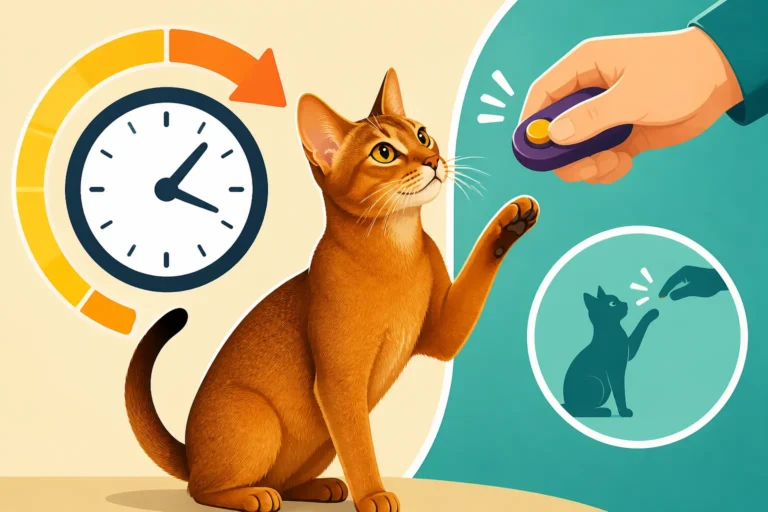
| Engagement | Interactive, problem-solving, "hunting" simulation | Observing, solo play, comfort-based | Puzzle feeders, clicker training, catio access |
| Social vs. Solitary | Highly social, wants to engage with others | More solitary, prefers personal space | Interactive play with owner, another high-energy cat |
| Prey Focus | Fast-moving, erratic "prey" | Small, soft, predictable toys | Feather wands (like Da Bird), crinkle balls (on Amazon) |
Creating 'Safe Zones' for Quieter Cats
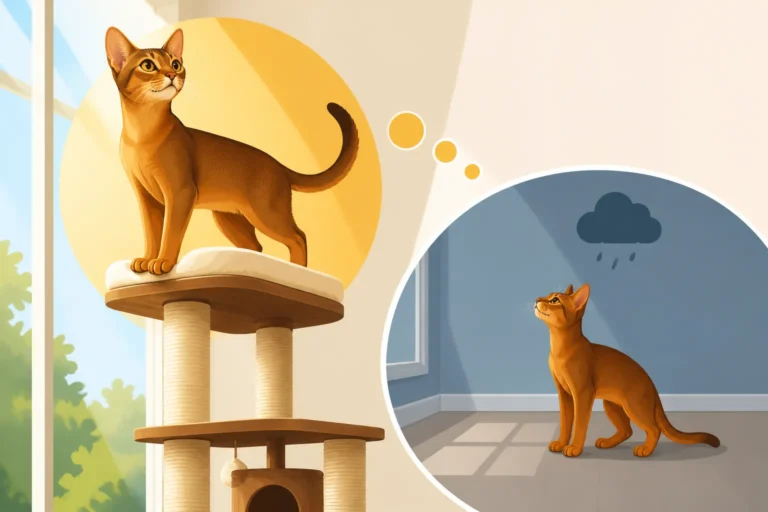
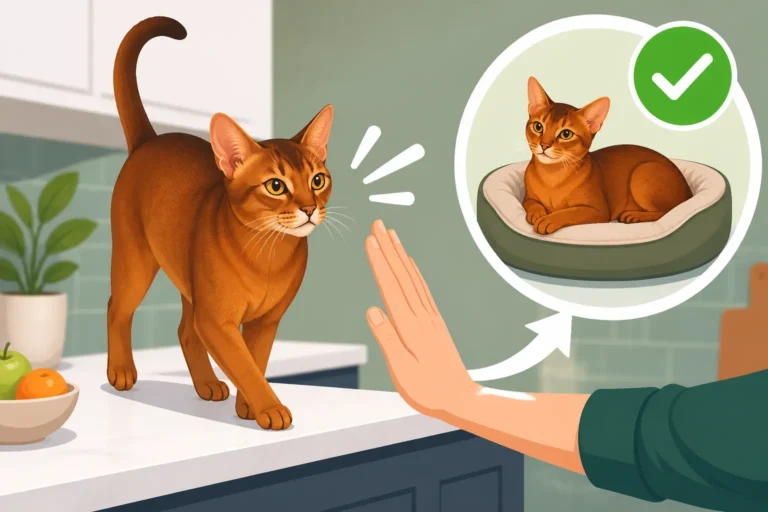
While you're busy exhausting your Abyssinian, you also need to ensure your quieter cat has sanctuary. This means dedicated spaces where the Aby cannot reach them, or at least, spaces designed to de-escalate interactions. Vertical space is critical. Abyssinians love to climb, but providing more vertical territory than they can possibly claim means there are always high perches for your quieter cat to escape to. Tall cat trees, wall-mounted shelves, or even just clearing off the top of a bookcase can offer a crucial retreat. Look for sturdy, multi-level cat trees on Amazon that cater to active climbers.
Consider pet gates or even a cat door with a microchip reader to create "cat-only" rooms where your quieter cat can relax without interruption. Ensure litter boxes, food, and water stations are duplicated and strategically placed so the quieter cat never feels trapped or cornered by the Aby while accessing essential resources. Sometimes, simply having separate feeding areas, or even feeding them simultaneously in different rooms, can reduce underlying tensions. Providing calm spaces will directly support the quieter cat's well-being. This ties into An Abyssinian Needs Height More Than It Needs Floor and Why Wall Shelves Work Better Than a Tree for an Abyssinian.
Structured Interactions and Separate Mealtimes
Beyond play and safe zones, consider how you structure daily life. Mealtimes can be a huge source of contention and an opportunity for pestering. If your Abyssinian is a fast eater, they might finish their meal and then try to muscle in on the quieter cat's food, adding stress. Feed them separately, perhaps even in different rooms, or use slow-feeder bowls for the Aby to prolong their mealtime and prevent them from finishing first.
You might also consider implementing short, supervised "peaceful interaction" times. These aren't play sessions, but moments where both cats are in the same room, perhaps receiving treats or gentle petting, while you monitor their body language. The goal is to associate positive experiences with each other's presence, rather than just high-energy Aby antics. If you're considering another cat to match your Aby's energy, take a look at Why a Second Cat Suits an Abyssinian or Whether Two Abyssinians Are Easier Than One.
When to Seek Professional Help and Understand Limitations
Despite your best efforts, sometimes the dynamic between cats can be too deeply ingrained or complex for an owner to resolve alone. Recognizing when to bring in outside expertise is crucial for the welfare of both your cats.
Recognizing Stress Signals in Both Cats
It's easy to assume your quieter cat is "just annoyed," but prolonged pestering can lead to genuine stress and anxiety. Watch for clear indicators: excessive hiding, avoidance of common areas, changes in eating habits (eating less or refusing to eat), inappropriate urination or defecation outside the litter box, or even overgrooming. If your quieter cat starts to lose weight or shows changes in their coat quality, it's a serious sign of chronic stress. This kind of stress can have long-term health implications, so don't ignore these subtle alarms. You might find more information on this in Why a Stressed Abyssinian Overgrooms.
On the flip side, also observe your Abyssinian. Are they truly bored and trying to instigate play, or is there a genuine aggressive component to their pestering? Are they displaying signs of frustration or anxiety when they don't get a reaction? While Abyssinians are typically bold, a truly frustrated Aby might also start exhibiting destructive behaviors, excessive vocalization, or even redirected aggression towards you. A cat that used to be a social butterfly but is now quiet and withdrawn could be telling you something significant, as explored in What a Quiet Abyssinian Is Telling You.
Consulting a Feline Behaviorist
If you've implemented all the enrichment and management strategies, and the problem persists or worsens, it's time to call in a professional. A certified feline behaviorist can observe your cats' interactions in their home environment, identify underlying triggers, and develop a tailored plan. They understand the nuances of feline body language and social dynamics in a way that goes beyond general advice. They can help you understand if the pestering is truly playful, a result of boredom, or a more serious behavioral issue that needs specific intervention.
Sometimes, it's not just about managing the Abyssinian's energy; it's about helping the quieter cat build confidence or teaching both cats to communicate more effectively. A behaviorist can introduce specific counter-conditioning and desensitization techniques that are difficult to implement without expert guidance. They can also advise on environmental modifications or even the judicious use of calming supplements or pheromone products to reduce overall household stress. Investing in a behaviorist is an investment in your cats' long-term happiness and peaceful coexistence.
Disclaimer
This article is for general informational purposes only and does not constitute professional advice. Laws, prices and regulations vary by location and change over time. Consult a qualified professional for guidance on your specific situation.