What an Old Abyssinian Needs Once It Stops Jumping
Senior Abyssinian cats experiencing age-related slowdowns learn how arthritis, muscle loss, and health issues change their play habits.
The daily stuff, done right.
Feeding amounts by life stage, coat and skin routines, dental and nail care, exercise needs, and what changes as they age.
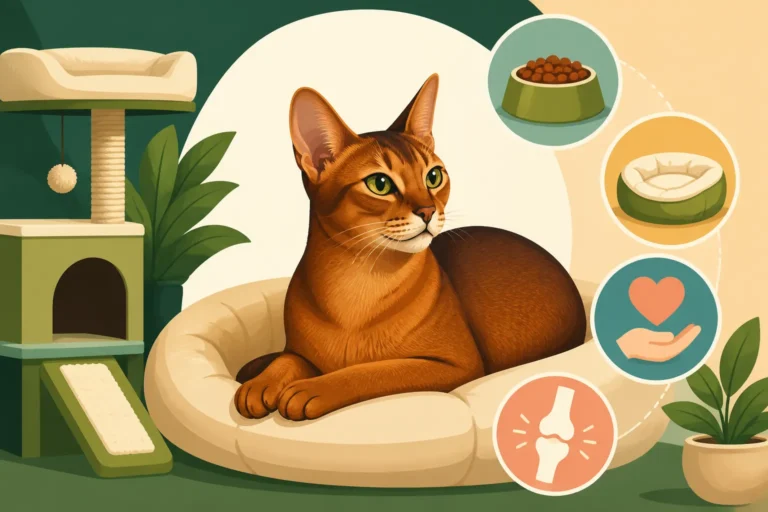
Senior Abyssinian cats experiencing age-related slowdowns learn how arthritis, muscle loss, and health issues change their play habits.
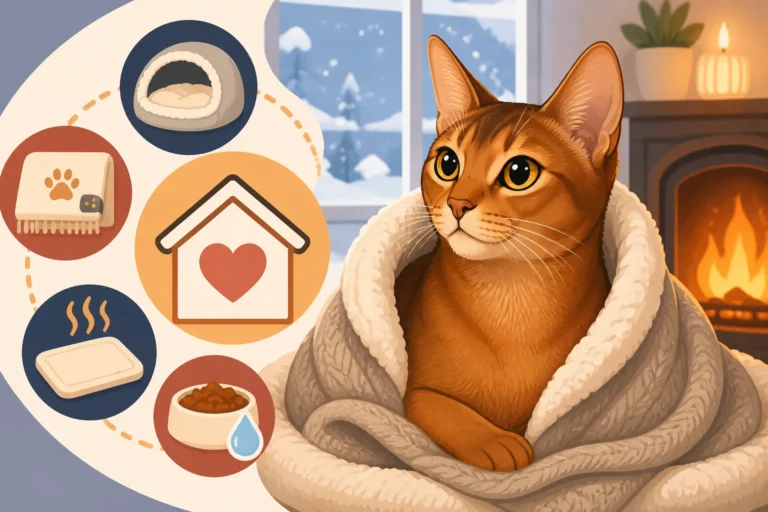
Abyssinian cats lack a thick undercoat to retain heat, leaving them vulnerable to cold temperatures, respiratory infections, and joint pain.
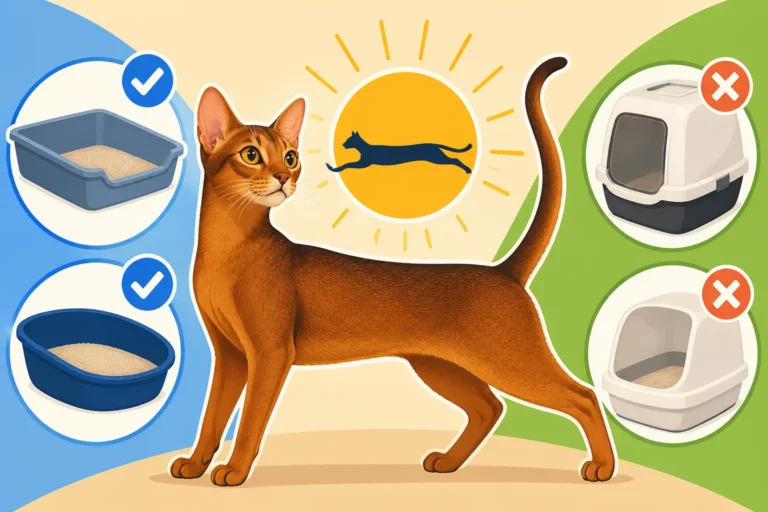
Abyssinian cats require long litter boxes with high sides to comfortably accommodate their athletic bodies and enthusiastic digging.
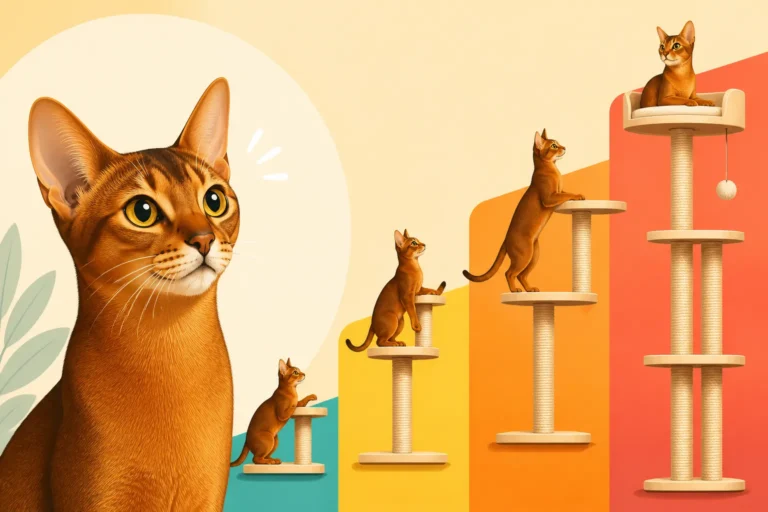
Abyssinian cats need scratching posts at every climbing level to satisfy natural instincts and protect household furniture.
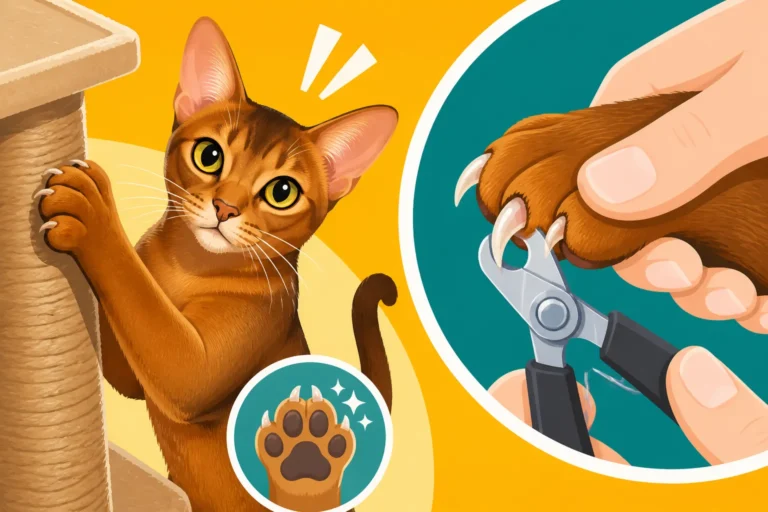
Abyssinian claw trimming helps prevent snagging and protects furniture by keeping active climbing cats safe and comfortable.
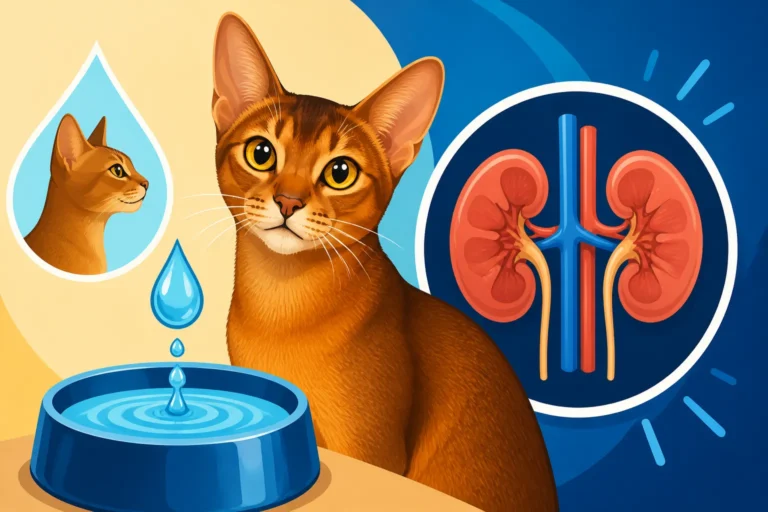
Abyssinian renal amyloidosis is a complex genetic condition requiring diligent water intake and veterinary check-ups to protect kidney health.
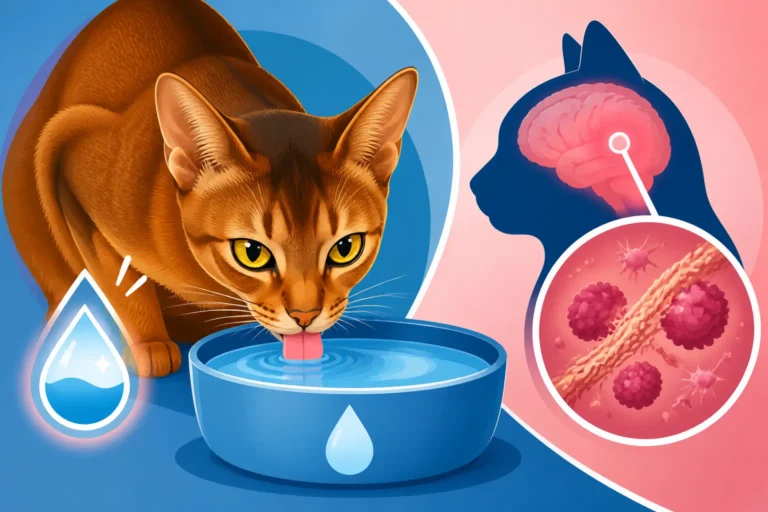
Abyssinian water intake guidelines help manage renal amyloidosis risks by maintaining kidney function and diluting waste products.
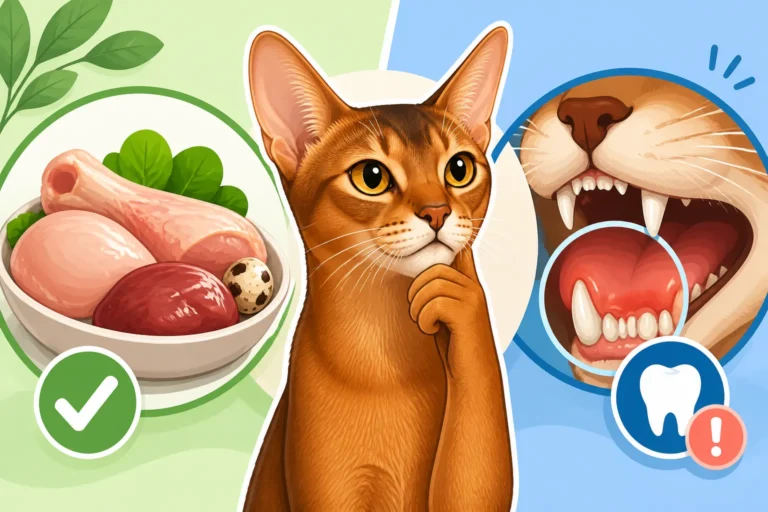
Raw feeding safety for Abyssinians with fragile gums helps owners evaluate juvenile gingivitis and heart, kidney, and liver risks.
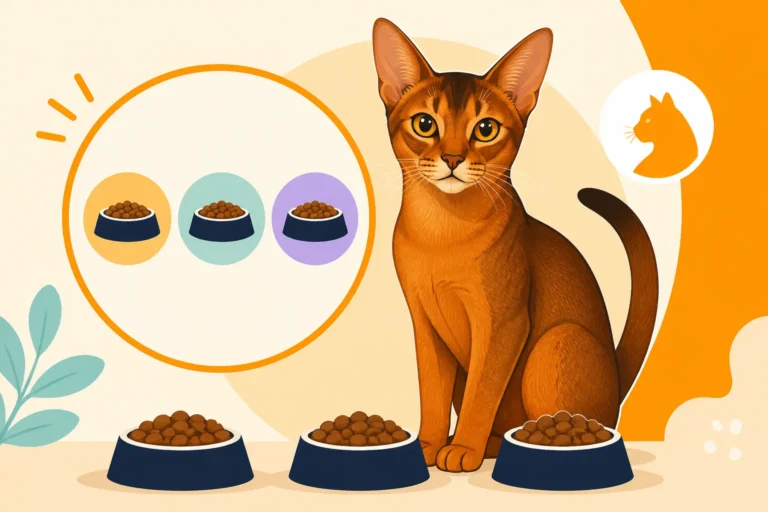
Proper feeding schedules for an Abyssinian prevent energy crashes and maintain stable blood sugar levels through frequent meals.
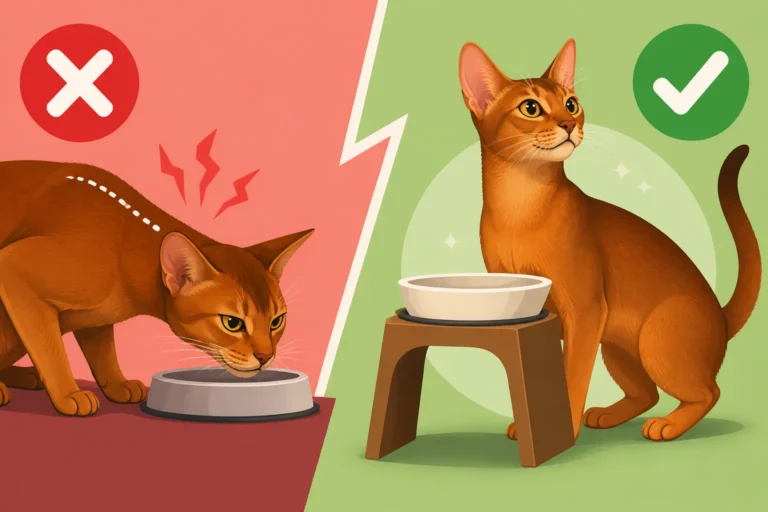
Constant food access harms the high activity level and lean physique of an Abyssinian cat by causing gradual weight gain.