Why an Abyssinian Digs Before and After Every Visit
Abyssinian litter box digging stems from wild ancestry, covering waste to hide scent and mark territory with paw glands.
The daily stuff, done right.
Feeding amounts by life stage, coat and skin routines, dental and nail care, exercise needs, and what changes as they age.
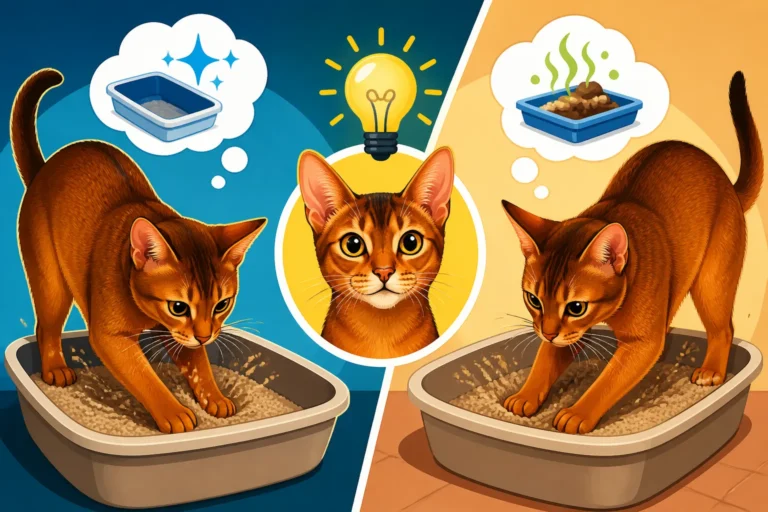
Abyssinian litter box digging stems from wild ancestry, covering waste to hide scent and mark territory with paw glands.
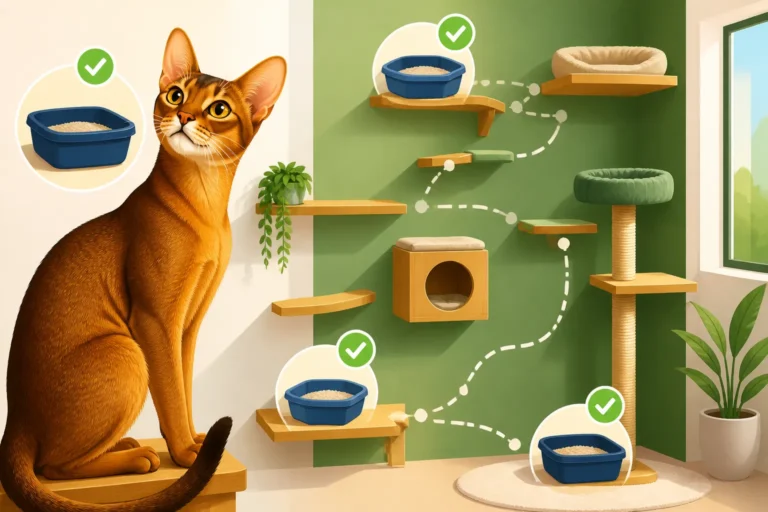
Abyssinian litter box placement strategies aligned with vertical climbing routes help keep athletic cats comfortable and homes clean.

Abyssinian cats prefer open litter boxes because covered designs limit their situational awareness and trap strong odors.
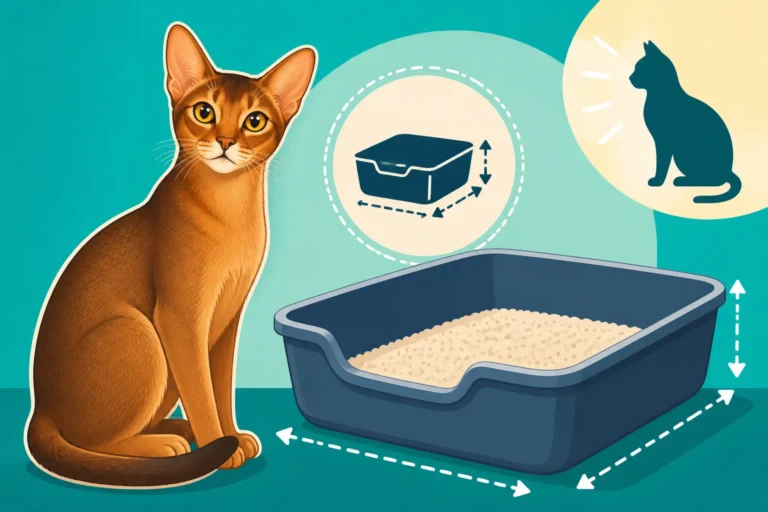
Abyssinian litter box dimensions must measure 1.5 times the cat length, requiring an internal size of 22 to 27 inches long and 18 to 20 inches wide.

Abyssinian cat litter texture preferences and sensitive paws explain why these pets reject harsh substrates and dusty options.
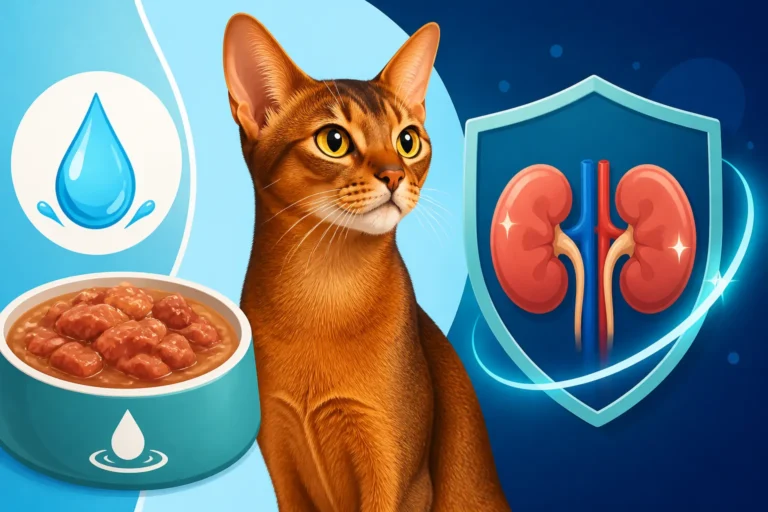
Wet food provides the high moisture needed to prevent dehydration and protect renal function in active Abyssinian cats.
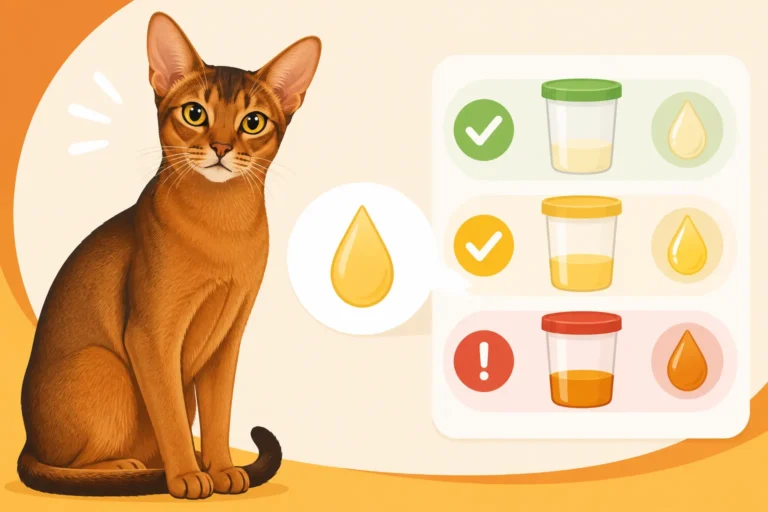
Healthy Abyssinian urine color, daily volume, and litter box clump sizes explained for cat owners to spot health issues.
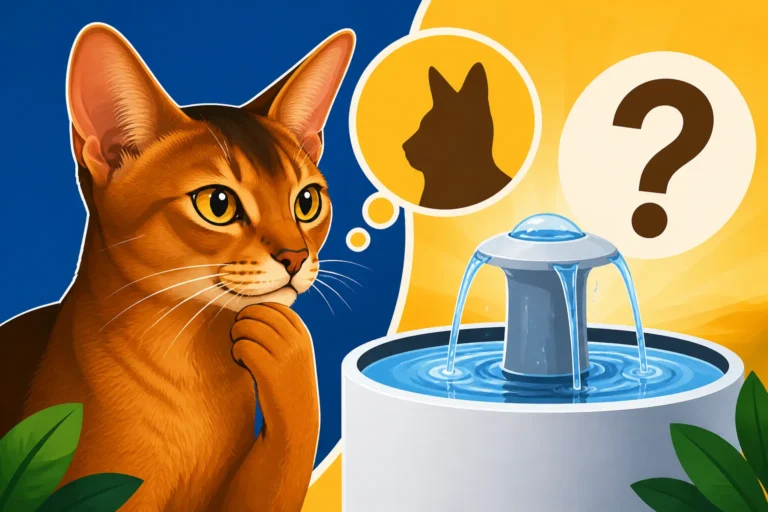
Abyssinian cat hydration needs, kidney health risks, and how moving water fountains encourage drinking habits.
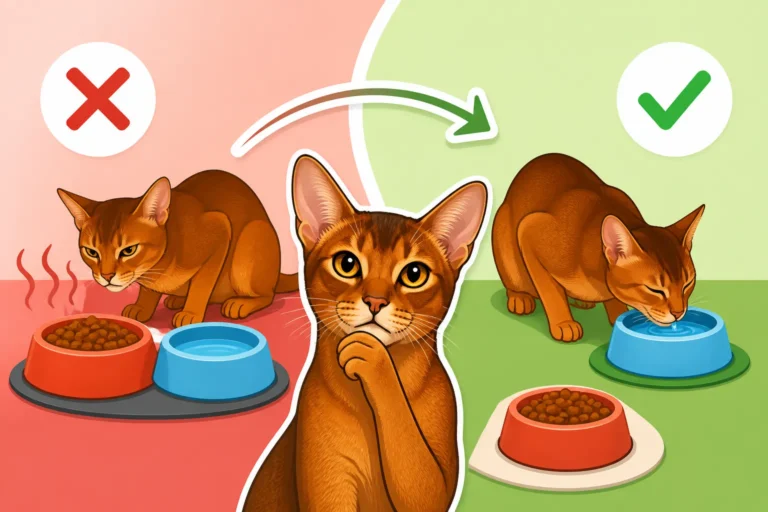
An Abyssinian cat needs water bowls separated from food because instincts and contamination risks cause chronic dehydration.
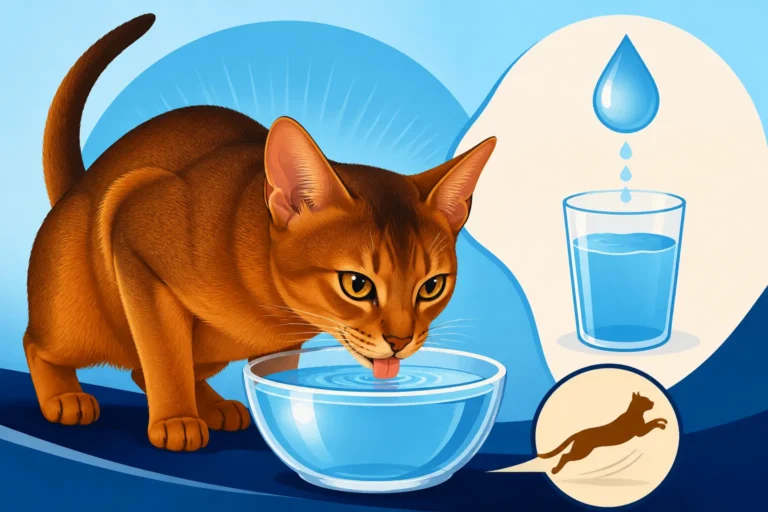
Active Abyssinian cats need specific daily water amounts to support high energy levels and prevent kidney issues.