How Often an Abyssinian Needs a Scale and Polish
It's a common worry for Abyssinian owners: you know dental health is crucial for cats, but with your busy, active Abyssinian, it's hard to tell what's normal and what requires professional intervention. Abyssinians, with their spirited nature and unique physiology, often face specific dental challenges that leave many owners wondering just how often their energetic companion truly needs a professional scale and polish. This guide will help you understand the signs to look for and establish a proactive dental care schedule for your beloved Aby.
The Unique Dental Challenges of Abyssinians
Abyssinians are a remarkable breed, full of life and boundless curiosity, but they do come with a predisposition to certain dental issues that many other cat breeds don't face to the same extent. This isn't a flaw in the breed, just a genetic quirk we need to be aware of and proactively manage. Their genetic makeup seems to make their mouths a bit more sensitive, particularly when it comes to gum health. It’s not just about brushing their teeth at home; sometimes, their body works against them, necessitating more intensive care.
Understanding Juvenile Gingivitis in Abyssinians
One of the most disheartening things to discover is that your vibrant, playful Abyssinian kitten might be battling a serious dental issue before they even hit their first birthday. This condition is often referred to as juvenile gingivitis, and it’s surprisingly common in Abyssinians. You might notice their gums looking a little red, maybe slightly swollen, and you might even catch a whiff of slightly unpleasant breath – not the breath of a healthy kitten, that's for sure.
This isn't just a minor irritation that will go away on its own. Juvenile gingivitis in Abyssinians can rapidly progress if left untreated. It typically starts to manifest around six months of age, just as those adult teeth are really settling in. While other kittens might have a little bit of redness from teething, an Abyssinian kitten with juvenile gingivitis experiences a much more intense inflammatory response. Their immune system, for reasons not entirely understood, seems to overreact to the normal bacteria in their mouth, leading to this early onset and often aggressive gum inflammation. It’s a frustrating situation because you’re doing everything right, providing good food and love, and yet this sneaky condition can creep in. Understanding Why an Abyssinian Kitten's Gums Fail at Six Months is the first step toward effective management. The inflammation isn't just cosmetic; it creates pockets where more bacteria can hide and flourish, accelerating the problem.
The Problem of Gum Overgrowth
Beyond simple inflammation, many Abyssinians, particularly those prone to juvenile gingivitis, can also develop a condition where their gum tissue actually starts to overgrow. Imagine trying to eat and having swollen, puffy gums encroaching on your teeth – it sounds uncomfortable, right? That’s exactly what happens to some Abyssinians. This overgrowth creates a perfect haven for food particles and bacteria, trapping them close to the tooth surface and making it nearly impossible for regular brushing or even the cat's own saliva to clean effectively.
This gum overgrowth, medically termed gingival hyperplasia, doesn't just look unpleasant; it can be downright painful for your Aby. They might start to show reluctance to chew hard kibble or toys, or you might notice them dropping food more often. The trapped bacteria lead to further inflammation, which in turn encourages more gum overgrowth, creating a vicious cycle. If the condition becomes severe, a veterinarian might recommend a gingivectomy, a procedure where the excess gum tissue is carefully trimmed away to expose the tooth surfaces and allow for proper cleaning. It sounds scary, but it’s often a necessary step to alleviate pain and prevent further dental decay and tooth loss. This genetic predisposition means that even with the best home care, your Abyssinian might be fighting an uphill battle against their own biology. You can learn more about How Overgrown Gum Tissue Buries an Abyssinian's Teeth and why it's such a specific challenge for the breed.
Why Professional Scale and Polish is Essential
When you have a breed like the Abyssinian that's prone to such specific dental issues, home brushing, while incredibly important, simply isn't enough to tackle everything. Think of it like this: you brush your teeth every day, but you still go to the dentist for professional cleanings, right? The same principle applies, but even more so for an Abyssinian with their unique challenges. A veterinarian can reach places you can't, and address issues that home care, no matter how diligent, can't resolve.
What a Professional Dental Cleaning Involves
A professional dental cleaning for your Abyssinian is far more comprehensive than what you can achieve with a toothbrush at home. For starters, it’s performed under general anesthesia. I know, the word "anesthesia" can be scary for any pet owner, but for dental work, it's absolutely crucial. Anesthesia allows the vet to thoroughly examine every tooth, probe for pockets, and take full mouth dental X-rays, which are vital for assessing the health of the tooth roots and the bone beneath the gum line. Without X-rays, about two-thirds of dental disease can be missed, hiding below the gum where you can't see it.
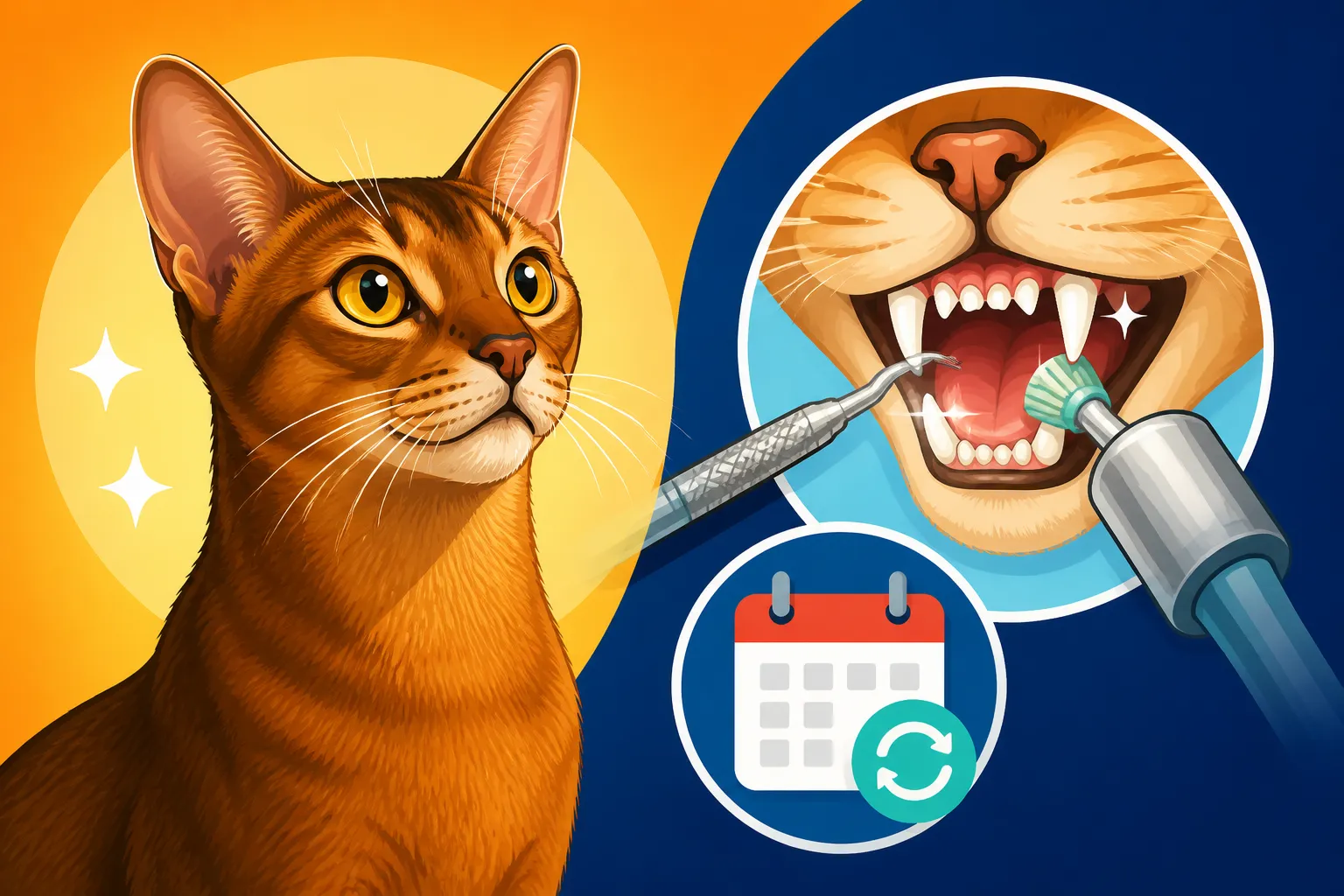
Once your Aby is safely under anesthesia, the process begins. First, the veterinary team will perform a detailed oral examination. Then comes the "scaling" – this is where they use specialized ultrasonic and hand instruments to remove plaque and tartar from above and, critically, below the gum line. This subgingival scaling is something you absolutely cannot do at home, and it's where much of the destructive periodontal disease occurs. After scaling, the teeth are polished to smooth out any microscopic etches left by the scaling instruments, making it harder for plaque to stick in the future. Finally, the mouth is irrigated to flush out any debris. It's a meticulous process designed to restore oral health and prevent future problems. It’s worth understanding What Happens During an Abyssinian's Dental Under Anesthetic to feel more comfortable with the procedure.
Identifying the Need for Intervention
Your Abyssinian is a master of hiding discomfort, a trait common in many cats. They are descendants of wild predators, after all, and showing weakness is not in their nature. This means that by the time you notice overt signs of dental pain, the problem might already be quite advanced. However, there are subtle clues you can watch for that indicate your Aby might need a professional dental assessment sooner rather than later.
The most obvious sign is often bad breath. It's easy to dismiss "cat breath" as normal, but truly foul odor usually indicates a bacterial infection in the mouth. Other signs include changes in eating habits: perhaps they start favoring one side of their mouth, dropping food while eating, or even showing a decreased appetite. You might see them pawing at their mouth, excessive drooling, or even a sudden aversion to having their face touched. Sometimes, the only sign is a change in behavior – a usually playful Aby becoming a bit more withdrawn or quiet, which, as many of us know, can be a red flag for many health issues. When your Abyssinian starts to Why an Abyssinian Drops Food While Eating, it's a clear signal to check their teeth. Regularly checking your Abyssinian's gums at home for redness, swelling, or bleeding, even if they protest, can help you catch issues early. And, of course, regular veterinary check-ups are paramount. Your vet has trained eyes and can spot subtle changes that might escape your notice.
Recommended Frequency for Abyssinian Dental Care
This is the million-dollar question for many Abyssinian owners: how often do they really need to go under for a professional cleaning? There’s no single, universal answer, unfortunately, because every cat is an individual. However, given the breed's predispositions, we can establish some solid guidelines and then tailor them to your specific Aby.
General Guidelines for Healthy Abyssinians
For an adult Abyssinian who has excellent home dental care (meaning you are consistently brushing their teeth daily or almost daily) and no prior history of severe juvenile gingivitis, gum overgrowth, or other dental issues, a professional scale and polish might be recommended every 12 to 18 months. This is often a minimum recommendation, designed to catch any plaque and tartar buildup that home brushing can't remove and to thoroughly assess their oral health with X-rays.
It’s crucial to understand that "excellent home care" is key here. If brushing is sporadic or your Aby absolutely refuses it, then even a "healthy" Aby might need more frequent cleanings. The goal is always to prevent severe periodontal disease, which can lead to pain, infection, and even impact systemic health. Your veterinarian will be your best resource in determining this baseline frequency, taking into account their overall health, age, and any previous dental history. Many vets will suggest a yearly dental exam as part of their annual check-up, even if a full cleaning isn't performed every time. This regular oversight is critical for a breed known for its sensitive mouth. If you want to know more about general guidelines, consider reading How Often an Abyssinian Needs Its Teeth Cleaned.
When More Frequent Cleanings are Needed
Now, if your Abyssinian falls into the category of those with known dental challenges, the frequency for a professional scale and polish will likely increase. This is where individual assessment becomes paramount. Factors like a history of severe juvenile gingivitis, recurring gum overgrowth, or a tendency to develop tartar rapidly will mean your Aby needs more frequent intervention.
For Abyssinians with a history of significant gum inflammation or those who have already undergone a gingivectomy, bi-annual cleanings (every six months) might be recommended by your vet. In some very severe cases, particularly if the gum overgrowth is aggressive and reoccurs quickly, even more frequent cleanings might be necessary to maintain comfort and prevent further disease progression. It’s disheartening, I know, to think of your cat needing anesthesia so often, but the alternative—chronic pain, infection, and tooth loss—is far worse. Discussing the specifics of your Abyssinian’s unique situation with your trusted veterinarian is the most important step. They can help you weigh the risks and benefits and create a tailored dental plan. This is also why Why Abyssinian Dental Work Is the Biggest Line in the Budget is a realistic consideration for owners.
Here's a quick overview of potential frequencies:
| Abyssinian's Dental Health Status | Recommended Professional Scale & Polish Frequency | Key Considerations / Home Care Role |
|---|---|---|
| Healthy, excellent home care | Every 12-18 months | Daily brushing is essential. Regular vet check-ups to monitor. |
| Mild gingivitis, good home care | Every 9-12 months | Focus on improving home care; vet may recommend specific rinses. |
| Moderate gingivitis, some tartar | Every 6-9 months | Aggressive home care needed; potentially needs X-rays more often to catch bone loss. |
| Severe juvenile gingivitis/overgrowth | Every 4-6 months, or as needed | May require gingivectomy; rigorous home care, potentially prescription dental diets/rinses. |
| Previous gingivectomy/tooth extractions | Every 6-12 months (highly individual) | Close monitoring by vet. May involve specialized post-op care. |
Integrating Home Care with Professional Care
It's vital to see home dental care and professional dental care not as separate entities, but as two critical parts of a cohesive strategy. One simply cannot fully replace the other, especially for a breed like the Abyssinian. Think of professional cleanings as deep resets for their oral health, and home care as the daily maintenance that extends the time between those resets and maintains overall gum and tooth health.
The Role of Daily Brushing
If there's one thing you can do every single day to dramatically impact your Abyssinian's dental health, it's daily tooth brushing. I know, it sounds like a chore, and honestly, some Abyssinians will make it feel like a wrestling match. But even a minute or two of dedicated brushing can make a world of difference in preventing plaque from hardening into tartar and reducing gum inflammation. The mechanical action of the brush helps to remove bacteria and food particles before they can cause damage.
You absolutely must use a toothpaste specifically formulated for cats, as human toothpaste contains ingredients that are toxic to them. You can find excellent enzymatic cat toothpastes from brands like Virbac or C.E.T., often available on Chewy or Amazon. As for the brush, a finger brush or a small, soft-bristled toothbrush designed for cats works best. The trick is to introduce it slowly, making it a positive experience with treats and praise. Start by just letting them lick the toothpaste off your finger, then slowly introduce the brush to just a few teeth, gradually building up duration and coverage. Consistency is key, even if you can only manage a minute each day. This daily routine is your first line of defense, and it directly influences how often your Aby will need professional cleanings. Learning How to Brush an Abyssinian's Teeth From Day One is a journey, not a sprint.
Other Supportive Measures
While daily brushing is the gold standard for home care, there are other supportive measures you can integrate to bolster your Abyssinian's dental health, especially if brushing is a challenge. These tools shouldn't replace brushing or professional cleanings, but they can certainly complement them.
One popular option is dental diets. Many veterinary-exclusive brands formulate kibble with specific textures and ingredients designed to help scrape plaque off teeth as the cat chews. Some even contain additives that help prevent tartar formation. While not a cure-all, these diets can contribute to better oral hygiene. Your vet can recommend suitable options, which you might find through specialized pet food retailers or online platforms like Chewy or even Amazon. There are also water additives designed to reduce bacteria in your cat's mouth. These are typically flavorless and easily mixed into their daily drinking water. Again, these are adjuncts, not replacements, but every little bit helps in the fight against dental disease. Finally, make it a habit to perform quick oral checks at home. Lift their lips, glance at their gums and teeth, and sniff their breath regularly. Catching changes early, even if they're subtle, can prompt an earlier vet visit and prevent small problems from escalating. Remember, Why Dental Treats Do Not Replace Brushing an Abyssinian is an important distinction to make; treats are not enough on their own.
Consistent, diligent dental care, both at home and with regular professional veterinary attention, is not just about keeping your Abyssinian's breath fresh; it's fundamental to their overall health, comfort, and longevity. By being proactive and working closely with your veterinarian, you can ensure your spirited Aby keeps flashing that healthy, bright smile for many joyful years.
Disclaimer
This article is for general informational purposes only and does not constitute professional advice. Laws, prices and regulations vary by location and change over time. Consult a qualified professional for guidance on your specific situation.