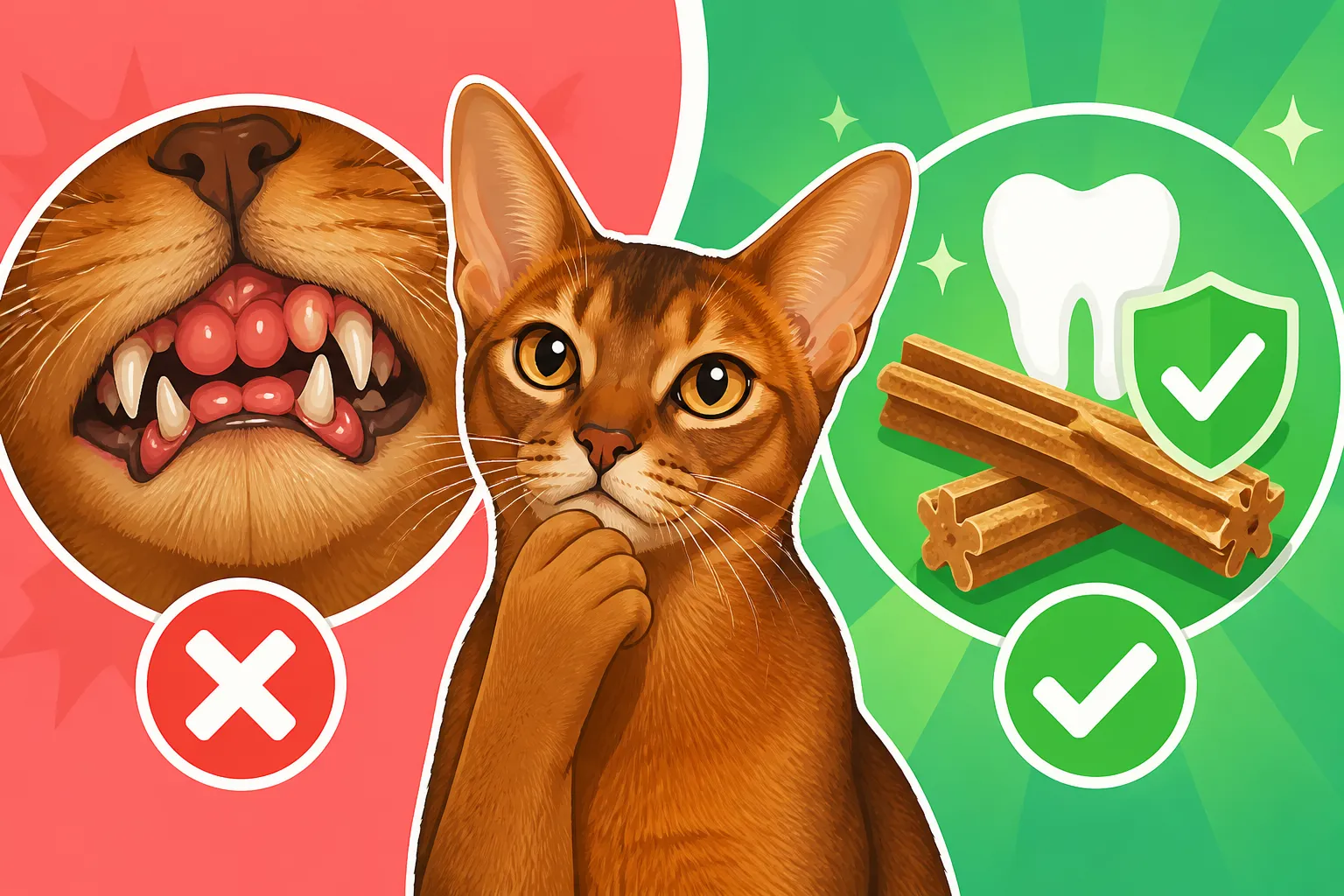
Whether Dental Chews Do Anything for Abyssinian Gum Overgrowth
One of the most disheartening things as an Abyssinian owner is seeing your vibrant, playful cat suddenly become hesitant to eat, or worse, noticing angry red gums around their pearly whites. You might jump to solutions like dental chews, hoping for an easy fix to what looks like a typical dental problem. But when it comes to the specific issue of Abyssinian gum overgrowth, often a form of juvenile gingivitis, dental chews often miss the mark entirely, and understanding why is crucial for your cat's long-term comfort and health.
Understanding Abyssinian Gum Overgrowth: Juvenile Gingivitis
Let's face it, finding out your beautiful, high-energy Abyssinian kitten might have a serious dental problem before they're even a year old is a real shock. Most cat owners expect dental issues in senior cats, not in a young, seemingly robust feline. But for Abyssinians, there's a particular predisposition to a condition known as juvenile gingivitis, which can quickly progress to something more severe if not addressed properly. It’s not just "bad breath" or a bit of redness; it's a structural change in their gum tissue that demands attention.
What Exactly Is Juvenile Gingivitis in Abyssinians?
Juvenile gingivitis in Abyssinians isn't your run-of-the-mill plaque buildup. It's an inflammatory condition that typically starts when they're still quite young, often around six months to a year old, as their adult teeth are fully erupting. Their gums become severely inflamed, red, swollen, and sometimes even bleed. What makes it particularly challenging in our active Abyssinians is that they are masters at hiding pain, so you might only notice subtle signs at first, like a slight hesitation before pouncing on their food or a less vigorous play session. This condition can sadly progress to hyperplastic gingivitis, where the gum tissue actually overgrows and engulfs portions of the teeth, creating pockets where bacteria can thrive unchecked. This isn't just uncomfortable; it sets the stage for more serious periodontal disease down the line, potentially leading to tooth loss. It's why recognizing Why an Abyssinian Kitten's Gums Fail at Six Months is so critical.
The Frustration of Persistent Red Gums
You might try everything: diligent home brushing (if your Abyssinian tolerates it!), special foods, and yes, even dental chews. And yet, those gums remain stubbornly red, swollen, and sometimes appear to be creeping up over the teeth. This is incredibly frustrating. You’re doing your best, following all the advice for general dental care, but the problem persists. It feels like you're fighting an uphill battle because you are. This isn't just about cleaning the tooth surface; it's about addressing an underlying predisposition in the breed. The genetic component of this inflammatory response means that standard preventative measures, while still important, often aren't enough to fully combat the issue. It's a truly heartbreaking situation to navigate with such a young, otherwise healthy cat.
The Role of Dental Chews: More Hype Than Help for Gum Overgrowth
When you notice those angry red gums, it’s natural to reach for what’s advertised as an easy solution. Dental chews are everywhere, promising fresher breath and cleaner teeth. You can find them readily on sites like Chewy or Amazon, often with glowing reviews for general dental health. But for the specific, complex challenge of Abyssinian gum overgrowth, we need to temper our expectations considerably. While they have a place in some feline dental care, they are largely ineffective for the deeper, structural issues seen in our Abyssinians.
How Dental Chews Are Supposed to Work (and for what)
Most dental chews are designed with two primary mechanisms in mind: mechanical abrasion and chemical action. The idea is that as your cat chews, the unique texture or shape of the treat physically scrapes plaque and tartar from the tooth surface, much like a tiny toothbrush. Simultaneously, many chews are infused with ingredients like enzymatic compounds or hexametaphosphate (HMP), which are thought to help break down existing plaque or prevent new tartar from forming. These products are generally targeted at managing plaque and tartar buildup, which are indeed precursors to gingivitis. For a cat with mild plaque and no underlying gum disease, they can offer a supplemental benefit to regular brushing. They are a "nice-to-have" for general oral hygiene in some cats, but they are far from a cure-all.
The Limitations of Chews for Abyssinian Gum Overgrowth
Here's the rub: Abyssinian gum overgrowth, or hyperplastic gingivitis, isn't primarily a surface-level plaque issue, even though plaque certainly makes it worse. It's an issue of the gum tissue itself becoming inflamed and growing excessively. Dental chews simply aren't designed to address this biological response. They can't reduce swollen tissue, nor can they magically retract overgrown gums. Think of it this way: if your finger joint was inflamed and swollen, chewing on a piece of hard candy wouldn't make the swelling go down; it might even irritate it further. The mechanics of a chew primarily target the crown of the tooth, the visible part. The real problem with gum overgrowth lies below the gumline and in the excessive tissue itself. The chewing action itself, while possibly good for plaque, doesn't penetrate or correct the underlying tissue proliferation. It’s why relying solely on them when you've noticed What Red Gums Mean in an Abyssinian Kitten is a missed opportunity for proper intervention.
Why Dental Chews Fall Short for Abyssinian Gum Overgrowth
It’s easy to feel like you’re doing something good by offering a dental chew, especially with clever marketing. However, for an Abyssinian struggling with gum overgrowth, these efforts often yield minimal results, sometimes even none at all, for very specific reasons related to the nature of the condition and how cats eat.
The Fundamental Difference: Plaque vs. Tissue Hyperplasia
Let’s get down to brass tacks: dental chews are best suited for controlling plaque and minor tartar buildup on the exposed surfaces of the teeth. Plaque is a soft, sticky film of bacteria; tartar is hardened plaque. The abrasive action of a chew can help scrape these off, and active ingredients can inhibit their formation.
However, Abyssinian gum overgrowth is a condition where the gum tissue itself, the gingiva, becomes inflamed and proliferates, literally growing thicker and sometimes covering parts of the teeth. This is a tissue-level, inflammatory response, not just a surface coating on the tooth. A dental chew cannot shrink inflamed gum tissue, nor can it physically remove the excess tissue that has started to envelop the teeth. In fact, aggressive chewing on hard items might even irritate already inflamed gums, potentially making the cat more uncomfortable. The problem isn't just dirt on a window; it's the window frame itself being distorted. This is why addressing Why an Abyssinian's Gums Overgrow Its Teeth requires a different approach than simply scrubbing the surface.
The Challenge of Effective Chewing in Cats
Another major hurdle is how cats, Abyssinians included, actually chew. Unlike dogs, who often gnaw extensively on chews, many cats tend to bite off pieces and swallow them with minimal prolonged chewing. This means the contact time between the chew and the tooth surface, particularly the back teeth where much of the problematic plaque and tartar accumulates, can be very short. For a dental chew to be effective, it needs to provide sufficient mechanical abrasion across all tooth surfaces, for a sustained period. Most cats just don't engage with dental chews in this manner.
Furthermore, if a cat's gums are already sore and overgrown, they might be even less inclined to chew vigorously on a hard dental treat. They may just swallow quickly or avoid the chew altogether, rendering its minimal benefits nonexistent. You might even find your Abyssinian, who is usually very food-motivated, dropping the chew or showing signs of discomfort, which can be a worrying indicator of how sensitive their mouth actually is. It's a sad reality that Why an Abyssinian Drops Food While Eating can be a symptom of significant oral pain, a pain dental chews cannot alleviate.
| Feature | Dental Chews for Plaque Control | Addressing Abyssinian Gum Overgrowth |
|---|---|---|
| Primary Goal | Reduce plaque & tartar on tooth surface | Reduce inflammation, remove excess gum tissue |
| Mechanism | Mechanical abrasion, chemical action | Surgical removal, anti-inflammatory treatment |
| Effectiveness | Limited, supplementary for surface issues | High for resolving hyperplastic tissue |
| Required Action | Cat chews treat | Veterinary procedure (e.g., gingivectomy) |
| Impact on Gums | Minimal, may irritate already inflamed gums | Direct treatment of gum tissue |
| Longevity | Temporary, needs consistent use | Often a more permanent solution when combined with home care |
What Actually Works for Abyssinian Gum Overgrowth
So, if dental chews aren't the answer, what can you do when your spirited Abyssinian is suffering from painful gum overgrowth? The truth is, managing this condition effectively requires a multi-pronged approach that leans heavily on professional veterinary care and dedicated home maintenance. It's not a quick fix, but it's the only way to ensure your Abyssinian lives comfortably and keeps those beautiful teeth.
Veterinary Intervention: The Non-Negotiable Step
When gum tissue has begun to overgrow, there’s really only one effective solution: professional intervention. This typically involves a procedure called a gingivectomy. Your veterinarian will place your Abyssinian under general anesthesia to safely and precisely remove the excess gum tissue that is covering the teeth. This not only alleviates the immediate discomfort but also eliminates the deep pockets that harbor bacteria, reducing the risk of further infection and periodontal disease. It's a crucial step, and you'll want to discuss this thoroughly with your vet. How a Vet Removes an Abyssinian's Excess Gum explains more about this process.
Beyond the initial surgery, regular professional dental cleanings are absolutely paramount. Abyssinians with a history of gingival hyperplasia need more frequent check-ups and cleanings than other cats. Your vet can determine the ideal schedule, which might be yearly or even every six months, depending on the severity and your cat's response to treatment. These cleanings allow the vet to remove any new plaque and tartar buildup and monitor the gum tissue for signs of recurrence or further inflammation. Neglecting these follow-ups can quickly undo the benefits of a gingivectomy. You need to budget for Why Abyssinian Dental Work Is the Biggest Line in the Budget for a reason.
Consistent Home Care: Beyond the Chew
Once the immediate overgrowth is managed by your vet, diligent home care becomes your most powerful tool in preventing recurrence and maintaining oral health. And I'm not talking about just dental chews here.
The gold standard for home dental care is, and always has been, brushing your cat's teeth. Yes, I know, it sounds like a monumental task with an Abyssinian! But starting early in kittenhood and making it a positive, gentle experience can make a world of difference. You'll need a small, soft toothbrush or a finger brush and a veterinary-approved enzymatic toothpaste. Never use human toothpaste, as it can be toxic to cats. Aim for daily brushing, even if it's just for a minute or two. Even a little brushing is better than none. Don't be discouraged if it's a slow process; consistency is key. How to Brush an Abyssinian's Teeth From Day One offers great tips on making this routine stick. Look for enzymatic toothpaste options on Amazon or at your vet's office.
While chews themselves aren't enough, certain dietary considerations can support overall oral health. High-quality wet food helps keep your Abyssinian hydrated, which is beneficial for kidney health (a particular concern for Abyssinians susceptible to conditions like amyloidosis, although not directly related to gum overgrowth, overall hydration is always a plus). Ensuring your Abyssinian drinks enough water is critical for general health, and while it won't cure gum overgrowth, good hydration can help flush the mouth and prevent dehydration-related issues. Why Wet Food Protects an Abyssinian's Kidneys highlights the importance of moisture in their diet.
Remember, dental chews can be a supplementary item for some cats with normal gums and minimal plaque, but they are absolutely not a substitute for professional veterinary care or daily brushing when dealing with serious conditions like Abyssinian gum overgrowth. Your vet is your best ally in developing a comprehensive plan tailored to your beloved Abyssinian's specific needs.
Disclaimer
This article is for general informational purposes only and does not constitute professional advice. Laws, prices and regulations vary by location and change over time. Consult a qualified professional for guidance on your specific situation.