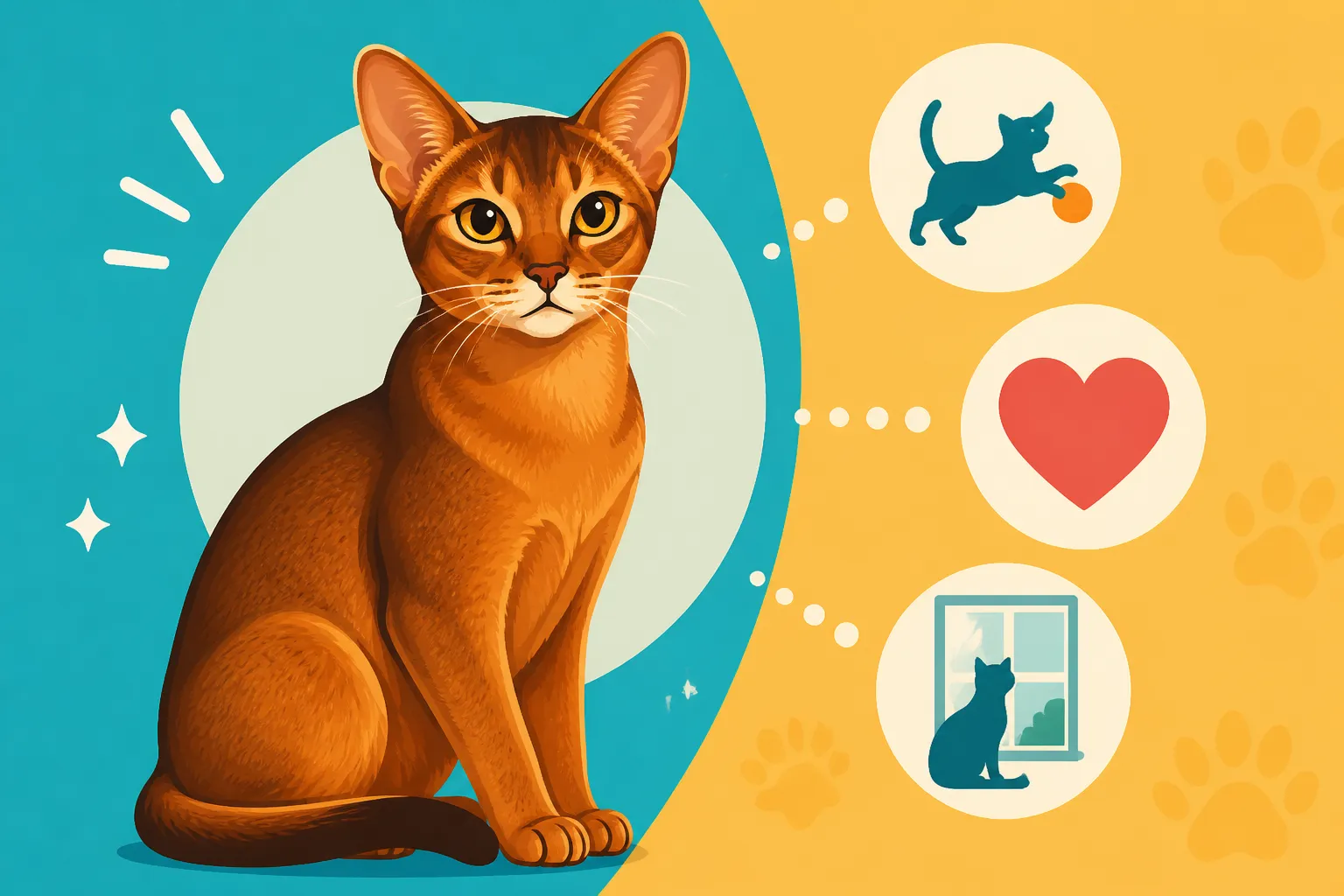
Whether an Abyssinian Is the Right Cat for You
Bringing an Abyssinian cat into your life is a significant decision, and many prospective owners worry about whether they can truly meet the needs of such a unique and energetic breed. It's completely understandable to feel overwhelmed by the sheer volume of information out there, or to wonder if your home and lifestyle are truly compatible with a cat known for its relentless activity and distinct personality. This guide is here to cut through the noise, helping you honestly assess if the Abyssinian is indeed the perfect feline companion for you and your household, covering everything from their famously busy nature to their specific care requirements.
Understanding the Abyssinian Temperament: Are You Ready for a Dynamo?
If you're picturing a serene cat napping peacefully on a sun-drenched windowsill for hours on end, then the Abyssinian might not be the match you're dreaming of. These cats are less about quiet contemplation and more about constant motion and engagement. Their entire being is geared towards interaction, exploration, and play, making them an incredibly lively addition to any home. They are often called the "clowns of the cat world" for a very good reason – they'll keep you entertained, but they'll also keep you on your toes.
Their Insatiable Curiosity and Energy Levels
The Abyssinian lives life at full throttle. They wake up ready to go and typically maintain that high level of energy throughout the day, often needing several dedicated play sessions to truly burn off some steam. It's not uncommon for new owners to find themselves utterly charmed by their kitten's antics, only to realize that "kitten energy" doesn't necessarily wane much with age. Instead, it refines into focused curiosity and an almost scientific approach to exploring every nook and cranny of their environment. The Abyssinian Is the Busiest Cat in the House is no exaggeration; they'll investigate every new bag, every opened drawer, and every human activity with intense interest. This isn't a cat that will sit idly by while you do chores; they'll likely "help" by inspecting your broom, "supervising" your cooking from the highest available shelf, or playfully swatting at your pen as you try to write. You'll need to be ready to embrace this constant involvement and see it as part of their charm, rather than an interruption.
Many people think a cat will just entertain itself, but an Abyssinian is different. They crave interaction, not just toys. If you're hoping for a pet that blends into the background, an Aby will swiftly disabuse you of that notion. Their intelligence means they learn quickly – both good habits and challenging ones. They understand routines, anticipate your next move, and will actively seek out engagement if they feel ignored. This can manifest as playful pestering, or, if truly bored, it can lead to more destructive behaviors we'll discuss later. Their boundless energy means they need outlets, and if you don't provide them, they will find their own, often to the detriment of your home decor.
The Need for Constant Interaction
This isn't a breed for someone who wants an aloof cat. Abyssinians thrive on being part of the family action. They follow you from room to room, often perching nearby, observing your every move. They might not be on your lap constantly, but they are always with you. This constant presence can be incredibly endearing, but it does require an owner who appreciates and reciprocates that level of engagement. If you work long hours or travel frequently, you'll need a solid plan for their enrichment and companionship.
The typical Abyssinian shows affection in its own unique ways. They might greet you at the door with excited chirps and rub against your legs, or jump onto your shoulder to supervise your activities from a prime vantage point. Why an Abyssinian Will Not Sit on Your Lap might seem like a drawback to some, but it simply means their affection is expressed through active participation rather than passive cuddling. They want to be involved in whatever you're doing, whether it's watching you cook, "helping" you work on your computer by walking across the keyboard, or playing a vigorous game of fetch with a crinkly ball you found on Chewy. Their communication is often vocal, with soft trills and chirps indicating their interest or demanding attention, but they generally aren't as loud as some other oriental breeds.
Why They Aren't Lap Cats But Still Affectionate
It's a common misconception that if a cat isn't a lap cat, it isn't affectionate. With Abyssinians, nothing could be further from the truth. Their affection is expressed kinetically. They want to be near you, involved in your world, and often physically touching you – just perhaps not in a still, heavy lump on your lap. They might lean against you, rub their head against your hand as you pass, or even climb up and sit on your shoulder. They are incredibly loving and devoted cats, but they show it through their active participation in your life.
This active affection means they are deeply connected to their people. They learn your schedule, your moods, and respond to your voice. When you sit down, don't be surprised if your Aby is suddenly right there, perhaps on the back of the couch, or nestled beside your leg, or even trying to insert itself between you and your book. They thrive on attention and will make it known if they feel neglected, usually through charming but persistent attempts to engage you in play or conversation. Understanding this unique expression of love is key to building a strong bond with an Abyssinian. They are highly attuned to human emotions and can be surprisingly empathetic, offering a comforting head nudge when you're feeling down, even if they won't sit still for a traditional cuddle.
Home Environment Considerations: Creating an Abyssinian Paradise
For an Abyssinian, your home isn't just a place to live; it's a dynamic playground, a multi-level climbing frame, and a puzzle to be solved. If your idea of cat-proofing is simply moving breakables off low shelves, you'll quickly learn that an Aby has a different definition of "low." These intelligent and agile cats require an environment that supports their natural instincts for climbing, exploring, and engaging their minds, otherwise, they will create their own entertainment, which may not align with your home's aesthetic.
The Crucial Role of Vertical Space
If there's one thing an Abyssinian needs, it's height. More than any other breed I know, they gravitate towards the highest points in a room. This isn't just a preference; it's almost an innate drive. They are natural climbers and jumpers, using their powerful hind legs and sleek bodies to scale bookshelves, cabinets, and anything else that offers a good vantage point. Providing ample vertical territory is absolutely essential for their happiness and well-being. An Abyssinian Needs Height More Than It Needs Floor is a mantra every Aby owner should live by.
Think cat trees, wall-mounted shelves, and clear pathways to the tops of tall furniture. Without these designated climbing opportunities, your Abyssinian will create its own, often at the expense of your curtains, blinds, or precariously balanced decorative items. Investing in sturdy, tall cat trees, like those you can find on Chewy, or installing secure wall shelves (making sure they are spaced appropriately for jumping) can transform your home into an exciting, enriching environment for them. This allows them to survey their domain, get exercise, and feel secure, all while minimizing potential damage to your cherished possessions. The feeling of being "on top of the world" is deeply satisfying for them.
Securing Your Home Against an Inquisitive Mind
An Abyssinian's intelligence and boundless curiosity mean they are expert problem-solvers. What looks like a securely closed cabinet door to you is just a challenge waiting to be overcome for an Aby. They quickly learn how to open doors, cupboards, and even drawers, especially if they suspect something interesting (like food, toys, or just a new hiding spot) is inside. This isn't mischievousness; it's pure, unadulterated exploration drive. Why an Abyssinian Opens Doors and Cabinets should be understood as a feature, not a bug, of their personality.
You'll need to implement child-proofing measures, not just for the cat's safety but for your sanity. Latches on cabinets, especially those containing food, medications, or chemicals, are a must. Secure garbage bins are also essential, as they will absolutely investigate any enticing smells. Electrical cords should be secured or covered to prevent chewing. Think of your home through the eyes of a highly intelligent, agile toddler with sharp claws and an insatiable desire to know what's on the other side of every barrier. This proactive approach will save you many headaches and keep your Abyssinian safe from potential hazards.
Dealing with Their Vocal Nature
While not as notoriously loud as, say, a Siamese, Abyssinians are definitely not silent cats. They have a distinctive range of vocalizations, from soft trills and chirps to more insistent meows and purrs. They use their voices to communicate with you, to express excitement, demand attention, or simply to comment on their day. If you prefer a very quiet household, their conversational nature might be a bit of an adjustment.
Their chirps are often a sign of happiness or an invitation to play, sounding almost bird-like. They'll use them to greet you, to guide you to their favorite toy, or to express satisfaction after a good meal. While they might vocalize more around meal times or when they want to instigate a game, it's rarely a harsh or incessant meow. Instead, it’s a sweet, expressive dialogue that contributes to their charm. Learning to interpret their varied sounds becomes part of the joy of owning an Abyssinian, forging an even deeper connection as you understand their unique language. Embrace the charming commentary; it's their way of staying connected with their favorite people.
Time and Commitment: Do You Have Enough to Give?
Owning an Abyssinian is not a passive endeavor. These cats demand, and truly thrive on, consistent engagement and attention from their human companions. If your lifestyle is already packed to the brim, or if you envision your cat as an independent entity requiring minimal daily input, an Abyssinian might not be the best fit. They require a significant investment of your time, energy, and affection to truly flourish and avoid boredom-induced destructive behaviors.
Daily Play Sessions and Mental Stimulation
An Abyssinian absolutely needs daily, dedicated play sessions. These aren't just five-minute tosses of a toy; we're talking about multiple, energetic sessions that truly tire them out physically and mentally. Their high intelligence means they can easily become bored if not adequately stimulated, and a bored Aby is a recipe for trouble. They excel at games that mimic hunting, like chasing a feather wand toy or batting at a laser pointer. Puzzle feeders are also fantastic for their keen minds, turning mealtime into a stimulating challenge.
Think about it this way: their wild ancestors would spend hours hunting, exploring, and engaging their brains. A domestic Abyssinian still has those instincts. If they don't get to "hunt" a toy bird or "solve" a puzzle for their dinner, they'll find other ways to satisfy that drive, like scaling your bookshelves, dismantling your toilet paper rolls, or trying to open every single cupboard. Rotating toys, introducing new challenges, and consistent interaction through play are critical to keeping an Abyssinian happy and out of trouble. Without this mental and physical outlet, they can become destructive or even overly demanding in less desirable ways.
The Importance of Companionship
Abyssinians are deeply social creatures. They bond intensely with their human families and genuinely suffer if left alone for extended periods without companionship. They aren't the kind of cat that can be left alone all day, every day, without consequences. While they are resilient, prolonged solitude goes against their very nature as interactive, involved companions. This isn't just about preventing boredom; it's about meeting their fundamental need for social connection.
If you have a busy work schedule, or if you're frequently out of the house for many hours, consider how you will provide this crucial companionship. A lonely Abyssinian can develop behavioral issues, ranging from excessive vocalization to inappropriate urination, or even become withdrawn. They truly thrive in an environment where they feel like an integral part of the household, not just a decoration. This might mean adjusting your routine, ensuring you have quality time dedicated to them when you are home, or considering additional companionship, which brings us to our next point. Why an Abyssinian Should Not Be Left Alone All Day is a crucial piece of advice for potential owners.
Considering a Second Cat for Your Abyssinian
Given their high energy and social needs, many Abyssinian owners find that having two Abyssinians (or another similarly playful and energetic cat breed) is actually easier than having just one. A companion provides a constant playmate, someone to chase and wrestle with, and a fellow explorer to share adventures. This can significantly reduce the pressure on you to be their sole source of entertainment and companionship.
The right companion can mean the difference between a contented, well-adjusted Abyssinian and one prone to mischief. They can keep each other occupied during the hours you're at work, engage in vigorous play sessions, and even groom each other. Introducing a second cat, especially another Abyssinian or a breed with a similar temperament, can create a harmonious multi-cat household where everyone's social and play needs are met. This isn't to say a single Abyssinian can't thrive, but it requires an even greater commitment of time and energy from you. If you're pondering bringing an Aby home, seriously think about getting two littermates or two young Abyssinians who can grow up together.
Health and Care: What to Expect from an Abyssinian's Needs
While Abyssinians are generally robust cats, like all purebreds, they do have certain predispositions and specific care needs that are important for prospective owners to understand. Their striking ticked coat is surprisingly low-maintenance, but other aspects of their health, particularly dental care, require diligent attention. Being prepared for these needs is crucial for ensuring a long, healthy, and happy life for your Abyssinian.
Grooming the Ticked Coat: It's Easier Than You Think!
One of the wonderful aspects of the Abyssinian is their distinctive ticked coat. Each hair strand has bands of color, giving them a shimmering, iridescent appearance without traditional stripes or spots. This coat is short, fine, and lies close to the body, and it has very little undercoat. The good news? This makes them surprisingly low-maintenance in the grooming department. The Ticked Coat Is the Whole Abyssinian Grooming Job and it's thankfully a straightforward one.
You won't need elaborate brushing routines or frequent professional grooming. A weekly once-over with a soft rubber grooming mitt or a damp chamois cloth is usually all that's required to remove loose hairs and keep their coat gleaming. This minimal shedding is often a pleasant surprise for new owners and can make them a more appealing choice for those who are sensitive to pet hair, though it's important to remember no cat is truly hypoallergenic. This simple grooming routine also provides a great opportunity for bonding and a quick health check of their skin and body condition.
Dental Health: A Major Focus
If there's one area of Abyssinian care that demands significant attention, it's their dental health. This breed is unfortunately prone to a condition called juvenile gingivitis, which can start as early as six months of age. This means their gums can become inflamed and overgrown, eventually leading to more serious issues like periodontal disease and tooth resorption if not addressed promptly and consistently. Why Abyssinian Dental Work Is the Biggest Line in the Budget for many owners, and it’s a vital one.
Because of this predisposition, establishing a routine of brushing your Abyssinian's teeth from a young age is paramount. Even if they develop gingivitis, regular brushing can help manage the condition and slow its progression. This involves using a cat-specific toothbrush and toothpaste, ideally daily. Beyond home care, be prepared for the possibility of regular professional dental cleanings under anesthesia, potentially starting earlier and occurring more frequently than with other cat breeds. Your vet might also recommend specific dental diets or chews, but these are typically adjuncts, not replacements, for manual brushing and professional veterinary care. It's an investment, but one that prevents pain and preserves their overall health. Brushing an Abyssinian's Teeth Matters More Than Its Coat for their long-term well-being.
Understanding Common Abyssinian Health Concerns
Beyond dental issues, Abyssinians are generally healthy, but like any breed, they have a few genetic conditions that responsible breeders test for, and that owners should be aware of. The main ones are Pyruvate Kinase Deficiency (PKD) and Progressive Retinal Atrophy (PRA-rdAc). Responsible breeders will provide genetic test results for these conditions, ensuring their breeding cats are clear or only carriers (and thus not at risk of developing the disease themselves).
Renal Amyloidosis is another concern, though there isn't a genetic test for it like PKD or PRA. It's a condition where an abnormal protein (amyloid) deposits in the kidneys, leading to kidney failure. This makes choosing a breeder who tracks health in their lines for generations incredibly important. Regular veterinary check-ups, especially as your Aby ages, will monitor kidney function and other potential issues. Catching any health problem early, whether it's a dental issue or a systemic disease, is always the best approach for a positive outcome. Knowing these predispositions helps you be a proactive and informed owner, working with your vet to keep your Aby as healthy as possible.
Financial Realities: Budgeting for an Abyssinian Lifetime
Let's be real: owning a purebred cat like an Abyssinian is a financial commitment that extends far beyond the initial purchase price. These are not "cheap" cats, and rightfully so, given the care and effort responsible breeders put into their lines. Understanding the true cost of ownership, from upfront expenses to ongoing care, is essential for anyone considering welcoming an Aby into their home. Cutting corners on costs often means cutting corners on health and well-being, which ultimately leads to more expensive problems down the line.
Initial Purchase Price and Breeder Expectations
The cost of an Abyssinian kitten from a reputable breeder can vary significantly depending on factors like pedigree, color, and whether it's pet or show quality. Expect to pay a premium for a well-bred kitten. This price reflects the breeder's investment in health testing parents, quality food, veterinary care for the queen and kittens, socialization, and the time and expertise involved in raising healthy, well-adjusted kittens. What an Abyssinian Kitten Costs in 2026 (while prices constantly fluctuate, the principle remains). Be very wary of unusually low prices, as these often signal a breeder who isn't investing in health testing or proper care, which can lead to heartbreaking and expensive health issues later.
A reputable breeder will not only charge a fair price but will also provide extensive documentation, including health guarantees, vaccination records, and proof of parentage and genetic testing. They'll ask you questions about your home and lifestyle, ensuring their kittens go to good homes. This upfront investment in a healthy, well-socialized kitten is crucial, as it lays the foundation for a lifetime of companionship and significantly reduces the risk of inheriting serious genetic conditions. It’s not just a purchase; it’s an investment in a family member.
Ongoing Costs: Food, Vet, and Enrichment
The purchase price is just the beginning. Abyssinians, with their high energy, need high-quality food to fuel their active lifestyles. Expect to spend a fair amount on premium cat food, both wet and dry, to meet their nutritional demands. What an Abyssinian Costs to Keep Every Year can be substantial, and food is a significant portion of that. Beyond food, routine veterinary care is a non-negotiable expense, including annual check-ups, vaccinations, and parasite prevention.
Then there's enrichment. Abyssinians thrive on a stimulating environment, which means a budget for sturdy cat trees, wall shelves, and a constant rotation of engaging toys. Consider durable toys from places like Chewy that can withstand their vigorous play. Don't forget the costs associated with their specific dental needs: toothbrushes, toothpaste, and potentially more frequent professional cleanings. And let's not overlook the potential for unexpected veterinary emergencies. While no one wants to think about it, planning for unforeseen health issues is a responsible part of pet ownership.
Here's a simplified look at potential costs, understanding that these are illustrative and can fluctuate greatly:
| Category | Initial Costs (Purchase & Setup) | Annual Ongoing Costs (Approx.) | Key Considerations |
|---|---|---|---|
| Kitten Purchase | Varies by breeder/region | N/A | Reflects health testing, vaccinations, initial vet care. Avoid "bargain" kittens. |
| Initial Vet Visit | Yes | N/A | Comprehensive check-up, fecal test, possibly microchipping. |
| Spay/Neuter | Yes | N/A | Essential unless breeding; often done before placement. |
| Food (High Quality) | Initial bag/cans | Varies by brand/diet | Abyssinians are active, need good protein. Wet food helps kidney health. |
| Litter & Litter Boxes | Boxes, scooper, first bag | Varies by brand/type | They appreciate larger, open boxes. |
| Cat Trees/Shelves | Significant investment | Minimal (replacement) | Crucial for vertical space and enrichment. Look for sturdy options from retailers like Chewy. |
| Toys & Puzzle Feeders | Initial assortment | Ongoing (replacement/new) | Need frequent rotation and engagement to prevent boredom. |
| Routine Vet Care | N/A | Yearly check-ups, vaccines | Essential for preventative health. |
| Dental Care | Initial dental supplies | Professional cleanings (annual) | Critical for Abyssinians due to breed predisposition. Can be a significant line item. |
| Pet Insurance (Optional) | N/A | Monthly premium | Highly recommended for purebreds to mitigate costs of unexpected illness/injury. |
| Emergency Fund | N/A | Highly recommended | For unforeseen medical issues; an alternative to pet insurance. |
The Value of Pet Insurance
Considering the potential for health issues like juvenile gingivitis and the general costs of emergency veterinary care, pet insurance can be an invaluable investment for an Abyssinian owner. Accidents happen, and illnesses can strike unexpectedly. Having a good pet insurance policy in place can provide peace of mind and prevent you from having to make difficult financial decisions during a stressful time.
Many pet insurance plans offer various levels of coverage, from accident-only to comprehensive plans that include illness and even some wellness benefits. It's wise to research different providers and their policies carefully, paying attention to what's covered, deductibles, and reimbursement rates. Enrolling your Abyssinian when they are young and healthy is usually the best approach, as pre-existing conditions are typically excluded. While it adds a monthly premium to your budget, pet insurance can be a literal lifesaver, allowing you to prioritize your Aby's health without the added burden of overwhelming veterinary bills.
Living with Children and Other Pets: Integration Strategies
Bringing an Abyssinian into a household with existing family members, whether human or animal, requires careful consideration. Their high energy, intense curiosity, and distinct personality mean they interact differently than some other cat breeds. While they can be wonderful family pets, successful integration depends heavily on understanding their needs and managing introductions thoughtfully.
Abyssinians and Kids: A Match for Older Children
If you have very young children or toddlers, an Abyssinian might not be the ideal choice for your family. Their high energy and sometimes intense play style can be overwhelming for small kids who may not understand how to interact gently with a cat. Abyssinians are not typically prone to aggression, but they can be easily overstimulated, and their playful nips or swatting might be too much for a child. They also tend to be very fast and agile, which can be a tripping hazard for unsteady toddlers.
They generally thrive in households with older children who understand boundaries, can engage in appropriate play, and respect a cat's space. An older child might even enjoy the challenge of teaching an Aby tricks or engaging in interactive play with a wand toy. They are sturdy cats, but they aren't fond of being picked up and carried around against their will, a common behavior among very young children. With proper supervision and teaching children how to interact respectfully, an Abyssinian can certainly coexist happily with older kids, becoming a lively and engaging companion. How an Abyssinian Behaves With Children and Dogs is often more like a playmate than a delicate pet.
Introducing Dogs and Other Felines
Abyssinians often do very well with other pets, especially other cats of a similar energy level, or even cat-friendly dogs. Their outgoing and confident nature means they're usually less intimidated than some other breeds, and they often enjoy the companionship. However, successful introductions are key to fostering harmonious relationships. Gradual, supervised introductions are always the best approach, allowing all animals to adjust at their own pace.
When introducing to another cat, especially one that might be more sedate, remember the Aby's "busiest cat" nature. They might pester a quieter cat, constantly trying to engage them in play. Choosing a companion cat that can match their energy, or at least tolerate their antics, is important. For dogs, choose a dog breed known for being gentle and respectful of cats, and ensure the dog is well-trained. Many Abyssinians will even play fetch with a dog, or chase each other around the house. Their social nature means they often welcome a companion, making the household an even livelier place.
Prey Drive Considerations
It’s important to acknowledge that Abyssinians, with their sleek, athletic build and intense focus, do possess a strong prey drive. This is a natural instinct, and it's part of what makes them such engaging and skilled hunters during playtime. However, this also means they are not suitable for homes with small, caged pets like hamsters, gerbils, birds, or fish.
Even with the best intentions and supervision, an Abyssinian's natural hunting instincts can be too strong to safely house them with such vulnerable prey animals. It's simply not fair to either the Aby or the small pet to put them in a potentially dangerous situation. If you already have small pets, you'll need to consider if you can provide completely separate, secure living spaces where there's absolutely no chance of interaction. For most, it's best to avoid these pairings altogether to prevent heartbreak and ensure the safety of all animals in the home.
Disclaimer
This article is for general informational purposes only and does not constitute professional advice. Laws, prices and regulations vary by location and change over time. Consult a qualified professional for guidance on your specific situation.