How an Abyssinian Differs From an Egyptian Mau
It’s easy to look at two sleek, short-haired cat breeds and think they're cut from the same cloth, especially when both possess that undeniable athletic grace and an air of ancient mystery. But if you’re trying to decide between welcoming an Abyssinian or an Egyptian Mau into your home, you’ll quickly realize they are wonderfully distinct creatures, each with unique traits that will dramatically shape your daily life together. This guide will help you sort through the subtle (and not-so-subtle) differences to help you understand which feline friend might be your perfect match.
The Telltale Markings: Abyssinian's Ticked Coat vs. Egyptian Mau's Spots
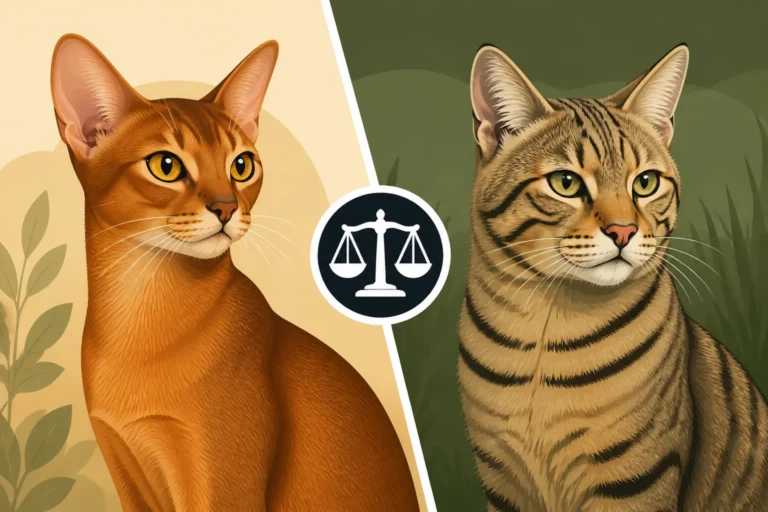
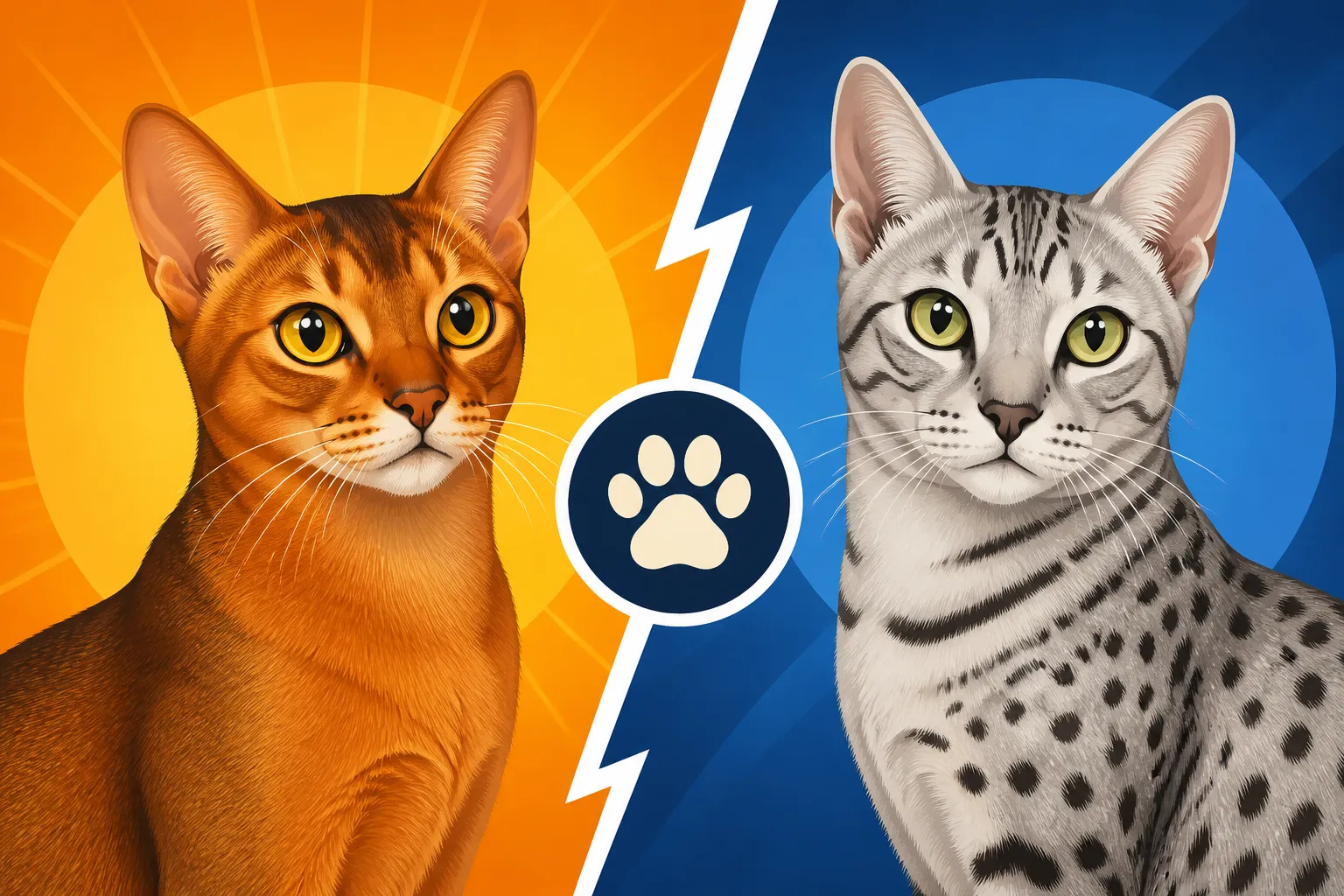
When you first glance at an Abyssinian and an Egyptian Mau, both appear to have short, fine coats. Both are undeniably beautiful, exuding an almost wild elegance. However, their coat patterns are the most significant and defining visual difference, immediately telling you which breed you're observing. It’s like looking at two different masterpieces – one painted with intricate brushstrokes of color, the other with deliberate, striking patterns.
The Abyssinian's Agouti "Shimmer"
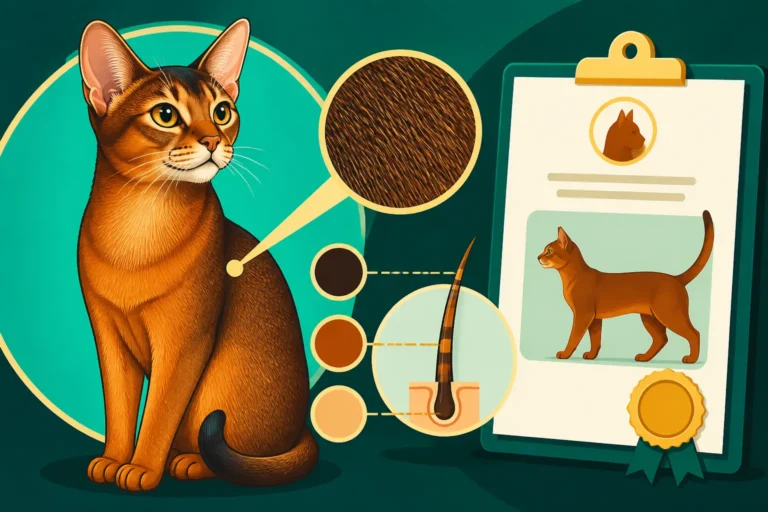
The Abyssinian is famous for its "ticked" or "agouti" coat. What does that mean, exactly? Well, instead of stripes, bands, or spots on the body, each individual hair shaft on an Abyssinian has multiple bands of color. Typically, you'll see three or four bands of alternating light and dark color along the length of a single hair. The tip of the hair is always the darkest. This unique characteristic is what gives the Abyssinian its signature shimmering, iridescent quality when it moves, like light catching a field of wheat. There are no distinct stripes or spots on the body itself; the ticking is uniform across the main torso, with some minimal barring possibly on the legs and tail in pet quality cats, though this is often considered a fault in the show ring.
When an Abyssinian walks or stretches, its coat seems to shift and glow, creating an illusion of depth and movement that is absolutely captivating. It's a subtle beauty, not a bold pattern, and it truly makes them look like miniature wild cats, perfectly camouflaged in a savannah landscape. This ticking is incredibly effective at hiding loose hairs too; The Ticked Coat Is the Whole Abyssinian Grooming Job explains how easy their grooming is, partly because their shed hairs blend so well into the background! The magic is in the individual hair, not in a large-scale pattern across their body.
The Egyptian Mau's Wild Spots and "M" Marking
In stark contrast, the Egyptian Mau is celebrated for its striking, naturally occurring spotted coat – the only domesticated cat breed to boast such a feature without human intervention. These spots are not random; they are typically large and distinct, scattered across their body in a pattern that echoes their wild ancestors. Each Mau has a unique pattern, like a feline fingerprint. Unlike the Abyssinian's uniform ticking, the Mau's spots are clear and sharply defined against the lighter ground color of their fur. They also have dark banding on their legs and tail, and often a distinctive "necklace" of spots or broken stripes around their neck.
But the Mau's distinctive markings don't stop there. Take a closer look at their face, and you'll find an immediate giveaway: the prominent "M" or scarab beetle marking on their forehead. This is often accompanied by "mascara" lines that extend from the outer corner of their eyes, giving them an exotic, alluring gaze. These features give the Egyptian Mau a truly ancient and regal appearance, fitting for a cat often associated with the pharaohs. The contrast couldn't be clearer: one is all about the subtle play of light on individual hairs, while the other proudly wears its bold, graphic spots for the world to see. You won't find this kind of natural spotting on an Abyssinian, just as you won't find the Abyssinian's overall ticked effect on a Mau.
A Glimpse into the Past: Origins and Ancestry
Both Abyssinians and Egyptian Maus carry an aura of ancient lineage, but their actual historical paths to becoming recognized breeds are quite different. Understanding where these captivating cats come from can shed light on some of their inherent qualities. It’s a fascinating journey, spanning continents and centuries, blending myth with modern genetics.
The Abyssinian's Enigmatic Journey
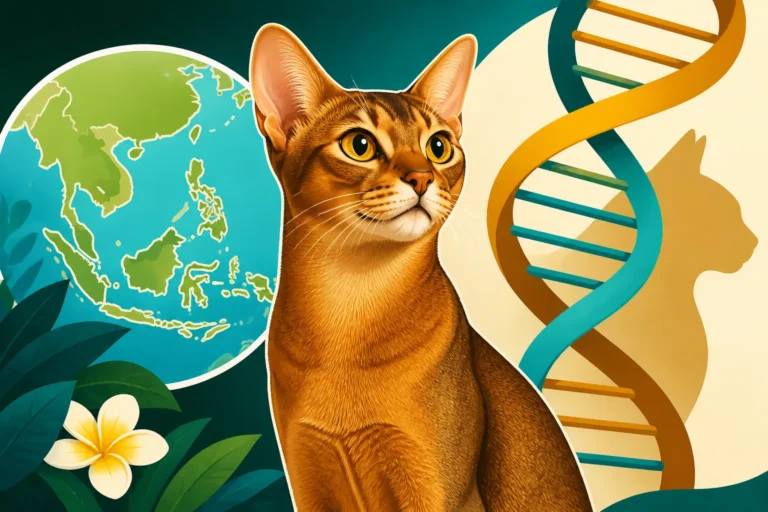
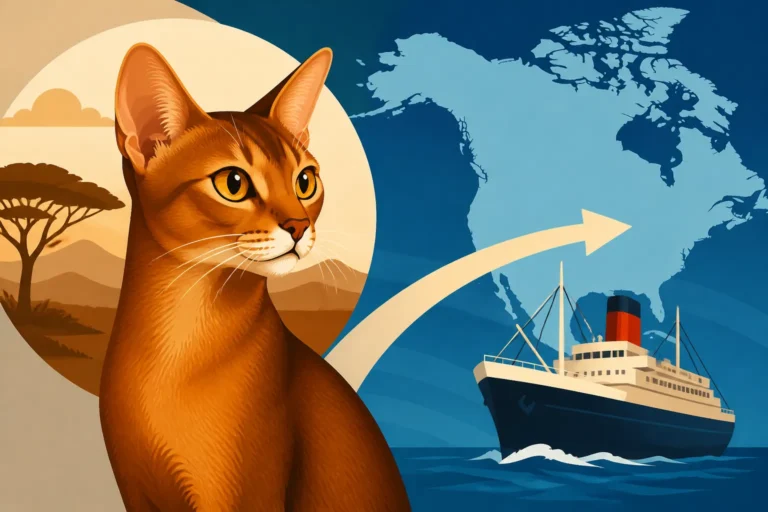
For a long time, the Abyssinian was thought to hail from Abyssinia (modern-day Ethiopia), hence its name. Tales of its arrival in England in the 19th century, brought back by soldiers from a military campaign, were widely circulated. However, genetic studies have largely debunked this charming, if inaccurate, origin story. It turns out, our beloved Abyssinians likely have roots much further east. The Abyssinian Is Probably Not From Abyssinia delves into this myth, and What Genetic Studies Say About the Abyssinian's Origin really pulls back the curtain on the scientific consensus.
Modern DNA research suggests that the Abyssinian's ancestors most likely originated along the Indian Ocean coast, possibly in Southeast Asia. This region was a bustling hub of trade, and cats with ticked coats were common along these routes, traveling on merchant ships. The breed as we know it today was refined and developed primarily in Great Britain in the late 19th and early 20th centuries, with significant contributions from American breeders later on, especially after the world wars decimated the British lines. So, while they carry an ancient look, the Abyssinian’s true "homeland" is a bit of a global mystery, pieced together through genetic clues rather than direct historical records.
The Egyptian Mau's Ancient Pedigree
The Egyptian Mau, on the other hand, leans heavily into its supposed ancient Egyptian heritage, with many believing it to be a direct descendant of the cats depicted in ancient Egyptian art and revered in pharaonic society. The very name "Mau" is the ancient Egyptian word for cat. While it's certainly plausible that their ancestors roamed the Nile, the modern Egyptian Mau breed was actually established much more recently. The true foundation of the modern breed began in the mid-20th century, with significant efforts by Russian Princess Nathalie Troubetzkoy. She acquired a few spotted cats in Italy and later imported more from Egypt, breeding them to create the foundation lines recognized today.
These foundation cats were then brought to North America, where the breed gained further recognition and development. The Mau's distinct body shape, with its somewhat longer hind legs and a characteristic "tiptoe" stance, is often cited as evidence of its ancient running and hunting prowess, echoing the graceful cats seen in hieroglyphs. So, while the direct, unbroken lineage from ancient Egyptian temples to your living room is romanticized, the modern Egyptian Mau was carefully cultivated to embody those very traits, preserving a look and perhaps some instincts that feel profoundly historical.
More Than Skin Deep: Temperament and Personality
Beyond their stunning looks and intriguing histories, the real differences between an Abyssinian and an Egyptian Mau often shine brightest in their personalities. Both are intelligent and active cats, certainly not content to be mere decorative pieces. But their ways of interacting with their humans and their world can be quite distinct, shaping the kind of companionship they offer.
The Abyssinian: Busy, Playful, and a Shoulder Rider
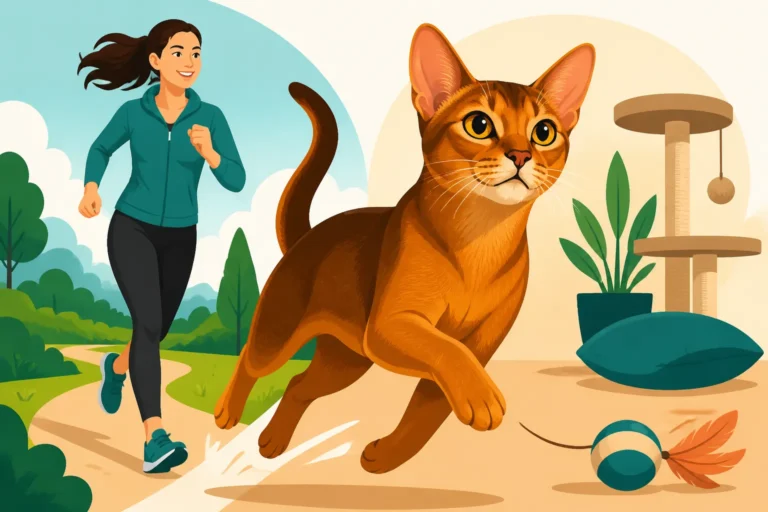
If you're looking for a cat that is constantly "doing something," the Abyssinian might just be your soulmate. They are famously energetic, often described as the "clowns of the cat world." They are incredibly curious, always exploring every nook and cranny, climbing to the highest points in the house, and engaging with anything that catches their eye. The Abyssinian Is the Busiest Cat in the House isn't an exaggeration; they truly thrive on interaction and mental stimulation. They love to play, and they'll involve you in their games, often bringing toys to you for a rousing game of fetch or chasing a wand toy with unparalleled athleticism. You'll find them following you from room to room, eager to participate in whatever you're doing, whether it's "helping" with laundry or supervising your cooking.
While they are highly affectionate, Abyssinians aren't typically known as lap cats. They prefer to be with you, rather than on you. You might find them perched on your shoulder, rubbing against your legs, or simply settling in the same room, observing. Their vocalizations are often soft chirps and trills, though they can certainly let you know when they want something! They tend to be friendly with strangers and generally adapt well to other pets, making them excellent companions for active families. Why an Abyssinian Will Not Sit on Your Lap delves deeper into their unique way of showing affection, which is all about engagement and shared activity rather than passive cuddling.
The Egyptian Mau: Loyal, Sensitive, and a "Chime"
Egyptian Maus are also highly intelligent and active cats, but their energy often manifests a bit differently than an Abyssinian's boundless enthusiasm. Maus are known for forming incredibly deep, almost dog-like bonds with their chosen humans. They can be quite sensitive and shy around strangers, often preferring to observe from a distance until they feel comfortable. Once they bond, however, their loyalty is unwavering. They may choose one particular person as "their" human and lavish them with attention, often demanding cuddles and close proximity. This intense loyalty can mean they are less outwardly gregarious with everyone in the household compared to an Abyssinian.
Their vocalizations are also unique, often described as a soft, melodious "chime" or trill, distinct from the typical meow. They are generally quieter cats than Abyssinians or Siamese, but they use their chimes to communicate effectively with their people. When they play, they display incredible agility and speed, often with a characteristic "wiggle" to their running gait, an evolutionary trait from their hunting ancestry. While they love to play and explore, they can be more sensitive to changes in routine or environment than the more boisterous Abyssinian. Providing consistency and a secure environment is key to a happy Mau, and they will shower their devoted owners with affection in return.
Health & Longevity: Common Concerns and Unique Traits
Bringing any cat into your life means committing to their health and well-being, and understanding potential breed-specific health issues is a crucial part of that responsibility. While both Abyssinians and Egyptian Maus are generally considered healthy and robust breeds, each has certain genetic predispositions that prospective owners should be aware of.
Understanding Abyssinian Health Vulnerabilities
Abyssinians, like many purebred cats, have a few genetic conditions that breeders rigorously test for. One of the most well-known is Pyruvate Kinase Deficiency (PKD or PK-Def), a hereditary red blood cell enzyme deficiency that can lead to intermittent anemia. It’s a serious condition, but thankfully, a DNA test is readily available, allowing responsible breeders to ensure their breeding cats are clear or only carriers. Pyruvate Kinase Deficiency Is the Abyssinian's Best Known Test offers a thorough explanation.
Another significant concern is Progressive Retinal Atrophy (PRA-rdAc), a genetic eye disease that causes degeneration of the retina, eventually leading to blindness. Again, a DNA test exists, and good breeders will screen for it to prevent affected kittens. Then there's Renal Amyloidosis, a kidney disease where abnormal proteins accumulate in the kidneys, leading to kidney failure. This is particularly heartbreaking because, as Renal Amyloidosis Is the Abyssinian Problem Nobody Can Test For explains, there is currently no DNA test for it, making careful pedigree research vital for prospective owners. Lastly, Abyssinians are prone to a condition called Juvenile Gingivitis, an aggressive gum inflammation that can begin when they are kittens and often requires early intervention, including professional dental cleanings and sometimes gingivectomies. This means budgeting for regular vet check-ups and being proactive with at-home dental care from a young age is extra important for an Abyssinian. Good quality food, like those available on Chewy, designed for dental health can be a helpful part of this regimen, though never a substitute for veterinary care.
Egyptian Mau Health Considerations
Egyptian Maus are generally considered a very healthy breed, often enjoying long, active lives. However, they are not entirely without their own potential health considerations. One condition occasionally seen in the breed is Patellar Luxation, where the kneecap can slip out of place. This can range from mild, intermittent discomfort to severe lameness, sometimes requiring surgical correction. Responsible breeders often screen their breeding cats for this condition to minimize its incidence.
Another concern in some lines of Egyptian Maus, as with many purebred cats, is Hypertrophic Cardiomyopathy (HCM), a common form of heart disease in felines that causes the heart muscle to thicken. While not as prevalent or well-documented in Maus as in some other breeds, breeders may recommend cardiac screenings (like echocardiograms) for their breeding stock. Overall, Maus tend to be robust, but maintaining their athletic physique through a good diet (perhaps from Chewy's selection of high-protein cat foods) and plenty of exercise helps keep them in top condition. Regular veterinary check-ups for both breeds are always paramount to catch any health issues early.
Lifestyle Match: Which Breed Fits Your Home?
Deciding between an Abyssinian and an Egyptian Mau isn't just about looks or history; it's about finding a cat whose personality and needs truly align with your lifestyle. Both breeds are incredibly rewarding companions, but they thrive in slightly different environments and with different levels of interaction. Consider your home, your routine, and your expectations for a feline friend before making your choice.
Meeting the Abyssinian's Need for Engagement
An Abyssinian isn't a cat you can just admire from afar. They demand engagement, interaction, and a stimulating environment. If you lead an active lifestyle and enjoy interacting with your pets, an Abyssinian will flourish. They absolutely need plenty of vertical space – cat trees, wall shelves, and access to high perches are essential for their well-being. An Abyssinian Needs Height More Than It Needs Floor, and they will use every bit of it! They are natural climbers and explorers, so a "catified" home is a must to keep them happy and prevent them from getting into mischief born of boredom.
Because they are so social and busy, Abyssinians do not do well when left alone for long periods. Why an Abyssinian Should Not Be Left Alone All Day is a critical read if you work long hours. They thrive on companionship, whether from their humans, another playful cat (another Abyssinian often works best!), or even a cat-friendly dog. They integrate well into family life and are generally tolerant of respectful children, though their high energy might be a lot for very young toddlers. Expect to dedicate significant time daily to interactive play sessions, enrichment activities, and simply being present with your Abyssinian.
Providing for the Egyptian Mau's Loyalty and Space
The Egyptian Mau, while active, might be a better fit for a home that offers a bit more routine and a less boisterous environment, especially during their initial settling-in period. Their sensitive nature means they appreciate consistency and can be prone to stress if their world changes too frequently or if they feel overwhelmed. They form deep, often exclusive, bonds with their primary caregivers, so they need an owner who can dedicate time to nurturing that relationship. While they enjoy play, it might be on their terms, and they may not demand constant "help" with your daily tasks in the same way an Abyssinian might.
Maus are also athletic and benefit from vertical space and opportunities to run and jump, but perhaps not to the same extreme as the Abyssinian. They are often content to supervise from a comfortable perch rather than scale every bookcase. They can be more cautious with strangers and prefer a quieter introduction to new people or pets. If you are looking for a deeply loyal, affectionate companion who might reserve their most intense devotion for you, and you can provide a stable, loving environment, the Egyptian Mau could be a wonderful choice. They are intelligent and enjoy puzzle toys and interactive games, just like an Abyssinian, so consider adding some enrichment from Chewy to keep their keen minds engaged.
Abyssinian vs. Egyptian Mau: A Comparative Overview
To help you visualize the key distinctions, here’s a summary of how these two magnificent breeds stack up against each other:
| Feature | Abyssinian | Egyptian Mau |
|---|---|---|
| Coat Pattern | Ticked (agouti) – individual hairs banded | Spotted – distinct, natural spots on body |
| Head Markings | No distinct markings | "M" or scarab marking on forehead, "mascara" lines |
| Eye Color | Gold or green | Gooseberry green |
| Body Type | Medium, lithe, well-muscled, "foreign" | Medium, athletic, "foreign," longer hind legs |
| Temperament | Very active, curious, playful, "clown-like," social, not typically a lap cat | Active, loyal, sensitive, can be shy with strangers, bonds deeply with one person |
| Vocalization | Chirps, trills, soft meows | Soft, melodious "chime" or trill |
| Known Health Issues | PK Deficiency, PRA-rdAc, Renal Amyloidosis, Juvenile Gingivitis | Patellar Luxation, Hypertrophic Cardiomyopathy (HCM) |
| Origin | Debated; likely Southeast Asia, developed in UK/US | Claims ancient Egyptian descent; developed in Italy/US |
| Energy Level | Very High | High |
| Ideal Home | Active, engaging, plenty of vertical space, good for multi-pet homes | Stable, consistent, patient, devoted owner, can be shy of frequent changes |
Ultimately, both Abyssinians and Egyptian Maus are extraordinary cats that bring immense joy and vibrancy to their homes. Your choice will come down to which set of unique characteristics resonates most deeply with your personal preferences and lifestyle. Whether you prefer the shimmering tick of an Abyssinian or the striking spots of an Egyptian Mau, you're sure to find a devoted and intelligent companion.
Disclaimer
This article is for general informational purposes only and does not constitute professional advice. Laws, prices and regulations vary by location and change over time. Consult a qualified professional for guidance on your specific situation.