How the Abyssinian Compares to the African Wildcat
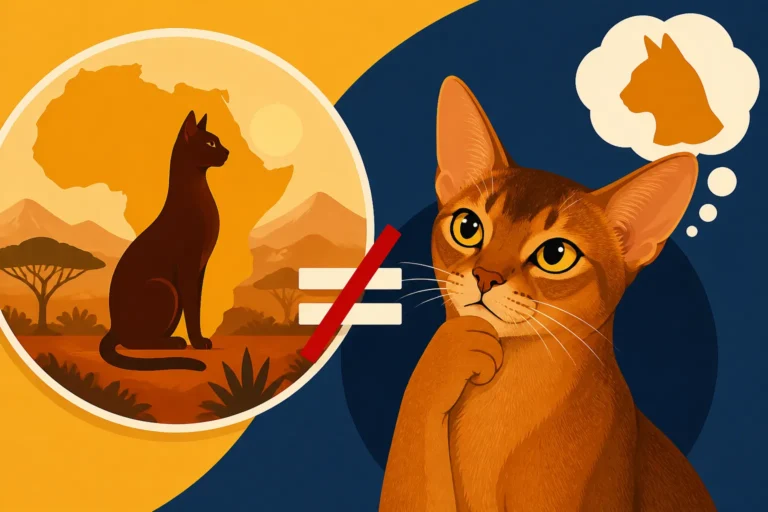
An Abyssinian can look strikingly like a small wildcat: lean body, long legs, alert ears, and a warm, ticked coat. That resemblance naturally raises questions about whether the breed has African wildcat ancestry or wild instincts. Here’s what the comparison really means, what the two cats share, and where their lives and needs are very different.
The Abyssinian and African Wildcat Are Not the Same Cat
What “African wildcat” means
The African wildcat is a wild feline species, commonly known by the scientific name Felis lybica. It lives across parts of Africa and neighboring regions, in habitats that include dry scrubland, grassland, and desert edges. Like other wild felines, it hunts for food and survives without the protection, routine care, or regular meals a domestic cat receives.
Abyssinians, by contrast, are a domestic cat breed. They may be athletic and self-assured, but they depend on people for food, veterinary care, safe shelter, and protection from traffic and other hazards. A cat’s alert expression or lithe build doesn’t change that basic difference.
Domestic cats have a complicated history involving wildcat populations, but that does not mean an Abyssinian is a wildcat in a smaller, more manageable package. To understand why the breed looks the way it does, it helps to separate the appearance of an individual cat from the history of domestic cats as a whole. Whether the Abyssinian Has Any Wild Ancestry
Why the Abyssinian’s history is often confused with its looks
The Abyssinian’s name can sound like a clue to its origin, and its tawny, ticked coat can evoke imagery of cats in ancient art. But a breed name and a resemblance are not proof of a direct line to a particular wild population. The breed’s origin story is not as simple as “this domestic cat came straight from Africa.”
That distinction matters because familiar stories can make a breed seem more exotic than it is. An Abyssinian may have a look that feels close to a wild feline, but its breed history is a separate subject from the larger domestication story. The Abyssinian Is Probably Not From Abyssinia and Why the Abyssinian Resembles Ancient Egyptian Art explore how appearance and origin can get tangled together.
Research into domestic-cat ancestry can add context, but it does not turn the Abyssinian into a wild hybrid. What Modern DNA Studies Found About Abyssinian Ancestry looks more closely at that broader question.
How Their Appearance Compares
A shared impression of agility, not identical bodies
At a glance, both cats can look slim, long-legged, and ready to move. The Abyssinian’s fine-boned frame, large ears, and alert posture contribute to an athletic impression. Its body is built for climbing, chasing toys, and darting around the home rather than lounging in one place all day.
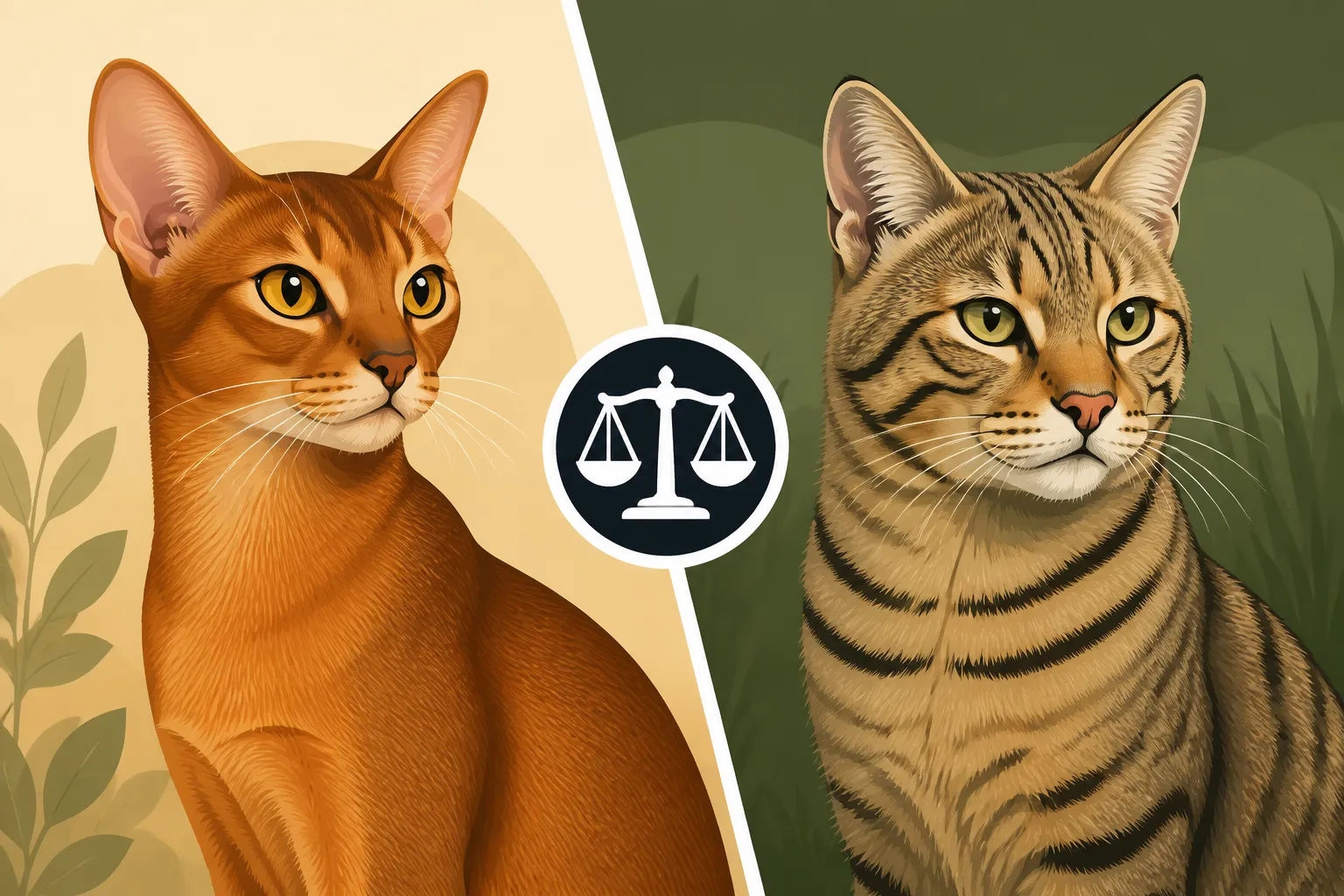
The African wildcat also has a practical, athletic shape suited to movement and hunting. But a general resemblance is not the same as a breed standard match. Individuals vary, and the wildcat is not simply an Abyssinian with a different lifestyle. Their proportions, coat details, and overall appearance shouldn’t be treated as interchangeable.
The Abyssinian’s coat is especially distinctive. Each hair carries bands of color, creating a warm, shaded look rather than the clear stripes or spots many people expect from a wild feline. That ticking is a defining breed feature, not evidence that the cat is part wildcat. What Makes an Abyssinian's Coat Ticked Rather Than Striped
Coat, color, and the “wild” look
The Abyssinian’s coat can shimmer as the cat moves, and its expressive eyes and upright ears help create a poised, watchful appearance. In some lighting, the coat may appear darker or richer; in others, the alternating bands of color are easier to see. Those changing impressions can make the breed seem especially wild-looking in photographs.
The African wildcat’s coat, meanwhile, is adapted to its natural environment. Its coloring can help it blend into dry landscapes, but that camouflage serves a different purpose from the Abyssinian’s breed characteristics. Even when both cats appear sandy or tawny, their coats should be understood in the context of their different lives.
If you’re trying to identify a domestic Abyssinian, look at the full picture: coat ticking, body shape, head, ears, and the cat’s documented breed background. A single color or facial feature is not enough to establish that a cat is an Abyssinian, much less a wildcat. What an Abyssinian Looks Like Against the Show Standard explains the domestic breed’s appearance in more detail.
| Feature | Abyssinian | African wildcat |
|---|---|---|
| Classification | Domestic cat breed | Wild feline species |
| Coat impression | Ticked, with bands of color on individual hairs | Natural coloring suited to blending into its habitat |
| Daily life | Lives with people and relies on human care | Lives in the wild and hunts to survive |
| Typical relationship with people | Can form close bonds with a household | Not a domestic pet; behavior and needs are those of a wild animal |
| Care needs | Safe indoor life, enrichment, food, and veterinary care | Wildlife needs that cannot be met by ordinary pet ownership |
Behavior and Daily Life Are a Bigger Difference Than Looks
An active pet is still a domestic cat
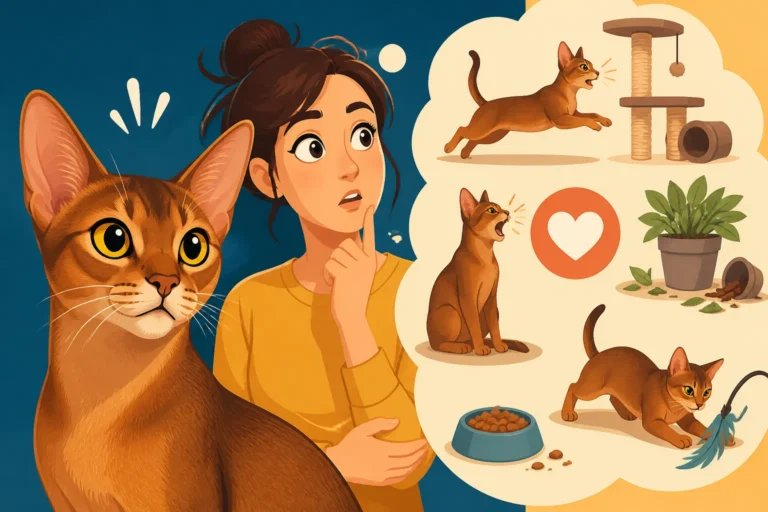
Abyssinians are known for being curious, energetic, and interested in what people are doing. They often climb, investigate open cupboards, follow household members from room to room, and turn ordinary objects into toys. That can feel “wild” when a cat launches itself onto a high shelf or studies a moving curtain with intense concentration.
But this behavior belongs to an active domestic cat. An Abyssinian can learn household routines, enjoy play with people, and settle into a home with safe places to climb and rest. Its energy is a reason to provide enrichment, not a sign that the cat needs to be treated like a wild animal. The Abyssinian Is the Busiest Cat in the House
The African wildcat has a different relationship with its surroundings. It must locate food, avoid dangers, and respond to the conditions of its habitat. A domestic cat’s hunting play may resemble a small version of stalking or pouncing, but a wand toy is not the same as the demands of survival in the wild.
Why the comparison should not guide pet care
It’s easy to see a confident, fast-moving cat and assume it needs a huge outdoor territory. In practice, an Abyssinian needs a safe home, daily play, and opportunities to climb and explore. A secure catio or supervised outdoor setup may offer enrichment for some households, but letting a cat roam freely exposes it to risks and does not make it a wildcat.
For a busy indoor Abyssinian, useful enrichment can be simple: rotate toys, offer food puzzles, create sturdy climbing routes, and schedule interactive play. If you’re choosing puzzles or other supplies, Chewy is one place owners may look for options; the important part is picking items that are safe, appropriately sized, and interesting enough for your cat to use. A puzzle that is too easy may be abandoned quickly, while one that is frustrating can make mealtime more stressful.
Never try to meet a domestic cat’s activity needs by encouraging it to hunt wildlife or by bringing wild animals into the home. A wild animal is not a training aid or a companion animal. Keep cats indoors or in secure outdoor spaces, and give them play that channels their instincts safely. Why an Abyssinian Should Not Roam Outdoors
What the Comparison Means for Someone Choosing a Cat
Choose an Abyssinian for its domestic personality
If the Abyssinian appeals to you, focus on its needs as a high-energy household cat rather than its resemblance to a wild feline. Ask yourself whether you can make time for interaction, provide vertical space, and keep the home safe for a curious climber. An Abyssinian may be a poor fit for someone who wants a very low-energy pet that is content to be ignored for long stretches.
A prospective owner should also think about temperament and routine, not just appearance. Some Abyssinians are highly social and want to be involved in everyday activities; others may be more reserved. A responsible breeder or rescue can help describe an individual cat’s personality and care history. Whether the Abyssinian Is the Right Cat for You
It can also help to compare the breed with other domestic cats that have an athletic or striking appearance. That comparison is about household fit, not wild ancestry: energy level, sociability, and the amount of daily engagement you can offer are much more useful questions. How the Abyssinian Compares to a Bengal as a Pet
Keep safety and welfare at the center
Abyssinians are agile enough to find surprising routes onto shelves, counters, and open doors. Anchor unstable furniture, secure windows and balconies, and put away medications, string, and small objects a cat might swallow. A well-planned climbing route can channel that athleticism toward safe spaces instead of fragile displays or kitchen counters.
If you’re setting up a room, consider sturdy shelves or a tall cat tree, scratching surfaces at different heights, a comfortable resting spot, and a window view with secure screening. Chewy may be one source for comparing enrichment products such as puzzle feeders or scratching equipment, but check dimensions and stability rather than assuming any product suits an active cat. Chewy can also be a place to browse interactive toys; rotate a few at a time so they don’t all become familiar background clutter.
Remember that a domestic cat’s welfare depends on dependable care. Regular veterinary attention, appropriate nutrition, clean litter, and safe surroundings matter more than any supposed “wild” quality. If you’re considering a cat because it looks like a wild feline, take time to learn about the specific animal’s needs before bringing one home. Chewy may help owners locate everyday pet supplies, but products cannot replace a safe environment, play, and responsible care.
The simplest way to think about the comparison is this: an Abyssinian may share a sleek, alert look with the African wildcat, but it is a domestic companion with domestic needs. Its resemblance is part of its appeal; it is not a reason to treat it as a wild animal.
Disclaimer
This article is for general informational purposes only and does not constitute professional advice. Laws, prices and regulations vary by location and change over time. Consult a qualified professional for guidance on your specific situation.