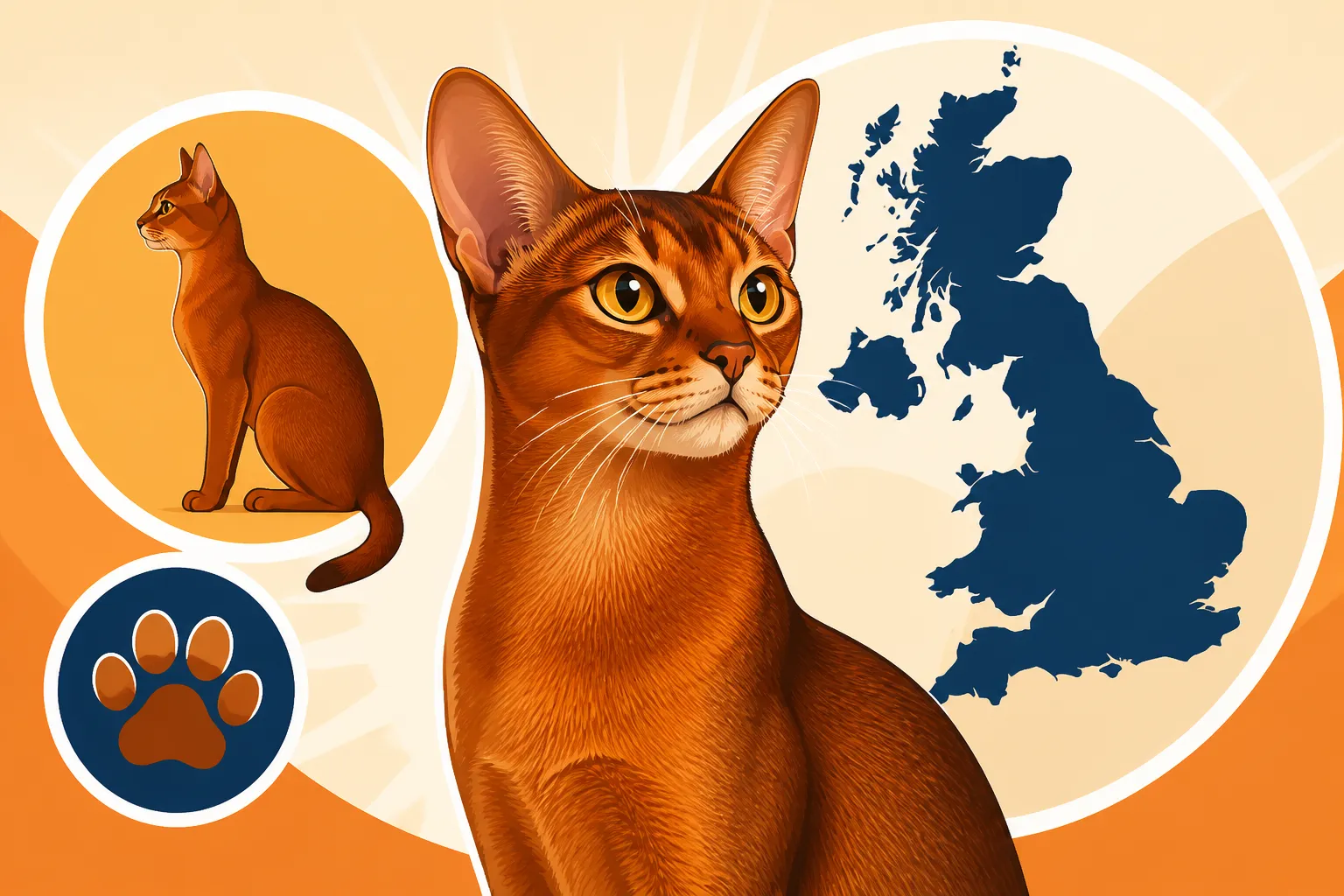
Why Ruddy Is Called Usual in Britain
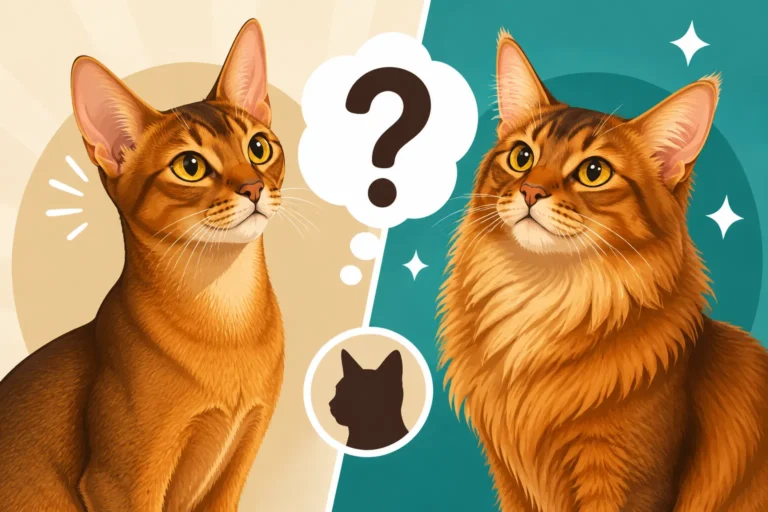
A British breeder may describe an Abyssinian as “usual,” while an American breeder calls the same color “ruddy.” That can make a pedigree, kitten listing, or show result look as if it refers to two different coats. It doesn’t: the words reflect different naming traditions for the breed’s familiar warm, dark-ticked appearance.
Why Britain Calls the Ruddy Abyssinian Usual
“Usual” is a traditional British color name
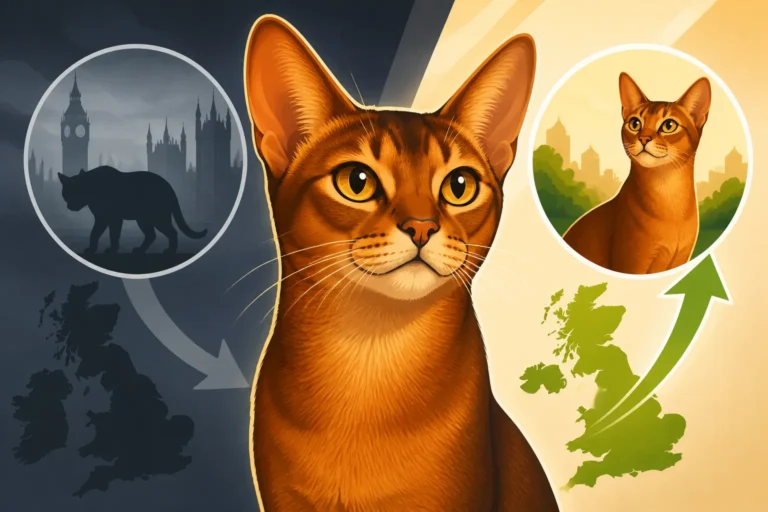
In British Abyssinian circles, usual is the traditional name for the coat many people elsewhere call ruddy. The two terms describe the same recognized color variety, not separate breeds or different kinds of Abyssinian. A cat described as usual in British paperwork may therefore be described as ruddy by a breeder or registry using American terminology.
The word is easy to misread if you encounter it for the first time. In everyday conversation, “usual” sounds like a casual comment meaning ordinary or unremarkable. In this context, it is a formal color label. It doesn’t mean the cat is less special, less purebred, or less carefully bred than an Abyssinian listed under another color name.
This is one of several cases where cat-fancy language varies between countries and registries. An owner comparing a British pedigree with an American breed guide may see different labels even when both describe a warm-toned Abyssinian with dark ticking. For a broader look at the breed’s standard colors, see The Four Colors an Abyssinian Comes In.
The name reflects a naming tradition, not a different coat
The British term sits alongside other color names used for Abyssinians, including blue and fawn. In some British contexts, the color often called sorrel elsewhere may be called cinnamon. These differences can make color descriptions feel inconsistent, especially when a kitten listing uses one vocabulary and a breed website uses another.
It helps to treat the label as a clue to the naming system being used, rather than as a complete description of the cat. If you are reading a breeder’s paperwork, check the registry and ask the breeder to explain the color in plain language. A photo can help too, though lighting, age, and coat condition can all affect how a color appears.
| Term you may see | Common context | What it generally refers to |
|---|---|---|
| Usual | British Abyssinian terminology | The warm, dark-ticked color often called ruddy elsewhere |
| Ruddy | Common American terminology | The same traditional Abyssinian color variety |
| Cinnamon | Used in some British color terminology | Often corresponds to the color called sorrel in other contexts |
| Sorrel | Common American terminology | A warm cinnamon-toned color variety |
What a Usual or Ruddy Abyssinian Looks Like
Warm ground color and dark ticking
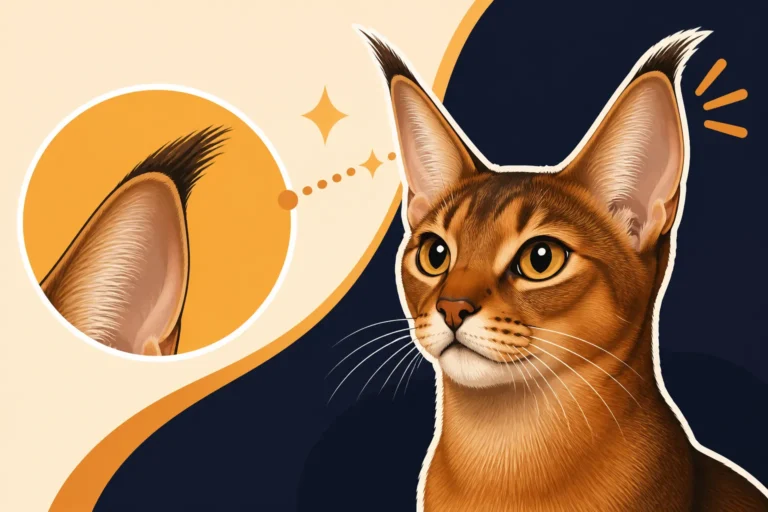
The usual or ruddy Abyssinian is known for a warm, reddish-brown impression, with darker bands across individual hairs. This banding is called ticking. Instead of the obvious stripes many people picture when they hear “tabby,” an Abyssinian’s coat has a fine, even pattern that gives the body a lively, shaded appearance.
The color is more than a simple solid brown. Each hair’s bands contribute to the overall effect, so the coat can seem to shift subtly as the cat moves or stands in different light. Some parts of the body may look richer or darker than others, and the contrast can be easier to notice in bright natural light than under a warm indoor bulb.
The warm ground color and dark ticking are useful clues, but the name alone does not tell you everything about an individual cat’s appearance. Coat shade can vary, and kittens may not show their mature coat as clearly as adults. For a closer description of the color’s visual details, read What a Ruddy Abyssinian Actually Looks Like.
Color labels do not replace the breed standard
A color name is only one part of how an Abyssinian is described. Breed standards also consider features such as the coat’s texture and ticking, the cat’s overall type, and other physical traits. A listing that says “usual” tells you the color category the breeder is using; it does not, by itself, tell you whether the cat meets every show standard.
That distinction is helpful for pet owners as well as people interested in showing cats. A companion cat can be a wonderful example of the breed without being selected or evaluated for the show ring. And a color label should not be used as a shortcut for assessing health, temperament, or how well the cat will suit your household.
If you’re looking at a kitten, ask to see the color description on its registration or pedigree documents and ask which organization’s terminology is being followed. When comparing listings, look at the full description rather than assuming that “usual” and “ruddy” signal a meaningful difference. What an Abyssinian Looks Like Against the Show Standard explains how coat color fits into the wider picture of breed type.
Why Color Names Differ Between Countries
Registries and breed communities use their own vocabulary
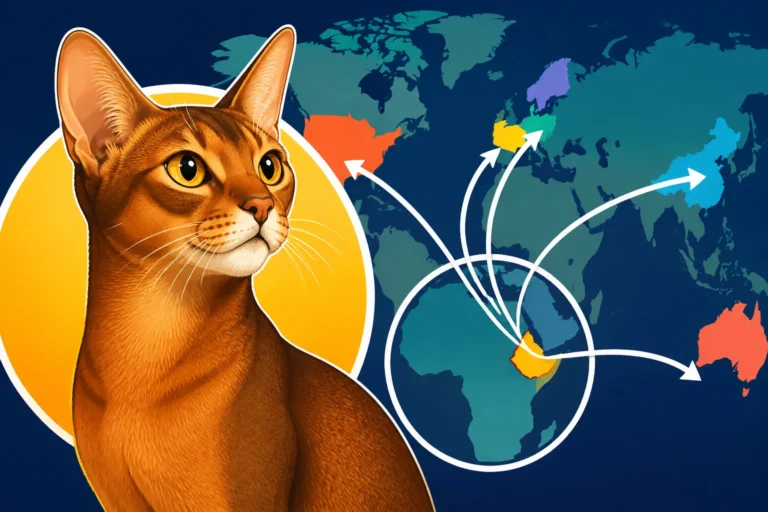
Cat breeds have developed within international communities where registries, clubs, and breeders may preserve different naming conventions. A color name that feels natural in one country may not be the preferred official term in another. That does not necessarily indicate a disagreement about what the cat looks like; it can simply reflect the language adopted by a particular registry or tradition.
This is why an Abyssinian’s color may be recorded differently across documents or discussed differently by breeders in Britain and the United States. The most useful question is not “Which word is correct everywhere?” but “Which registry or community is using this term?” Once you know that, it is much easier to compare descriptions without getting tangled in the vocabulary.
The same principle applies when you read about the other recognized colors. Which Abyssinian Colors CFA Recognizes is useful when you need to understand a particular registry’s terminology, while What an Abyssinian’s Coat Color Is Registered can help explain why formal paperwork may use a label that differs from a breeder’s everyday wording.
“Usual” does not mean a lesser or unofficial cat
Because the word sounds ordinary, someone unfamiliar with British terminology might assume “usual” means a generic color or a less desirable version. That is not what the term means. It is a color name used in a particular naming tradition, and it can appear in legitimate breed descriptions and records.
Nor does the word tell you whether a cat is rare or common in the breeder’s local area. Availability depends on individual breeding programs and the cats in their lines. If a breeder describes a kitten as usual, the practical follow-up is to ask what color that means in familiar terms and how the kitten’s color is recorded—not to assume the label signals a special status.
When discussing an Abyssinian with a breeder, you can keep the conversation simple: “When you say usual, do you mean the color often called ruddy?” A responsible breeder should be able to clarify the terminology and show you the relevant paperwork. If the kitten’s pedigree or registration is important to you, confirm the exact registered wording rather than relying only on an advertisement.
How to Read a British Abyssinian Color Description
Check the registry and ask for a plain-language explanation
When you see “usual” in a British listing, first look for the registry or association named in the advertisement or paperwork. Then ask the breeder to confirm how that organization identifies the color. This is especially useful if you are comparing cats from different countries, where familiar everyday terms may not match the official descriptions.
You can also ask for recent photographs taken in natural light. A photo cannot replace formal identification, and screens can distort color, but it may help you understand what the breeder means by the label. If the kitten is very young, ask whether its coat color and ticking are still developing. A young coat may not yet show the same depth and definition as an adult’s.
For a buyer, careful questions are more useful than trying to decode every word in isolation. Ask for the color as recorded, the registry name, and a straightforward description of the coat. If you are comparing an Abyssinian with another color variety, What Sorrel Means on an Abyssinian can help clarify another common terminology difference.
Keep color separate from care and buying decisions
“Usual” and “ruddy” are color terms, not care instructions. They do not mean the cat needs a special diet, a different grooming routine, or a particular kind of home. Abyssinians have a close-lying, ticked coat, and basic care is generally about gentle routine grooming and checking the cat’s overall health—not trying to enhance or alter the color.
If you are assembling ordinary supplies, focus on what suits the individual cat and your household. A soft grooming mitt, for example, may be easier to introduce than a brush a lively cat dislikes. Some owners browse retailers such as Chewy when comparing basic grooming tools, but the product label should not be mistaken for a breed or coat-color standard. A quick, calm grooming routine is usually more helpful than repeatedly working at the coat in pursuit of a particular look.
Likewise, don’t let color terminology distract from the questions that matter when choosing a kitten: health history, early socialization, veterinary care, and clear documentation. If you’re buying supplies through Chewy or another retailer, check that a grooming tool is gentle and appropriate for a short coat. Chewy’s product descriptions may help you compare options, but your breeder or veterinarian is a better person to ask about the kitten’s individual needs.
Use the term as a translation, not a mystery
If you remember one thing, remember this: usual is the British name commonly used for the Abyssinian color called ruddy in other contexts. When the words appear in different listings, they usually point to a naming difference rather than a different cat or a different coat pattern.
For a new owner, that translation can make pedigrees, breeder conversations, and breed guides much easier to follow. You can still ask for clarification whenever a description is unclear. A good explanation should connect the formal term to what you can see on the cat and identify the registry or terminology behind it.
And if you’re shopping for everyday cat-care items, Chewy is one place owners may look for general supplies—but color labels should come from reliable breed or registration information, not retail listings. Keep the terminology in perspective, and focus on the individual cat in front of you: its health, personality, and needs matter far more than whether its paperwork says usual or ruddy.
Disclaimer
This article is for general informational purposes only and does not constitute professional advice. Laws, prices and regulations vary by location and change over time. Consult a qualified professional for guidance on your specific situation.