Whether a Chocolate Abyssinian Exists
A cat advertised as a “chocolate Abyssinian” can be confusing: the coat may look warm brown, but that does not automatically make chocolate an accepted Abyssinian color. This guide explains how the breed’s ticking affects color, why “chocolate” labels can be misleading, and what to ask a breeder or registry before relying on the description.
Does a chocolate Abyssinian exist
The short answer depends on what someone means by “exists.” A cat may be described as chocolate because its coat looks rich brown, or it may carry a particular color gene. But that does not mean chocolate is a recognized standard color for Abyssinians.
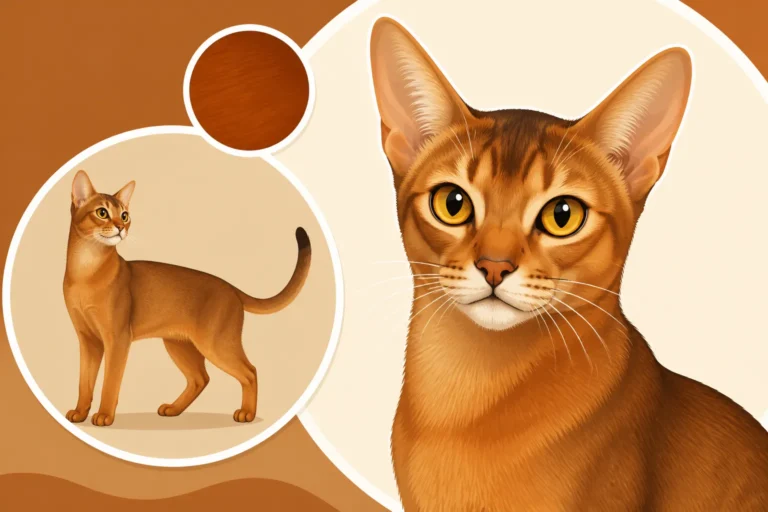
Abyssinians are known for a close-lying, ticked coat. Each hair has alternating bands of pigment, so the overall color is a blend created by many tiny bands rather than one solid shade. That can make a ruddy or sorrel cat look unusually dark, coppery, or brown in certain light. The distinction matters if you are comparing a breeder’s description with a pedigree, registration record, or show standard.
What people may mean by chocolate
In cat coat-color terminology, chocolate generally refers to a brown pigment variant. It is a genetic color term, not simply a casual way to say “brown.” A chocolate cat may have a warmer, softer brown appearance than a black-based brown cat, though lighting, coat condition, age, and other genes affect what the color looks like.
Abyssinian color is more complicated to judge because the coat is ticked. Rather than seeing a single uninterrupted brown shade, you see hairs with alternating bands. A warm-looking Abyssinian may therefore be mistaken for chocolate when it is actually a recognized color such as ruddy or sorrel. If the cat is photographed in golden indoor lighting, the difference can be even harder to judge.
It also helps to separate three claims that are often blurred together: the cat looks chocolate, the cat carries a color gene associated with chocolate, and the cat is registered as a recognized chocolate Abyssinian. Those claims are not interchangeable. A photo may support the first impression, but it cannot establish the other two.
For a useful starting point, compare the standard colors in The Four Colors an Abyssinian Comes In and the specific appearance of What Sorrel Means on an Abyssinian. Sorrel is especially easy to confuse with a warm brown description because its reddish, cinnamon-toned appearance can look different from one cat or photograph to another.
Why the coat can look brown without being chocolate
The ticked pattern changes how the eye reads a coat. On a ruddy Abyssinian, darker bands and a warm ground color combine to create an overall rich appearance. On a sorrel, the warm red or cinnamon tones can also be described casually as brownish, particularly in a low-quality photo or under yellow lighting. Neither casual description proves the cat has a chocolate coat.
Age and seasonal coat changes can add to the confusion. A kitten’s coat may not yet show its adult ticking clearly, and a coat can appear different as it matures. Sun exposure, indoor lighting, grooming, and the camera’s color settings can also shift how warm or dark the fur appears. A seller’s phone photo is not a reliable color test.
This is why breeders and registries use defined color names rather than relying on descriptions like “dark brown,” “mocha,” or “chocolate.” The relevant question is not only what shade the coat seems to be, but whether its pattern, pigment, and documented color fit the breed’s accepted terminology. What Makes an Abyssinian's Coat Ticked Rather Than Striped explains why the breed’s individual hairs matter so much to the finished look.
Why chocolate is not a standard Abyssinian color
Breed standards and registry rules determine which colors are accepted for registration or competition. In common Abyssinian standards, the familiar colors are ruddy, sorrel, blue, and fawn, though names and accepted varieties can differ among organizations. Chocolate is not generally listed as one of the standard Abyssinian colors in the way those four are.
That distinction does not mean every cat described as chocolate is unhealthy or that its coat must be fake. It means the label may be informal, inaccurate, or connected to a nonstandard color claim. If the exact classification matters to you, ask which registry the breeder uses and check that registry’s current breed standard rather than relying on a sales description.
Registry recognition versus a seller’s description
A breeder may use “chocolate” as a visual nickname to help a prospective owner picture a warm brown coat. Another seller might use the same word to suggest a rare color or a special genetic trait. Unless the term appears in the cat’s official registration documents under an accepted designation, treat it as a description rather than a confirmed registry color.
The breed standard is the better reference point. Which Abyssinian Colors CFA Recognizes covers the colors accepted by CFA, while Why a Chocolate Abyssinian Is Not CFA Recognized focuses on why the chocolate label does not fit that standard. If a breeder names a different registry, ask for that organization’s corresponding color rules; recognition can vary between registries.
When a listing uses a color name that seems unusual, ask for the registered color of both parents and the kitten, not just a verbal description. You can also request the kitten’s registration paperwork or pedigree information and confirm the terminology with the relevant organization. A responsible breeder should be comfortable explaining what the label means and should not pressure you to accept “rare chocolate” as proof of special status.
| What you see or hear | What it can tell you | What it cannot confirm |
|---|---|---|
| A warm brown-looking coat in a photo | The coat appears warm or brown under those conditions | The cat’s genetic color or registry classification |
| A seller calls the kitten chocolate | The seller is using that description | That chocolate is an accepted Abyssinian color |
| A pedigree lists a color | The recorded color terminology for that cat | Every genetic detail of the cat’s coat |
| A registry standard lists accepted colors | Which color names that organization recognizes | How another registry classifies its cats |
| A genetic test reports a color-related result | Information about the tested gene or variants | Whether the cat meets a particular show standard |
How nonstandard colors can appear in breed conversations
A color can enter breed discussions through informal naming, genetic variation, ancestry, or crossbreeding. But those possibilities should not be treated as proof about an individual cat. A coat that looks different from the usual examples may reflect lighting, age, ordinary variation within a recognized color, or a mixed background. Documentation is needed before making a stronger claim.
Abyssinians also have a history of being discussed through coat appearance and ancestry. For background on how researchers interpret the breed’s origins, see What Modern DNA Studies Found About Abyssinian Ancestry. That broad history is not a way to identify a particular kitten’s color, but it is a reminder that appearance alone does not tell the whole story.
If a breeder claims to have a genuinely unusual color, ask them to explain the claim plainly: Is “chocolate” just a descriptive nickname? Is it a genetic result? Is it the color recorded by a registry? If they cannot distinguish those meanings, or if the claim is used mainly to justify a higher price, slow down and verify the paperwork before making a decision.
How to assess a kitten described as chocolate
You do not need to become a feline genetics expert to ask sensible questions. The goal is to find out whether “chocolate” is an informal color description or a documented classification, and whether the cat is being represented honestly.
Start with the breeder’s paperwork and the registry’s own color terminology. Then compare the cat with reliable descriptions or photos of recognized Abyssinian colors. Ask about the parents’ registered colors and whether the breeder has documentation for any genetic claim. If the answer is vague, that is a reason to pause—not necessarily proof of wrongdoing, but a sign that the label needs clarification.
Questions to ask the breeder
Keep your questions direct and specific. For example:
- What color is listed on the kitten’s registration or pedigree?
- Which registry recognizes that color name?
- Are you using “chocolate” as a visual description, a genetic claim, or an official color designation?
- What are the registered colors of both parents?
- Can I see the relevant registration documents or color records?
- If you mention a genetic result, what was tested, and can I review the report?
A trustworthy breeder should be able to explain the difference between appearance and official color status without making you feel difficult. If the kitten is being sold as a pet rather than for showing, registry color recognition may matter less to your decision—but accurate descriptions still matter. You deserve to know what you are buying, especially if the unusual color is being emphasized as a selling point.
You can also compare the breeder’s wording with How an Abyssinian's Coat Color Is Registered. A registration record is useful evidence of recorded information, but it should be read in the context of the registry’s rules. A phrase in an online advertisement is not equivalent to an official record.
How to judge color in photos and in person
If possible, look at the kitten in natural daylight rather than judging from a heavily edited image. Ask for several unfiltered photos taken in different lighting, including a clear view of the body and face. A single close-up can exaggerate warmth or darkness and hide the overall ticking pattern.
In person, observe the coat from more than one angle. Abyssinian ticking can look different as the cat moves or as light falls across the hair. Avoid trying to identify the color from one patch of fur alone. Ask the breeder to describe the coat using the registry’s terminology, then compare that description with the cat’s paperwork.
Basic coat care will not change a cat’s genetic color, but it can help you see the natural coat more clearly. A gentle grooming mitt or comb can remove loose hair without the need for aggressive brushing. If you shop at Chewy or another pet retailer, look for tools intended for cats and avoid deshedding blades that may damage a fine, close-lying coat. Chewy can be one place to compare general grooming supplies, but a product listing cannot verify a color claim. When in doubt about a tool or skin concern, ask your veterinarian or breeder for a suitable option.
What to remember when you see a chocolate Abyssinian listing
A warm brown-looking Abyssinian may simply be a ruddy or sorrel cat photographed in flattering light. “Chocolate” may be an informal description, but that does not make it a standard registered Abyssinian color. The clearest way to understand the claim is to check the kitten’s paperwork, ask which registry is involved, and separate visual appearance from genetic or registration claims.
If the kitten is a good fit for your home, the exact shade may not affect its personality or its ability to be a beloved companion. Still, you should not have to guess what a breeder means. Ask for straightforward answers, compare the color name with the registry standard, and be cautious when “rare chocolate” is presented as a fact without supporting documentation. If you are purchasing grooming supplies to keep the coat tidy, Chewy may help you browse ordinary cat-care options; it cannot establish pedigree or coat genetics.
Most importantly, judge the breeder on the whole picture: transparent records, clear communication, healthy and well-cared-for cats, and a willingness to answer questions. Color can be fascinating, but it should never replace careful checks of the kitten’s background and welfare. Chewy is relevant only for routine supplies after you bring a cat home, not as a source for verifying breed or color claims.
Disclaimer
This article is for general informational purposes only and does not constitute professional advice. Laws, prices and regulations vary by location and change over time. Consult a qualified professional for guidance on your specific situation.