Which Eye Colors an Abyssinian Can Have
An Abyssinian’s eyes can look green, gold, or hazel, and the same cat may seem to change color as the light shifts. That can leave owners wondering whether a different-looking eye is normal, especially in a kitten. This guide explains the colors Abyssinians can have, how kitten eyes develop, what breed standards say, and which changes deserve a vet’s attention.
Eye colors Abyssinians can have
Gold, green, and hazel are the familiar colors
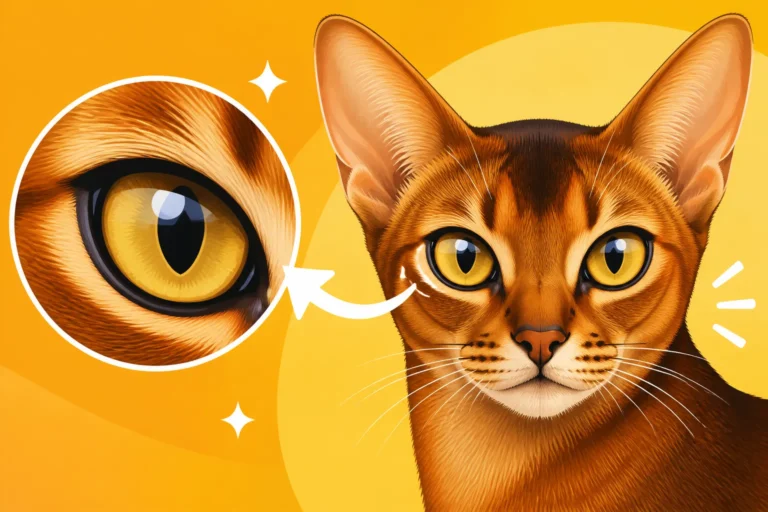
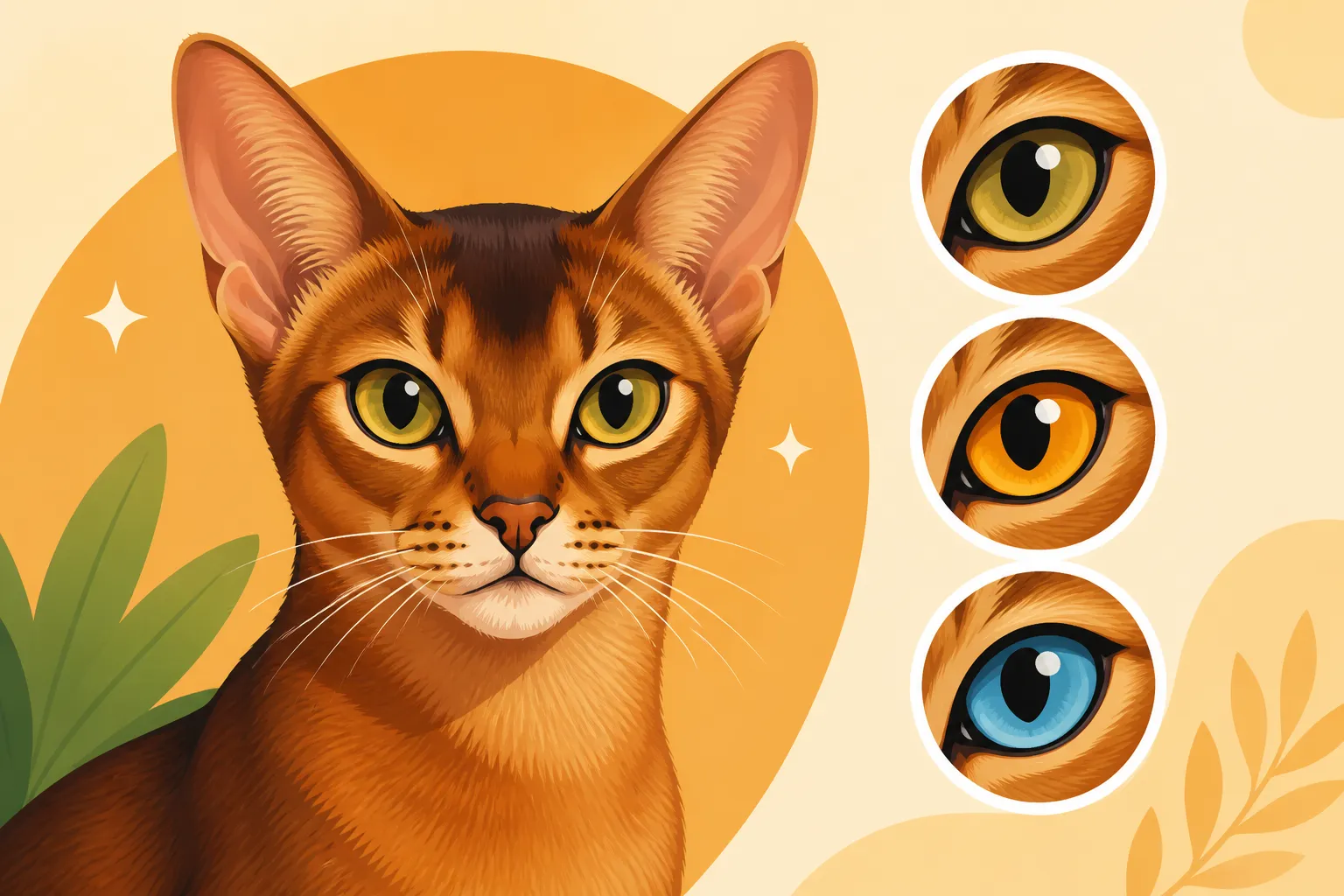
Abyssinian eyes are commonly described as gold, green, or hazel. Gold may look warm and yellow, while green can range from a softer shade to a richer, more vivid one. Hazel often sits between the two, blending green and golden-brown tones.
The exact appearance varies from cat to cat. One Abyssinian may have clear green eyes, while another has golden eyes that look amber in a sunny room. Hazel eyes can be especially hard to label because they may appear greener from one angle and more gold from another.
Some people describe an Abyssinian’s eyes as coppery or amber. Those words can be useful for describing what you see, but they are not always used as formal show-color categories. Breed standards and the terminology they use can differ, so a color that seems obvious at home may be described differently in a show context. For the broader picture of how appearance is assessed, see What an Abyssinian Show Standard Asks For.
| What the eyes look like | How owners often describe them | What to keep in mind |
|---|---|---|
| Yellow or warm golden tones | Gold or amber | Warm indoor lighting can make gold look more orange |
| Green tones | Green | The shade and intensity vary among individual cats |
| A mix of green and gold or brown | Hazel | The balance can look different in different light |
| A deeper orange-brown impression | Coppery or amber | These descriptions may not match a formal standard’s wording |
A color label is only a convenient description, not a health test or a measure of how well a cat fits the breed. If your Abyssinian’s eyes are clear, comfortable, and unchanged, a difference between “gold” and “amber” is usually a matter of how the color looks to you.
Lighting and the dark eye rim affect what you see
Abyssinians have a striking dark outline around the eyes. That contrast can make the iris seem brighter or more saturated, particularly in photographs. The outline is a normal feature of the breed, and it can make a golden eye look especially vivid against the face. Learn more in Why an Abyssinian's Eye Rim Is Outlined.
Lighting also plays a big role. Warm household bulbs can make green or hazel eyes look more golden, while cool daylight may bring out green tones. A camera’s automatic color correction can shift the appearance again. If you are comparing pictures, try to take them in similar natural light rather than judging a close-up taken under a bright lamp against one taken near a window.
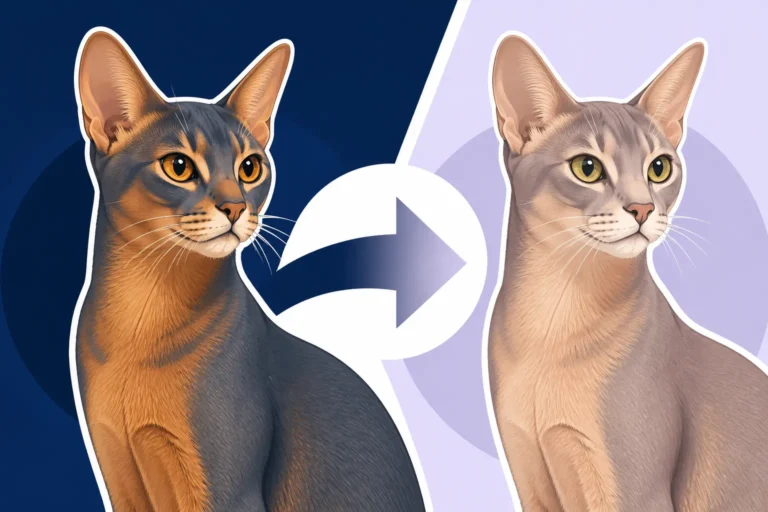
Coat color can influence the overall impression, too. An Abyssinian’s ticking and coat shade create a particular contrast with the eyes, but the coat does not determine whether the eyes must be green or gold. The recognized coat colors are a separate subject from eye color; Which Abyssinian Colors CFA Recognizes explains that distinction.
How Abyssinian kitten eye color develops
Blue eyes in a young kitten do not predict the adult color
Like many kittens, an Abyssinian may start life with blue-looking eyes. As the kitten grows, pigment develops in the iris and the eyes begin to shift toward their eventual color. The transition is gradual, so a young kitten’s early eye color usually does not tell you exactly what its adult eyes will look like.
Owners often notice the first visible change during the first few months. The eyes may move from blue to a cloudy gray-green or muted gold before becoming clearer and more distinct. It can feel as if the color changes overnight when you look at weekly photos, even though the process is generally gradual.
There is no need to keep checking the eyes every day. A photo every few weeks, taken in similar lighting, is a more helpful way to notice ordinary development. For a closer look at the timing, see When an Abyssinian Kitten's Eye Color Settles. Individual development varies, so a kitten’s breeder or veterinarian can help you interpret what you are seeing at a routine visit.
Adult color may take time to look settled
An Abyssinian’s eyes can continue to develop after the first hint of adult color appears. A kitten might look greenish at one age and more golden later, or its color may become more vivid as it matures. The final impression can take time to become consistent, and lighting will still make it seem different from day to day.
This can be frustrating if you are trying to identify a kitten’s adult appearance from a photo or compare it with a breed description. The safest approach is to treat early color as provisional. A breeder may be able to describe the parents’ eye colors, but that does not guarantee an exact match in the kitten.
Eye color is also only one small part of the overall appearance. If you are looking at a kitten’s registration details or color description, remember that coat-color terms and eye-color observations are not interchangeable. How an Abyssinian's Coat Color Is Registered covers how coat color is recorded.
What breed standards say about Abyssinian eyes
Standards describe preferred appearance, not every healthy cat
Abyssinian breed standards generally value clear, vivid eye color and the breed’s distinctive dark eye outline. Depending on the registry and the wording of its standard, gold and green are emphasized, and hazel may also be included. A show description is a guide to judging breed type; it does not mean every healthy Abyssinian will have an identical shade.
This distinction matters when a pet owner sees an eye color that is not the first one pictured online. A healthy cat may have a subtle or mixed-looking shade, and photographs can exaggerate differences. A pet’s eye color by itself does not establish its pedigree, quality, or health.
The eye outline and iris color are separate features. The dark rim can make the iris appear more strongly defined, but it does not mean the eye itself is unusually dark. Likewise, a change in how the coat looks in sun or indoor light does not necessarily mean the eyes have changed. When assessing a cat’s whole appearance, avoid relying on a single photo or one descriptive label.
Eye color is not a reliable way to identify coat color or ancestry
Abyssinians come in different coat colors, but you cannot reliably work backward from eye color to determine a cat’s coat color or family line. Two Abyssinians with similar coats may have different-looking eyes, and two cats with similar eyes may have quite different coats.
If you are considering a kitten, ask the breeder for the kitten’s registration and health information rather than treating eye color as proof of breed. A responsible breeder should be comfortable discussing the kitten’s background and answering questions about its appearance. Eye color can be a lovely detail, but it is not a substitute for documentation.
The same caution applies to online listings. Photos may be edited, taken under colored lighting, or captured when a kitten is too young for its adult eye color to be clear. If the color matters to you for show purposes, check the relevant registry’s written standard and ask an experienced breeder or judge how that standard is applied.
When an eye-color change needs attention
Normal variation is different from a sudden change
A kitten’s gradual shift from blue toward a more mature color is expected development. In an adult cat, however, a sudden or noticeable change in one eye should not be dismissed as a lighting trick—particularly if it persists when you view the cat in natural light. Changes in the surface of the eye or iris can have several causes, and only a veterinary exam can sort them out.
Pay attention to whether the change affects one eye or both and whether the eyes still look clear. If you are uncertain, take a photo in natural light and show it to your veterinarian. A photo can help document what you noticed, but it cannot replace an examination.
It is also worth distinguishing a change in perceived color from a change in comfort or appearance. An iris that seems greener in daylight is different from an eye that becomes cloudy, develops an unusual patch, or looks different in one eye than the other. If the change is new or concerning, contact a veterinarian rather than waiting for the next routine appointment.
Look for discomfort or discharge as well as color changes
Squinting, pawing at the face, redness, cloudiness, swelling, or unusual discharge can signal an eye problem. A cat may also keep one eye partly closed or seem bothered by bright light. Those signs deserve attention even if the iris color itself appears normal.
A small amount of dried material at the inner corner can happen, but persistent, thick, colored, or increasing discharge is different. If you are unsure what you are seeing, When an Abyssinian's Eye Discharge Means Something can help you think through the difference between an occasional bit of debris and a reason to call the clinic.
Avoid putting human eye drops, homemade rinses, or grooming products near the eye unless your veterinarian specifically recommends them. If a vet does advise an eye-care supply, ask what type is appropriate and how to use it. A retailer such as Chewy may be a place to compare a vet-approved item, but a product listing is not a diagnosis. If you order a recommended product through Chewy, check that it matches the veterinarian’s instructions rather than choosing based on a similar-sounding label.
For routine observation, you do not need special equipment. Notice whether both eyes look clear, whether your cat is blinking comfortably, and whether the color looks consistent under ordinary daylight. If something seems suddenly different, make a note of when you first noticed it and contact your vet. If the clinic recommends a particular supply, keep its packaging and instructions; when replacing it through Chewy, verify that it is the same type your vet approved.
Disclaimer
This article is for general informational purposes only and does not constitute professional advice. Laws, prices and regulations vary by location and change over time. Consult a qualified professional for guidance on your specific situation.