Why an Abyssinian Is Wrong for a Quiet Household
A quiet home can feel less peaceful once an energetic Abyssinian starts racing down the hallway, calling for attention, and climbing onto the highest shelf. This guide explains why the breed can be a poor fit for a low-activity household, what “busy” really looks like day to day, and how to tell whether your home can meet an Abyssinian’s needs without turning calm routines into a constant negotiation.
Why an Abyssinian Can Disrupt a Quiet Household
Quiet does not always mean calm to a cat
People often picture a quiet household as a comfortable place for a cat: fewer visitors, a gentle routine, and plenty of time to nap. For many cats, that can be a lovely match. An Abyssinian, however, is often looking for something more than a peaceful room. This alert, athletic breed tends to seek company, stimulation, and opportunities to explore. A home that feels restful to its people may feel uneventful to a cat who wants to investigate every cupboard and follow every movement.
That mismatch is easy to underestimate before bringing a kitten home. You may imagine a small companion snoozing beside your desk while you work. Instead, the kitten might climb onto the desk, paw at your pens, investigate your keyboard, and chirp whenever you stop interacting. These behaviors are not necessarily signs of bad manners. They can be ordinary expressions of curiosity and energy, particularly when the cat has not had enough play or mental engagement.
The breed’s reputation for busyness is a useful starting point, not a guarantee that every individual will behave identically. Age, temperament, health, routine, and the amount of enrichment at home all matter. Still, prospective owners should take the general pattern seriously. The Abyssinian Is the Busiest Cat in the House explains why a calm-looking cat may still need a lively daily routine.
Attention can look different from cuddling
An Abyssinian may want to be near you without settling quietly in your lap. Some follow their person from room to room, perch on a shoulder, or supervise household tasks from a counter. Others keep returning with a toy or making small chirps to invite a response. That constant involvement can be endearing if you enjoy an interactive companion, but tiring if your ideal cat is content to nap undisturbed nearby.
This difference matters in a household where everyone values quiet personal space. Someone reading on the sofa may find a cat repeatedly stepping across the pages. A person on a video call may have a curious face appear beside the screen. At night, the cat may be ready to play just as the household is winding down. The cat may be affectionate, but its affection can come with motion and requests for engagement.
It is also worth separating lap preference from social interest. An Abyssinian that rarely curls up on a lap may still be deeply attached to its people. If you are hoping for a companion who spends long stretches still and tucked against you, read Why an Abyssinian Will Not Sit on Your Lap before deciding whether this breed’s style of closeness suits you.
The Daily Activity an Abyssinian May Need
Play and mental work are part of the routine
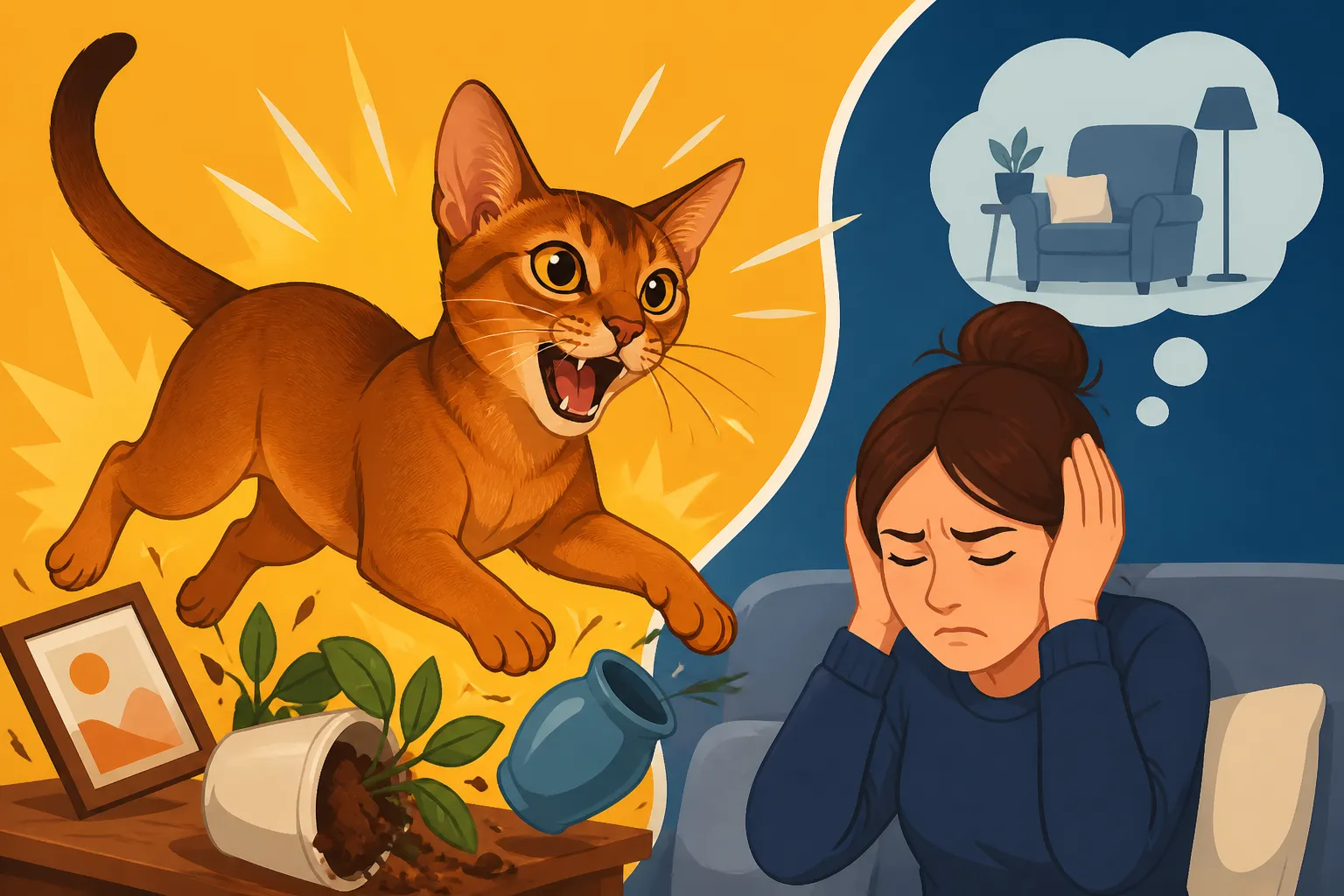
A high-energy cat needs more than a few toys scattered on the floor. Interactive play gives the cat a chance to chase, stalk, leap, and catch, while puzzle toys and food-search games give its mind something to solve. Without these outlets, an Abyssinian may invent its own activities: opening a cabinet, swatting objects off a shelf, or sprinting through the home when you would rather settle in for the evening.
A practical routine might include several short play sessions spread through the day rather than one brief session that has to carry the whole evening. A wand toy can encourage chasing, while rotating a few toys keeps familiar objects from becoming dull. A treat puzzle or a small food hunt can be useful when you need to concentrate. Stores such as Chewy carry a range of interactive toys and puzzle feeders, but the important part is choosing items that are safe, varied, and interesting to your particular cat.
Even a well-equipped home does not replace interaction. A cat may enjoy a puzzle feeder and still want you to play. If you work long hours, regularly travel, or prefer not to build play into your daily routine, the mismatch may become frustrating for both of you. Why an Abyssinian Should Not Be Left Alone All Day explores how long periods without company or activity can affect this breed.
Height and exploration matter as much as floor space
Abyssinians are often drawn to high vantage points. A quiet household with wide open floors but no climbing options may not feel as engaging as it looks to a person. Cat trees, stable shelves, and window perches can give an active cat places to climb, observe, and rest above the busy parts of the home. The route should be secure, with sturdy furniture and clear landing spots rather than a precarious chain of objects.
This is especially important in smaller homes. An apartment can work for an Abyssinian, but it needs to be arranged thoughtfully. A tall cat tree, safe window access, scratching posts, and regular play can make limited floor space more useful. The goal is not to fill every wall with equipment; it is to create a few dependable places where the cat can move and observe without turning fragile ornaments or kitchen counters into its personal playground. See Why an Abyssinian Needs Height More Than It Needs Floor and Whether an Apartment Suits an Abyssinian for more on making vertical space work.
Before adopting, walk through your home as if you were a curious cat. Are medications and cleaning products secured? Can the cat reach a balcony or open window? Are cords, breakable objects, and small items put away? If you are planning to add climbing shelves or a window perch, pet retailers such as Chewy may offer options, but check that any furniture is stable and appropriate for your space before setting it up.
| Household routine | Possible fit for an Abyssinian | What to consider |
|---|---|---|
| Quiet evenings with daily play and interaction | Often workable | Plan active play before the household settles down |
| Long workdays and little time at home | Often challenging | Consider how the cat will get company and enrichment |
| A home with space for climbing and window watching | More promising | Make routes stable and windows secure |
| A household that expects a silent, low-maintenance pet | Often a poor match | The cat’s curiosity and requests for attention may feel disruptive |
| A calm home with an engaged owner | Depends on the person | Quiet surroundings can work if the daily routine is stimulating |
When the Breed’s Energy Becomes a Poor Match
Look at your real routine, not your ideal one
It is tempting to plan around the person you hope to be after adopting: the owner who plays for an hour every night, builds a beautiful climbing wall, and never misses a feeding routine. A more reliable test is to look at an ordinary week. If you are tired after work, do you still have the patience to play? If you need uninterrupted calls or long periods of quiet, can you provide the cat with safe activities and company without expecting it to remain invisible?
Think about the household’s tolerance for noise and interruption, too. Abyssinians are not usually known as the most persistently loud breed, but individuals vary, and even a relatively quiet cat can make chirps, meows, and activity sounds. Running across hard floors, jumping onto furniture, or investigating a door can disturb a household that expects near-total stillness. A person who works nights, has sensory sensitivities, or needs a particularly calm environment should consider these practical details rather than relying on a breed description alone.
The breed may also be a poor fit if your household wants an independent cat that rarely seeks attention. That does not make the Abyssinian difficult or unsuitable as a pet in general. It simply means the cat’s normal needs may conflict with what the household finds enjoyable. Which Household an Abyssinian Fits Best can help you compare your expectations with the kind of home in which this breed is more likely to thrive.
Notice the signs that the mismatch is already happening
If an Abyssinian is already in your home, frequent mischief does not automatically mean you made the wrong choice. First, look for unmet needs and changes in routine. Is the cat getting interactive play? Does it have a place to climb and watch the world? Are meals predictable? Has a recent change—such as a move, a new pet, or a different work schedule—left it unsettled? A sudden behavior change, especially one paired with reduced appetite, withdrawal, or unusual restlessness, is worth discussing with a veterinarian rather than dismissing as boredom.
If the problem is mainly that the cat repeatedly seeks activity while you need quiet, make the environment more predictable. Try play before a demanding work block, offer a safe food puzzle, and rotate toys rather than leaving every toy out all the time. Keep fragile or dangerous items out of reach, and reward calm behavior when it happens. Chewy and other pet stores can be places to find puzzle feeders or play equipment, but no product can substitute for time, supervision, and a routine that suits the cat.
Do not punish normal exploration by yelling or chasing the cat. That can add stress without teaching a better activity. Instead, interrupt unsafe behavior calmly and redirect the cat to an appropriate alternative, such as a scratching post, toy, or climbing spot. If you are considering a second cat to provide companionship, remember that another animal is not a guaranteed solution. Introductions, temperament, space, and ongoing care all matter.
How to Decide Before Bringing an Abyssinian Home
Ask yourself what “quiet” means in your home
Some quiet households are simply low on visitors and household commotion. They may still have an owner who enjoys interactive play, welcomes a cat shadowing them from room to room, and can make space for climbing. That home may suit an Abyssinian well. Other households use “quiet” to mean minimal interruption, little activity, and a pet that can entertain itself for most of the day. That expectation is more likely to clash with this breed.
It can help to write down the daily routine you can realistically offer: when you are home, when you can play, where the cat can climb, and how it will be occupied during work or sleep. Be honest about constraints such as a small living space, frequent travel, a demanding schedule, or a housemate who dislikes animals on furniture. A thoughtful plan is more useful than assuming the cat will adapt to whatever routine is already in place.
For first-time cat owners, the question is not simply whether an Abyssinian is “too much.” It is whether you want a highly involved companion and are prepared to learn its communication and enrichment needs. Whether an Abyssinian Suits a First Time Cat Owner is a helpful next read if you are weighing breed experience against your willingness to adapt.
Make your decision based on fit, not appearance
The Abyssinian’s elegant, athletic appearance can be captivating, but appearance does not tell you how much interaction a cat may want. Spend time with adult cats if you can, speak candidly with a responsible breeder or rescue, and ask what the individual cat is like at home. Find out whether it is especially vocal, persistent about play, comfortable alone, or unusually active at night. The answers will not promise exactly how the cat will behave in your home, but they can give you a more realistic picture than a kitten’s charm alone.
If you know you want a cat that is content with long quiet stretches and minimal daily engagement, choosing a different individual or breed may be kinder to everyone. If you like an observant companion who follows your routines, asks for play, and makes the home feel animated, the Abyssinian’s energy may be a pleasure rather than a problem. The key is not to expect a lively cat to become a decorative, silent presence. Why an Abyssinian Is Called the Clown of Cats offers another glimpse of the breed’s playful, entertaining side.
Disclaimer
This article is for general informational purposes only and does not constitute professional advice. Laws, prices and regulations vary by location and change over time. Consult a qualified professional for guidance on your specific situation.