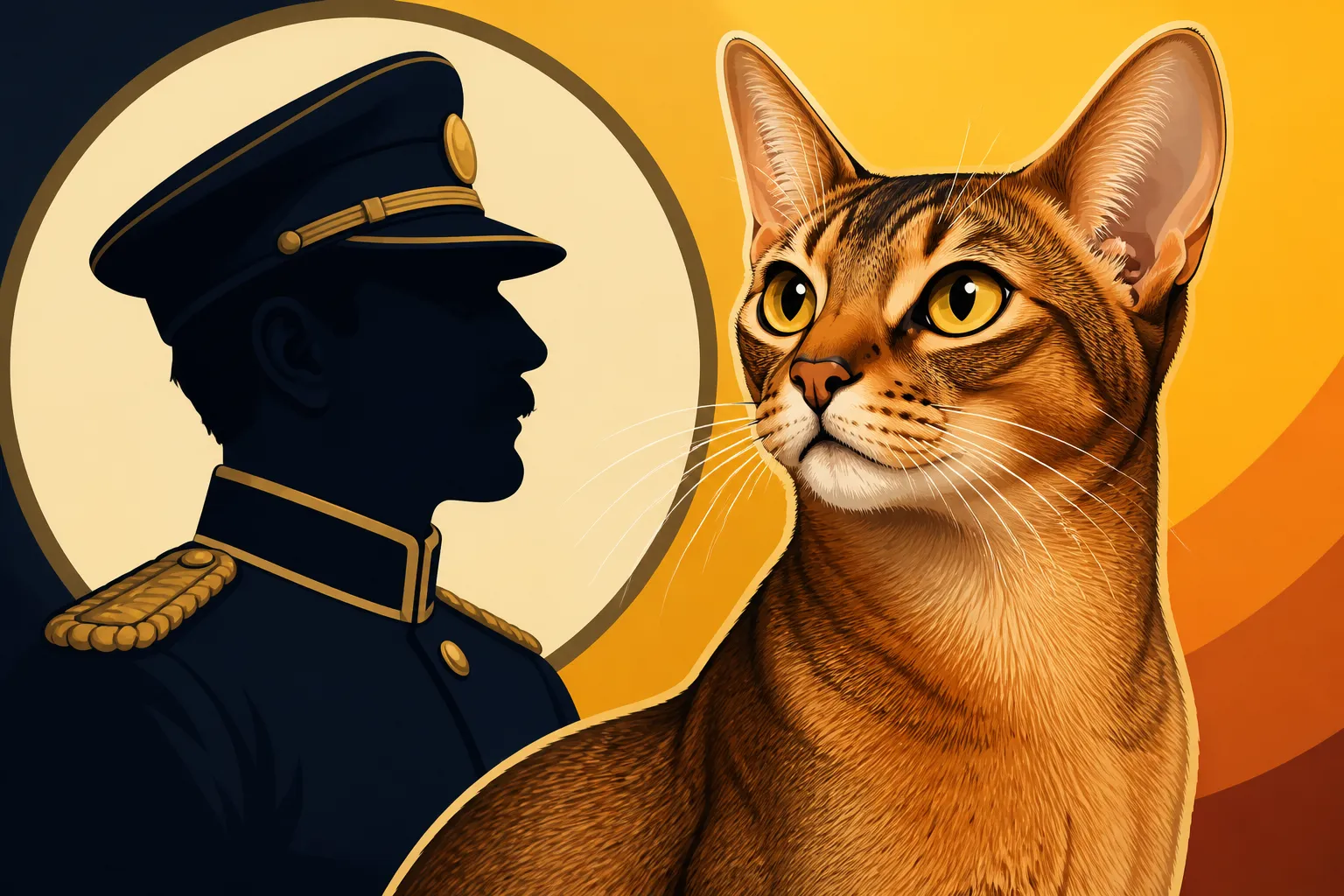
Who Lieutenant General Robert Napier Was
Many cat enthusiasts, especially those new to the enchanting Abyssinian, often stumble upon a captivating origin story involving a British military campaign and a feline named Zula. It’s a tale that has been passed down through generations, painting a vivid picture of the breed's possible ancient roots. But who exactly was Lieutenant General Robert Napier, the man at the heart of this enduring legend, and how did a powerful military figure become so intertwined with the history of our beloved Aby? This guide will dive deep into his life, the famous expedition, and the enduring mystery surrounding his connection to the Abyssinian cat.
The Man Behind the Legend: Lieutenant General Robert Napier's Life and Career
Before we even get to the cats, it’s important to understand the man himself. Lieutenant General Robert Napier, later elevated to Field Marshal Lord Napier of Magdala, was a truly formidable figure of the Victorian era. He was born in Ceylon (modern-day Sri Lanka) in 1810, into a military family, so perhaps a life of service was almost destined for him. His early life was marked by education at the Addiscombe Military Seminary, which was essentially a school for future officers of the East India Company's army. This wasn't just any military academy; it was a place that prepared young men for complex, often grueling campaigns in distant lands, fostering skills in engineering, strategy, and leadership.
Napier's career was long and distinguished, spanning several decades and continents. He joined the Bengal Engineers in 1826 and quickly made a name for himself, not just as a brave soldier, but as a brilliant military engineer. This wasn't always about grand battles; often, it was about logistics, building infrastructure, and navigating incredibly challenging terrain. He saw extensive service in British India, participating in the First and Second Sikh Wars, where he earned commendations for his bravery and strategic insight. Imagine the sheer grit and determination required to lead troops through those difficult conditions, making crucial decisions under immense pressure. He was involved in the relief of Lucknow during the Indian Mutiny in 1857, an event that deeply etched itself into British historical consciousness. These experiences forged him into a commander of exceptional capability and reputation.
By the time of the Abyssinian Campaign, Napier was a highly respected general, known for his meticulous planning, his ability to manage complex operations, and his genuine concern for the welfare of his troops. He wasn't just a desk general; he was a leader who understood the practicalities and perils of warfare in remote, unforgiving environments. His appointment to lead the expedition to Abyssinia wasn't just a matter of seniority; it was a clear recognition of his unique talents for a mission that many considered almost impossible. His career showcased a man of profound dedication to his duty and an impressive ability to execute ambitious plans against incredible odds.
Napier's Rise Through the Ranks
Napier’s ascent through the military hierarchy wasn’t just about being in the right place at the right time. It was a testament to his consistent performance, his engineering prowess, and his strategic acumen. In India, he oversaw massive public works projects, including irrigation systems and railways, demonstrating his ability to manage large-scale undertakings that required both technical expertise and administrative skill. This blend of engineering and military leadership was unusual and highly valued.
He was knighted in 1867, a significant recognition of his contributions to the British Empire before the Abyssinian Campaign even began. This honor underscored his already formidable standing. To put it simply, by the late 1860s, Sir Robert Napier was one of the most trusted and experienced military commanders in the entire British Empire. His leadership style was characterized by thorough preparation, attention to detail, and a commitment to achieving objectives with minimal loss of life, both for his own forces and, whenever possible, for the local populations. This was a man who didn't take shortcuts and understood the gravity of his responsibilities.
His Legacy Beyond the Abyssinian Story
While the Abyssinian cat legend often frames him through a very narrow lens, Napier's legacy extends far beyond that single, albeit famous, campaign. After his success in Abyssinia, he continued his illustrious career. He served as Commander-in-Chief in India and later as Governor of Gibraltar, a strategically vital post. His influence on military engineering and colonial administration was profound.
He retired as a Field Marshal, the highest rank in the British Army, and was created Baron Napier of Magdala, a title directly commemorating his victory in Abyssinia. His life story is one of consistent achievement, facing down logistical nightmares, and demonstrating remarkable leadership under pressure. To view him solely as the man who might have brought an Abyssinian cat to England is to miss the incredible scope of his accomplishments as a soldier, engineer, and administrator who left an indelible mark on the British Empire. He was a figure of immense historical importance, even without the charming feline folklore attached to his name.
The Abyssinian Campaign of 1868: A Historic Expedition
The Abyssinian Campaign of 1868 was one of the most audacious and remarkable military expeditions of the Victorian era. It wasn't just another colonial skirmish; it was a mission born out of a diplomatic crisis, demanding incredible logistical planning and execution. Understanding the context of this campaign is crucial to appreciating how a cat might have, or might not have, entered the narrative.
The Hostage Crisis and the Call to Arms
The entire campaign began because of a volatile situation in Abyssinia (modern-day Ethiopia). Emperor Tewodros II, a powerful and erratic ruler, had imprisoned a group of European missionaries and British diplomats in his mountain fortress of Magdala. He felt slighted by the British government, believing his letters had gone unanswered and his offers of alliance ignored. In his frustration, he took drastic measures, hoping to compel the British into action and gain attention on his own terms.
Diplomatic efforts to secure their release failed repeatedly, and the situation grew increasingly dire for the hostages. Eventually, the British government, under intense public pressure, decided that military intervention was the only way to save its citizens and uphold its prestige. This wasn't a decision taken lightly. Abyssinia was, and still is, a land of incredibly rugged terrain, towering mountains, deep ravines, and scorching plains. There were no roads, no supply lines, and no easy access. The prospect of mounting a military expedition there was daunting, to say the least. It was seen by many as an almost impossible feat of logistics and warfare.
Napier's Masterclass in Logistics
Enter Lieutenant General Robert Napier. He was chosen to lead this formidable undertaking, and his preparations were nothing short of brilliant. The expeditionary force, comprised primarily of Indian Army soldiers and British officers, was carefully assembled and equipped. Napier understood that success hinged not on brute force, but on meticulous planning and an unwavering focus on logistics.
He organized a massive infrastructure effort, building roads, bridges, and even telegraph lines as his army advanced. Supply depots were established along the route, ensuring that troops, animals, and equipment were constantly provisioned. Thousands of transport animals – elephants, camels, mules, and donkeys – were procured to carry everything from water and food to artillery pieces. This wasn't just marching an army; it was essentially building a temporary civilization capable of sustaining itself through an inhospitable landscape. Napier's foresight and engineering expertise were truly on display here. The planning was so comprehensive that many military historians still study it as a textbook example of logistical brilliance.
The campaign itself was a grueling march of over 400 miles through some of the most challenging terrain imaginable. Yet, Napier's forces pressed on, reaching the fortress of Magdala in April 1868. The ensuing battle was swift and decisive. The fortress was stormed, the Emperor Tewodros II took his own life rather than surrender, and the hostages were liberated. The mission was accomplished with remarkably few casualties on the British side, a testament to Napier's leadership and strategic approach. The army then promptly dismantled its temporary infrastructure and withdrew, leaving Abyssinia soon after.
The "Zula" Connection: Unpacking the Abyssinian Origin Story
Now, we arrive at the heart of the matter: the story of Zula, the alleged Abyssinian cat brought back from the campaign. It’s a compelling tale, but one that has been subject to considerable scrutiny over the years.
The Legend of Zula
The popular narrative states that one of the soldiers or officers involved in the Abyssinian Campaign brought back a cat named Zula, who was then exhibited at the Crystal Palace Cat Show in London in 1871. This Zula, with her striking ticked coat, was supposedly the progenitor, or at least a foundational ancestor, of the modern Abyssinian breed in England. The story is often romanticized, conjuring images of a regal cat from ancient lands, brought to the Western world by a heroic expedition. It gives the breed a sense of exotic mystery and ancient lineage, which is certainly appealing.
This legend is frequently cited in older breed histories and is still repeated in various circles today. It offers a tidy, dramatic origin for a breed whose appearance certainly evokes images of ancient Egyptian cats and desert origins. For many years, it was simply accepted as fact, forming the cornerstone of the breed's lore. The appeal of having such a direct and adventurous connection to a historical event is strong, making the Abyssinian feel even more special.
The Historical Discrepancy
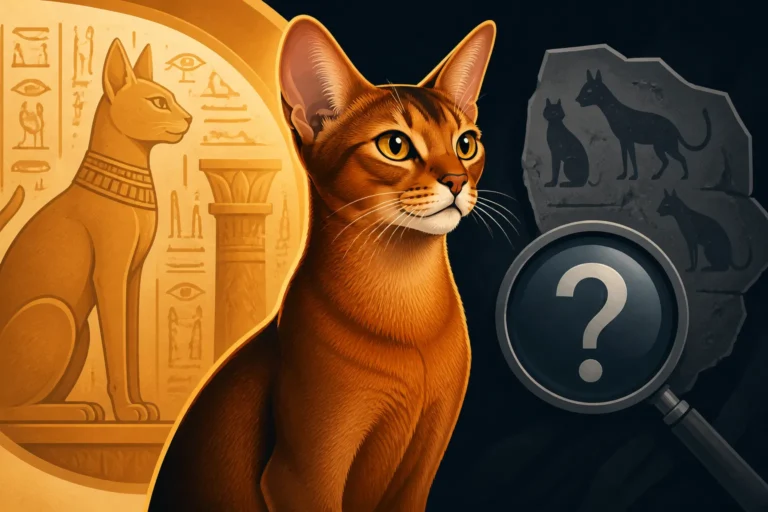
While the Zula story is enchanting, historical records reveal significant gaps and inconsistencies. While a cat named Zula was indeed exhibited at the Crystal Palace in 1871, and she was described as being an "Abyssinian cat," the connection to Napier's campaign is tenuous at best. There is no definitive proof, such as official military records or personal accounts from Napier himself, that explicitly links Zula or any specific cat to the returning troops. In fact, many of the original reports and accounts of the campaign make no mention of cats being brought back at all.
Moreover, the term "Abyssinian cat" in the 19th century was often used rather loosely to describe any cat with a ticked coat, regardless of its actual geographical origin. Ticked cats were seen in various parts of the world, including Britain, long before the 1868 campaign. The descriptive term might have been applied to Zula simply because she looked exotic and the recent Abyssinian Campaign was fresh in people's minds, creating an association, rather than reflecting a true origin. What the First Abyssinian Breed Standard Said might have focused on characteristics observed in various ticked cats, not just one imported specimen.
Why No Pedigree Connects Zula to Modern Abyssinians
Perhaps the biggest blow to the Zula legend is the lack of any traceable pedigree connecting her to the foundation stock of the modern Abyssinian breed. Early cat breeding records, though not as rigorous as dog pedigrees, did exist. Yet, when examining the lineage of the Abyssinians that truly established the breed in the late 19th and early 20th centuries, Zula's name simply doesn't appear in any official capacity. Why No Pedigree Connects Zula to Later Abyssinians is a critical point that undermines the entire romantic narrative.
The early Abyssinian gene pool was likely built from a combination of imported ticked cats from various parts of the world, often referred to as "British Ticked Cats," and crosses with domestic shorthairs and other breeds to establish desired traits. Genetic studies further complicate the Zula story, suggesting the breed's origins are more complex and likely rooted in Southeast Asia and the Indian Ocean coast, rather than directly from Abyssinia. What DNA Says About Where Abyssinians Came From shows that the truth is often more nuanced than a single, dramatic origin event. While the idea of a cat descending from ancient lands is compelling, the scientific and historical evidence points elsewhere.
Beyond the Myth: What Science and History Tell Us About Abyssinian Origins
While the legend of Zula and the Abyssinian Campaign is captivating, modern understanding, armed with historical rigor and genetic science, paints a more complex and fascinating picture of the breed's true origins. The Abyssinian Is Probably Not From Abyssinia, despite its name.
The Indian Ocean Coast Hypothesis
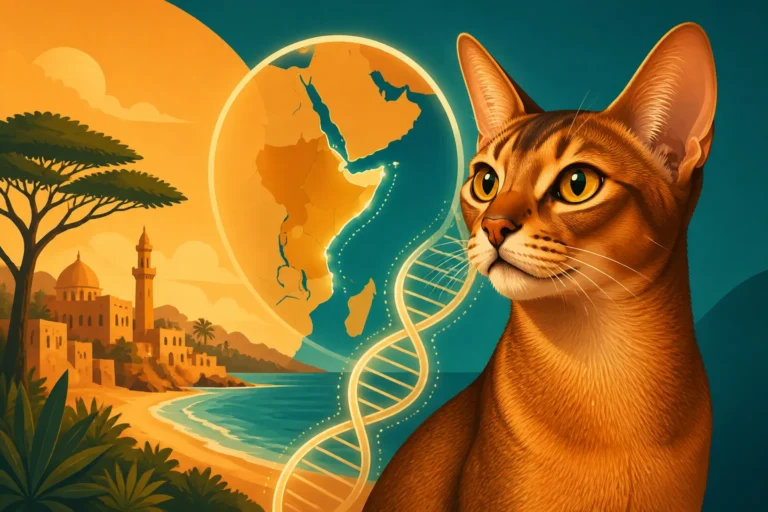
Contemporary genetic studies have largely discredited the direct Abyssinian origin story. Instead, DNA analysis points to the coastal regions of the Indian Ocean as the most likely ancestral home of the Abyssinian cat. This includes areas such as Sri Lanka (Ceylon), where Lieutenant General Robert Napier himself was born, and parts of Southeast Asia. It's believed that these ticked cats were spread through trade routes, brought by merchants and sailors as they traveled the globe. They were highly valued on ships for their mousing abilities, and their striking appearance made them popular companions wherever they landed.
This theory aligns with the broader understanding of cat domestication and dispersal, which indicates multiple centers of origin and widespread movement alongside human migration and trade. So, while an "Abyssinian-looking" cat might have existed in Abyssinia in 1868, it was likely part of a much larger, globally distributed population of ticked cats rather than a unique, indigenous variant solely from that region. The name itself, "Abyssinian," likely stuck due to the sensationalism and public interest surrounding Napier's campaign at the time, offering a ready-made, exotic label for these distinctive felines.
Early European Breeding Efforts
The development of the modern Abyssinian breed in Europe and later in North America was a gradual process, not a sudden emergence from a single imported cat. Early breeders, particularly in Britain, likely worked with various ticked cats, some perhaps imported from the Indian Ocean or other exotic locations, and others possibly local British cats already carrying the ticking gene. Why the Abyssinian Was Once Called the Ticked Cat reflects this broader genetic pool.
The breed standard evolved over time, emphasizing specific traits like the unique ticking pattern, the large expressive ears, and the lean, muscular body. What Harrison Weir Wrote About the Abyssinian provides valuable insights into the early characteristics that captivated enthusiasts. These pioneering breeders selectively bred cats to enhance and stabilize these characteristics, eventually creating the distinct and beloved Abyssinian we know today. It was a careful process of selection and refinement, often involving outcrossing to maintain genetic diversity and health in those crucial early years when the breed was still quite fragile.
The Enduring Appeal of the Myth
Despite the historical and genetic evidence, the Zula legend persists. Why? Because it’s a great story. It provides a romantic, heroic origin that resonates with people's desire for a deeper connection to history and the exotic. It taps into the ancient allure of cats, often associated with royalty and mystery, harking back to images of ancient Egyptian frescoes.
The name "Abyssinian" itself, though perhaps a misnomer, has a certain gravitas and intrigue. It sounds ancient, aristocratic, and distinct. It’s a testament to the power of a compelling narrative that even when confronted with scientific findings, some stories are just too good to let go of. Ultimately, whether Zula was directly connected to Napier or not, the Abyssinian cat has firmly established its place as one of the most intelligent, active, and beautiful breeds in the feline world. Its history, while perhaps not as neatly tied to a single military expedition as once thought, is rich with global travel, selective breeding, and enduring charm.
| Origin Story Aspect | Zula/Napier Legend | Modern Historical/Genetic Consensus |
|---|---|---|
| Primary Origin Location | Abyssinia (Ethiopia) | Indian Ocean Coast (SE Asia, Sri Lanka) |
| How Cats Arrived | Brought by British military | Via ancient trade routes, sailors |
| Specific Foundation Cat | Zula, exhibited 1871 | No single verifiable foundation cat; diverse origins |
| Historical Evidence | Anecdotal accounts, 1871 show listing | Genetic studies, broad historical records |
| Pedigree Link | No traceable links to modern lines | Breed built from diverse ticked cats, outcrosses |
| Term "Abyssinian" | Directly from campaign name | Descriptive term for ticked cats, popularized by campaign |
The Lasting Influence of the Napier Name
Even if the direct link between Lieutenant General Robert Napier and the first Abyssinian cat in England is more folklore than fact, his name remains an important part of the breed's story. It's a reminder of how significant historical events can capture public imagination and inadvertently shape the narrative of something seemingly unrelated, like a cat breed.
A Legacy of Exploration and Discovery
Napier's campaign symbolized a period of intense global exploration and the movement of goods, people, and, yes, animals across vast distances. In a world before easy travel and instant communication, bringing an animal back from a faraway land was a remarkable feat in itself. The very idea that such an exotic creature could accompany a military expedition speaks to the human fascination with the unknown and the desire to bring a piece of it home.
While we might now understand that the Abyssinian's journey to Europe was likely less dramatic and more diffused than a single returning general, the romance of the story persists. It reflects a time when the world was slowly becoming more interconnected, and when rare and unusual animals from distant lands held immense appeal. This general era of discovery and exchange is, in a broader sense, still very much a part of the Abyssinian's true history, even if the specific details are different. Why the Abyssinian Was Named After a Country It Is Not From explores this fascinating intersection of history and naming conventions.
The Power of a Good Story
The enduring nature of the Zula legend underscores the power of a good story. People love narratives that provide a sense of place, history, and adventure. For a breed as distinctive and energetic as the Abyssinian, an origin myth tied to an ancient land and a heroic military figure simply fits the perceived personality and appearance of the cat. It gives the breed a noble, almost regal backstory that resonates with many owners.
Even if we acknowledge the inaccuracies, the story serves as a conversation starter, drawing people into the breed's history and stimulating curiosity. It encourages deeper investigation, leading new enthusiasts to learn about the more scientifically supported origins and the dedicated work of early breeders. This fascination ensures that the Abyssinian's story, in all its forms, continues to be told and celebrated. So, while Lieutenant General Robert Napier might not have personally escorted Zula off a ship, his historical presence inadvertently gave the Abyssinian cat a memorable, if mythical, introduction to the Western world. It's a charming detail in the rich tapestry of [Breed Overview].
Disclaimer
This article is for general informational purposes only and does not constitute professional advice. Laws, prices and regulations vary by location and change over time. Consult a qualified professional for guidance on your specific situation.