Whether an Apartment Suits an Abyssinian
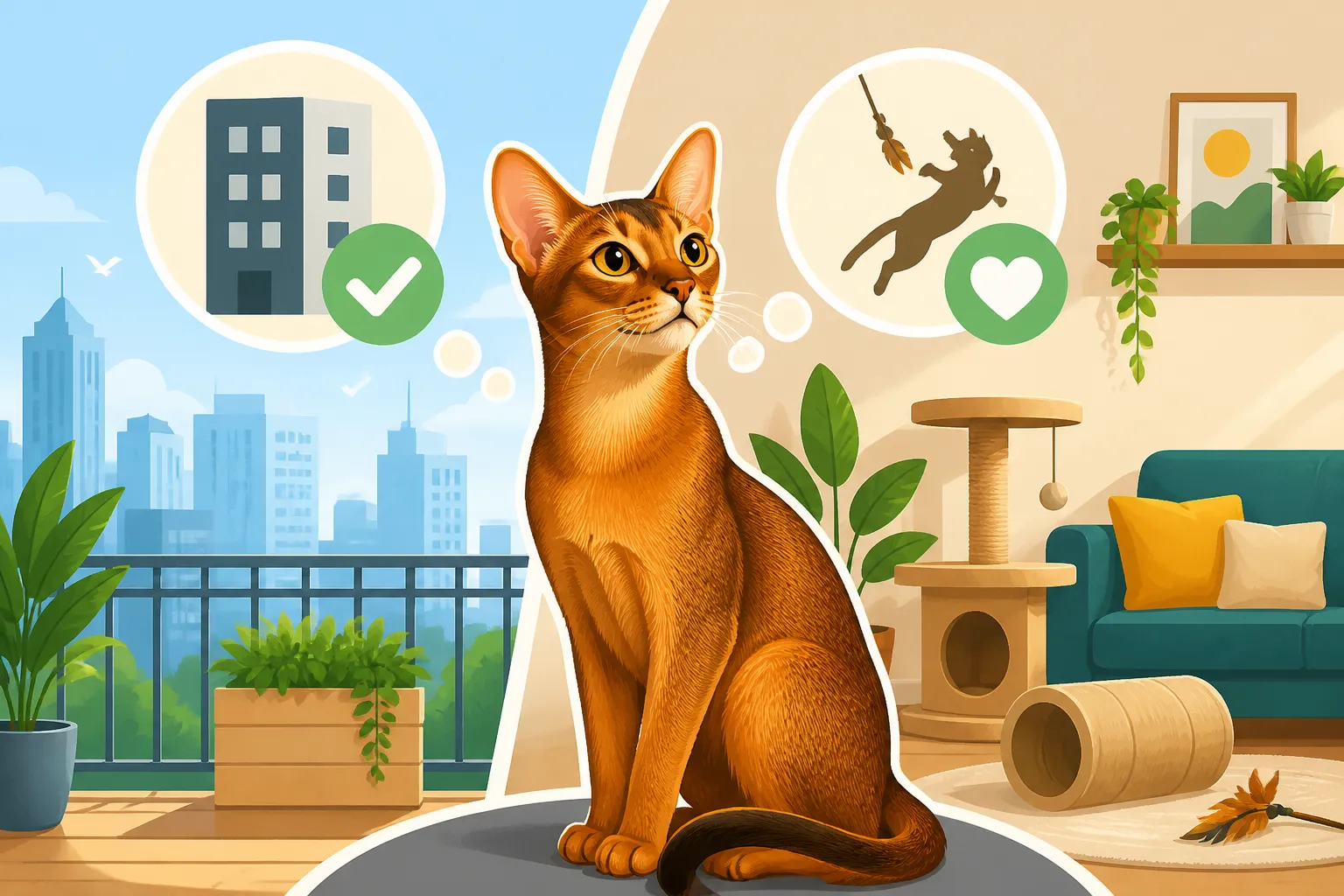
An apartment can suit an Abyssinian, but limited floor space is only part of the picture. This energetic, curious cat needs climbing opportunities, daily interaction, and ways to stay mentally busy. If you’re worried about noise, boredom, or a cat scaling every shelf, this guide explains how to judge your home and make it work safely.
Is an apartment a good fit for an Abyssinian
Floor space matters less than how the space is used
Abyssinians are athletic, active cats, but they do not need a large house simply for the sake of having more floor area. They often make better use of a small home when it offers several levels to explore, places to watch the world, and regular chances to play. A compact apartment with stable climbing furniture and an engaged owner can be a better fit than a spacious home where the cat has little to do.
Think about a typical one-bedroom apartment: the cat may have a perch near a window, a sturdy cat tree, a scratcher, and a few clear routes between favorite resting spots. That arrangement can provide more useful stimulation than a large, empty room. For ideas on building upward rather than filling every corner with furniture, see An Abyssinian Needs Height More Than It Needs Floor.
The real question is whether your home and routine can meet the breed’s needs. If you’re away most of the day and want a pet that will quietly sleep until you return, an Abyssinian may feel like a demanding choice. If you enjoy interactive play and can make room for climbing and companionship, apartment living can be entirely workable. Which Household an Abyssinian Fits Best can help you think through the broader lifestyle match.
Consider your noise, schedule, and neighbors
Abyssinians are often social and communicative. Many use chirps, trills, or meows to get attention, though individual cats vary. In an apartment, those sounds can feel more noticeable through shared walls, especially if a cat is bored, hungry, or frustrated by a closed door. It’s worth considering your building’s sound insulation and your tolerance for a cat who may want to be involved in whatever you’re doing.
Activity can be just as important as vocalizing. A cat racing down a hallway or jumping between furniture may create thumps that carry to a downstairs neighbor. Rugs or runners can soften noise on hard floors, while stable climbing furniture gives your cat a more predictable place to move around. Secure, well-positioned furniture also helps prevent the louder crash of a shelf or lamp being knocked over.
A quiet household that expects a cat to be content with minimal engagement may find this breed challenging, regardless of apartment size. For a closer look at the mismatch between a low-stimulation home and a high-energy cat, read Why an Abyssinian Is Wrong for a Quiet Household. If you work from home, your presence may help, but it does not replace play and enrichment; the cat may simply expect to participate in every meeting.
How to set up an apartment for an Abyssinian
Create a climbing route, not a single tall perch
A tall cat tree can be useful, but a route with more than one resting or climbing point usually gives a cat more options. You might place a tree near a window, add a sturdy shelf or two where appropriate, and provide a scratcher along the path. In a small apartment, the route can use existing furniture, provided each landing spot is stable and safe. The goal is not to make every wall a cat gym; it is to let your cat move around without needing to leap onto fragile or hazardous surfaces.
Before adding shelves, check that the wall and mounting hardware can support them securely. Avoid placing a landing point above a hot stovetop, beside an open flame, or where a fall could send the cat into glass or clutter. Keep the route away from places where a cat could become trapped behind appliances or furniture. How to Make an Abyssinian's Climbing Route Safe offers more detail on planning safe movement through the home.
If wall changes are not allowed in a rental, choose freestanding equipment with a broad, stable base and position it where it cannot tip. A narrow San Francisco apartment, for example, may have little spare floor area, but a corner tree and a cleared window ledge can still create a useful vertical zone. You can also rotate the cat’s toys and move a resting spot occasionally, rather than buying more equipment every time the cat loses interest. For layout ideas, see How Many Vertical Levels an Abyssinian Needs.
Make windows, balconies, and doorways secure
A window perch can provide hours of quiet observation, but only if the window is reliably secured. Do not assume a screen is strong enough to hold a climbing or startled cat. Check that screens fit tightly and have no loose corners or gaps; keep windows closed when you cannot be certain they are safe. A bird feeder outside may add visual interest, but it should not encourage the cat to push against an unsecured screen.
Balconies require particular caution. A railing is not a safe barrier for a cat that climbs, squeezes through gaps, or lunges after a bird. If you want to give your cat outdoor access, consider a properly enclosed, cat-safe space and supervise the arrangement. Otherwise, a window perch or indoor enrichment is safer than letting the cat roam outside.
Apartment doorways can be another escape risk. An Abyssinian may rush to investigate when someone enters or leaves, so develop a simple routine: keep the cat in another room during deliveries if needed, remind visitors to watch the door, and make sure identification and microchip details are current. The aim is not to keep the cat shut away all day; it is to prevent a curious dash into a hallway or stairwell.
Meeting an Abyssinian’s activity and social needs
Build play into the day
Abyssinians need more than a toy left on the floor. Interactive play gives them a chance to stalk, chase, leap, and finish a sequence with a small reward or meal. A wand toy can work well in a hallway or open section of the living room, while a lightweight toy can be tossed across a rug. Keep play sessions short enough that both of you can stay engaged, and vary the toy or movement when your cat loses interest.
A practical apartment routine might include a play session before breakfast, a puzzle or food-search activity while you work, and another interactive session in the evening. That rhythm can help channel energy into predictable outlets instead of midnight sprints or attention-seeking paw taps. For more ways to structure activity, see How Much Play an Abyssinian Needs Each Day.
Puzzle feeders and food games can make a small space more interesting without adding much furniture. Start with an easy activity so your cat understands what to do, then make it a little more challenging as the cat learns. Chewy is one place owners may browse for puzzle feeders and interactive toys, but choose based on your cat’s size, play style, and ability to use the item safely rather than on novelty alone. Supervise new toys at first, especially anything with strings, small detachable parts, or pieces that could be swallowed.
Think honestly about time alone and the only-cat question
An Abyssinian may follow you from room to room and want to be involved in everyday activities. That does not mean every cat needs another cat, but it does mean long, empty stretches can be difficult for some individuals. A second compatible pet may provide company, yet it is not a guaranteed fix: introductions take care, personalities matter, and two cats still need attention, space, and resources.
If your schedule means the cat will often be alone, consider how you will make those hours less monotonous. Set up a safe window view, rotate toys, provide a food puzzle, and keep climbing and scratching options available. A camera can help you see whether the cat settles or spends the day vocalizing and searching for activity, but it cannot replace interaction. Read Why an Abyssinian Left Alone Redecorates and Whether an Abyssinian Can Be an Only Cat when weighing the household fit.
Chewy may be useful for finding food puzzles or replacement toys, but purchasing more items is not a substitute for companionship and a reliable routine. If you are considering a second cat, plan for a gradual introduction and separate feeding and litter areas at first. If you are not, be prepared to make time for daily play and give your cat regular access to you and its environment.
A practical apartment setup and decision checklist
Match each household need to a clear solution
Before bringing an Abyssinian home, walk through your apartment from the cat’s perspective. Look for tempting but unsafe landing spots, dangling cords, open trash, toxic plants, and cabinets containing medication or cleaning supplies. Decide where the litter box, food, water, scratching surfaces, and resting areas will go. Keeping food and water away from the litter area can make the layout more comfortable, while more than one resting spot gives the cat a choice.
| Apartment concern | What to plan for | Why it helps |
|---|---|---|
| Limited floor space | Use stable vertical furniture and clear climbing routes | Adds movement and exploration without filling every walkway |
| Neighbor noise | Use rugs in active areas and secure climbing furniture | Softens landing sounds and reduces crashes |
| Long periods alone | Rotate safe toys, provide food puzzles, and schedule play | Offers variety, while still recognizing that enrichment is not a replacement for interaction |
| Windows and balconies | Secure openings and avoid relying on loose screens or railings | Reduces escape and fall risks |
| Rental restrictions | Choose freestanding equipment and check rules before installing shelves | Helps avoid damage or lease problems |
| High shelves and counters | Remove breakable or dangerous items and redirect climbing to safer places | Makes exploration less likely to cause injuries or household damage |
A small home can become cluttered quickly, so choose equipment that serves more than one purpose. A stable cat tree can provide a scratching surface, a perch, and a route between levels. A window seat can function as both a resting spot and a place to watch outdoor activity. Avoid squeezing furniture into narrow routes where the cat might collide with objects during a sudden burst of energy.
Chewy is one shopping option for comparing cat trees, scratchers, and enrichment supplies, but measure your available space and check product dimensions before ordering from any retailer. Pay attention to stability and materials, and consider whether the item can be returned or moved if it does not suit your apartment. A smaller number of well-chosen, secure items is often more useful than a room full of toys your cat ignores.
Decide based on the life you can offer
An apartment is more likely to suit an Abyssinian if you can provide daily interactive play, safe climbing opportunities, and a home where the cat is included in regular life. You do not need a large home or elaborate built-ins. You do need to be willing to cat-proof the space, protect windows and doors, and accept that a curious, energetic cat may investigate places you would prefer it didn’t.
It may be a poor match if your building is extremely noise-sensitive, your schedule leaves little room for interaction, or you expect the cat to stay off all furniture and entertain itself quietly. Some challenges can be managed with a thoughtful setup, but a mismatch in lifestyle is harder to solve by buying another toy or adding a cat tree.
Before deciding, ask yourself a few direct questions: Can I offer active play most days? Is there a safe place for climbing and looking outside? Can I secure windows and manage the front door? Am I prepared to redirect cupboard-opening, counter-jumping, or nighttime activity rather than expecting the cat to stop exploring? If your answers are mostly yes, an apartment can be a happy home for an Abyssinian. For the related question of work schedules, see Whether an Abyssinian Suits a Full Time Worker.
Disclaimer
This article is for general informational purposes only and does not constitute professional advice. Laws, prices and regulations vary by location and change over time. Consult a qualified professional for guidance on your specific situation.