Why an Abyssinian Bumps Furniture Before Anyone Notices
It’s truly disheartening when you start to notice little changes in your beloved Abyssinian, especially if they begin to bump into furniture or seem a little off-kilter in their usual graceful movements. These subtle shifts can be incredibly difficult to spot at first, often dismissed as playful clumsiness or just an off day, but they can sometimes be the quiet whispers of underlying health issues. This comprehensive guide is here to help you understand why your energetic Abyssinian might be experiencing these bumps, focusing on common causes like progressive retinal atrophy, and offering actionable advice on recognizing the signs and providing the best care for your feline friend.
The Abyssinian's Keen Senses and Early Warning Signs
Abyssinians are renowned for their incredible athleticism and boundless energy. They're often described as the "clowns of the cat world" because of their playful antics and gravity-defying leaps. This very agility, however, can paradoxically make it harder to detect when something is amiss, especially concerning their vision. What might seem like a minor misstep to us could actually be an early indicator that their world is beginning to dim.
Why Their Natural Agility Masks Early Changes
Think about it: an Abyssinian is a natural-born climber and explorer. They scale cat trees with ease, leap onto shelves, and navigate cluttered rooms with impressive precision. Their bodies are lean and muscular, built for speed and acrobatic feats. When a cat this agile starts to misjudge a jump or lightly brush against a familiar chair leg, it's easy for us, as their devoted human companions, to think, "Oh, they're just being silly," or "They were probably distracted." We might even chuckle at their apparent clumsiness, completely missing the more serious implications. This is particularly true in their younger, most vibrant years, where their sheer zest for life often overshadows any minor physical impairment. They’re so good at adapting, so brilliant at using their other senses – their superb hearing, sensitive whiskers, and keen sense of smell – that they can often compensate for quite a while before their vision loss becomes overtly obvious. They are masters of disguise when it comes to illness, and a lean Abyssinian can hide illness longer than a heavy cat, often to their detriment.
Subtle Behavioral Cues You Might Miss
The trick with Abyssinians, and really with many cats, is that they are masters of subtlety. They don't usually put on a grand show of their discomfort or impairment until it's quite advanced. Instead, you'll notice tiny, almost imperceptible changes in their routine or behavior. Perhaps your Abyssinian hesitates just a fraction of a second longer before launching themselves onto the kitchen counter, or they might take a slightly wider berth around a piece of furniture they once zipped past.
You might observe a shift in their play habits, too. A cat that once chased a laser pointer with fierce determination might now seem to lose interest more quickly, or perhaps they're not quite as enthusiastic about retrieving that favorite crinkle ball. This isn't necessarily boredom; it could be that they simply can't see the toy as clearly as they once did. They might also become more cautious in dimly lit rooms, choosing to stick to well-lit pathways or avoiding adventures in twilight hours altogether. Sometimes, you’ll just see them standing a little longer, their head tilted, as if trying to puzzle out what’s in front of them, even if it's been there for years. These are the quiet cues, the soft signals that, when pieced together, can paint a picture of a developing issue.
Understanding Progressive Retinal Atrophy (PRA-rdAc)
When we talk about vision loss in Abyssinians, one of the most significant concerns is Progressive Retinal Atrophy, specifically a form called PRA-rdAc. This isn't just a generic age-related decline; it's a specific genetic condition that has unfortunately been identified within the breed. Understanding it is crucial for any Abyssinian owner.
How PRA-rdAc Affects Abyssinian Vision
PRA-rdAc stands for Progressive Retinal Atrophy, rod-cone dystrophy, Abyssinian type. It's a nasty bit of science-speak that essentially means the photoreceptor cells in your cat's retina – the rods and cones responsible for detecting light and color – start to degenerate. This isn't a sudden event; it's a slow, insidious process.
Initially, it's the rod cells that are affected the most. These are the cells crucial for low-light vision. So, the first thing you'll likely notice, or rather, your cat will notice, is a decline in their ability to see in dim lighting or at night. This is precisely why an Abyssinian might start bumping into furniture before you even notice. They might navigate your well-lit living room just fine during the day, but once dusk falls or a lamp is turned off, their world becomes a lot more challenging.
As the condition progresses, the cone cells also begin to degenerate. These are responsible for day vision and color perception. Eventually, the vision loss becomes more complete, affecting their ability to see clearly even in bright light. This genetic condition is a significant reason How PRA-rdAc Blinds an Abyssinian Slowly, making early recognition and appropriate care paramount. Knowing Which Four Diseases the Abyssinian Actually Carries can help you be proactive in monitoring your pet's health.
The Gradual Onset That Fools Owners
One of the most frustrating aspects of PRA-rdAc is its gradual onset. It doesn't happen overnight. Instead, it unfolds over months, sometimes even years. This slow progression is a double-edged sword: it allows your Abyssinian to adapt, but it also makes it incredibly difficult for you to pinpoint exactly when the problem started.
Cats are incredibly resilient and adaptive creatures. As their vision slowly deteriorates, they instinctively begin to rely more heavily on their other senses. Their whiskers, which are incredibly sensitive to changes in airflow and proximity to objects, become their primary guides in familiar environments. Their hearing becomes more attuned to the sounds of their surroundings, and their sense of smell helps them identify familiar territories and pathways. This compensation is brilliant, but it effectively 'fools' us into thinking everything is normal.
You might only truly realize the extent of their vision loss when you rearrange furniture, move to a new home, or if they are placed in an unfamiliar environment like a vet's office or a cattery. Suddenly, their carefully constructed mental map of their world is disrupted, and their inability to see becomes glaringly obvious. This is often when owners become acutely aware that When an Abyssinian's Night Vision Goes First was just the beginning of a much larger issue.
Other Potential Reasons for Bumping Furniture
While PRA-rdAc is a significant concern for Abyssinians, it's not the only reason a cat might start bumping into furniture. As our feline friends age, or if they develop other health complications, their coordination and senses can be affected in various ways. It's important to consider the full picture.
Age-Related Vision Changes and Other Health Issues
Just like humans, cats can experience age-related vision decline even without a specific genetic condition like PRA-rdAc. As an Abyssinian reaches their senior years, their eyes might develop cataracts, making their vision cloudy, or they could suffer from glaucoma, which increases pressure within the eye and can lead to blindness if untreated. These conditions don't necessarily manifest as an immediate, complete loss of sight but rather a gradual dimming and blurring, making precise navigation difficult.
Beyond ocular issues, other systemic health problems can also impact a cat's coordination and spatial awareness. Conditions like hyperthyroidism, which is common in older cats, can sometimes lead to disorientation or a general sense of being "off." Neurological disorders, though less common, can also affect balance and motor control, causing your cat to misjudge distances or stumble. Even chronic pain from arthritis can make a cat hesitant to jump or move fluidly, leading to more cautious, sometimes clumsy, movements. These are all reasons why What an Old Abyssinian Slows Down From can be a complex question, and it's essential to consider all possibilities.
Environmental Factors and Stress
Sometimes, the reason for your Abyssinian bumping into things has less to do with their physical health and more to do with their surroundings or emotional state. Cats are creatures of habit, and Abyssinians, with their active and intelligent minds, are particularly attuned to their environment.
Have you recently moved furniture, brought in a new piece of décor, or even just re-arranged their favorite climbing shelves? Even a minor change can throw off their internal "map" of your home. While a fully sighted cat would quickly adapt, an Abyssinian with even mild, unnoticeable vision impairment might struggle more significantly with these changes, leading to unexpected bumps. This is why it's so important to be mindful of What Not to Move Around a Blind Abyssinian once you suspect vision loss.
Furthermore, stress can manifest in surprising ways in cats. A significant change in the household – a new pet, a new person, construction noise, or even a change in your daily routine – can make a cat feel anxious and disoriented. This stress can impact their focus and coordination, leading to more clumsy behavior. While it's not a direct cause of vision loss, it can certainly exacerbate any underlying issues or make a cat seem less 'present' and more prone to accidents.
When to Seek Veterinary Advice and How to Help
Noticing your Abyssinian bumping into things is a clear signal that it’s time to pay close attention and, if necessary, seek professional help. Early intervention can make a significant difference in managing underlying conditions and improving your cat’s quality of life.
Recognizing Definitive Signs of Vision Loss
While the subtle cues can be tricky to spot, there are more definitive signs that your Abyssinian is experiencing vision loss. Keep an eye out for these indicators:
- Dilated Pupils: In normal lighting conditions, a cat's pupils should adjust. If your Abyssinian's pupils appear constantly wide and dilated, even in moderately bright light, this can be a sign their retina isn't responding properly.
- Reluctance to Jump: Your once fearless climber might start hesitating before making leaps they used to execute effortlessly, or they might abandon climbing altogether. Why an Abyssinian That Stops Climbing Needs a Vet is a critical question, as it can be a sign of many issues, including vision loss.
- Missing Toys or Food: During playtime, they might swat at a toy and miss consistently. Or, they might struggle to find their food or water bowls if they've been moved even slightly.
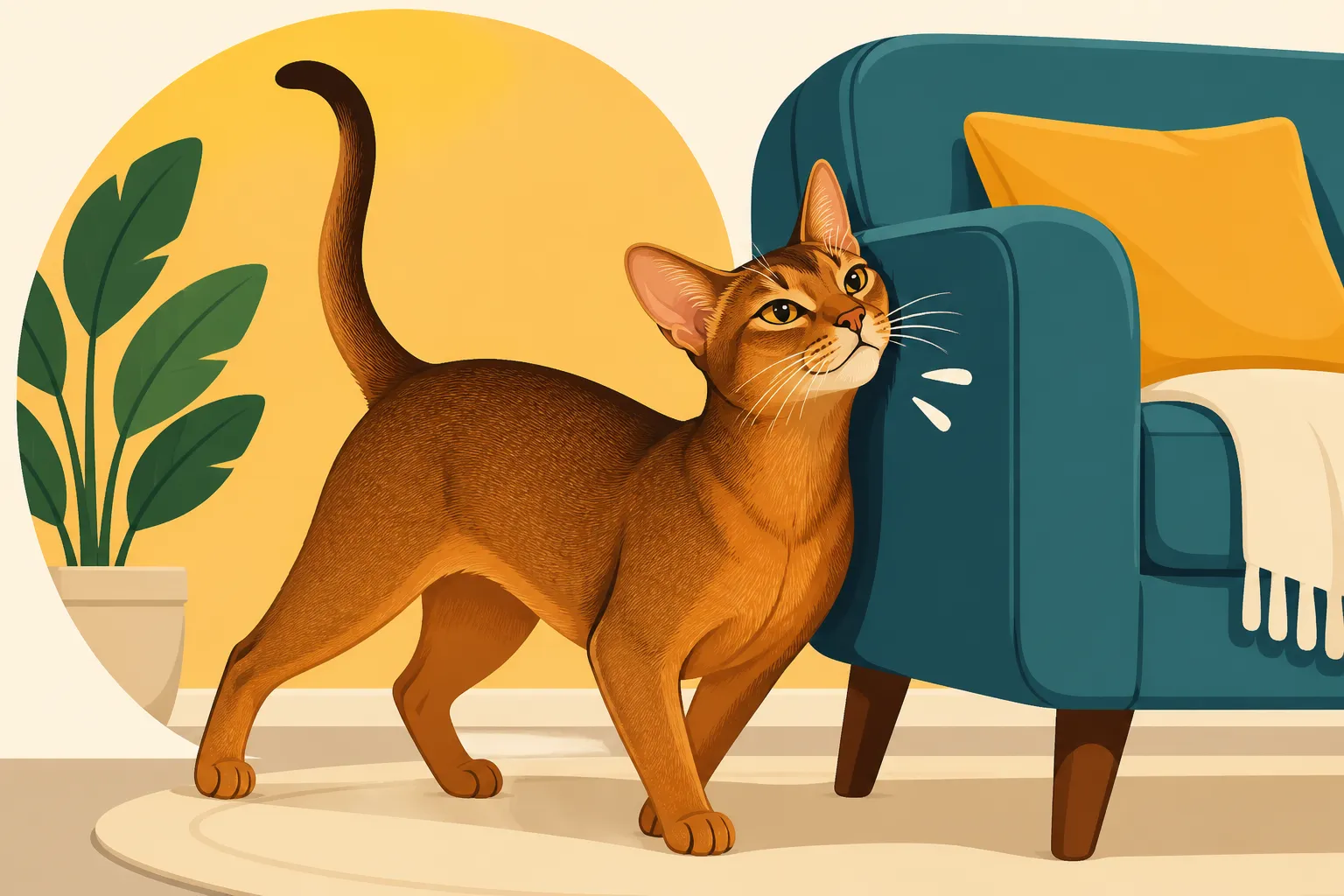
- Bumping into Familiar Objects: This is perhaps the most concerning sign. Bumping into new furniture is one thing, but repeatedly walking into a wall or a coffee table that has been in the same spot for years is a strong indicator of vision impairment.
- Changes in Eye Appearance: Look for cloudiness, redness, discharge, or any visible changes in the structure of their eyes. While PRA-rdAc doesn't cause visible changes to the eye itself, other conditions might.
If you observe any of these signs, especially a combination of them, it’s time to schedule a veterinary visit immediately. Your vet can perform a thorough eye examination and potentially refer you to a veterinary ophthalmologist for specialized testing. This is How a Vet Confirms Retinal Atrophy in an Abyssinian, often through tests like electroretinography (ERG), which measures the electrical responses of cells in the retina. Genetic testing, such as How the CEP290 Test Clears an Abyssinian, can also provide peace of mind or confirm a diagnosis for specific hereditary conditions.
Supporting Your Abyssinian Through Vision Impairment
If your Abyssinian is diagnosed with vision loss, whether due to PRA-rdAc or another condition, there are many ways you can help them maintain a good quality of life.
- Maintain Consistency: The golden rule for a vision-impaired cat is consistency. Avoid moving furniture, litter boxes, food, and water bowls. Their internal map is their lifeline.
- Create Safe Pathways: Ensure clear paths through your home. Block off any hazardous areas like stairs with pet gates, or at least ensure good lighting and consistent traction on steps.
- Use Vocal Cues: Talk to your Abyssinian frequently. Use their name and gentle, reassuring tones to let them know where you are and what you're doing. This helps them orient themselves.
- Enrichment: Don't stop playtime! Use toys that make noise, like crinkle balls or toys with bells, to engage their other senses. Puzzle feeders can still be a great source of mental stimulation.
- Safe Climbing: While Why a Blind Abyssinian Still Climbs is common, you might need to adjust their climbing routes. Add carpet runners to slippery surfaces, ensure soft landings below favorite perches, and consider reducing the height of some climbing opportunities.
- Indoor Life: For a vision-impaired Abyssinian, an indoor-only life is absolutely essential for their safety. Why a Blind Abyssinian Must Stay Indoors is not just a suggestion; it’s a necessity to protect them from dangers like traffic, predators, or getting lost.
- Regular Vet Check-ups: Ongoing veterinary care is crucial. Regular check-ups will help monitor the progression of any vision loss and address any other health concerns that may arise.
Managing a cat with a chronic health condition can be stressful, both emotionally and financially. This is where pet insurance, like a plan from Healthy Paws, can be an absolute lifesaver. It can help cover unexpected veterinary costs, diagnostic tests, and ongoing treatments, allowing you to focus on providing the best care without the added financial strain. Having a plan with Healthy Paws in place early on can make a world of difference.
Remember, your Abyssinian relies on you to be their eyes and their advocate. By understanding the potential issues, recognizing the signs, and being proactive in their care, you can ensure they continue to live a happy, enriched life, even if their vision isn't what it once was. Many Abyssinians who lose their sight adapt remarkably well to their new normal with the right support from their devoted families. How a Blind Abyssinian Maps a House is a testament to their incredible adaptability.
Here’s a quick overview of subtle versus more definitive signs of vision changes:
| Category | Subtle Signs (Early Stage) | Definitive Signs (Advanced Stage) |
|---|---|---|
| Movement | Slight hesitation before jumping or climbing | Bumping into familiar furniture or walls |
| Walking wider around objects | Stumbling or falling from low heights | |
| More cautious in dimly lit areas | Difficulty navigating in any light level | |
| Play Behavior | Less enthusiasm for chasing moving toys | Missing toys during play; difficulty locating dropped toys |
| Reduced interest in activities requiring keen eyesight | Unresponsive to visual cues, only reacting to sound or touch | |
| Eye Appearance | No visible changes to the eye itself | Pupils constantly dilated, even in bright light |
| Cloudiness, redness, discharge, or structural changes to the eye | ||
| Interaction | More reliant on sound or scent to locate you | Startled easily by unexpected touch |
| Appears "lost" or disoriented in new arrangements | Unable to find food/water bowls or litter box if moved slightly | |
| Overall | Minor behavioral shifts, often attributed to age or mood | Clear signs of disorientation, fear, or withdrawal |
Disclaimer
The information provided in this article is for educational purposes only and is not intended to be a substitute for professional veterinary advice, diagnosis, or treatment. Always seek the advice of your veterinarian or other qualified animal health provider with any questions you may have regarding a medical condition. Never disregard professional veterinary advice or delay in seeking it because of something you have read in this article.