What an Abyssinian Steals and Hides
If you share your home with an Abyssinian, you've probably experienced that moment of panic when a beloved earring vanishes, or perhaps a favorite pen disappears without a trace. These intelligent, energetic cats have a notorious habit of "borrowing" small household items, often tucking them away in secret stashes. This guide will delve into the fascinating reasons behind this unique Abyssinian behavior and offer practical strategies to manage your cat's inner kleptomaniac.
The Abyssinian's Natural Instincts at Play
It’s easy to feel frustrated when your Abyssinian makes off with your car keys, but understanding the root of this behavior can help. These cats aren't doing it to annoy you; they're simply following deeply ingrained instincts that have been refined over generations. Their playful, curious nature is a double-edged sword: endlessly entertaining, but also prone to turning your home into their personal hunting ground.
The Hunter's Drive and Prey Simulation
At its core, an Abyssinian's tendency to "steal" and hide objects is a manifestation of their strong predatory drive. Unlike some other breeds, Abyssinians are known for being incredibly active and intelligent, and their instincts are always running hot. In the wild, or even in a barn cat scenario, they would be constantly hunting small prey like mice, insects, and birds. When living indoors, with no actual prey to pursue, that powerful instinct doesn't just vanish. Instead, it gets redirected.
Think of those tiny, jingly toys you buy your cat, or even just a crumpled piece of paper. To your Abyssinian, these aren't merely inanimate objects; they are stand-ins for live prey. The act of "catching" a sock, carrying it off, and tucking it away mimics the entire hunting cycle: stalk, pounce, kill (playfully, of course), and then transport the prize back to a safe den. This behavior fulfills a crucial psychological need for them, making them feel like capable, successful hunters even when their biggest challenge is liberating a hair tie from your nightstand. It's all part of what makes The Abyssinian Is the Busiest Cat in the House.
Curiosity, Intelligence, and Problem-Solving
Abyssinians are renowned for their exceptional intelligence. They're not just beautiful; they're incredibly smart problem-solvers. This means they are constantly observing their environment, learning how things work, and figuring out how to manipulate them. A closed cabinet door isn't a barrier; it's a puzzle waiting to be solved. A sparkling earring isn't just an accessory; it's a fascinating, novel object begging for investigation.
Their intense curiosity drives them to explore every nook and cranny of your home, test the boundaries of what they can reach, and figure out the physics of how things move or fall. They’ll quickly learn that certain objects can be batted around, carried, or even nudged into hiding spots. This isn't just random mischief; it's a genuine intellectual exercise for them. They're learning about their world, and sometimes that world includes your pen collection. Their ability to strategize and execute these "heists" is a testament to their sharp minds, even if it leaves you wondering where your keys went.
Why Small Objects Become "Prey"
It's not just any object that catches an Abyssinian's eye. There’s usually a method to their madness, a set of characteristics that make certain items irresistible targets for their playful pilfering. Understanding what makes these objects so appealing can help you manage the behavior and keep your valuables safe.
The Thrill of the Chase and Capture
For an Abyssinian, the act of "stealing" an object isn't just about owning it; it's about the entire process. The glint of a piece of jewelry, the way a rubber band snaps, or the quiet rustle of paper can trigger their primal hunting instincts. They often prefer items that are small enough to bat around, carry in their mouths, or send skittering across the floor. This provides the "chase" element, simulating the unpredictable movement of real prey.
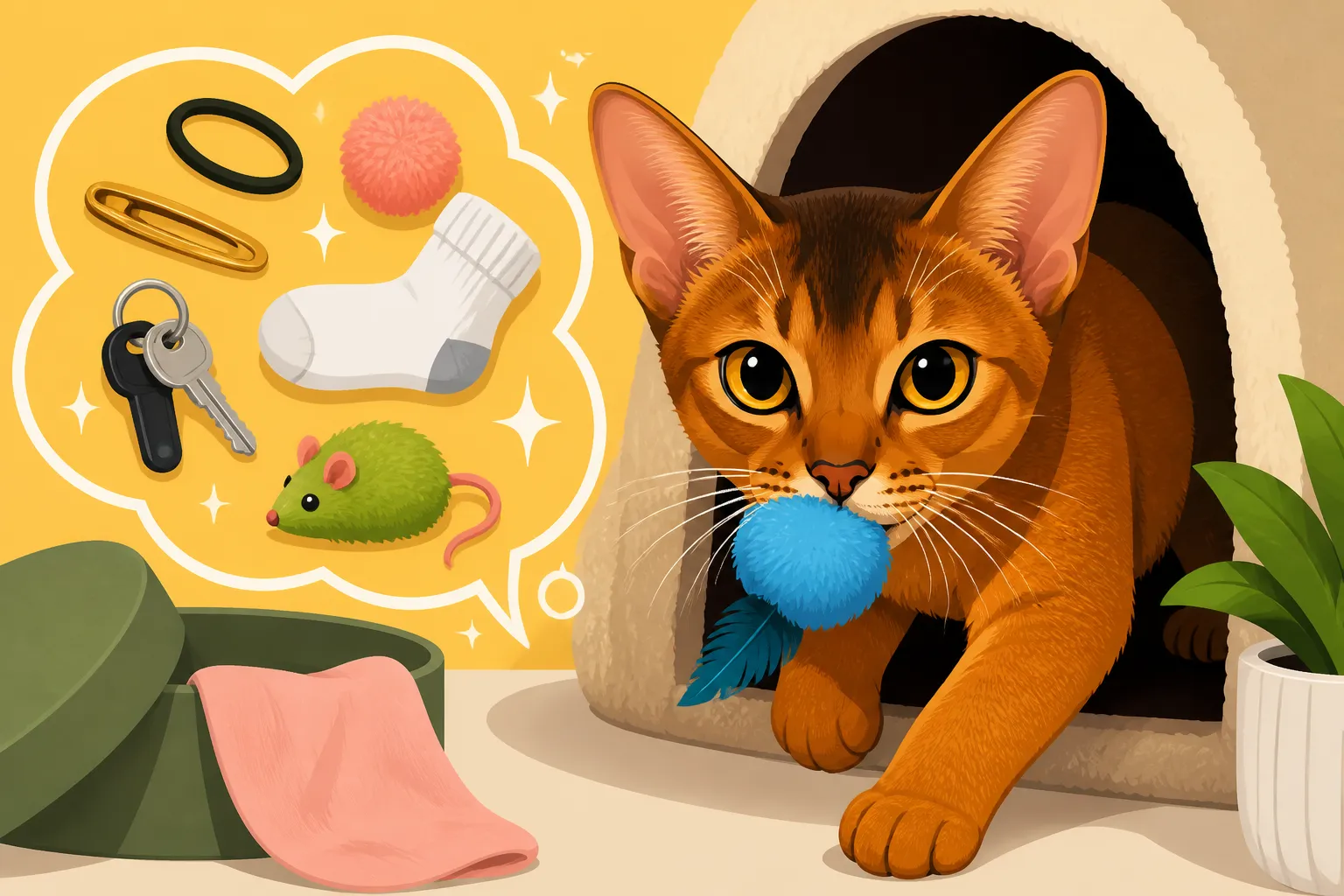
Once they've "caught" their prize, they get immense satisfaction from carrying it off. You might see your Abyssinian trotting proudly with a sock dangling from its mouth, or perhaps a hair tie clutched firmly as they dart under the sofa. This isn't just about possession; it's the culmination of the hunt, reinforcing their natural behaviors. It’s their way of experiencing the thrill of a successful catch, even if that catch is just your missing chapstick.
Irresistible Textures and Sounds
Abyssinians are very tactile and auditory creatures. Their senses are incredibly keen, and certain textures and sounds are simply irresistible to them. Objects that are lightweight, crinkly, jingly, or made of a material that feels interesting in their mouth become instant targets. Think about it: a piece of tin foil crinkles delightfully, a plastic pen clatters satisfyingly when dropped, and a hair tie offers a unique chew and stretch.
These sensory experiences are highly stimulating. The feel of soft fabric, the sharp sound of plastic hitting the floor, or the springy resistance of an elastic band can all act as powerful attractants. They explore these items with their paws and mouths, engaging multiple senses. It's a form of sensory enrichment that helps keep their active minds occupied, but it also means that your knitting needles or loose change are probably not safe if left unattended. This sensory engagement is a huge part of what drives their interest in various household items, turning mundane objects into exciting playthings.
The Art of the Cache: Where Abyssinians Hide Their Treasures
So, your Abyssinian has successfully "acquired" an item. What happens next? Unlike a dog that might bring you a stolen shoe, an Abyssinian often has a more secretive agenda. They're not just collecting; they're creating hidden stashes, little treasure troves that speak to their deep-seated instincts.
Common Hiding Spots Around the House
Abyssinians are masters of discretion when it comes to stashing their loot. They favor secluded, often elevated, spots where they feel safe and undisturbed. You might find a collection of odd socks, bottle caps, or even small toys under the couch cushions, inside a shoe, or tucked away in a rarely-used basket. Their preference for climbing means they also love to hide things in higher places, like the back of a bookshelf, on top of a wardrobe, or even nestled amongst clothes in a drawer that they’ve learned to open. Why an Abyssinian Opens Doors and Cabinets explains how they master those skills.
Sometimes, their hiding spots are surprisingly intricate. They might push an item under a rug, behind a curtain, or even into a potted plant. These spots aren't always logical to us, but to an Abyssinian, they represent a secure place where their "prey" can be kept safe from rivals (other pets, or even you!) or revisited for future play sessions. If you're missing something small, starting your search in dark, cozy, and elevated nooks is usually a good bet. Just be prepared to discover a whole collection of forgotten trinkets you didn't even know were gone.
The Secret Stash: Why They Don't Always Retrieve
One of the most perplexing aspects of an Abyssinian's hiding habit is that they often don't seem to revisit their stashes or even remember where they put things. You might stumble upon a pile of forgotten treasures months later. This behavior can be confusing for owners, but it ties back to their predatory instincts. In the wild, a successful hunt isn't always followed by immediate consumption. Sometimes, prey is cached for later, especially if the hunter has a surplus or wants to keep it safe from scavengers.
For an Abyssinian, the satisfaction often comes from the hunt and the capture itself, and the subsequent act of hiding is the final step in that instinctual cycle. Once hidden, the immediate need is met, and their attention moves on to the next fascinating object or activity. It's not about building a permanent collection for display; it's about fulfilling the drive to hunt and secure. The object becomes a trophy, and its mere existence in a secret spot is enough. This is why you rarely see an Abyssinian proudly bringing you a stolen item. They're not looking for your approval of their hunting prowess; they're just following their own internal compass.
Managing the "Thieving" Behavior
While your Abyssinian's penchant for stealing and hiding can be endearing, it can also be genuinely frustrating and, at times, even dangerous (for them or your items). The good news is that with a little foresight and consistent effort, you can redirect this natural behavior into more appropriate channels. It's all about understanding their needs and structuring their environment to meet them.
Prevention: Securing Valuables and Temptations
The first line of defense against an Abyssinian's thieving tendencies is prevention. This means actively cat-proofing your home in a way that minimizes opportunities for them to get into mischief. Think like an Abyssinian: what small, shiny, or interesting items are within paw's reach? Jewelry, hair ties, pens, bottle caps, small toys, and even medication (which is crucial to keep secured) are prime targets.
Consider storing tempting items in drawers or containers with childproof latches, especially if your Abyssinian has already mastered opening cabinet doors. How to Secure a Cupboard Against an Abyssinian offers some excellent tips for this. Clear off countertops and nightstands, or use decorative boxes to contain smaller objects. For items that absolutely cannot be lost, like important documents or keys, consider keeping them in a designated, closed space where your cat simply cannot access them. While you can't eliminate every single temptation, making a conscious effort to secure the most common targets will drastically reduce the number of "missing item" mysteries in your home.
Redirection: Offering Appropriate Outlets
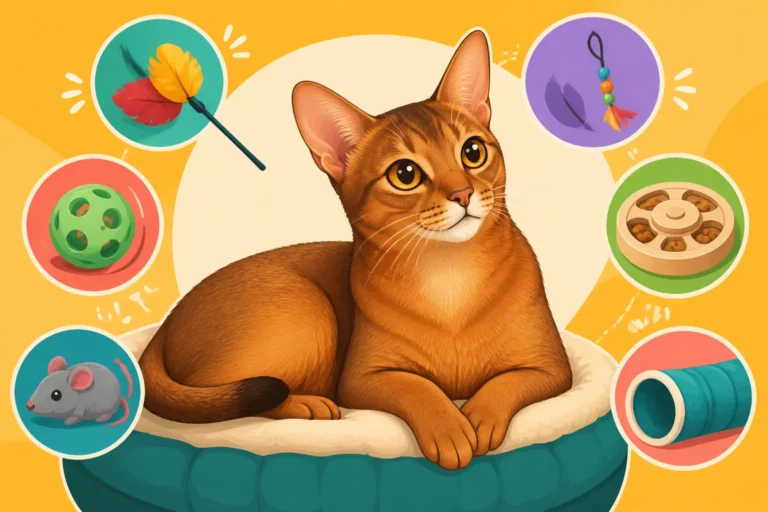
Since the desire to hunt, play, and carry objects is deeply ingrained in Abyssinians, simply trying to stop the behavior without providing alternatives will likely lead to frustration for both of you. The key is redirection: give them approved "prey" to chase and hide. Invest in a variety of small, lightweight cat toys that mimic the items they tend to steal. Think crinkly balls, soft plush mice, and sturdy plastic springs.
These toys should be engaging enough to hold their attention. Consider rotating their toy selection regularly to keep things fresh and exciting, as Why an Abyssinian Loses Interest in a Toy Fast explains. Interactive play with wand toys is also crucial, as it allows them to satisfy their hunting instincts under your guidance. When you see your Abyssinian eyeing your pen, immediately offer them an appropriate toy instead. Praise them enthusiastically when they play with the designated toy, reinforcing that this is the desired behavior. By offering appealing alternatives, you can gently guide their instincts away from your belongings and towards their own designated playthings.
The Role of Enrichment and Play in Preventing Object Theft
A bored Abyssinian is a destructive Abyssinian, and this often manifests as stealing and hiding objects. These highly active and intelligent cats need constant mental and physical stimulation to thrive. If they're not getting enough appropriate outlets for their energy and curiosity, they will find their own entertainment, often at your expense.
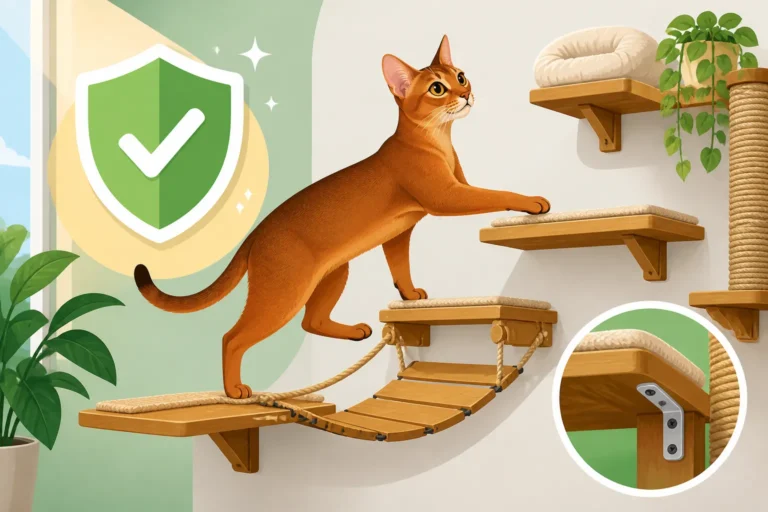
Regular, intense play sessions are paramount. Aim for several short bursts of interactive play throughout the day, totaling at least 30-60 minutes. Use wand toys, laser pointers, and other engaging items that encourage chasing, pouncing, and "killing." How Much Play an Abyssinian Needs Each Day emphasizes the importance of consistent activity. Beyond structured play, environmental enrichment is vital. This includes providing plenty of vertical space like cat trees and wall shelves for climbing and exploration. Puzzle feeders, such as those found on Amazon, are also excellent for engaging their problem-solving skills and turning mealtime into a mental exercise. These can be particularly effective in preventing boredom-driven object theft. For instance, How to Make a Puzzle Feeder Harder for an Abyssinian gives specific tactics to keep them engaged. By keeping your Abyssinian's mind and body active with enriching activities, you'll find they have less need to "redecorate" your home with your belongings.
When "Stealing" Becomes a Problem
Most Abyssinian owners will experience their cat making off with a hair tie or sock occasionally, and it's often more amusing than problematic. However, there are times when this behavior can escalate or indicate an underlying issue that needs attention. It's important to know the difference and understand when to seek further advice.
Distinguishing Play from Compulsive Behavior
For the most part, an Abyssinian's habit of stealing and hiding is a normal, albeit sometimes inconvenient, expression of their playful and predatory nature. It's typically sporadic, involves a variety of objects, and is usually accompanied by other signs of happiness and engagement, like a lively gait or chirping. They might even try to engage you in a game of fetch with their "treasure" (though this is more common with certain individual cats than others).
However, if the stealing and hiding become obsessive, relentless, or start to interfere with your cat's normal routine, it might be crossing into compulsive behavior. This could look like your cat only focusing on one type of object, becoming distressed if they can't access certain items, or spending an inordinate amount of time seeking and stashing. If you notice a sudden, significant increase in this behavior, or if your Abyssinian seems unusually anxious or stressed around their "collection," it's worth a closer look. While rare, compulsive behaviors can sometimes be a sign of anxiety or a lack of adequate stimulation, and in these cases, consulting with a veterinary behaviorist might be beneficial.
Signs Your Abyssinian Might Be Stressed or Bored
If your Abyssinian's object obsession seems to intensify, or if they're displaying other unusual behaviors alongside it, it could be a cry for help. A stressed or bored Abyssinian will often find ways to self-soothe or generate stimulation, and excessive stealing and hiding could be one manifestation. Look for other clues in their behavior. Are they also overgrooming, leading to bald patches? Are they vocalizing more than usual, perhaps with anxious meows rather than their typical chirps? Are they showing signs of aggression, or withdrawing from interaction?
A sudden change in their normal routine, a new pet or person in the house, or even a subtle shift in their environment can trigger stress in sensitive Abyssinians. If they're bored, they might also start engaging in other destructive behaviors, such as chewing on inappropriate items (like electrical cords, which need to be managed safely—see How to Cable Manage a Room for an Abyssinian) or scratching furniture excessively. It's important to remember that Why an Abyssinian Hides Pain Behind Its Energy; a cat that suddenly changes its habits might be trying to tell you something. Always rule out medical issues with a vet visit first, and then evaluate their environment for opportunities to increase enrichment, play, and stability. Addressing the root cause of stress or boredom is key to bringing their stealing habits back into a manageable, playful range.
Here's a quick look at common items Abyssinians "acquire" and what you can do about it:
| Stolen Item Category | Why Abyssinians Love Them | Recommended Solution & Prevention |
|---|---|---|
| Hair Ties/Rubber Bands | Springy, chewy, easy to carry, mimic thin prey. | Store in a closed container. Offer robust cat springs or dense rubber toys (e.g., from Amazon). |
| Socks/Underwear | Soft, fabric-y, easy to grab, often scented. | Keep laundry hampers closed. Provide soft, plush catnip toys. |
| Pens/Pencils | Roll easily, hard plastic, sometimes chewable. | Store in drawers. Offer hard plastic rolling toys or interactive treat dispensers. |
| Small Toys (child/pet) | Readily available, designed for play, varied textures. | Keep out of reach. Provide designated cat toys; rotate to maintain interest. |
| Jewelry/Shiny Objects | Glimmer, jingle, visually stimulating. | Store in jewelry boxes/drawers. Offer crinkly balls or shiny Mylar toys. |
| Bottle Caps/Straws | Lightweight, make noise, easy to bat around. | Recycle promptly. Use secure bins. Offer crinkle balls or plastic rings. |
At the end of the day, living with an Abyssinian means embracing their unique personality, and that often includes their playful habit of collecting treasures. By understanding their instincts, providing ample mental and physical enrichment, and taking sensible precautions, you can minimize the frustration and maximize the joy of sharing your home with these incredible, intelligent cats. They truly do keep life interesting!
Disclaimer
This article is for general informational purposes only and does not constitute professional advice. Laws, prices and regulations vary by location and change over time. Consult a qualified professional for guidance on your specific situation.