Why an Abyssinian Races Through the House at Night
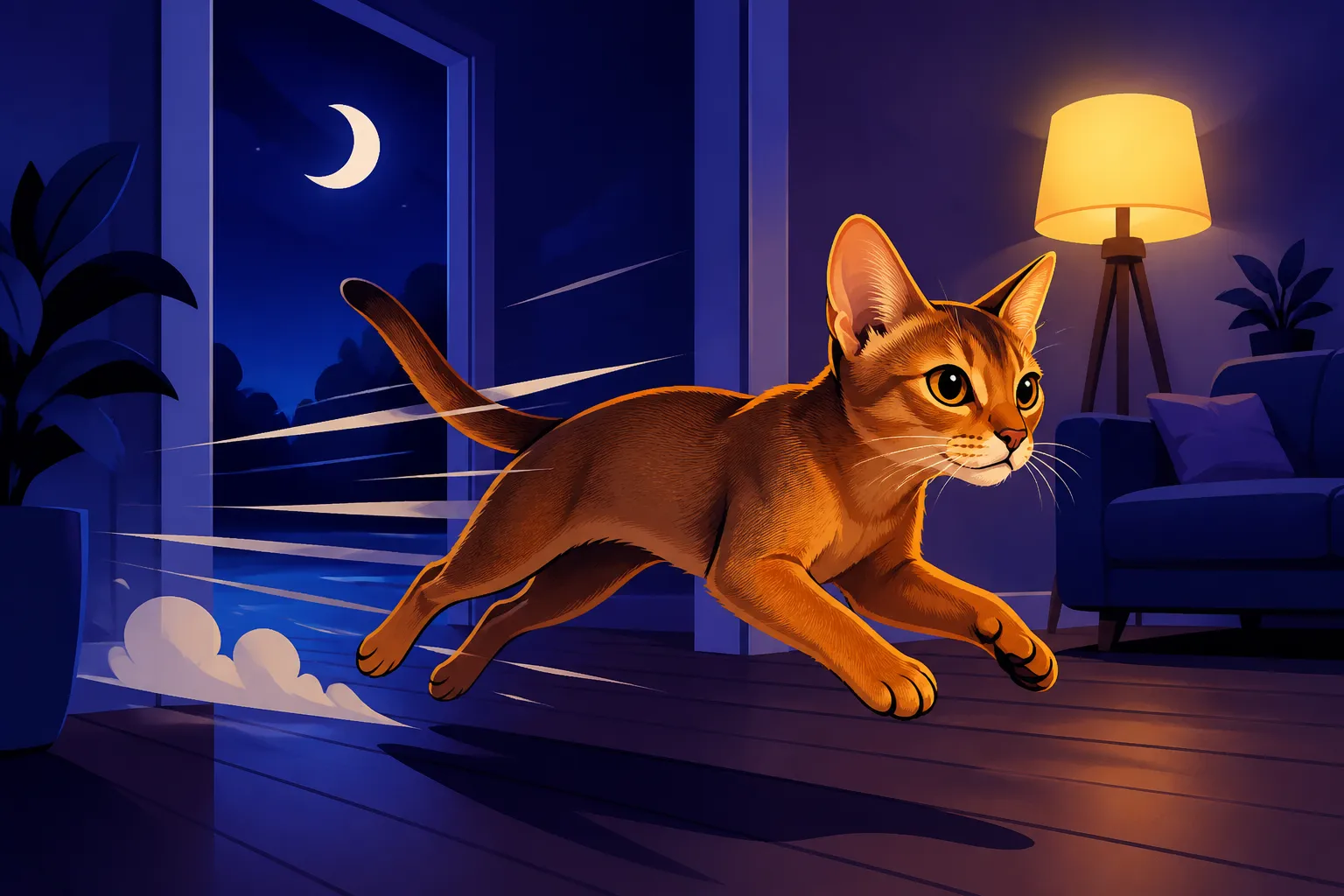
It's incredibly frustrating, isn't it? You've had a long day, you're finally settling down for some peace and quiet, and suddenly your Abyssinian decides the house is an Olympic track. The thundering paws, the inexplicable dashes from one end of the room to the other – it can feel like you've got a small, furry tornado loose right when you want to sleep. This guide is here to help you understand why your beloved Aby turns into a night owl sprinter and, more importantly, what you can do to bring a bit more calm to your evenings.
Understanding the Abyssinian's Innate Energy Cycle
Abyssinians aren't like your average couch potato cat. They are bundles of energy, curiosity, and boundless enthusiasm, and their internal clocks operate a little differently than ours. This isn't just a quirky personality trait; it's deeply rooted in their biology and ancestry.
Crepuscular Nature Explained
One of the biggest reasons your Abyssinian seems to come alive at night is their crepuscular nature. This simply means they are most active during dawn and dusk. Think about it: in the wild, these are the prime hunting times. The light is dim, offering cover for stalking prey, and many smaller animals are also out and about. While your Aby isn't hunting gazelles in your living room, that primal instinct to be alert and active during these low-light periods is still very much present.
So, when you're winding down, your Abyssinian is just getting started, feeling that ancient urge to explore and exert themselves. This natural rhythm often clashes with our human schedules, leading to those perplexing nighttime zoomies. It's not malicious; it's simply how they're wired. Expecting them to be completely dormant at night is like expecting a teenager to go to bed at 8 PM – it's just not going to happen without some serious intervention and redirection.
The Instinct to Hunt and Play
Beyond being crepuscular, Abyssinians possess an incredibly strong prey drive and a need for constant mental and physical stimulation. They were bred to be alert, active, and intelligent, and these traits manifest as a relentless desire to play, chase, and "hunt." If this instinct isn't satisfied during their waking hours, it has to come out somehow.
When they race through the house, they're not just running; they're often re-enacting a hunt. They might be chasing an invisible mouse, practicing their pounces, or simply burning off excess energy that's been building up all day. Their minds are constantly seeking puzzles to solve and "prey" to capture. If you're not providing enough structured play and enrichment, especially leading up to the evening, that energy will inevitably bubble over into those chaotic late-night sprints. It's a clear signal that their natural drives aren't being fully met.
Common Triggers for Nighttime Zoomies
While their inherent nature plays a huge role, there are specific factors in your daily routine and home environment that can exacerbate those nighttime bursts of energy. Identifying these triggers is the first step toward creating a more peaceful household after dark.
Insufficient Daytime Activity and Play
This is probably the most common culprit. Many Abyssinian owners underestimate just how much dedicated play and activity these cats truly need. They aren't content with a few toys scattered on the floor or an occasional laser pointer session. Abyssinians thrive on interactive play that simulates hunting and challenges their minds. If they spend a good portion of their day napping or watching you work without much engagement, that pent-up energy has nowhere to go but out, often when the house goes quiet.
Think of it like this: if you sat at a desk all day and then tried to go straight to bed, you'd probably feel restless. Your Aby feels the same, but with the added layer of powerful predatory instincts. They need sustained, high-intensity play sessions where they can stalk, chase, pounce, and "kill" their prey (e.g., a wand toy). Without this crucial outlet, those frantic nighttime dashes are almost guaranteed. How Much Play an Abyssinian Needs Each Day is a great resource if you're looking for guidance on structuring play.
It's not just about physical exertion, either. Their intelligent minds need challenges. Puzzle feeders, climbing structures, and new experiences keep their brains working. If their mental landscape is barren during the day, they might resort to destructive or overly energetic behaviors at night, simply because their clever brains are bored and seeking stimulation. A catnip mouse from Amazon, or a treat dispenser that makes them work for their dinner, can make a surprising difference.
Environmental Factors and Stimuli
Your home environment can also inadvertently contribute to your Abyssinian's nocturnal antics. Small changes in light, sound, or even smells can trigger their sensitive senses and encourage activity. For instance, if you have motion-activated lights outside, or if streetlights cast shifting shadows through a window, these can become irresistible "prey" for a bored Aby.
Similarly, changes in household routine, or even the subtle sounds of your neighbors, can pique their interest and encourage exploration. Abyssinians are incredibly observant and curious. If they hear something rustle, see a shadow move, or smell something new, their instinct is to investigate, often at top speed. Ensuring their resting environment is truly dark and quiet can sometimes help, but you can't control everything. Sometimes, a quiet house simply means fewer distractions, making it easier for them to focus on their internal urge to play. Why an Abyssinian Hates a Closed Door touches on their need to be part of the action, which can also play into their late-night wanderings.
Furthermore, if your Abyssinian feels like they don't have enough "territory" to claim during the day, they might try to assert themselves at night. This is especially true if they share a home with other pets or if their vertical space is limited. By tearing through the house, they are often surveying their domain, marking it with their scent, and simply reveling in having the run of the place without human interference.
Dietary Habits and Energy Spikes
Believe it or not, when and what your Abyssinian eats can also impact their nighttime energy levels. Just like humans can get a sugar rush, cats can experience energy spikes depending on their diet and feeding schedule. A large meal right before bed, especially one high in carbohydrates (though most good quality cat foods are low-carb), can give them a burst of energy that makes settling down difficult.
It's also about their internal clock. If they're used to getting a substantial meal in the evening, their body might anticipate that energy surge and become more active afterward. Consider spreading their daily food intake across several smaller meals, with the last meal being a few hours before your bedtime. This allows them time to digest and burn off that initial energy. Why an Abyssinian Guards Its Feeding Time explains more about their relationship with meal times.
Many owners find that feeding a larger portion of their daily wet food ration as their final meal helps. The protein and moisture content can be more satisfying and promote a feeling of fullness and contentment, making them more inclined to settle down for a longer stretch. There are automatic feeders available on Amazon that can dispense smaller portions throughout the day, ensuring a consistent energy supply rather than large peaks and troughs.
Strategies to Encourage a Calmer Night
So, now that we understand why your Abyssinian is acting like a tiny nocturnal race car, let's talk about what you can actually do to encourage a more peaceful night for everyone. It's all about intentional routine and fulfilling their natural needs during appropriate times.
Establishing a Consistent Play Routine
This is probably the single most effective strategy. Your Abyssinian needs to burn off that immense energy during the day and early evening, not in the dead of night. Plan for at least two, but ideally three or four, intense play sessions throughout the day. Each session should be at least 10-15 minutes long, with the last one scheduled right before your bedtime. The goal is to utterly exhaust them, both physically and mentally.
Use interactive toys like wand toys with feathers or realistic "prey" attachments. Let them chase, stalk, pounce, and capture the toy. Make it a full hunting sequence. End the session with a definitive "kill" where they get to hold and "destroy" the toy. A high-quality wand toy from Amazon can withstand their vigorous play. After this final play session, offer them their last meal or a substantial treat. The "hunt, catch, eat, groom, sleep" cycle is deeply ingrained, and replicating it before bedtime can signal their body that it's time to wind down.
If you have a particularly energetic Aby, you might even consider adding a brisk walk on a harness and leash during the day. How to Leash Train an Abyssinian details the steps to introduce this safely. The outdoor stimulation and physical exercise can be incredibly beneficial for channeling their energy productively.
Enrichment to Satisfy Their Curiosity
Abyssinians are highly intelligent and curious creatures. Physical play alone won't always cut it; they need mental stimulation to prevent boredom, which can often lead to destructive or hyperactive behavior. Provide plenty of opportunities for them to use their brains and satisfy their natural exploratory instincts.
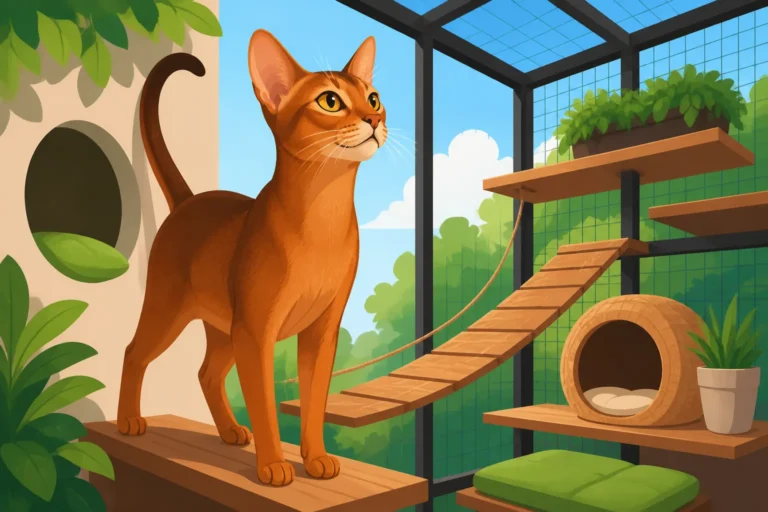
Vertical space is paramount for Abyssinians. They love to climb and observe their world from high vantage points. Invest in tall cat trees or, even better, install wall-mounted cat shelves. An Abyssinian Needs Height More Than It Needs Floor emphasizes this crucial need. These structures give them a safe, elevated space to survey their "territory" and satisfy their climbing urges. Without adequate vertical territory, they might try to create their own by scaling bookcases or cabinets.
Puzzle feeders are another fantastic tool for mental enrichment. Instead of just putting their food in a bowl, make them work for it. There are many options on Amazon, from simple treat balls to more complex feeders that require manipulation. This mimics the problem-solving aspect of hunting and can keep them engaged for a good while, especially if you hide treats around the house for them to find. This "foraging" behavior can be incredibly satisfying for an Aby.
| Activity Type | Daytime Focus | Nighttime Goal | Recommended Item |
|---|---|---|---|
| Physical Play | High-intensity chasing, pouncing | Exhaustion, simulating hunt | Feather wand toy, laser pointer (briefly) |
| Mental Stimulation | Puzzle feeders, foraging games | Engagement, problem-solving | Interactive treat dispenser, hidden kibble |
| Environment | Vertical spaces, window perches | Safe observation, quiet retreat | Tall cat tree, wall shelves (check Amazon for options) |
| Routine | Scheduled play, regular feeding | Predictability, winding down | Automatic feeder (for smaller meals), consistent schedule |
Optimizing Their Environment for Rest
While your Aby might have a unique internal clock, you can still create an environment that gently encourages them to synchronize a bit more with your schedule. Just as we prepare for sleep, there are things you can do to signal to your cat that it's time for quiet.
Dim the lights in the evenings leading up to your bedtime. This can help signal their bodies that it's not prime hunting time. Close blinds and curtains to block out streetlights or other external stimuli that might catch their eye. While Abyssinians love their window perches, having them settled away from the window at night might reduce their reactivity to outside movement.
Ensure they have comfortable, warm sleeping spots in quiet areas. While many Abyssinians prefer to sleep with their humans, having alternative cozy beds or cat caves available gives them options. Consider using a calming pheromone diffuser in the room where they typically sleep to promote a sense of security and relaxation. Sometimes, having a designated "safe zone" can make a big difference in how quickly they settle. Remember, a Why a Coat With No Undercoat Leaves an Abyssinian Cold means they often seek out warmer spots, so a soft, warm bed can be very inviting.
When to Consider a Vet Visit
While nighttime zoomies are often a normal, albeit sometimes annoying, part of owning an Abyssinian, there are instances when a sudden change in behavior warrants a check-up with your veterinarian. Always err on the side of caution when it comes to your cat's health.
Sudden Changes in Nighttime Behavior
If your Abyssinian has always been a pretty consistent sleeper at night, and then suddenly starts tearing through the house with newfound intensity, it's worth a vet visit. A sudden, unexplained increase in activity, especially when coupled with other behavioral changes like increased vocalization, restlessness, changes in appetite, or excessive grooming, could be a sign of discomfort or an underlying health issue.
Cats are masters at hiding illness, and sometimes the only outward sign is a subtle shift in their normal routines or activity levels. What seems like just "more zoomies" could be a frantic attempt to relieve pain or anxiety they can't otherwise express. Never dismiss a significant or abrupt change in behavior without consulting your vet. Why a Suddenly Still Abyssinian Needs a Vet highlights how any drastic change, even increased activity, should be investigated.
Ruling Out Underlying Health Issues
Certain medical conditions can manifest as increased energy, restlessness, or discomfort that might lead to your Abyssinian being more active at night. Hyperthyroidism, for example, is a common condition in older cats that can cause increased metabolism, weight loss, and hyperactivity. Even younger cats could have other issues causing discomfort or altered sleep cycles.
Conditions like chronic pain, arthritis (even in subtle forms), or even dental problems can make it difficult for a cat to settle comfortably, leading to restlessness and pacing or sudden bursts of activity. Urinary tract issues, while usually associated with litter box problems, could also cause discomfort that makes a cat unable to relax. Your vet can perform a thorough examination, including blood work and potentially other diagnostics, to rule out any medical causes for the change in behavior. Which Blood Values Catch an Abyssinian's Kidneys Early is a good article to review, as kidney issues can sometimes affect overall comfort and behavior.
Remember, you know your Abyssinian best. If something feels "off" or if the nighttime racing is truly out of character, a trip to the vet is always the right call. It provides peace of mind and ensures that if there's an issue, it can be addressed promptly.
Disclaimer
This article is for general informational purposes only and does not constitute professional advice. Laws, prices and regulations vary by location and change over time. Consult a qualified professional for guidance on your specific situation.