How an Abyssinian Learns to Push a Handle Down
It’s a scenario many Abyssinian owners know all too well: you’re enjoying a quiet moment, only to hear the unmistakable click and creak of a door opening, followed by the triumphant, curious face of your Aby. These intelligent, nimble cats seem to have an uncanny knack for breaching barriers, and learning how they figure out pushing a door handle down can save you a lot of future headaches. This guide will delve into the brilliant, often mischievous, mind of your Abyssinian and explain their mastery of door handles.
The Abyssinian Mind: A Master of Observation and Problem-Solving
If you live with an Abyssinian, you know they aren't just pets; they are active participants in your daily life, constantly observing, learning, and often, testing boundaries. Their intense curiosity isn't just a cute quirk; it's a driving force behind their impressive problem-solving skills, including how they crack the code of your household doors.
The Hunter's Instinct and Cognitive Prowess
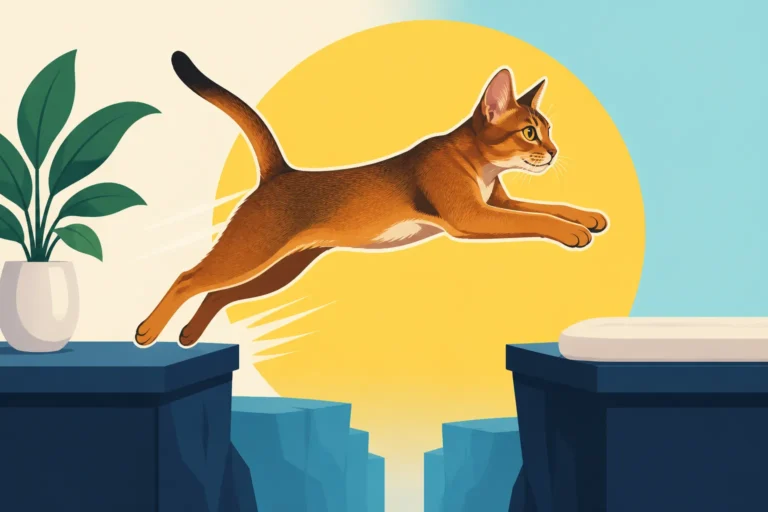
The Abyssinian's wild roots, even if distant, still influence their behavior today. They are built for movement, agility, and incredibly sharp senses. Think about their ancestors: they weren't just waiting for dinner; they were actively hunting, tracking, and figuring out how to access prey. This requires not only physical prowess but also significant cognitive function – the ability to assess a situation, formulate a plan, and execute it. Your Abyssinian applies this same ancestral instinct to their domestic environment. They see a closed door not as an insurmountable barrier, but as a challenge, a puzzle to be solved, or perhaps, an opportunity to find something exciting on the other side. This innate drive means they're constantly analyzing their surroundings, looking for patterns, and trying to understand how things work. It's why The Abyssinian Is the Busiest Cat in the House and rarely just sits idly by.
Mimicry and Learning by Watching
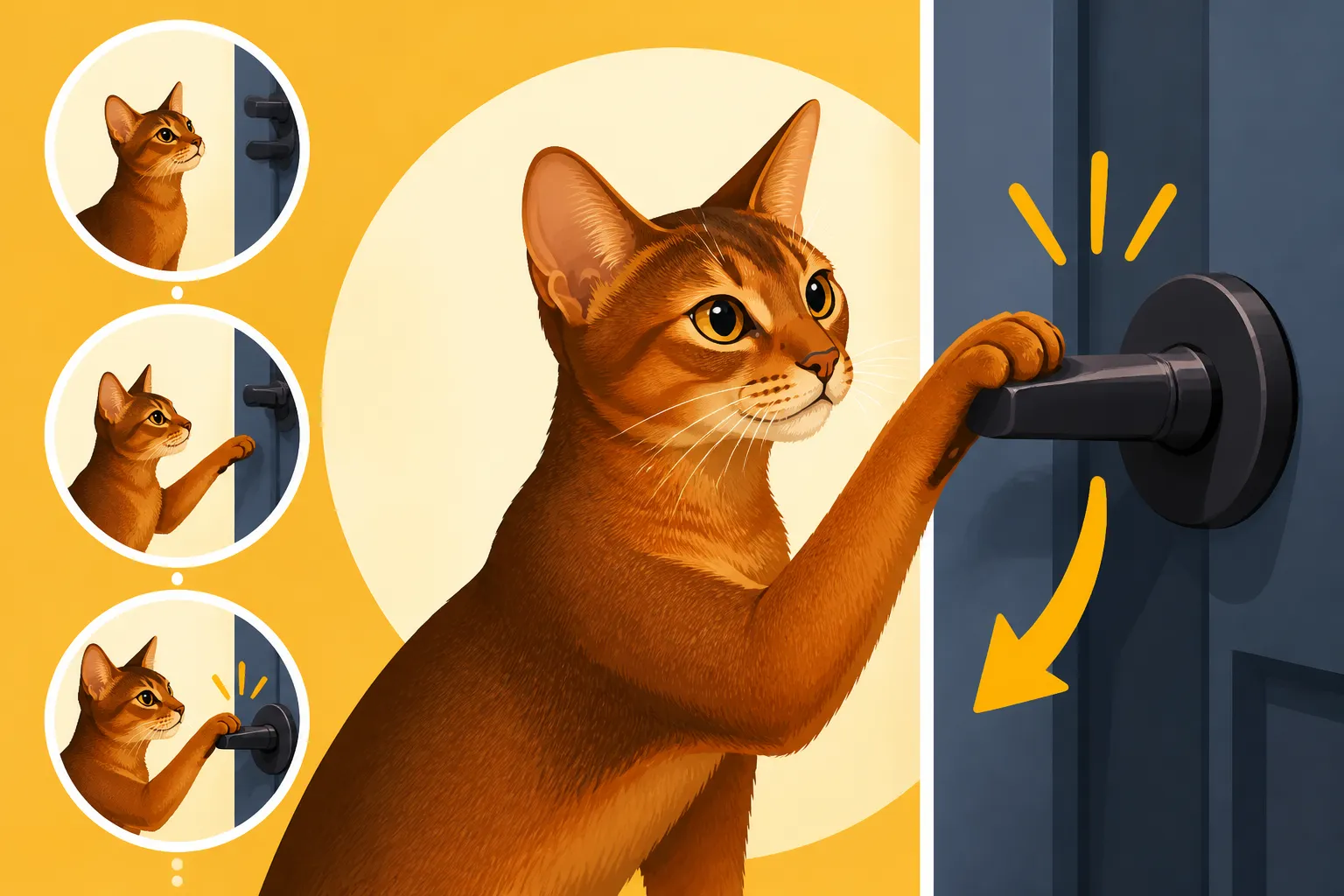
One of the most fascinating ways Abyssinians learn is through observation. They are incredibly attentive to their humans. Have you ever noticed your Aby watching your every move as you prepare their food, or open a cupboard? They’re not just admiring your technique; they're learning. When you reach for a door handle, turn it, and pull or push, your Abyssinian is processing this entire sequence of events. They see your hand grasping, the wrist turning, the lever depressing, and then, voilà, the door opens. This isn't just random chance; they begin to connect the actions with the outcome. They might start by mimicking parts of the action – jumping up, pawing at the handle – until they accidentally stumble upon the right combination. Once they do, their sharp minds register the success, and they'll try to replicate it. It’s almost like they have little mental notebooks, jotting down "human turns shiny stick, door opens, must try shiny stick."
Deconstructing the Door Handle: What an Abyssinian Sees
For us, a door handle is a simple mechanism. For an Abyssinian, it's a fascinating, complex object that holds the key to new adventures. They don't just see a handle; they see potential, leverage, and a pathway to whatever exciting thing might be on the other side.
From Curiosity to Cause and Effect
An Abyssinian's curiosity is boundless. A closed door represents an unexplored territory, a potential new hunting ground for toys, or simply a different vantage point from which to supervise their human. When they encounter a door, they don't just sniff; they investigate. They might bat at the bottom, scratch at the frame, or, crucially, jump up and paw at the handle. This initial investigation isn't necessarily aimed at opening the door, but rather at understanding its nature. However, during these exploratory phases, they might accidentally depress the lever-style handle. The sudden click and swing of the door immediately teach them a powerful lesson in cause and effect. "Aha!" their intelligent brains deduce, "Pushing this metal thing makes the world expand!" This accidental success is a huge motivator. They quickly associate the physical action with the desired outcome, setting them on the path to becoming expert door-openers. This kind of problem-solving is intrinsically rewarding for a cat like an Abyssinian, who is always looking for new ways to engage their mind. Why an Abyssinian Opens Doors and Cabinets isn't just a random act; it's a calculated, learned behavior.
The Role of Paws and Body Weight
Lever-style door handles are particularly vulnerable to an Abyssinian's ingenuity because they play right into their natural abilities. Unlike a round doorknob that requires a twisting grip – a difficult feat for a cat's paw – a lever handle can be operated with a downward push. An Abyssinian often jumps up, either placing their front paws on the handle or using their hind legs to launch themselves and their body weight to press the lever down. Their agile bodies and strong leg muscles are perfectly adapted for this. Some Abyssinians become so adept that they can hang from the handle with one or both front paws, using their body weight to leverage it downwards. Others might stand on their hind legs and use a front paw to expertly push the lever. The key is that the motion required is a simple downward force, which is easily achieved by their athletic build. They quickly learn that gravity, combined with their own weight and nimble paws, is their greatest ally in door-opening endeavors.
Reinforcement: Why They Keep Doing It
Once an Abyssinian learns the trick, why do they continue to employ it? It all comes down to reinforcement. The rewards they reap from opening doors are often far greater than any disincentive, making it a persistent habit that requires consistent management from us.
The Reward of Access and Exploration
The most significant reinforcement for a door-opening Abyssinian is the immediate reward of access. Opening a door grants them entry to a forbidden room, a pantry full of interesting smells, or simply a new space to explore. This fulfills their deep-seated need for novelty and exploration. Imagine the thrill of discovering a new "territory" within their own home! This might lead to investigating a closet, finding a sunbeam in a rarely used guest room, or even just chasing dust bunnies under a bed. Each successful door opening leads to a fresh adventure, reinforcing the behavior. Furthermore, if they're locked out of a room where their favorite human is, opening the door grants them access to attention, play, or simply companionship. For a breed that thrives on interaction and being part of the action, any barrier that separates them from their family is a challenge to be overcome. This constant seeking of new stimuli and connection means that simply getting into the room is often reward enough.
Unintended Training by Human Reaction
Sometimes, we inadvertently reinforce our Abyssinian's door-opening habits. When your cat successfully opens a door and walks into a room, how do you react? Do you rush over to pick them up, shoo them out, or even laugh at their cleverness? Any of these reactions, from a cat's perspective, can be a form of attention. Even negative attention is still attention, and for a social, intelligent cat, attention can be a powerful motivator. If they learn that opening a door leads to you immediately engaging with them, they might see it as a successful way to solicit interaction. The mere act of you looking at them, talking to them, or chasing them out of the room provides a response that reinforces their behavior. This isn't malicious on their part; it's simply a cat's way of understanding their world and how their actions influence their environment and the giants they live with. To truly deter the behavior, the consequence of opening the door needs to be utterly neutral or, ideally, slightly undesirable.
Preventing the Great Escape: Practical Solutions
So, if your Abyssinian has mastered the art of the door handle, what can you do? It's all about making the "reward" less accessible and providing alternative outlets for their immense energy and intelligence.
Securing Doors Against Nimble Paws
Once an Abyssinian figures out a lever handle, it can feel like your home has turned into their personal playground. The good news is there are several effective solutions to secure your doors without resorting to locking yourself in a fortress.
Firstly, traditional lever locks can be replaced with child-proof or cat-proof options. These often involve mechanisms that require a different motion, like pushing a button while turning, or lifting a tab. You can find excellent options on platforms like Amazon by searching for "cat proof door lever lock" or "child safety door handle locks." These are designed to be difficult for small hands (or paws) to manipulate while still being easy for adults.
Another common and effective solution is a simple gate hook and eye latch installed higher up on the door frame, out of your Aby's reach. This provides an additional layer of security. Alternatively, some owners use horizontal barrel bolts, again mounted high. The goal is to install something that requires dexterity beyond a cat's capability or height. Remember that Abyssinians are exceptional jumpers and climbers, so "out of reach" means truly out of reach, often at chest height or higher for an average adult. How to Secure a Cupboard Against an Abyssinian provides similar ideas for cabinets.
Here's a quick comparison of door securing options:
| Deterrent Type | Pros | Cons | Effectiveness Against Abyssinians |
|---|---|---|---|
| Child Safety Lever Lock | Easy for humans, hard for cats, no permanent damage | Requires installation, can be unsightly if not chosen well | High (prevents lever depression) |
| Hook and Eye Latch | Simple, inexpensive, very secure if mounted high | Requires drilling, less convenient for frequent entry/exit | High (physical barrier) |
| Barrel Bolt | Very strong, provides absolute security | Requires drilling, can be more conspicuous | High (physical barrier) |
| Doorknob Covers | Inexpensive, no installation, works for round knobs | Not effective for lever handles, can be ripped off | Low (for lever handles) |
| Pet Gate (at door) | No damage to door, temporary, good for supervision | Can be jumped over by determined Abyssinians, less aesthetic | Medium (can be overcome) |
Redirection and Alternative Enrichment
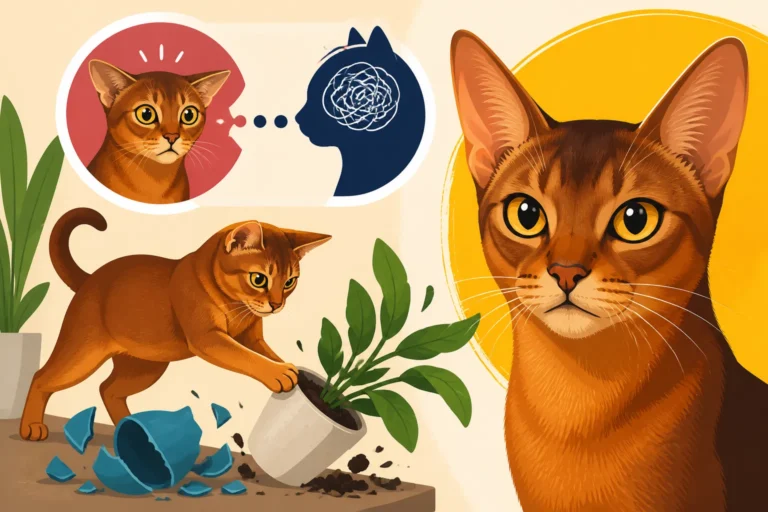
Simply blocking their access isn't enough for an Abyssinian; you need to channel their intelligent energy into more appropriate activities. An Aby that is bored is an Aby that will find trouble, including trying to open doors. They need mental and physical stimulation throughout the day.
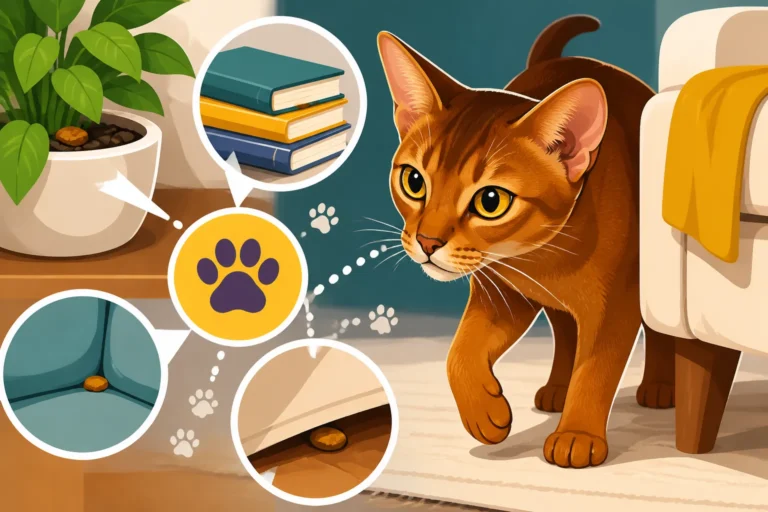
Invest in a variety of interactive toys. Wand toys that mimic prey movement are excellent for burning off physical energy. Puzzle feeders, readily available on platforms like Amazon, are fantastic for engaging their minds. Which Puzzle Feeders Hold an Abyssinian's Attention can help you choose the right ones. Hide treats or portions of their kibble around the house in designated, safe spots, encouraging their natural foraging instincts. This provides a "job" for them, satisfying their hunting drive. Why Foraging Suits an Abyssinian's Mind explains how this fulfills a deep-seated need.
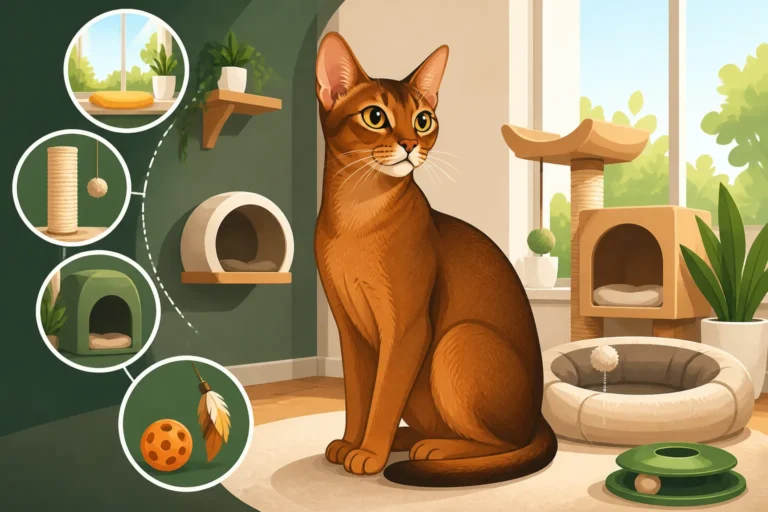
Furthermore, ensure they have ample vertical space. Abyssinians love to climb and observe from high vantage points. Tall cat trees, wall-mounted shelves, and cat tunnels provide an enriching environment that encourages appropriate climbing and exploration. An Abyssinian Needs Height More Than It Needs Floor is a principle to live by with this breed. If your Aby is constantly engaged with approved activities and has plenty of ways to explore and climb, they'll be less likely to become fixated on opening doors out of boredom. Remember, What an Abyssinian Does When It Is Bored usually involves mischief and destruction, so prevention is key.
Sometimes, the door opening isn't about getting into a specific room, but about avoiding being alone. Abyssinians are incredibly social and can suffer from separation anxiety. If your Aby seems distressed when left alone, even in a different room, consider if they might benefit from a companion. Why a Single Abyssinian Costs More in Damage often stems from this need for interaction. Ultimately, managing a door-opening Abyssinian involves a combination of smart hardware and consistent, engaging enrichment that satisfies their intelligent, active nature.
Disclaimer
This article is for general informational purposes only and does not constitute professional advice. Laws, prices and regulations vary by location and change over time. Consult a qualified professional for guidance on your specific situation.