Why an Abyssinian Bites During Play
It can be incredibly disheartening when your beloved Abyssinian, usually a whirlwind of affectionate energy, turns a fun play session into a painful experience with a sharp nip or even a full-on bite. Many Abyssinian owners find themselves wondering why their otherwise sweet cat suddenly decides to use their teeth during play, and it’s a frustrating cycle to navigate. This comprehensive guide is here to shed light on the natural instincts and learned behaviors behind play biting in Abyssinians, offering practical, empathetic strategies to redirect this behavior and ensure playtime remains joyful and pain-free for both of you.
Understanding Why Your Abyssinian Bites During Play
Abyssinians are known for their incredible energy, intelligence, and a distinctly wild, almost untamed spirit that manifests beautifully in their sleek, athletic bodies. This same vibrant energy, however, can sometimes lead to behaviors that are less desirable in a domestic setting, particularly when it comes to play. It's not usually out of malice, but rather a complex mix of instinct, arousal, and learned responses.
The Abyssinian's Natural Hunting Instincts
At their core, Abyssinians are miniature hunters, a trait deeply embedded in their genetic makeup. Their lean, muscular bodies are built for chasing, pouncing, and quick bursts of activity. When your Abyssinian engages in play, especially vigorous play, they are essentially re-enacting a hunt. Think about it: a cat in the wild hunts small prey, which involves not just the chase but also the final "kill bite." For an Abyssinian, play is a vital outlet for this innate predatory sequence. They stalk, they pounce, they bat, and eventually, they want to grab and "kill" their prey.
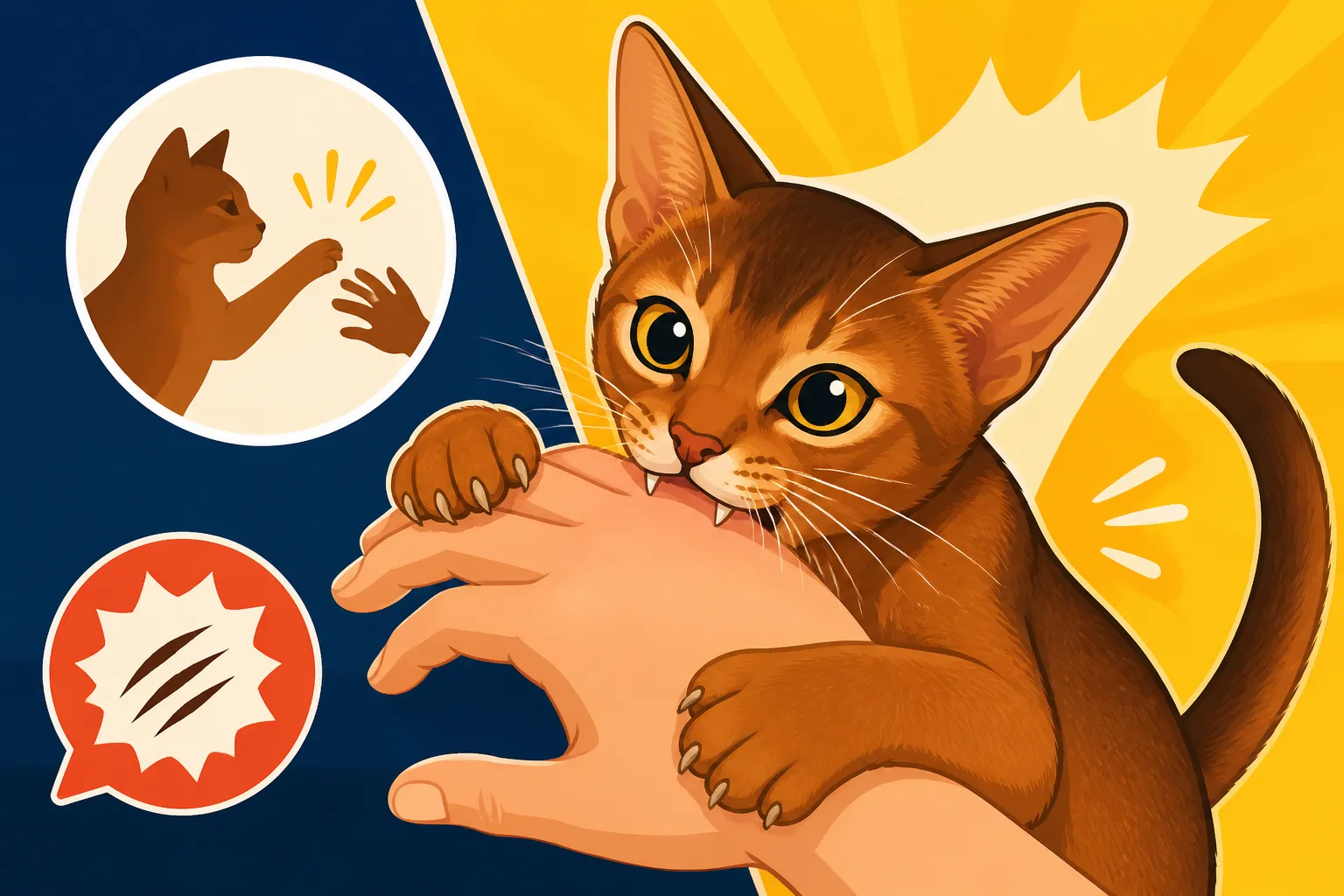
If your hands or feet become that "prey" during play, their natural instinct kicks in, and they will use their teeth and claws just as they would on a mouse or bird. This isn't aggression; it's simply the natural conclusion of their play sequence. They aren't trying to hurt you intentionally, but their hunting tools are, by design, very sharp. Understanding this instinct is the first step toward redirecting it appropriately. They aren't misbehaving; they're just following their deepest programming, and it's up to us to guide that energy into constructive channels.
Overstimulation and Overarousal During Intense Play
Another major factor contributing to play biting in Abyssinians is overstimulation or overarousal. These cats have incredibly high energy levels and can get very intense during play sessions. What starts as fun and games can quickly escalate into a state where they are so wound up that they lose a bit of control. It's like a child getting overtired and becoming cranky – for an Abyssinian, it manifests as heightened physical responses. Their pupils might dilate, their tail might twitch frantically, and they might start breathing a little faster. These are all signs that they're tipping into an overstimulated state.
When an Abyssinian becomes overaroused, their inhibitions can drop, and they might switch from gentle nipping to harder bites, almost as if they can't quite distinguish between the toy and your hand. This often happens without warning, leaving you with a sudden scratch or bite mark. Learning to recognize the subtle cues that your Abyssinian is getting too worked up is crucial. A good rule of thumb is to end the play session before they reach this point, keeping it positive and leaving them wanting more. You can learn more about these signals in How an Abyssinian Shows It Is Overstimulated.
Lack of Bite Inhibition from Early Socialization
Many of us get our Abyssinians as adorable, tiny kittens, and it's so easy to engage in rough-and-tumble play with our bare hands. Unfortunately, this can inadvertently teach them that human skin is an acceptable target for their teeth and claws. In a litter, kittens learn "bite inhibition" from their siblings and mother. If one kitten bites too hard, the other will yelp and stop playing, teaching the aggressor to moderate their force. The mother cat will also correct overly rough play.
If a kitten is removed from its litter too early, or if humans consistently allow or even encourage hand-play, they miss out on these vital lessons. They don't learn that human skin is fragile and requires gentle interaction. When they grow into an adult Abyssinian, which as you know are incredibly energetic and playful creatures, that lack of early bite inhibition can manifest as painful play biting. This is especially true for an Abyssinian kitten, whose boundless energy often makes them seem Why an Abyssinian Kitten Is Relentless. They need consistent guidance to understand appropriate boundaries.
Effective Strategies to Redirect Play Biting
Once you understand why your Abyssinian is biting during play, you can implement effective strategies to redirect this natural behavior into acceptable channels. The key is consistency, patience, and providing appropriate alternatives. Remember, you're not punishing them for being a cat, but rather teaching them how to interact safely within your human world.
Using Appropriate Play Toys to Protect Your Hands
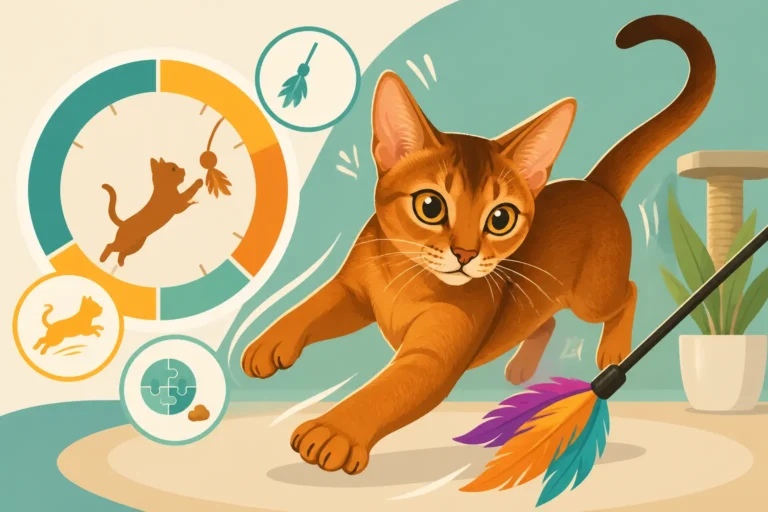
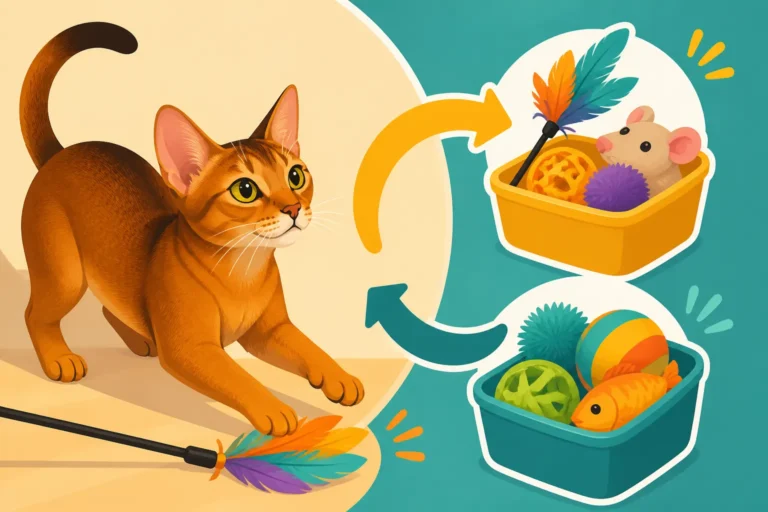
The single most effective way to stop an Abyssinian from biting your hands during play is to ensure your hands are never part of the game. This means investing in and consistently using a variety of interactive toys that create distance between their sharp parts and your delicate skin. Wand toys are absolutely essential for any Abyssinian owner. They mimic prey movement, allow for high-energy chasing and pouncing, and keep your fingers well out of harm's way. Look for wand toys with sturdy sticks and durable attachments like feathers, ribbons, or small stuffed animals. You can find a huge variety on sites like Amazon, ensuring you have plenty to rotate and keep things interesting.
Beyond wand toys, consider "kicker" toys or sturdy plush toys. These are usually cylindrical and about the size of a cat, designed for them to grab with their front paws, bunny-kick with their back legs, and "kill" with a good bite. This satisfies their natural urge to grapple and bite their prey in a safe and appropriate manner. The more exciting and varied the toys you offer, the less appealing your hands will become as a play object. For more ideas on what engages them, you might find Which Wand Toy an Abyssinian Prefers helpful.
Teaching Bite Inhibition Through Consistent Communication
Even with the best toys, accidents can happen, or your Abyssinian might try a cheeky nip. This is where teaching bite inhibition comes in. The moment your cat's teeth touch your skin, even lightly, let out a high-pitched "ouch!" or "eep!" immediately, and then completely withdraw from play. Freeze, turn away, or even leave the room for a minute. This mimics how a littermate would react and communicates that the interaction has become unpleasant. The key is to be consistent every single time. Your Abyssinian will quickly learn that "human skin + teeth = end of fun."
Never, ever punish your cat physically or by yelling. This can break their trust, make them fearful, and potentially lead to more serious behavioral issues, including fear-aggression. The goal is to make the undesirable behavior unrewarding, not terrifying. A short "time-out" is often all it takes. Once they calm down and you re-engage, ensure it's with an appropriate toy, reinforcing the correct way to play. Over time, they'll learn that gentle play continues, while biting stops the fun. This strategy is further detailed in How to Stop an Abyssinian Play Biting.
Engaging Their Minds with Puzzle Feeders and Training
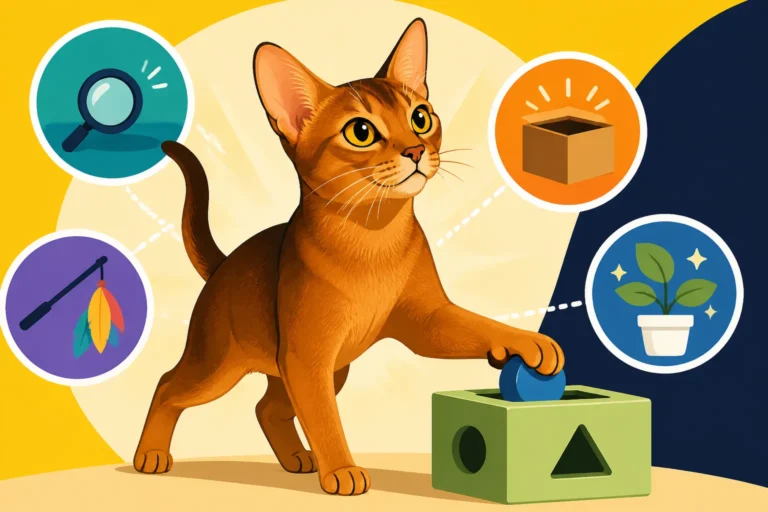
Abyssinians are not just physically active; they are highly intelligent and need significant mental stimulation. A bored Abyssinian is often a mischievous Abyssinian, and that excess mental energy can sometimes be channeled into unwanted behaviors like play biting, or even destructive chewing if they're not getting enough appropriate outlets. Integrating puzzle feeders into their daily routine is a fantastic way to engage their minds. Instead of simply placing their food in a bowl, make them "work" for it by using a feeder that requires them to solve a puzzle or manipulate an object to get their meal.
Beyond puzzle feeders, consider teaching your Abyssinian tricks. Yes, cats can learn tricks! Using a clicker and positive reinforcement, you can teach them to sit, stay, come, or even fetch. This kind of interaction builds a stronger bond, channels their intelligence constructively, and provides mental exercise that can reduce the likelihood of them seeking more primal, potentially painful, forms of entertainment. Websites like Amazon offer a wide array of puzzle feeders and clicker training kits suitable for smart cats like Abyssinians. Finding stimulating options can really make a difference; check out Which Puzzle Feeders Hold an Abyssinian's Attention for some great ideas.
Environmental Enrichment and Long-Term Solutions
Managing play biting isn't just about what you do during playtime; it's also about creating an environment that caters to your Abyssinian's unique needs. A well-enriched home can proactively reduce many behavioral issues, including excessive biting.
Creating a Play-Safe Home Environment
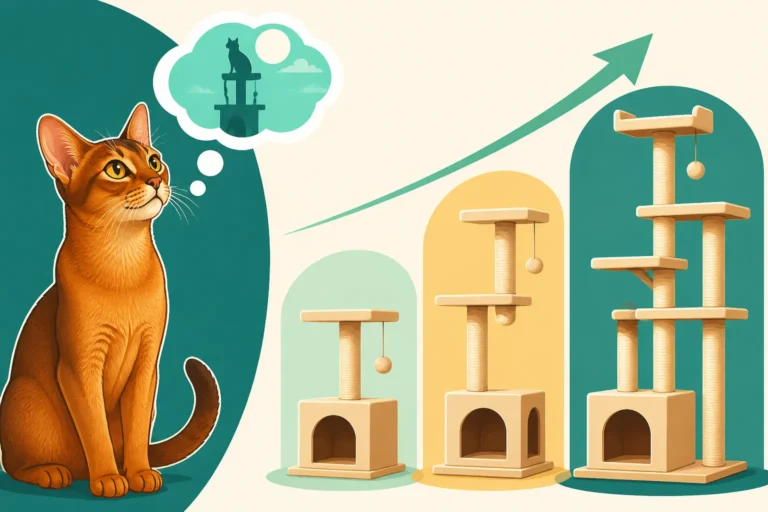
Abyssinians thrive in vertical spaces. They are incredible climbers and jumpers, always seeking the highest vantage point in the room. Providing ample climbing opportunities—like tall cat trees, wall-mounted shelves, and secure perches—is crucial. This allows them to expend energy, feel secure, and survey their domain from above. When their environment satisfies these innate needs, they are less likely to act out in other ways. Remember, a cat that can scale a bookcase probably isn't getting enough proper climbing zones! For inspiration on creating these spaces, you might want to look at Why an Abyssinian Needs Height More Than It Needs Floor.
Beyond climbing, ensure they have designated scratching posts and pads in various materials (sisal, cardboard, carpet) and orientations (vertical and horizontal). Scratching is a natural and necessary cat behavior that keeps their claws healthy and allows them to stretch and mark their territory. Providing plenty of appropriate scratching surfaces can also reduce the temptation to use human skin or furniture for scratching during excited play.
The Benefits of a Playmate for High-Energy Abyssinians
If you have a single Abyssinian and are struggling with persistent play biting, consider if they might benefit from a companion. Abyssinians are highly social cats and often do incredibly well in pairs or multi-cat households, especially with another cat that matches their energy level. A playmate can absorb a lot of that boundless Abyssinian energy, providing a constant, appropriate outlet for wrestling, chasing, and mock-hunting. The other cat will also provide immediate, clear feedback if play gets too rough, reinforcing bite inhibition in a way humans sometimes struggle to.
This isn't a quick fix, and introducing a new cat requires careful planning and a slow introduction process. However, for many Abyssinian owners, adding a second cat, particularly another playful breed or even another Abyssinian, can dramatically improve the first cat's behavior and overall happiness. They get to engage in natural cat-to-cat play, which is often far more satisfying for them than any human-led interaction. The concept of introducing a second cat to suit their needs is explored further in Why a Second Cat Suits an Abyssinian.
When to Seek Professional Guidance
While most play biting can be managed with consistent training and environmental enrichment, there are instances where professional help might be needed. If your Abyssinian's biting is truly aggressive (not just playful nips), causes significant injury, seems sudden and unexplained, or is accompanied by other worrying behavioral changes (like hiding, increased fear, or house-soiling), it's time to consult your veterinarian first. They can rule out any underlying medical issues that might be causing pain or discomfort, leading to unusual behavior.
If health issues are ruled out, your vet might recommend a certified feline behaviorist. These professionals are trained to observe your cat's behavior in context, identify triggers, and develop a tailored plan to address the issue. They can offer insights and techniques that go beyond general advice, helping you and your Abyssinian live together happily and safely. Remember, seeking help is a sign of a responsible pet owner, not a failure.
Table: Tools for Redirecting Play Biting in Abyssinians
Here’s a quick overview of some essential tools and their benefits for managing play biting:
| Tool Category | Example Products (often found on Amazon) | Primary Benefit | How it Helps with Play Biting |
|---|---|---|---|
| Wand Toys | Da Bird, Go Cat Teasers, various feather or ribbon wands | Creates distance, mimics prey, encourages chase/pounce | Keeps your hands out of the biting zone, fulfills hunting instinct safely. |
| Kicker Toys | Catnip-filled plush kickers, sturdy fabric logs | Allows for wrestling, bunny-kicking, and 'kill' biting | Provides an acceptable target for full-body play and satisfying biting/grappling urges. |
| Puzzle Feeders | Nina Ottosson puzzle bowls, treat balls, slow feeder dishes | Mental stimulation, slows eating, reduces boredom | Engages their mind, expends mental energy, reducing the likelihood of boredom-induced mischief and biting. |
| Interactive Laser | Red dot laser pointers (use with caution to avoid frustration) | High-energy chase, satisfies prey drive | Provides an intense chase without direct contact; always end with a physical toy they can catch and 'kill'. |
| Tall Cat Trees / Wall Shelves | Multi-level cat trees, wall-mounted climbing perches | Vertical space, climbing outlet, sense of security | Fulfills natural instinct to climb and observe, reducing restless energy that can lead to rough play. |
| Clicker & Treats | Pet training clickers, small high-value cat treats | Positive reinforcement, mental engagement, builds bond | Teaches alternative behaviors (e.g., "sit" instead of bite), channels intelligence, strengthens communication. |
This structured approach, focusing on understanding your Abyssinian's natural inclinations and providing appropriate outlets, will help transform play sessions from potentially painful encounters into truly joyful bonding experiences.
Disclaimer
This article is for general informational purposes only and does not constitute professional advice. Laws, prices and regulations vary by location and change over time. Consult a qualified professional for guidance on your specific situation.