How Thin an Abyssinian’s Undercoat Really Is
Many cat owners envision a plush, thick coat when they think of a feline companion, often complete with a dense, insulating undercoat. However, if you've ever had the pleasure of running your hands over an Abyssinian, you quickly discover that their coat is a world apart. This guide will delve into the unique structure of the Abyssinian's coat, specifically focusing on just how remarkably thin their undercoat truly is, and what that means for their care, comfort, and your life together.
The Abyssinian's Distinctive Ticked Coat and Sparse Undercoat
The Abyssinian coat is perhaps its most defining physical characteristic, after those incredible ears and almond-shaped eyes. What many don't realize is that its famous ticked pattern is directly linked to an almost non-existent undercoat. It’s not just a superficial difference; it dictates a lot about their daily life and care.
What is a Cat's Undercoat, Anyway?
Before we dive into the Abyssinian's specific situation, let's talk about what an undercoat usually is. Most cat breeds have a multi-layered coat designed for protection and insulation. You have the outer 'guard hairs,' which are typically longer, coarser, and provide waterproofing and protection from the elements. Then, underneath those, you find the 'awn hairs' which are mid-length and contribute to insulation. Finally, and most importantly for traditional cat warmth, there's the 'undercoat' – a soft, downy layer of very fine, short hairs that are densely packed. This undercoat is what gives many breeds their plush feel and acts as their primary thermal blanket, trapping air close to the body to keep them warm in winter and sometimes even cool in summer by creating a buffer. It's also the source of most of the shedding woes for many cat owners!
The Abyssinian's Minimalist Approach to Undercoats
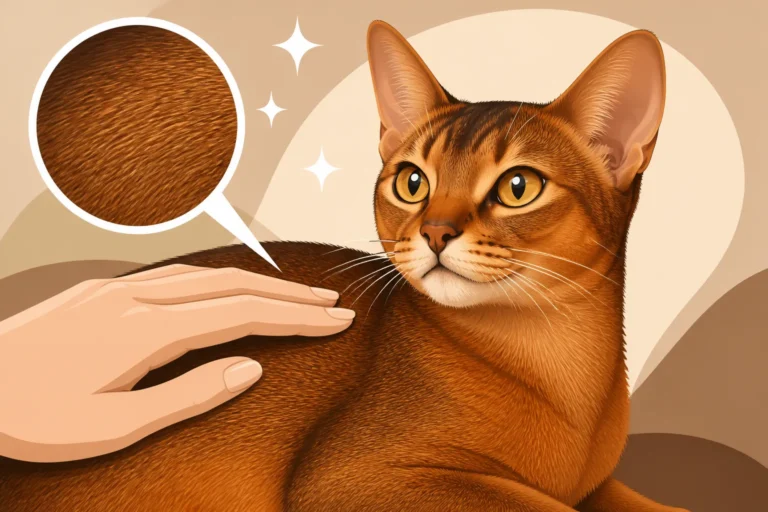
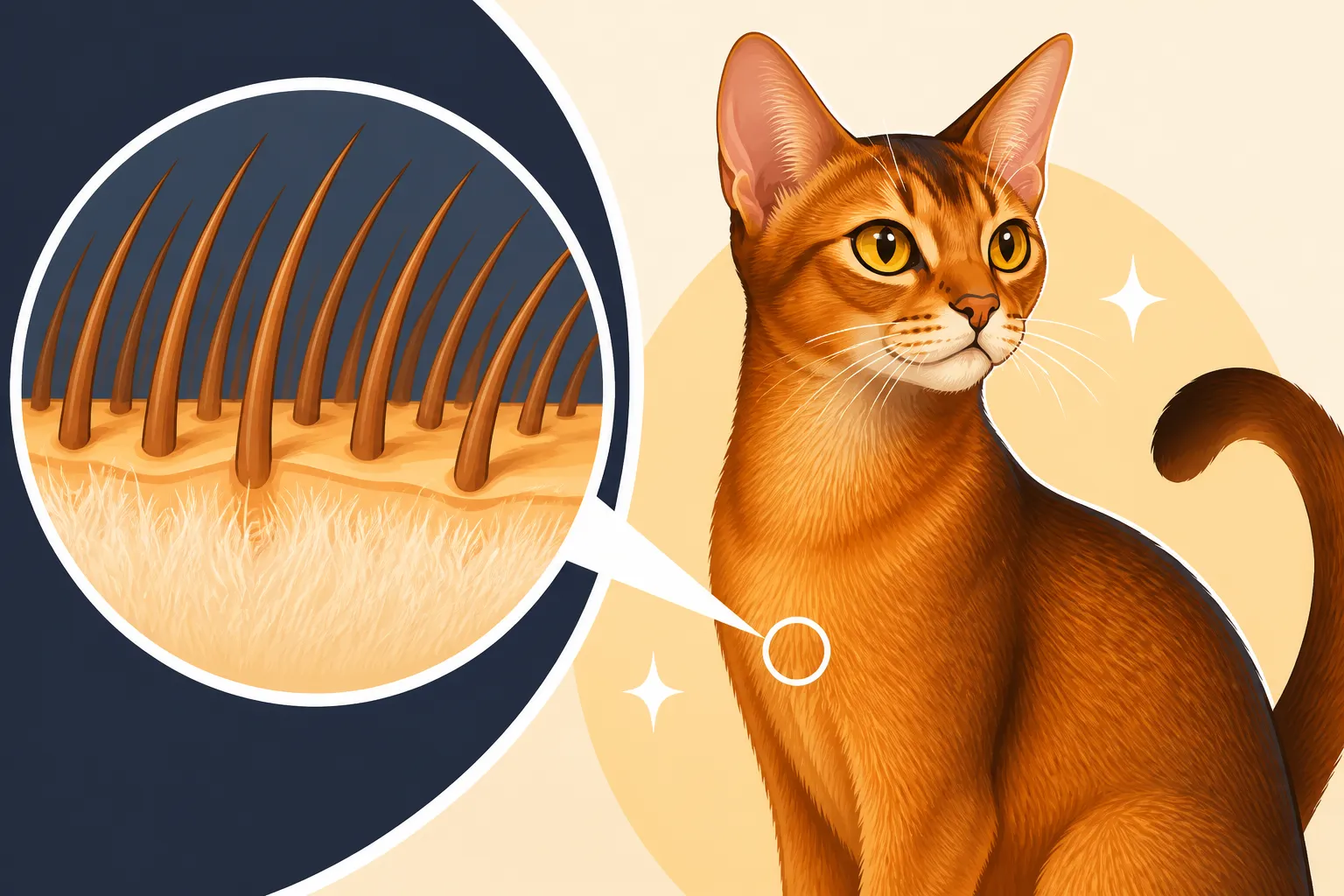
Now, picture that typical multi-layered cat coat, and then subtract most of the undercoat. That's essentially what you get with an Abyssinian. Their genetic makeup results in a coat that is predominantly made up of guard hairs and awn hairs, with only a very, very sparse, fine layer of true undercoat, if any at all. It's often described as a "single coat" or a "ticked coat with very little undercoat," and that description truly hits the mark. When you stroke an Abyssinian, you don't sink into layers of fluff; instead, your hand glides over a smooth, resilient coat that feels incredibly soft but also very close to the skin. This isn't a defect; it's a hallmark of the breed, a feature that contributes to their sleek, almost wild appearance. This unique characteristic is also why The Ticked Coat Is the Whole Abyssinian Grooming Job is often stated – there's just not much underneath to deal with!
How the Ticked Pattern Influences Undercoat Development
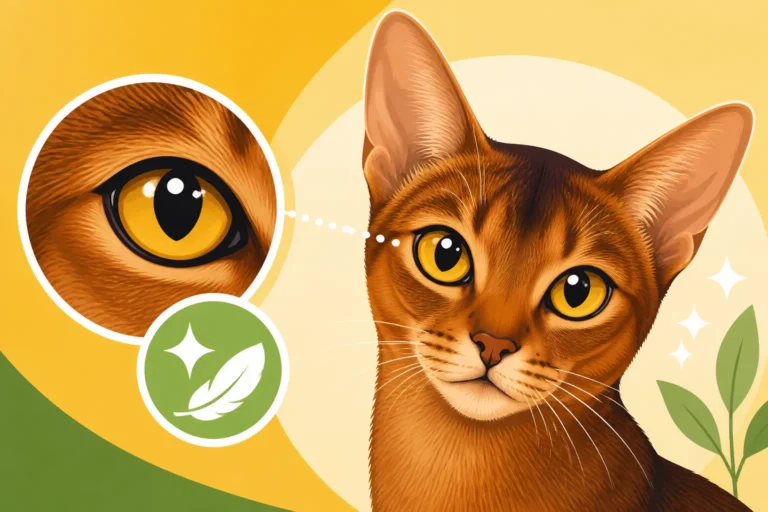
The gorgeous ticked pattern that defines the Abyssinian is a direct result of how each individual hair is banded with color. Instead of solid color or distinct stripes, each hair shaft has multiple bands of color, typically three or four, with darker bands at the tip and base and lighter bands in between. This agouti gene expression means the coat shimmers and changes with light and movement, creating a truly dynamic visual effect. It’s also fascinating how How Many Bands an Abyssinian Hair Carries affects this shimmering quality. This specialized hair structure seems to go hand-in-hand with the lack of a dense undercoat. A thick, opaque undercoat would actually obscure the ticking, making the coat appear dull and less vibrant. Therefore, evolution, or perhaps selective breeding, favored a coat structure that enhances the ticking rather than burying it under a layer of dense fluff. This results in the famously fine, soft texture that many owners describe when feeling their Abyssinian's fur, often compared to the softest rabbit fur – truly, How Fine an Abyssinian's Coat Feels is one of their most delightful tactile traits.
Living with a Cat That Has Almost No Undercoat
So, what does this practically mean for you and your Abyssinian? It impacts everything from how much they shed to how they regulate their body temperature and even their specific grooming needs. Understanding these implications is key to providing them with the best care.
Shedding: Less Is More
One of the biggest benefits of an Abyssinian's minimal undercoat is significantly reduced shedding compared to many other cat breeds. Owners of Persians, Maine Coons, or even many domestic shorthairs will attest to the constant battle against a flurry of fur. With an Abyssinian, that battle is largely averted. Because there isn't a dense layer of downy undercoat to shed out in clumps or waves, the amount of hair they lose is far less noticeable. You'll still find some hair, of course – all cats shed – but it's usually fine, short, and blends into the environment much more easily. This is why it’s often noted that Why an Abyssinian's Single Ticked Coat Barely Sheds. This can be a huge relief for many owners, especially those who prefer a cleaner home or who might have mild sensitivities to cat dander and hair. While no cat is truly hypoallergenic, the reduced shedding of an Abyssinian often makes them a better fit for allergy sufferers, a topic we often discuss when we look at Whether an Abyssinian Sets Off Cat Allergies.
Temperature Regulation: The Warmth Factor
While less shedding is a definite perk, the thin undercoat does come with a significant consideration: warmth. That dense undercoat in other breeds is a natural insulator, protecting them from both cold and heat extremes. An Abyssinian simply doesn't have that built-in thermal protection. This means they are far more susceptible to feeling cold, especially in cooler climates or drafty homes. You'll often find your Abyssinian seeking out the warmest spots in the house – sunny windowsills, snuggled under blankets, on your lap, or perched high up on a cat tree near a vent. They are masters of finding and exploiting heat sources. This is a crucial point for owners to understand, as Why a Coat With No Undercoat Leaves an Abyssinian Cold can impact their comfort and well-being. Providing warm, soft beds, perhaps even heated pads, and ensuring a comfortable ambient temperature in your home, especially during colder months, is not just a luxury for an Aby, but a necessity. Their love for high perches like tall cat trees and wall shelves isn't just about their active nature, but also about finding warm air currents, reinforcing why An Abyssinian Needs Height More Than It Needs Floor.
Grooming Needs: Simplicity is Key
The low-maintenance aspect of the Abyssinian's coat is truly a joy. Unlike breeds that require daily brushing to prevent mats and tangles in their thick undercoats, an Abyssinian typically only needs a quick brush once or twice a week. The goal isn't to remove massive amounts of shed undercoat, but rather to distribute natural oils, stimulate circulation, and remove any loose surface hairs or dust. The type of brush you use also matters greatly. Harsh slicker brushes or deshedding tools designed for dense undercoats are entirely inappropriate and can actually damage their delicate ticked hairs. Instead, a soft rubber grooming mitt or a fine-toothed comb is usually all that's needed to maintain their coat's health and shine. Many owners find a grooming mitt to be the perfect tool; for more on this, we explore Which Grooming Mitt Suits an Abyssinian. Beyond that, an occasional wipe down with a damp cloth or chamois can really bring out the luster of their shimmering coat, making it glow.
Practical Care for the Abyssinian's Unique Coat
Understanding the theory behind their sparse undercoat is one thing, but translating that into practical, everyday care for your Abyssinian is where the real benefit lies. Their unique coat demands specific attention, but thankfully, it's usually less intensive than you might expect.
Brushing for Health and Shine, Not Deshedding
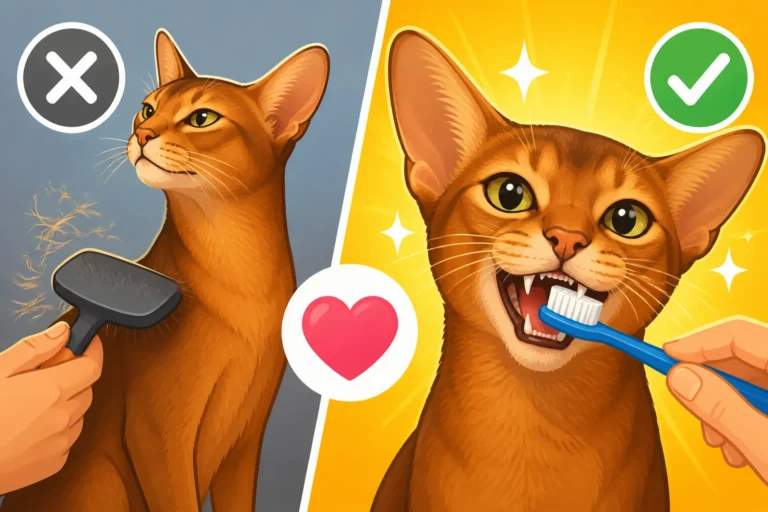
When it comes to brushing your Abyssinian, think of it less as a "deshedding operation" and more as a "polishing routine." Because they lack that dense undercoat, you won't be pulling out handfuls of fluffy hair. Instead, a weekly session with the right tools will keep their coat gleaming and healthy. A soft rubber curry brush or a natural bristle brush works wonderfully to gently massage their skin, distribute those natural oils, and remove any fine, loose hairs that might otherwise fall around your home. Some owners even like to finish with a soft chamois cloth to enhance the coat's natural sheen. Avoid metal rakes, slicker brushes, or anything marketed as a "deshedder," as these are designed for cats with thick undercoats and can actually damage the Abyssinian's delicate topcoat and irritate their skin. The focus here is on maintaining the integrity and shine of their existing coat, which is already naturally tidy.
| Grooming Tool Type | Best Use for Abyssinian | Why It Works / Doesn't Work |
|---|---|---|
| Rubber Grooming Mitt | Excellent for daily/weekly brushing, removing loose hair | Gentle, stimulates circulation, won't damage fine hairs. |
| Natural Bristle Brush | Good for smoothing the coat and adding shine | Soft bristles distribute oils evenly, ideal for finishing. |
| Fine-toothed Comb | Useful for checking for fleas or small tangles (rare) | Can gently remove minimal loose hairs, but use sparingly to avoid pulling. |
| Slicker Brush | Not Recommended | Too harsh for their fine, single coat; can pull out healthy hairs and cause discomfort. |
| Deshedding Tool | Absolutely Not Recommended | Designed for dense undercoats; will cut and damage the Abyssinian's delicate hairs, potentially ruining the ticking pattern. |
| Chamois Cloth | Perfect for finishing, bringing out the coat's natural luster | Buffs the coat to a high shine without any hair removal. |
Keeping Your Abyssinian Warm and Comfortable
Given their limited natural insulation, ensuring your Abyssinian stays warm is a year-round consideration, not just for winter. You'll quickly notice their preference for cozy spots. Provide them with soft, plush beds in sunny areas or near heat sources. Thermal blankets or self-heating pet mats can be a real luxury for them. Consider their sleeping arrangements, especially if your home gets chilly at night. Many Abyssinians love to burrow under blankets or snuggle right up to their humans for warmth. Even in warmer climates, if you run air conditioning constantly, make sure your Aby has access to warmer spots. For a cat that enjoys being high up, a well-placed cat tree can offer both a vantage point and a warmer air pocket, as heat rises. You might even find them nestled on top of your warm electronics! Remember, a comfortable Aby is a happy Aby, and providing adequate warmth directly contributes to their overall well-being.
Dental Care Takes Priority Over Coat Maintenance
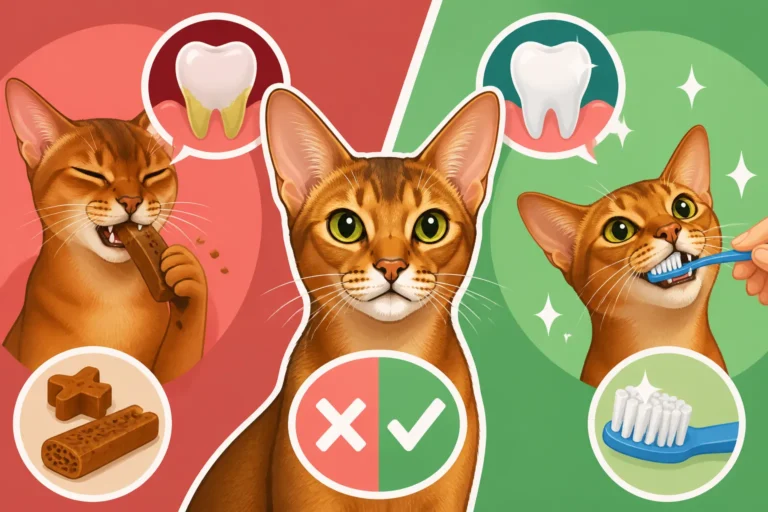
While coat care for an Abyssinian is refreshingly simple, it's vital not to mistake "low grooming needs" for "low overall care needs." In fact, because their coat is so low maintenance, it allows us to shine a spotlight on other, often overlooked, aspects of their health that are critically important. Dental health, for instance, is a huge one for Abyssinians. Many Abyssinians are prone to certain dental issues, such as gingivitis and tooth resorption, which can be painful and lead to serious health problems if neglected. This is why Why Abyssinian Dental Work Is the Biggest Line in the Budget is often true. Regular toothbrushing at home and professional dental cleanings at the vet are far more crucial for an Abyssinian than elaborate coat conditioning treatments. Establishing a routine of daily or every-other-day toothbrushing from a young age can make a world of difference. This emphasis on dental care highlights that while their undercoat might be thin, their overall health care commitment remains robust. This is also why we continuously stress [Why an Abyssinian Needs Its Teeth Cleaned More Often] than some other breeds.
Debunking Myths About the Abyssinian Coat
There are a few common misunderstandings that arise because of the Abyssinian's unique coat. Let's clear those up so you know exactly what to expect and what not to believe about their lovely fur.
Not Hypoallergenic, Just Less Shed
It's a common misconception that because Abyssinians shed so little, they must be hypoallergenic. While it's true that their minimal shedding means less hair and dander are dispersed into your home environment, they are not truly hypoallergenic. The primary allergen in cats isn't their fur itself, but a protein called Fel d 1 found in their saliva, urine, and skin secretions (dander). When a cat grooms itself, this protein dries on their fur and then flakes off with shed hair or dander, becoming airborne. Because Abyssinians shed less, there's less carrier material for the Fel d 1 protein, which can make them more tolerable for people with mild cat allergies. However, they still produce the allergen. So, while they might be a better choice for some allergy sufferers than, say, a Persian, they are not a guaranteed solution. Always spend time with an Abyssinian before bringing one home if you have allergies, just to be sure.
The Difference Between a Thin Undercoat and a Poor Quality Coat
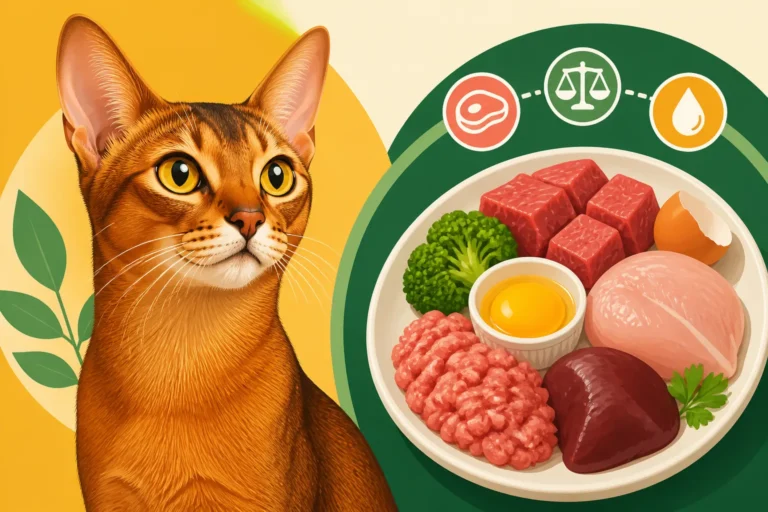
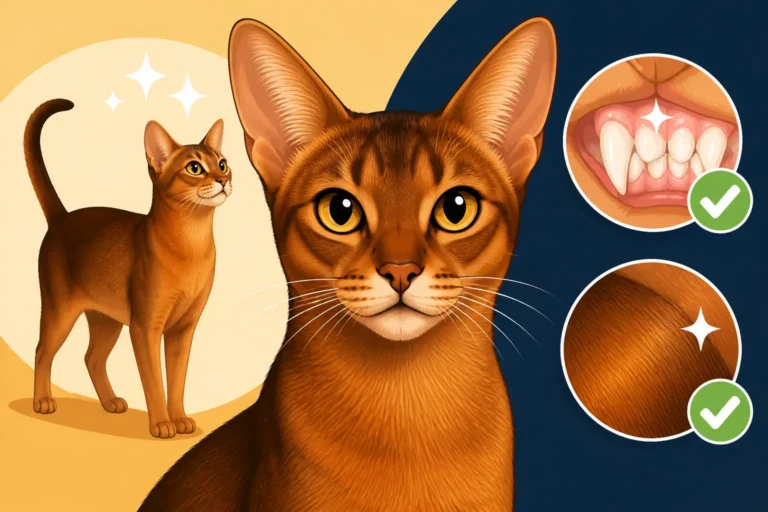
Sometimes, people unfamiliar with the breed might mistake an Abyssinian's naturally thin undercoat for a sign of a poor quality coat or even ill health. This couldn't be further from the truth. A healthy Abyssinian coat is short, fine, soft, and lies close to the body. It should have a noticeable sheen and that characteristic ticking that gives it depth and warmth of color. There should be no matting, and the skin underneath should be clear and healthy. A poor quality coat, on the other hand, might look dull, feel rough, have bald patches, or show excessive shedding (for an Aby, that is!). These are signs that something is genuinely wrong, perhaps a nutritional deficiency, parasites, stress, or an underlying health issue. The natural thinness of their undercoat is a breed trait, a mark of their elegance, not a flaw. If an Abyssinian looks scruffy or has patches of fur that seem "wrong," it warrants a vet visit, as Why a Lean Abyssinian Hides Illness Longer Than a Heavy Cat can make subtle changes in appearance critical indicators. Maintaining a high-quality diet, providing plenty of fresh water (especially important given the breed's predisposition to kidney issues, which is Why an Abyssinian's Kidney Problems Make Water Intake Matter), and regular preventative veterinary care are the best ways to ensure your Abyssinian's coat remains a testament to the breed's beauty.
Disclaimer
This article is for general informational purposes only and does not constitute professional advice. Laws, prices and regulations vary by location and change over time. Consult a qualified professional for guidance on your specific situation.