Why an Abyssinian’s Front Claws Wear Faster Than Its Back
If you’re an Abyssinian owner, you might have noticed something a little peculiar about your cat's claws: the front ones often seem to wear down faster or need trimming more frequently than their back counterparts. This isn't just your imagination or some random quirk; it's a direct result of the Abyssinian's unique blend of boundless energy, agility, and how they interact with the world around them. This guide will dive deep into the fascinating reasons behind this phenomenon, offering insights into your Aby's behavior and practical advice for keeping all their paws healthy and happy.
The Abyssinian's Natural Movement and Its Impact on Claws
Abyssinians are not your average lounge-lizards; they are athletes, acrobats, and explorers all rolled into one sleek, vibrant package. This inherent drive for movement directly translates into how their claws are used and, consequently, how quickly they wear down. Understanding their natural behaviors is key to deciphering the mystery of their uneven claw wear.
The Energetic Abyssinian Lifestyle and How They Interact with Their Environment
Ask any Aby owner, and they'll tell you these cats are "always on the go." They possess an almost tireless energy, constantly investigating, climbing, and exploring every nook and cranny of their domain. Unlike some more sedentary breeds, an Abyssinian doesn't just walk across a room; they dart, bound, and often scale objects that other cats might simply observe. This high level of activity means their paws, especially their front ones, are constantly engaged.
Think about a typical day for your Abyssinian. They might start by leaping onto the kitchen counter to "help" with breakfast, then scale a tall cat tree to survey their kingdom, only to then spring down to chase a feather wand toy across the floor. This relentless motion, characterized by quick changes in direction, impressive vertical leaps, and agile descents, puts constant demands on their front claws. These claws are their primary tools for gripping, launching, and maintaining balance during their acrobatic feats. This constant interaction with various surfaces, whether it's carpet, wood, upholstery, or scratching posts, contributes significantly to the wear and tear on those busy front digits. In fact, you'll find that How Many Hours a Day an Abyssinian Stays Active directly correlates with how much their front claws are put to use.
The Mechanics of Climbing and How Front Claws Engage
When an Abyssinian decides to climb, whether it's the drapes, a bookshelf, or a specially designed cat wall, their front paws lead the charge. They are not merely pushing off with their back legs; they are actively using their front claws to hook, grip, and pull themselves upwards. Imagine them like tiny mountaineers, digging their crampons (claws) into the surface to gain purchase. This is where the real work happens for the front claws.
Their hind claws, on the other hand, primarily provide the powerful push-off needed for the initial launch and then offer stability and leverage as the cat ascends. While essential for propulsion, they don't engage in the same direct, abrasive gripping action as the front claws during the climb itself. When an Abyssinian descends, often with surprising grace, those front claws once again bear the brunt of the action, carefully hooking and releasing to control their downward motion. They use them like brakes, slowing their descent and preventing slips. This repeated cycle of gripping, pulling, and braking on various textures is a major contributor to the increased wear and tear on the front claws. It's why providing vertical territory is so crucial for them; An Abyssinian Needs Height More Than It Needs Floor, and those front claws are what get them there.
Understanding Claw Anatomy and Wear Patterns
To truly appreciate why your Aby's front claws are getting more of a workout, it helps to understand a little about feline claw anatomy and how different environments impact their natural wear. It's not just about what they do, but how their tools are designed for the job.
The Structure of a Cat's Claw and Why It's Unique
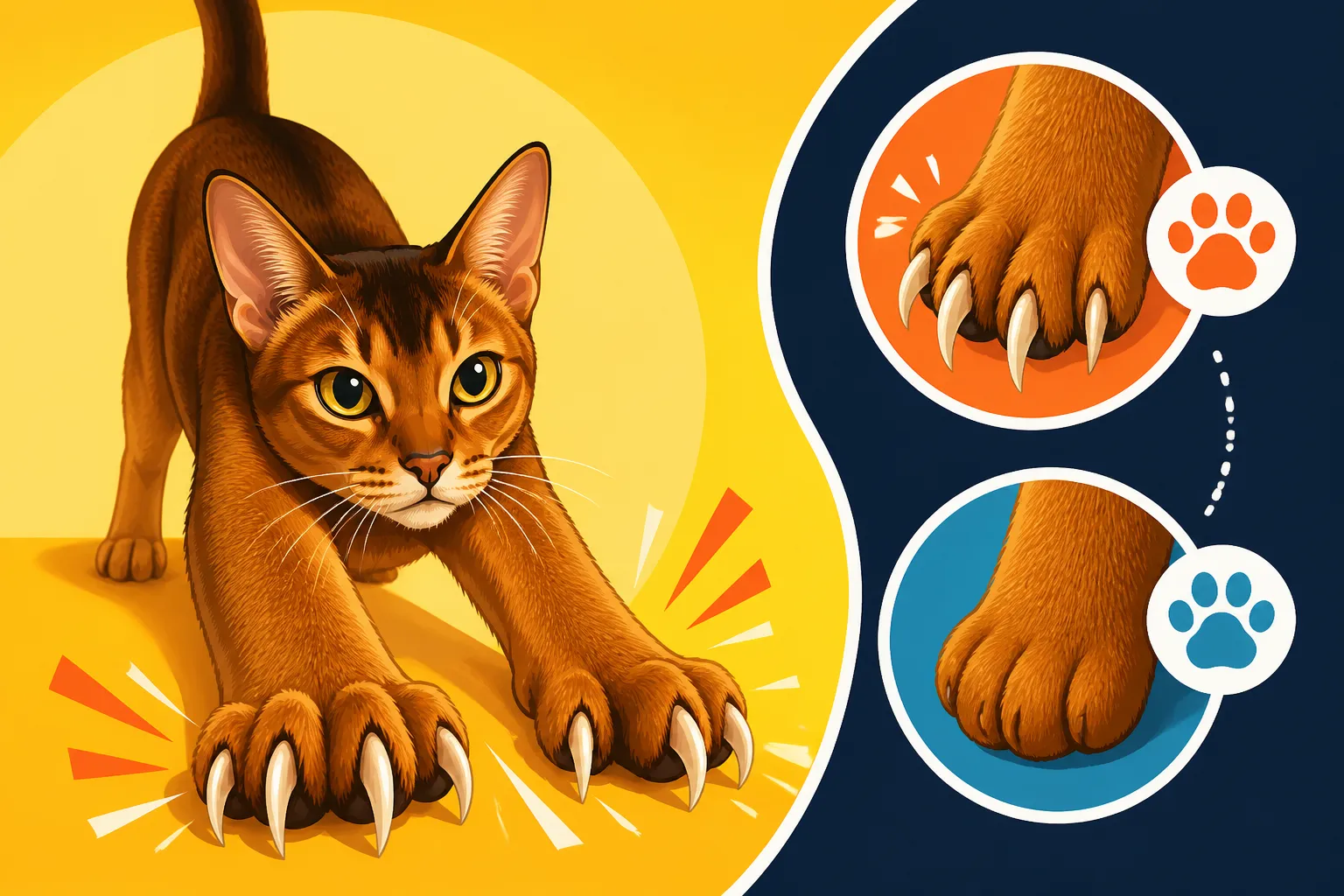
A cat's claw is an incredible piece of natural engineering, designed for both precision and power. Unlike dog claws, cat claws are retractable, meaning they can be sheathed back into a protective paw pad when not in use. This keeps them sharp and prevents unnecessary wear during casual walking. Each claw consists of several layers of keratin, much like our fingernails, surrounding a sensitive core called the quick, which contains blood vessels and nerves. As the cat grows, new layers of claw grow from the base, pushing the older, outer layers forward.
When a cat scratches, they're not just sharpening their claws; they're actually shedding those outer, dull layers, revealing the fresh, sharper claw underneath. This process is called "shedding the nail sheath." Abyssinians, with their active lifestyles, engage in this behavior frequently, and the sheer volume of their front-paw activity means these outer sheaths are shed more often. Imagine a pencil where the lead is constantly being exposed by aggressive sharpening – that's a bit like what happens with an Aby's front claws. The constant exertion and interaction with surfaces means these claws are naturally sloughing off older layers more rapidly than the less-used back claws, leading to a perception of faster wear.
How Different Surfaces Affect Claw Abrasion
The surfaces your Abyssinian interacts with daily play a massive role in how quickly their claws wear. Scratching posts, cat trees, carpeted floors, and even your furniture (we've all been there!) all contribute to this process, but they don't do so equally.
Sisal and Cardboard: These are the gold standard for cat scratching surfaces. Sisal, often found on high-quality cat trees, provides an excellent, fibrous texture that allows cats to really dig in and pull, effectively stripping away those outer claw sheaths. Cardboard scratchers, widely available from retailers like Amazon and Chewy, also offer fantastic resistance, letting cats get a satisfying shred. When your Aby attacks a sisal post or a cardboard scratcher, it’s primarily their front claws that are doing the heavy lifting, grappling and tearing at the material. This aggressive action leads to significant abrasion and helps naturally maintain the sharpness and length of their front claws. If you've ever seen the debris around a well-used scratching post, you know how much work those front claws are doing.
Carpet and Upholstery: While less ideal, carpet and some furniture fabrics also provide a degree of claw abrasion. However, the action here is often more akin to gripping and pulling than the deep, satisfying shredding that sisal offers. This can still contribute to wear, but it's often a less efficient process for shedding the outer layers and can sometimes lead to excessive wear if the cat isn't also using appropriate scratching surfaces. Plus, it tends to be less desirable for you, the owner! This is why Why an Abyssinian Destroys Cheap Furniture Faster is often linked to a lack of suitable, engaging scratching alternatives.
Wood and Hard Surfaces: When an Abyssinian climbs a wooden shelf or a door frame, their claws are essentially acting as small grappling hooks. The friction against these hard surfaces can also contribute to wear, but it's a different kind of wear compared to the shredding action on sisal. It’s more about the physical pressure and friction of holding on. Overall, the varied textures an active Abyssinian encounters, with their front claws taking the lead in gripping, pulling, and climbing, ensures that these claws are almost constantly being abraded and maintained, often more so than their less-used rear claws.
Practical Implications for Abyssinian Care and Enrichment
Knowing why your Aby's front claws wear faster isn't just interesting trivia; it has real, actionable implications for their daily care and overall well-being. Providing the right environment and routine can make a world of difference.
Providing Adequate Scratching Opportunities for Front Claws
Since their front claws are constantly at work, it's absolutely crucial to provide an abundance of appropriate scratching surfaces. This isn't a luxury for an Abyssinian; it's a fundamental need that supports their physical and mental health. Skimping on scratching options is a surefire way to have your furniture become the default target.
Firstly, think about variety. Abyssinians appreciate different textures and orientations. They need both vertical posts for a full-body stretch and horizontal scratchers for a different kind of claw workout. Consider tall sisal posts, as Why an Abyssinian Prefers a Tall Sisal Post is clear: it allows them to fully extend and dig in. You can find excellent, sturdy options on Chewy or Amazon that cater to their vertical stretching needs. Secondly, think about placement. Don't relegate scratchers to some hidden corner. Place them strategically in areas where your Aby spends a lot of time, especially near their climbing routes or where they tend to stretch after waking up. If they love to climb onto a specific shelf, consider a wall-mounted scratcher nearby. Essentially, Why an Abyssinian Needs a Post at Every Climbing Level reinforces this point; if they're going to climb it, they need to be able to scratch near it. Offering plenty of these designated scratching zones helps redirect their natural claw maintenance behavior away from your sofa and towards acceptable outlets, keeping their front claws healthy and appropriately worn.
Recognizing When Front Claws Need Trimming or Attention
Even with ample scratching opportunities, your Abyssinian's front claws might still need occasional trimming. This is especially true if you notice them snagging on carpet, curtains, or even their own bedding. Overgrown front claws can become uncomfortable, affecting their gait or even growing into their paw pads, leading to pain and potential infection.
Regularly checking your Aby's paws should be part of your routine. Gently press on their paw pads to extend the claws. You're looking for claws that are sharp but not excessively long, and that retract fully into the paw pad. If you hear them click-clacking on hard floors when they walk, it's definitely time for a trim. Learning How to Trim a Climbing Abyssinian's Claws effectively and safely is a valuable skill for any Aby owner. If you're nervous about doing it yourself, don't hesitate to ask your vet or a professional groomer for a demonstration. They can show you how to identify the quick to avoid cutting too short, which can be painful and cause bleeding. Keeping their claws at an appropriate length ensures their comfort and continued agility, preventing any potential issues that could arise from neglect.
Considering the Overall Health and Activity Level
The wear patterns on your Abyssinian's claws are often a good indicator of their overall health and activity level. A sudden change in how quickly their claws wear, or if you notice unusual breakage, could be a subtle sign that something else is going on.
For example, if your previously active Aby suddenly seems less interested in climbing or playing, and their claws are becoming noticeably longer and thicker, it might be a symptom of pain, joint issues, or another underlying health problem. Similarly, excessively brittle or flaky claws could indicate nutritional deficiencies or systemic issues. It's a good idea to monitor both front and back claws. While the front claws get more direct abrasion, the back claws also have a function in scratching and pushing off, and their condition can tell you something. Always remember How Often to Check a Climbing Abyssinian's Back Claws as well. A healthy Abyssinian, with their characteristic boundless energy, will naturally keep their front claws much more worn down than a less active cat, or even their own hind claws. If you observe any significant changes in their claw health or activity level, a quick check-up with your vet is always a wise decision. They can rule out any medical concerns and ensure your energetic companion remains as spry and curious as ever.
| Feature | Front Claws | Back Claws |
|---|---|---|
| Primary Use | Gripping, pulling, climbing, pouncing, scratching, braking | Propulsion, pushing off, scratching, stability, digging |
| Wear Rate | Generally faster due to constant friction and abrasion | Generally slower, less direct contact with surfaces |
| Maintenance | Require more frequent checks and trimming | Less frequent trimming usually needed |
| Engagement | Active, direct engagement in most activities | More indirect, supportive role in most activities |
| Impact of Life | High impact from climbing, play, and exploration | Moderate impact from running and jumping |
Disclaimer
This article is for general informational purposes only and does not constitute professional advice. Laws, prices and regulations vary by location and change over time. Consult a qualified professional for guidance on your specific situation.