Why Three Meals Suit an Abyssinian
It's a common dilemma for Abyssinian owners: you feed your vibrant, energetic companion what seems like a perfectly adequate meal, only for them to act like a starving waif an hour later. You might even find yourself wondering if your cat has a hollow leg or some secret compartment for food. The truth is, these incredible, active cats aren't built like your average couch-potato feline, and their metabolism demands a different approach to feeding. If you've been sticking to the traditional two meals a day, this guide is here to explain why embracing a three-meal-a-day schedule can be a game-changer for your Abyssinian's health, happiness, and even your sanity.
Understanding the Abyssinian's Unique Metabolism and Energy Needs
Abyssinians are not just beautiful; they are bundles of boundless energy, constantly exploring, climbing, and "helping" with whatever you're doing. This isn't just a quirky personality trait; it's deeply ingrained in their physiology and directly impacts their nutritional requirements and how they best process their food.
Why Abyssinians Burn Calories Faster Than Other Cats
Think of your Abyssinian as a tiny, highly efficient athlete. They possess a lean, muscular build with very little body fat, and they are almost perpetually in motion. This constant activity, combined with a naturally high metabolic rate, means they burn through calories at an impressive pace. Unlike some other breeds that might be content to nap for hours on end, an Abyssinian sees the world as its personal playground, and every object is a potential challenge to be scaled, investigated, or batted around. All that joyful chaos requires a significant amount of fuel.
This high energy expenditure isn't something that can just be "turned off." It's part of what makes them so captivating, but it also means their bodies are constantly working, consuming energy even when they appear to be resting. It's why trying to feed them like a less active breed often leads to them feeling genuinely hungry much sooner. If you've ever looked up How Many Calories an Adult Abyssinian Burns, you'll see it's often more than you'd expect for their size.
The Problem with Two Large Meals for an Active Cat
For many cat owners, feeding twice a day – once in the morning, once in the evening – is the standard routine. And for many cats, particularly those with a lower activity level, this works perfectly fine. However, for an Abyssinian, two large meals can create a "feast or famine" cycle that's far from ideal. They'll likely devour their large portion incredibly quickly, driven by that high metabolism, and then spend the next several hours feeling ravenous.
This isn't just about them pestering you for food; it can lead to genuinely uncomfortable hunger pangs. When they finally do get their next meal, they might eat it so fast that they regurgitate it, or they might gorge themselves, putting unnecessary strain on their digestive system. It doesn't align with how cats naturally eat in the wild either, where they would typically hunt and consume multiple small prey items throughout the day. Trying to force an Abyssinian's dynamic digestive system into a static, infrequent schedule just doesn't work well for their physical or mental well-being.
The Benefits of a Three-Meal-a-Day Schedule for Your Abyssinian
Transitioning to a three-meal schedule can feel like a bit of a juggling act at first, especially if you're used to a simpler routine. But the benefits for your Abyssinian are truly remarkable, addressing both their physiological needs and their lively personalities.
Stabilizing Blood Sugar and Energy Levels Throughout the Day
One of the biggest advantages of feeding your Abyssinian three smaller, more frequent meals is the stabilization of their blood sugar levels. When a cat eats a large meal after a long period of fasting, their blood sugar can spike and then drop, leading to energy fluctuations. For an Abyssinian, this might manifest as bursts of frantic activity followed by noticeable lethargy, or even heightened irritability.
By providing food more regularly, you help maintain a more consistent blood glucose level. This translates to more even energy throughout the day, reducing those dramatic peaks and valleys. Your cat will feel more consistently satiated, less prone to frantic begging or acting out due to hunger, and generally more balanced. This also means their mental focus might improve, making training sessions or interactive play even more engaging. You'll find that Why an Abyssinian's Calorie Needs Beat a Heavier Cat's is largely due to maintaining this high-energy state.
Supporting Digestive Health and Nutrient Absorption
Beyond just managing hunger, smaller, more frequent meals are significantly easier for your Abyssinian's digestive system to handle. When a cat eats a very large volume of food quickly, it can overwhelm their stomach, leading to rapid regurgitation (the dreaded "scarf and barf"), or simply pass through their system less efficiently. This means they might not be absorbing all the vital nutrients from their expensive, high-quality food.
Distributing their daily intake into three portions allows for a more controlled and gentle digestive process. The stomach isn't overloaded, and the intestines have a better chance to extract all the goodness from each meal. This can reduce instances of digestive upset, promote healthier bowel movements, and ensure your Abyssinian is truly getting the most from their diet. It's also particularly beneficial if you incorporate wet food, which is highly recommended for all cats, but especially Abyssinians, given their Why Wet Food Protects an Abyssinian's Kidneys – every bit of moisture helps.
Practical Tips for Implementing a Three-Meal Feeding Routine
Making the switch to a new feeding schedule can seem daunting, but with a few practical strategies, you can make it a smooth transition for both you and your Abyssinian. The key is consistency and understanding your cat's natural rhythms.
Choosing the Right Portions and Food Types
The first step is to accurately determine your Abyssinian's daily caloric needs. This will depend on their age, activity level, and whether they are spayed/neutered. Your veterinarian can provide the best guidance on this. Once you have that total, you'll simply divide it by three to get the portion size for each meal. It sounds simple, but precision matters to avoid over or underfeeding. How to Portion an Abyssinian Across Three Sittings truly makes a difference in managing their weight and energy.
When it comes to food, a high-quality, protein-rich diet is paramount. Many Abyssinian owners find a combination of wet and dry food works best, with wet food often making up at least two of the three meals to boost hydration. You might consider using puzzle feeders or slow-feeder bowls for one or two of the meals, especially for dry kibble. This makes them work for their food, tapping into their natural foraging instincts, slowing down consumption, and providing mental enrichment. Brands like Chewy and Amazon offer a wide array of these types of feeders that can really help extend mealtime engagement and prevent rapid eating.
Integrating Meal Times with Your Household Schedule
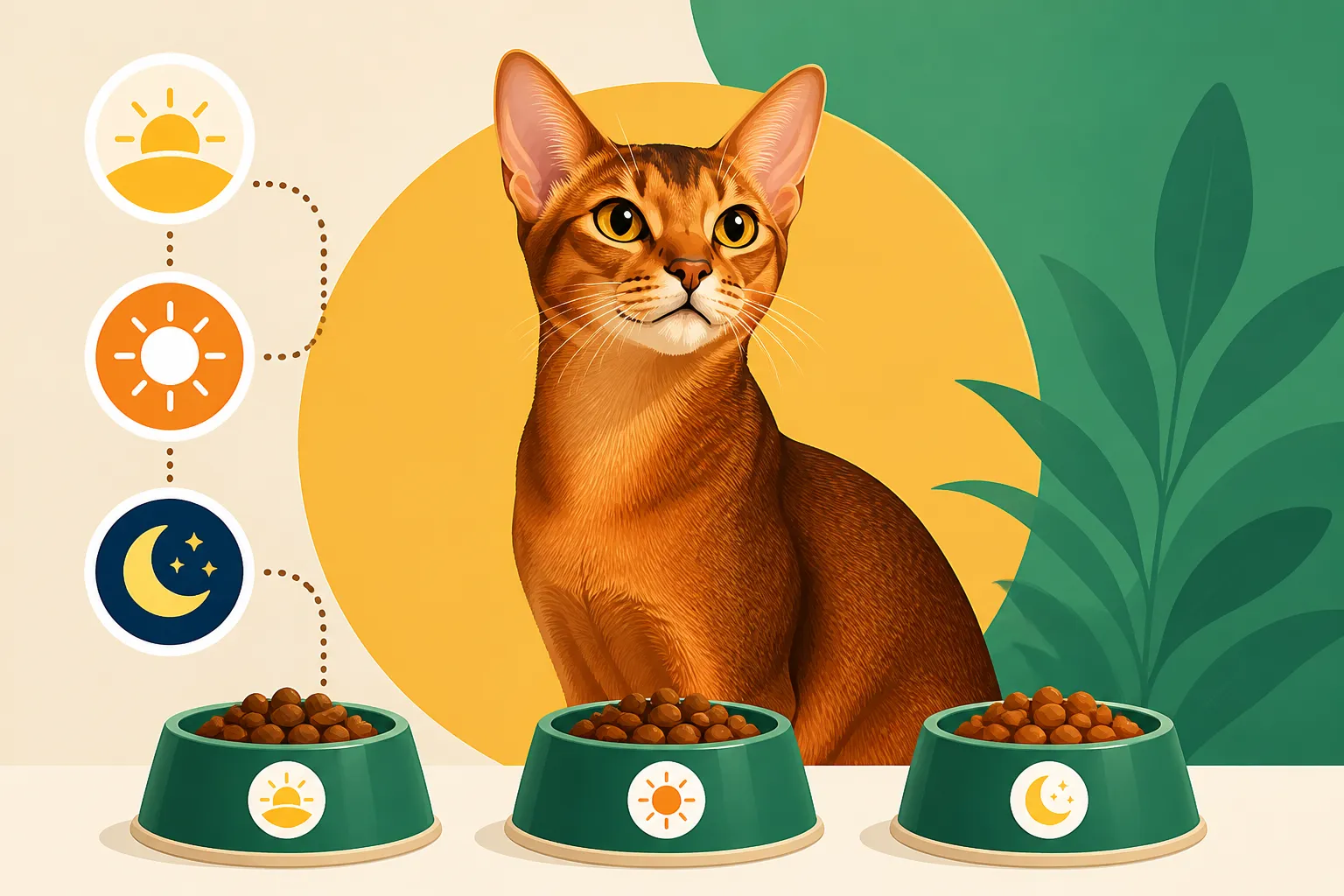
Creating a consistent schedule is crucial. Ideally, you'd aim for a morning meal (e.g., 7 AM), a midday meal (e.g., 1 PM), and an evening meal (e.g., 7 PM). Of course, life happens, and this isn't always perfectly achievable. If you work away from home, the midday meal can be the biggest hurdle. This is where technology becomes your friend.
Automatic feeders are a fantastic solution for that midday meal. There are many reliable models available on Amazon or Chewy that you can program to dispense a precise portion at a specific time. Some even connect to Wi-Fi, allowing you to dispense a meal remotely or check if your cat has eaten. If you're using fresh food, some higher-tech automatic feeders have cooling compartments, or you can portion meals in advance and store them appropriately for your schedule. The most important thing is predictability for your Abyssinian; they thrive on routine. Consistency in feeding times, even if you rely on an automatic feeder, goes a long way. This is crucial for Whether a Timed Feeder Works for an Abyssinian.
Monitoring and Adjusting Your Abyssinian's Feeding Plan
Once you implement the three-meal schedule, it’s not a “set it and forget it” situation. Your Abyssinian’s needs can change over time, and subtle adjustments might be necessary. The most important things to monitor are their weight, body condition, and energy levels. While Abyssinians are naturally lean, you should still be able to easily feel their ribs when you gently run your hands along their sides, and they should have a discernible waist. Learn How to Feel an Abyssinian's Waist Under Its Coat because their dense ticking can sometimes hide weight changes.
Regular weigh-ins at home, along with annual (or semi-annual for seniors) veterinary check-ups, are vital. Your vet can give you objective feedback on their body condition score. If your Abyssinian seems excessively hungry, or conversely, is leaving food behind, it might be time to tweak portion sizes slightly. Age also plays a role: kittens need more calories for growth, while senior Abyssinians might require fewer, or even different types of nutrients. Don't forget that Why an Abyssinian Rarely Gets Fat is largely due to their high metabolism, but it's still possible with overfeeding.
Common Challenges and Solutions When Transitioning to Three Meals
Even with the best intentions, changing a feeding routine can present a few bumps in the road. Knowing what to expect and how to handle it can make the process much smoother for everyone involved.
The "Always Hungry" Abyssinian and Begging Behavior
One of the most common frustrations for Abyssinian owners is their cat's seemingly insatiable appetite and persistent begging. Even after eating, they might chirp, follow you to the kitchen, or try to "help" you prepare your own meals. It's easy to assume they're still hungry because they haven't gotten enough food, but often it's a combination of habit, attention-seeking, and their natural high drive.
A three-meal schedule actually often reduces incessant begging in the long run. When an Abyssinian knows food is coming more frequently, the desperation between meals tends to lessen. However, in the initial transition, or if it's a deeply ingrained habit, you might still face persistent requests. It's important to differentiate between genuine hunger and seeking attention or treats. Stick to the scheduled meal times as much as possible, and for the times in between, redirect their energy. Engage them with a wand toy, offer a puzzle feeder with a tiny portion of their daily kibble, or simply give them some dedicated playtime. Understanding Why an Abyssinian Asks for Food It Does Not Need is key here – it's often more about mental stimulation than actual caloric need.
Managing Multiple Cats with Different Dietary Needs
If you live in a multi-cat household, especially with other breeds or cats on different diets, managing a three-meal-a-day schedule for your Abyssinian can get complicated. You don't want your Abyssinian eating another cat's food, and you certainly don't want a slower eater missing out. This is a common concern for owners, and it can feel like a logistical nightmare, especially since Whether Two Abyssinians Cost Twice as Much depends a lot on how you manage their resources, including food.
There are several strategies to tackle this. Supervised mealtimes are the most direct approach: you simply sit with them while they eat, ensuring everyone gets their correct portion, then pick up any uneaten food. If this isn't feasible for all three meals, consider microchip-activated feeders. These ingenious devices only open for the cat whose microchip is programmed into them, preventing food theft and allowing you to offer specific diets to specific cats without worry. They are a game-changer for multi-cat households, allowing you to maintain individual feeding plans even when you're not actively present.
| Feature | Two Meals A Day (Traditional) | Three Meals A Day (Recommended for Abyssinians) |
|---|---|---|
| Hunger Management | Long stretches of hunger, potential ravenous eating. | More consistent satiety, less extreme hunger between meals. |
| Energy Levels | Spikes and crashes, potential for hyperactivity or lethargy. | Stable blood sugar, more even and sustained energy throughout the day. |
| Digestion | Risk of rapid eating, regurgitation, and digestive upset. | Easier digestion, better nutrient absorption, less stomach upset. |
| Behavior | Increased begging, food obsession, potential for mischief. | Reduced begging, better mood stability, mental enrichment opportunities. |
| Metabolism | Not optimized for their fast metabolism and high activity. | Better matches their high metabolic rate and continuous activity needs. |
| Convenience | Simpler for owner, but potentially less ideal for cat. | Requires more planning/tools (auto-feeder) but better for cat's health. |
Ultimately, feeding your Abyssinian three meals a day isn't just about giving them more food; it's about providing it in a way that respects their unique biology and lifestyle. It aligns with their natural instincts, helps regulate their energy, and supports their overall health and happiness. It’s a commitment, yes, but one that pays dividends in a thriving, well-adjusted Abyssinian companion. Remember, How Many Meals a Day an Abyssinian Should Get truly makes a difference.
Disclaimer
This article is for general informational purposes only and does not constitute professional advice. Laws, prices and regulations vary by location and change over time. Consult a qualified professional for guidance on your specific situation.