Why the Abyssinian Was Named After a Country It Is Not From
It's always a bit of a head-scratcher when you hear about a cat breed named after a place that, it turns out, isn't actually its ancestral home. You get your heart set on a cat with an ancient, exotic backstory, only to find out the truth is a lot more complicated and, frankly, a bit of a historical mix-up. This guide is here to untangle the fascinating real story behind why the Abyssinian cat bears a name that doesn't quite fit its genetic roots, and how this beautiful breed truly came to be.
The Enduring Myth of Abyssinian Origins
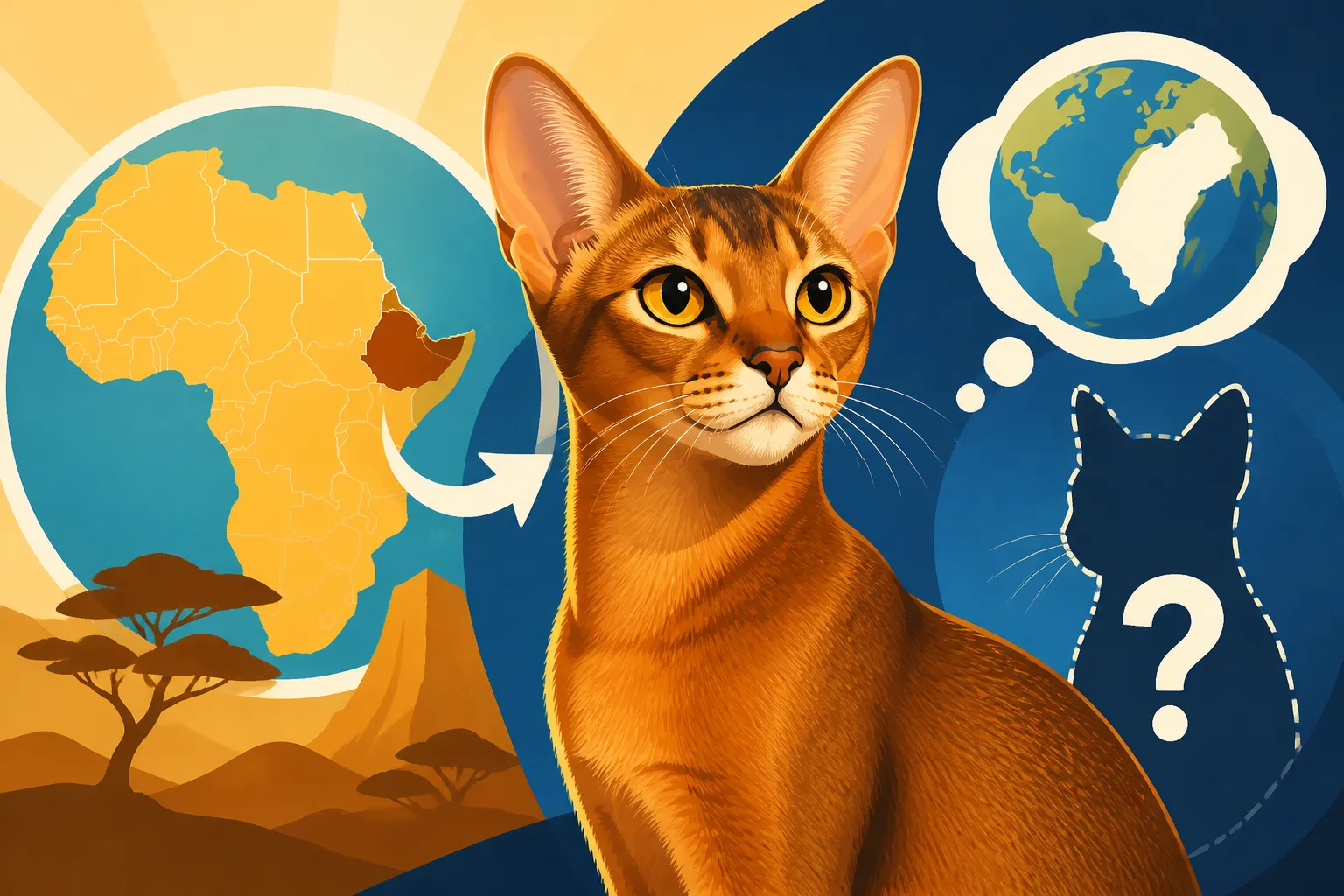
For generations, cat lovers and breeders alike have cherished a romantic tale about the Abyssinian's origins, a story that ties this elegant feline to the ancient lands of Ethiopia, once known as Abyssinia. It's a narrative that paints a vivid picture of a cat descending from regal felines of the Nile, brought back to Victorian England as a trophy of war. While incredibly appealing, this narrative, much like a well-loved legend, contains more poetry than historical fact, creating a persistent misconception that we still encounter today.
Zula and the 1868 Story Everyone Repeats
The most popular version of the Abyssinian origin story centers around a cat named Zula. The tale goes that Zula was brought to England in 1868 by Captain Barrett-Lennard at the conclusion of the Abyssinian War. This military campaign, led by Lieutenant General Robert Napier, saw British and Indian forces invade Ethiopia. Zula, supposedly a war prize, was then exhibited at the Crystal Palace Cat Show in London in 1871, sparking widespread fascination with her unique ticked coat and wild appearance. This story has been repeated so often, in breed books and on cattery websites, that it has become almost impossible to separate from the breed itself. It truly sounds like something out of an adventure novel, doesn't it?
The allure of this story is undeniable. Imagine a cat with such an ancient, noble lineage, a direct link to a far-off land and a historical event. It grants the Abyssinian a certain mystique, a sense of being a living artifact from a bygone era. For those of us who adore the breed, it feels good to believe our agile, intelligent companions carry such a grand heritage. This romantic connection to a distant past is part of what makes the Abyssinian so captivating to new enthusiasts. Many people still share this story with pride, not realizing the actual historical gaps that exist. You can read more about this specific tale in Zula and the 1868 Story Everyone Repeats.
Why the Link Between Zula and Modern Abyssinians Is Broken
While Zula makes for a wonderful story, the unfortunate truth is that there's no solid, documented evidence connecting her directly to the modern Abyssinian breed. In Victorian England, cat breeding was a far less formalized affair than it is today. Pedigrees were often sparse or non-existent, and records weren't meticulously kept. Cats were frequently given breed names based on their appearance or perceived exotic origins rather than a clear genetic line. Zula might have been a "ticked cat" from Abyssinia, or simply a ticked cat named after Abyssinia, but there's no continuity in her lineage that can be traced to the Abyssinians we know today.
The gap in documentation is a significant hurdle. There were no official registries like the CFA or TICA as we know them, nor were there strict rules about recording parentage. Imagine trying to trace your family tree back 150 years with only a few anecdotes and no birth certificates! That's essentially the challenge with Zula. Early cat fanciers were more interested in describing types of cats rather than establishing rigorous pedigrees. This loose approach to record-keeping meant that many early "Abyssinian" cats might simply have been domestic cats exhibiting the ticked pattern, perhaps even English street cats. This lack of a clear, unbroken lineage is why experts largely consider the Zula story to be a charming myth rather than factual history. The lack of a clear genetic bridge really leaves the connection between Zula and our modern Abyssinian cats broken, even if the legend persists. Learn more about the specific historical gaps in Why the Link Between Zula and Modern Abyssinians Is Broken.
The Problem with the "Oldest Breed" Claim
Hand-in-hand with the Zula myth often comes the claim that the Abyssinian is one of the "oldest breeds" or even a direct descendant of the cats worshipped in ancient Egypt. Again, this is a romantic notion, fueled by the Abyssinian's striking resemblance to figures in ancient Egyptian art—those lean, elegant bodies, large ears, and almond-shaped eyes. While the visual parallels are certainly captivating and make for great conversation, they don't hold up under scientific scrutiny.
The issue with claiming such ancient lineage is the lack of verifiable evidence. "Breed" in the modern sense implies a distinct, genetically uniform population developed through selective breeding. This kind of systematic breeding simply wasn't happening in ancient Egypt. While cats were revered, they weren't being bred for specific show standards or pedigrees. Furthermore, the term "oldest breed" is problematic because it often conflates ancient cat types with modern breeds. Many domestic cat populations across the world developed unique appearances over millennia, but these were natural populations, not "breeds" as defined by contemporary cat fancy organizations. The Abyssinian, as a recognized breed, is a product of human intervention and selective breeding that began in the 19th century, making it relatively "young" by comparison to species evolution, even if its appearance might evoke ancient echoes.
Unraveling the True Genetic Tapestry
If the romantic tales of Abyssinian origins don't hold water, then where do these beautiful, active cats truly come from? Modern science, particularly through genetic studies, has provided a much clearer, albeit perhaps less dramatic, answer. It turns out the Abyssinian's actual ancestors likely embarked on a much longer, more nuanced journey than a single warship's passage.
What Genetic Studies Say About the Abyssinian's Origin
In recent decades, breakthroughs in feline genetic analysis have allowed researchers to trace the ancestry of many domestic cat breeds with incredible precision. And what these studies have revealed about the Abyssinian is truly fascinating: their genetic markers point away from Ethiopia. Instead, the evidence strongly suggests that the Abyssinian, like many other modern breeds, traces its most significant genetic roots back to cats found along the coast of the Indian Ocean, specifically in Southeast Asia. This was a busy maritime trade route, a melting pot of cultures and, as it turns out, cats.
These genetic studies look at specific DNA markers that reveal population bottlenecks, ancestral relationships, and migration patterns. For the Abyssinian, the data consistently shows a genetic signature more aligned with cats from regions like Singapore and the Malaysian peninsula than with any specific ancient African population. This doesn't mean there's no African influence at all in the broader domestic cat genome, but for the distinct characteristics of the Abyssinian breed, the trail leads eastward. This kind of scientific detective work helps us reconstruct a more accurate family tree for our feline friends, moving beyond charming anecdotes to verifiable biological facts. It really shines a light on how much we're still learning about the origins of our beloved pets. For an in-depth look at these findings, check out What Genetic Studies Say About the Abyssinian's Origin.
Why the Indian Ocean Coast Fits the Abyssinian's Genes
So, why the Indian Ocean coast? Think about the history of global trade. For centuries, merchant ships plied the waters between Southeast Asia, India, the Middle East, and eventually Europe. These ships weren't just carrying spices, silks, and other goods; they were often carrying cats. Cats were invaluable on board for pest control, keeping rats and mice in check, protecting precious cargo. As these ships docked in various ports, cats would disembark, interbreed with local populations, and then sometimes re-embark on other vessels, spreading their genes across vast distances.
The ticked coat pattern, which is the hallmark of the Abyssinian, is quite common among domestic cats in certain regions along these historical trade routes. It's plausible that cats with this unique coat pattern, originating in Southeast Asia, slowly made their way westward over centuries, evolving and mixing with other feline populations. By the time the British cat fancy began to formalize breeds in the 19th century, ticked cats had likely already established themselves in various parts of the world, including Britain. When breeders started selecting for the specific traits that would become the Abyssinian, they were probably working with a pool of cats that had already arrived via these ancient maritime pathways, far removed from the Ethiopian highlands. It highlights just how much historical movement and interaction shaped the genetic landscape of our domestic animals. You can delve deeper into this concept with Why the Indian Ocean Coast Fits the Abyssinian's Genes.
How Wild Animal Traders Moved Cats Between Ports
Beyond the simple utility of cats on merchant ships, there was also a fascinating, if sometimes ethically questionable, aspect of wild animal trade that played a role. In the 19th century, there was a significant appetite among European elites for exotic animals. Collectors and zoological gardens sought out unusual creatures from distant lands, and sometimes domestic animals with exotic appearances were caught up in this trade. Sailors and opportunistic traders would bring back all sorts of animals to sell in port cities like Liverpool or London.
It's entirely possible that cats with striking appearances, like the ticked pattern of the Abyssinian, were brought back to Europe precisely because they looked "wild" or "exotic." These might have been stray cats from port towns in Asia, or even cats whose ancestry included some of the wilder-looking domestic cat populations found in those regions. These "imports" would then have entered the general cat population, their unique genes mixing and eventually being noticed by early cat fanciers. The very name "Abyssinian" suggests this desire for an exotic backstory, even if the cat itself didn't come from that exact locale. This complex interplay of utility, curiosity, and trade paints a much more intricate picture of how the Abyssinian's ancestors truly made their way to Europe.
The Role of Early Cat Fancies and Naming Conventions
The shift from simply having cats around to breeding them for specific traits and formally naming those breeds is a relatively recent phenomenon, largely taking hold in Victorian England. This era was characterized by an explosion of interest in pedigree animals, from dogs and horses to poultry and, of course, cats. The way breeds were named during this formative period often tells us more about human fascination and whimsy than about strict geographical origins.
The Naming Trend of the Victorian Era
The Victorians had a profound love for the exotic and the romantic. As the British Empire expanded, so did the public's curiosity about distant lands and their inhabitants, both human and animal. This fascination naturally spilled over into the nascent world of animal fancying. When a new type of cat with an unusual appearance emerged, especially one that lacked stripes and had a rather "wild" ticked coat, it was almost inevitable that it would be given a name that evoked a far-off, mysterious place. "Abyssinian" fit the bill perfectly.
It wasn't just Abyssinians; many other breeds received names that suggested foreign origins, even if their actual development happened much closer to home. Think of the Siamese, named after Siam (now Thailand), or the Russian Blue, named after Russia. These names added a certain cachet, making the animals seem more special and desirable. For the Abyssinian, the name also benefited from the lingering public interest in the Abyssinian Campaign, a relatively recent and well-publicized military endeavor. Attaching such a name to a cat type that looked distinctly different from common tabbies was a clever marketing move, even if it wasn't strictly accurate from a genetic standpoint.
Harrison Weir and the First Abyssinian Standards
No discussion of early cat fancying in Britain is complete without mentioning Harrison Weir. Considered the "Father of the Cat Fancy," Weir was instrumental in organizing the first cat shows and establishing breed standards. His book, "Our Cats and All About Them" (published in 1889), served as a foundational text for the emerging world of pedigree cats. In it, Weir documented various types of cats, including the "Abyssinian."
Weir's descriptions were critical in solidifying the image and characteristics associated with the breed. He focused on their unique ticked coat, their elegant build, and their often striking eye color. While he referenced the popular story of Zula, Weir's detailed written standards helped codify what an "Abyssinian" should look like, regardless of its precise origin. He defined the desirable physical traits that breeders would then selectively work towards. Without these early standards, the Abyssinian might never have become a distinct, recognized breed. His writings also illustrate how much of the early breed definition was based on visual appeal and romantic association rather than scientific lineage. If you're interested in what he wrote about our furry friends, you can find more in What Harrison Weir Wrote About the Abyssinian.
How the Ticked Coat Led to the "Bunny Cat" Nickname
The Abyssinian's defining characteristic is undoubtedly its ticked coat. Unlike a tabby cat with distinct stripes or swirls, each individual hair on an Abyssinian has multiple bands of color, giving the coat a shimmering, almost iridescent quality, without any visible barring or stripes on the body. This unique pattern is called agouti ticking, and it's what makes the Abyssinian look so much like a miniature puma or, more commonly, a wild rabbit.
In fact, one of the earliest nicknames for the Abyssinian was the "bunny cat" or "rabbit cat." This wasn't just a casual observation; it was a descriptor that highlighted their distinctly non-domestic appearance. Rabbits, especially wild varieties, often exhibit a similar ticked or agouti pattern, which provides excellent camouflage. This resemblance to a wild creature, combined with their slender, muscular bodies and large ears, contributed to the perception of the Abyssinian as something exotic and untamed, even if they were being bred in British catteries. This "wild" look further fueled the romantic idea of a far-off origin, making the name "Abyssinian" feel even more appropriate to the Victorians. The visual impact of that unique coat, so different from the common housecat, was clearly a huge part of its initial appeal. Discover more about this intriguing nickname in Why Early Abyssinians Were Called Bunny Cats.
Beyond the Name: The Abyssinian's Unique Place in History
While the naming origins of the Abyssinian might be steeped in a charming misconception, the breed's journey through history is anything but mythical. It's a testament to the dedication of breeders and the enduring appeal of these magnificent felines that they have survived challenges and maintained their vibrant spirit for over a century.
The Abyssinian Nearly Disappeared From Britain Twice
The path to securing the Abyssinian's place in the cat fancy was far from smooth, especially in its early British homeland. The breed faced two major existential threats that almost wiped it out entirely. The first was the devastating impact of the two World Wars. During wartime, resources were scarce, and maintaining breeding programs for pedigree animals became a luxury many couldn't afford. Food was rationed, catteries were abandoned, and many beloved lines were lost due to neglect or the inability to provide proper care. The focus shifted entirely to human survival, and pedigree cat populations plummeted across Europe.
Just as the breed began to recover from the ravages of war, another disaster struck: the rampant spread of feline leukemia (FeLV) in the mid-20th century. Before effective testing and vaccination were available, this highly contagious and deadly virus decimated catteries. Abyssinian lines, like those of many other breeds, suffered immense losses. It was a truly terrifying time for breeders, watching their carefully developed lines succumb to a mysterious illness. The resilience of the breed, and the sheer determination of a handful of dedicated fanciers, is what ultimately pulled them back from the brink. You can learn more about these perilous times in The Abyssinian Nearly Disappeared From Britain Twice.
How American Breeders Rebuilt the Abyssinian
Amidst these crises in Britain, a vital lifeline for the Abyssinian breed emerged across the Atlantic. American breeders, who had begun importing Abyssinians in the early 20th century, played a crucial role in preserving and expanding the breed's gene pool. While European lines struggled, American catteries were able to continue their breeding programs, often with cats that had been imported before the worst of the wartime and disease outbreaks hit. This geographic separation acted as a kind of genetic insurance policy.
American breeders diligently worked to maintain and refine the Abyssinian standard, focusing on health, temperament, and the breed's distinctive appearance. Their efforts ensured that viable populations existed, which could then be used to reintroduce new bloodlines into Europe once conditions improved. This cross-continental collaboration highlights the global nature of animal fancying and the shared passion that drives dedicated breeders. Without the foresight and commitment of these American enthusiasts, the Abyssinian as we know it today might truly be a historical footnote. Their work solidified the breed's presence and allowed it to flourish. Find out more about this important chapter in How American Breeders Rebuilt the Abyssinian.
What 150 Years Have Not Changed About the Abyssinian
Despite the convoluted origin story and the numerous challenges the breed has faced, some things about the Abyssinian have remained remarkably consistent over the last 150 years. Their core essence—their vibrant personality, their stunning appearance, and their athletic grace—is what continues to captivate hearts.
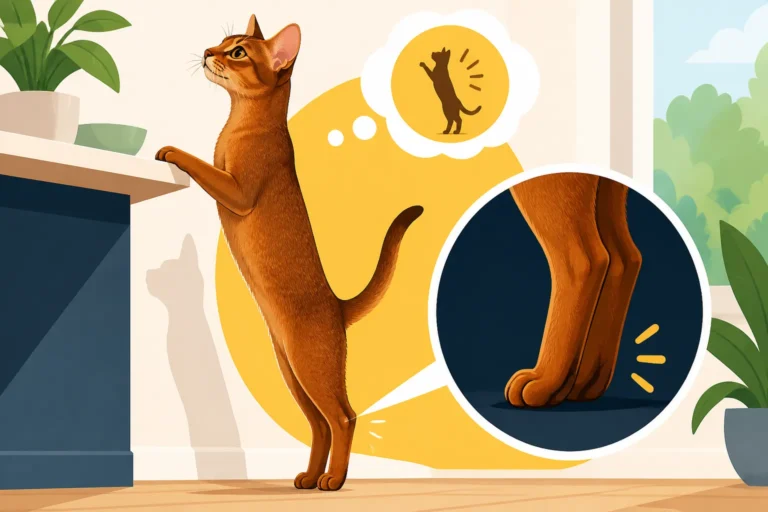
The Abyssinian is still renowned for its active, intelligent, and curious nature. They are often called the "clowns of the cat kingdom" or described as dog-like in their loyalty and playful antics. They thrive on interaction, love to explore every nook and cranny of their home, and possess an almost boundless energy that keeps their owners on their toes. This high-energy personality means they need plenty of enrichment and play, whether it's chasing wand toys or solving puzzle feeders. Even if their geographical origin is debated, their lively character is not.
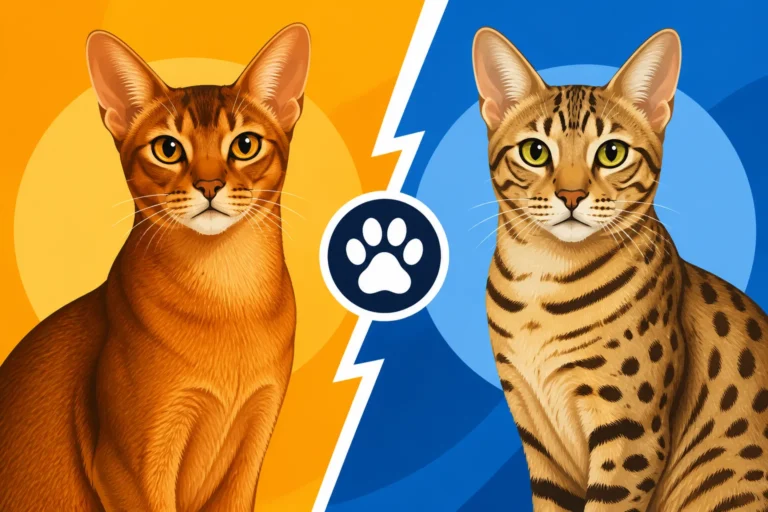
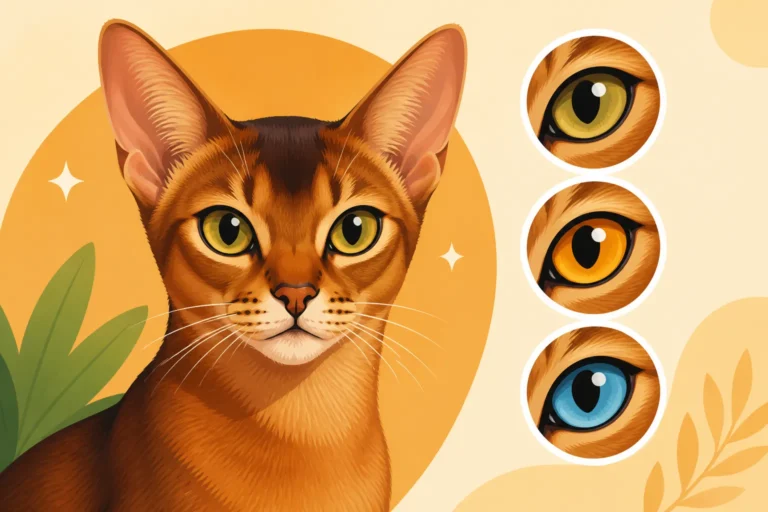
Physically, the defining characteristics laid out in those early standards are still very much present. The unique ticked coat, the elegant, muscular body, the large, expressive ears, and the piercing, almond-shaped eyes that give them an almost wild look. These are the traits that make an Abyssinian instantly recognizable and deeply cherished. While breeders continue to refine and ensure health, the fundamental beauty and spirit of the Abyssinian have endured, proving that sometimes, the story of what a cat is, far outweighs the story of where it supposedly came from. They are truly an enduring marvel, and their needs haven't changed much either; active cats require good nutrition and plenty of play, which you can easily source from places like Chewy. Their distinct look, as outlined by the breed standard, is still a marvel to behold, which you can read about in What an Abyssinian Looks Like Against the Show Standard. Many also wonder how they compare to similar breeds, and you can explore that in How an Abyssinian Differs From an Egyptian Mau. And for those who love their unique fur, The Ticked Coat Is the Whole Abyssinian Grooming Job offers a deep dive. Ultimately, the essence of the Abyssinian, its character and charm, remains untouched by the historical renaming. What 150 Years Have Not Changed About the Abyssinian truly highlights this constancy.
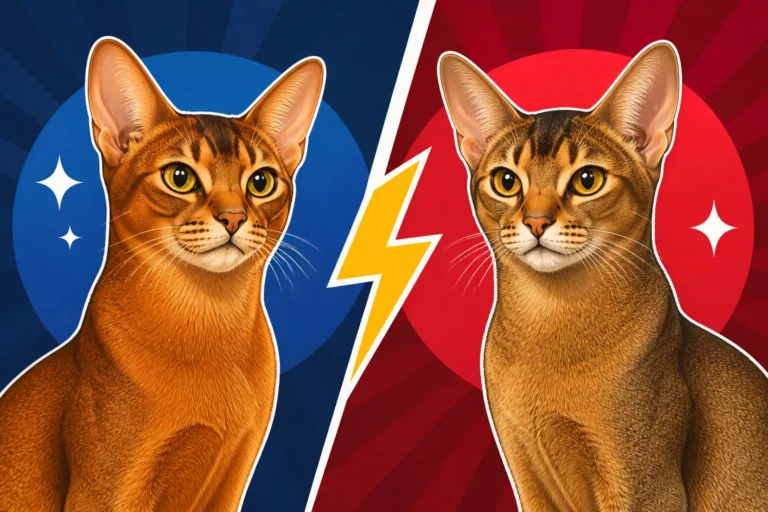
Here's a quick comparison of the myth versus the genetic reality:
| Feature | Traditional (Mythical) Origin | Genetic Evidence |
|---|---|---|
| Primary Location | Abyssinia (modern-day Ethiopia) | Southeast Asia and the Indian Ocean coast |
| Method of Arrival | Brought to England by returning soldiers (e.g., Zula) | Gradual spread via ancient maritime trade routes |
| Time Period | Mid-19th Century (specifically 1868) for direct ancestors | Centuries of slow migration leading up to 19th-century breed development |
| Evidence Basis | Historical anecdote, popular narrative, visual resemblance | Modern DNA analysis of specific genetic markers |
| Core Ancestry | Descendant of ancient Egyptian cats, wild African cats | Domestic cats from Southeast Asian populations |
| Naming Influence | Exotic appeal of distant lands, military campaign | Desire for romantic backstory for a unique-looking cat |
As you can see, the story we tell ourselves about the Abyssinian's origins is beautiful, but the scientific tale is just as captivating, showing how far our understanding of these wonderful creatures has come. The Abyssinian's journey is a testament to natural migration and dedicated human breeding, creating the spirited, elegant companion we cherish today, a cat whose wild beauty can be admired, and whose toys and treats can easily be found on Chewy.
Disclaimer
This article is for general informational purposes only and does not constitute professional advice. Laws, prices and regulations vary by location and change over time. Consult a qualified professional for guidance on your specific situation.