When an Abyssinian Kitten’s Eye Color Settles
An Abyssinian kitten’s eyes often start blue, then gradually develop the gold, green, or hazel shades associated with the breed. The change can make it hard to know whether a kitten’s color is still developing or has settled. This guide explains the usual timeline, what affects the final shade, and which eye changes deserve a call to your veterinarian.
When an Abyssinian kitten’s eye color usually settles
Why kitten eyes start blue
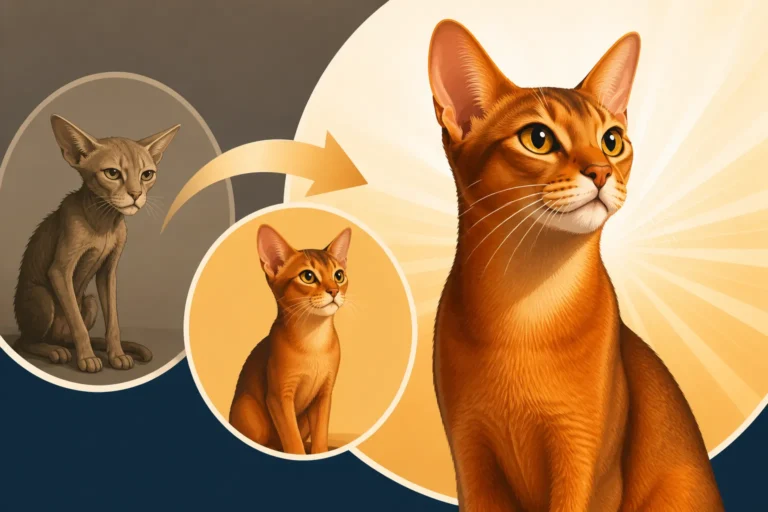
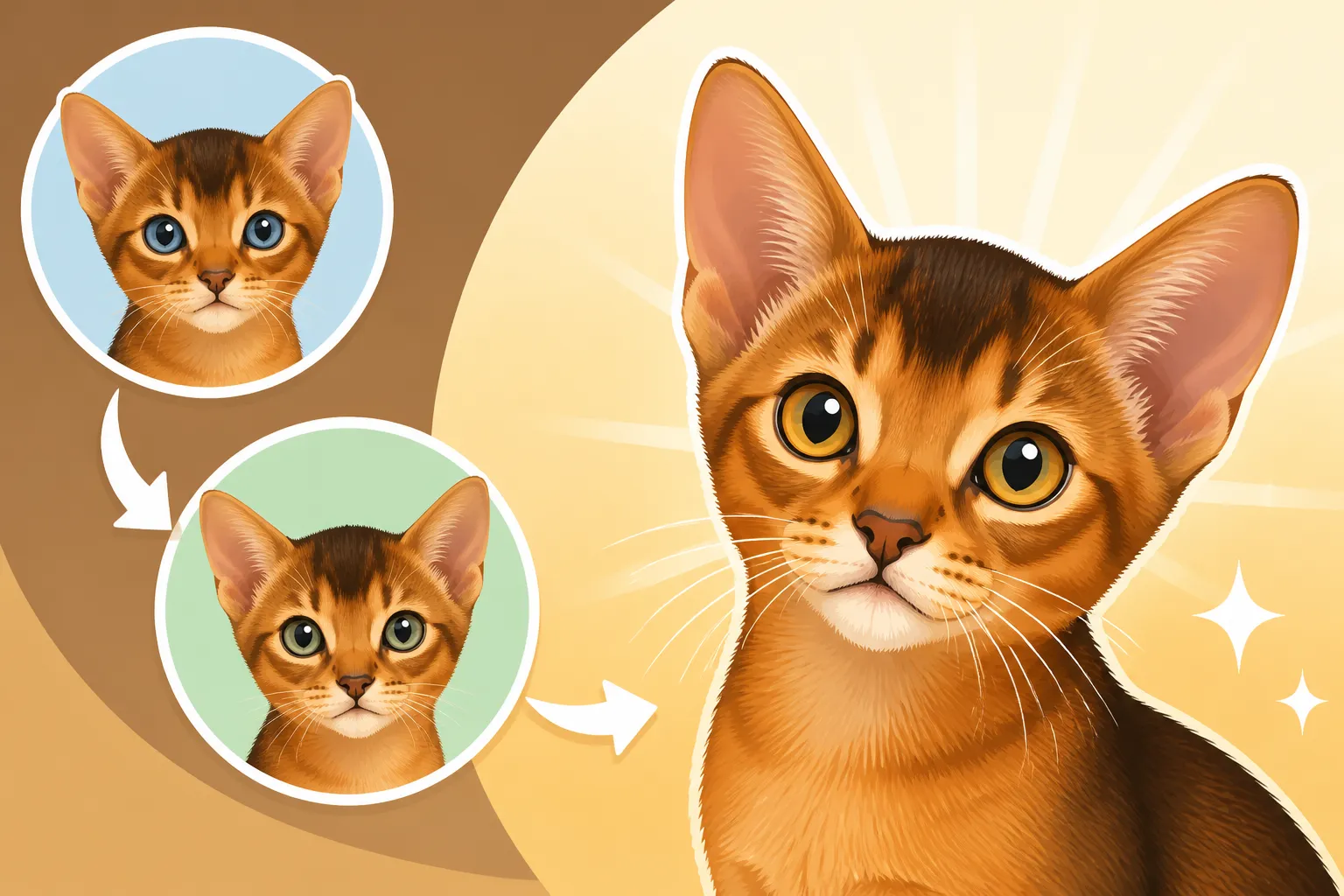
Many kittens are born with blue-looking eyes because the iris has little pigment at first. As a kitten grows, pigment-producing cells develop and add color. The blue appearance is usually part of normal development, not a preview of the adult eye shade.
The change is gradual rather than a switch that happens overnight. You might first notice a muted gray, greenish, or amber cast around the pupil, followed by a stronger, more recognizable color. Lighting can make the same eyes look different from one day to the next, so a single glance is not a reliable way to judge whether the color is final.
Abyssinian kittens can vary in how quickly their eye color develops. Age, individual development, and inherited traits all play a part. The coat color does not provide a dependable shortcut to predicting whether a kitten’s eyes will mature to green, gold, or hazel.
The typical timeline for eye color changes
Eye color often begins changing during the first several weeks of life. By the time a kitten is a few months old, its adult shade may be becoming clearer, but some eyes continue to deepen or shift subtly for longer. A kitten’s color is commonly more settled by around three to six months, though individual timing varies.
This timeline is a helpful guide, not a deadline. If an Abyssinian is still young and its eyes look like they are changing evenly, gradual development is generally less concerning than a sudden change in appearance. For a closer look at how kittens change overall, see What an Abyssinian Kitten Looks Like at Eight Weeks and When an Abyssinian Kitten's Adult Ticking Arrives.
| Kitten age or stage | What you may notice | What to keep in mind |
|---|---|---|
| Newborn and very young | Eyes may look blue or blue-gray | Low iris pigment is common early in development |
| Several weeks old | A hint of another shade may appear | The change can be subtle and uneven in appearance |
| A few months old | Gold, green, or hazel tones may become clearer | Color can continue to deepen |
| Later kittenhood | The shade may look more consistent | Individual development varies; a vet can assess unusual changes |
Try comparing photos taken in similar natural light rather than relying on memory. Indoor bulbs, phone cameras, and reflections from nearby colors can make green eyes appear amber or make gold eyes look much paler. If the kitten is otherwise comfortable and the color is changing gradually in both eyes, patience is usually more useful than checking repeatedly throughout the day.
What adult eye colors are typical in an Abyssinian
Gold, green, and hazel shades
Adult Abyssinian eyes are often described as gold, green, or hazel, with variation in depth and tone. One kitten may grow into a warm golden color, while another develops a clearer green. Some eyes appear to sit between familiar color labels, especially in certain lighting.
There is no need to force a precise label while the kitten is still growing. Even among adults, people may describe the same eye color differently. If you want to understand the range commonly associated with the breed, Which Eye Colors an Abyssinian Can Have offers useful context.
Abyssinian eyes are also known for their expressive appearance. The darker outline around the eyes can make the iris color look more vivid, much like a frame brings attention to a picture. That outline is separate from the iris pigment itself; learn more in Why an Abyssinian's Eyes Are Rimmed in Dark.
Why coat color does not tell you the final eye shade
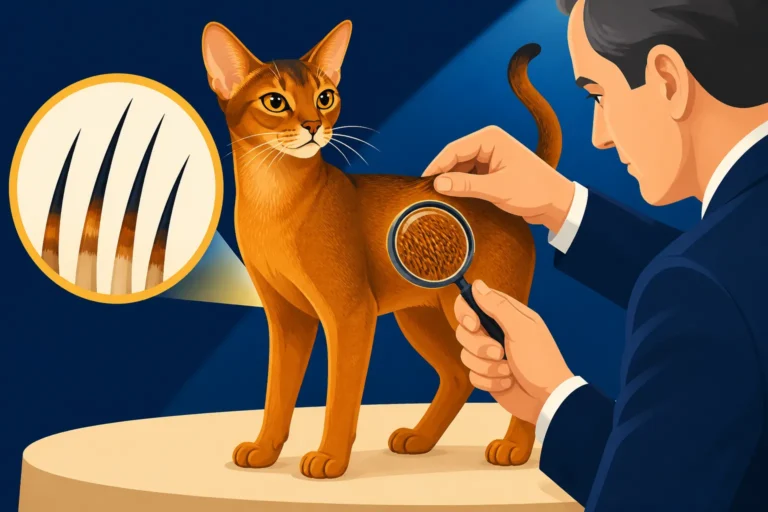
It is tempting to predict a kitten’s adult eye color from its coat. The coat may change as it matures, and its ticking can look different in warm indoor light, shade, or direct sun. Eye color and coat color are influenced by inherited traits, but one should not be treated as a simple color chart for the other.
That means two kittens from the same litter can develop different eye shades, even if their coats look similar. A kitten’s adult eye color is best understood as its own inherited feature rather than a guaranteed match to its coat. For the same reason, a breeder’s description of a young kitten’s future eye color is an informed expectation, not a promise.
If you are visiting a litter, look at the kitten in soft daylight and avoid judging from flash photography. Take a few photos from the same distance and angle over time. These are useful keepsakes, but they are not a substitute for a veterinary examination if the eye itself looks irritated or abnormal.
How to tell normal color development from an eye problem
Signs that are usually less concerning
A gradual, fairly even shift in color as a kitten matures is generally different from sudden cloudiness, redness, or discomfort. If both eyes appear clear and the kitten is opening them normally, playing, eating, and behaving as usual, a changing shade alone may simply reflect development.
It is also normal for a kitten to squint briefly in bright light or to have slight differences in how the eyes look in photographs. A camera flash can create reflections, while shadows can make one iris seem darker. Check the eyes in comfortable daylight without shining a light directly into them.
Keep a simple record if you are unsure: note the kitten’s age, the date, and what you see, then take a clear photo in consistent lighting. A secure carrier can make routine visits less stressful. If you are comparing carriers online, Chewy is one place to browse options, but prioritize a secure fit, good ventilation, and a design you can carry steadily.
Changes that merit veterinary advice
Contact a veterinarian if an eye becomes cloudy, looks swollen, stays red, produces unusual discharge, or seems painful. Persistent squinting, rubbing at the face, keeping one eye closed, or a sudden difference between the eyes also deserves attention. A kitten that bumps into objects or seems unable to track movement should be assessed promptly.
A color difference that appears suddenly is not the same as a slow developmental change. Likewise, a new white or opaque area should not be assumed to be a harmless pigment variation. Eye problems can worsen quickly, and a veterinarian can examine the surface of the eye and other structures to work out what is happening. For more on symptoms to watch for, see When an Abyssinian's Eye Discharge Means Something.
When preparing for an appointment, bring your notes and photos, and mention when you first noticed the change. A familiar blanket in the carrier may help the kitten settle. If Chewy is where you already shop for routine pet supplies, you may find carrier liners or familiar bedding there; avoid putting any product near the eye unless your veterinarian recommends it.
How to monitor your kitten’s eyes as they grow
Take useful photos without overchecking
Choose a consistent spot with gentle natural light and photograph both eyes from a comfortable distance. Avoid flash, direct sun, and repeated handling just to get a better picture. A weekly or occasional photo is more useful than dozens of pictures taken under different lighting conditions.
Record what you see in plain language. For example: “both eyes look clear; color seems slightly greener than last month” is more useful than trying to decide whether an iris is exactly gold or hazel. Note any discharge, squinting, or behavior change separately from the color itself.
This record can help at a regular checkup, especially if you are uncertain whether a change is gradual. It is not necessary to buy special eye-care products just to observe color. If you come across eye washes or drops while browsing Chewy or another retailer, do not use them simply because the label says they are for pets. Ask your veterinarian first, since the right response depends on what is causing a symptom.
Make eye checks part of ordinary care
A quick, calm look at your kitten’s face during everyday handling can help you notice changes early. You do not need to restrain the kitten or pry its eyelids open. Simply observe whether both eyes look clear, whether the kitten seems comfortable, and whether anything has changed since your last check.
At routine appointments, mention questions about color even if the kitten seems well. A veterinarian can tell you whether the appearance fits normal development and whether any further examination is needed. An early visit is especially useful for a new kitten, when the veterinarian can also review general health and answer practical questions; see Why an Abyssinian Kitten Needs an Early Vet Visit.
Most importantly, do not let a normal color timeline distract you from a symptom. Gradual pigment development is one thing; pain, persistent discharge, cloudiness, or sudden vision changes are another. If something looks wrong, getting professional advice is more helpful than trying to identify the cause from a photograph.
Disclaimer
This article is for general informational purposes only and does not constitute professional advice. Laws, prices and regulations vary by location and change over time. Consult a qualified professional for guidance on your specific situation.