What an Abyssinian Does First as Its Sight Goes
It’s a heart-wrenching thought for any Abyssinian owner: the possibility of their vibrant, energetic companion losing their sight. These athletic, intelligent cats are so renowned for their agility and curiosity that the idea of them navigating the world with impaired vision can feel overwhelming. This guide aims to shed light on the initial, often subtle, signs that an Abyssinian might display as its vision begins to fade, helping you recognize these crucial early indicators and understand the steps you can take to support your beloved feline.
The Sneaky Start of Vision Loss in Abyssinians
Unlike a sudden injury, most vision loss in Abyssinians is gradual. This slow progression, coupled with a cat's incredible ability to adapt and mask vulnerabilities, makes it incredibly challenging for us, their devoted humans, to notice anything amiss in the early stages. Abyssinians are masters of disguise when it comes to illness or impairment, often pushing through discomfort or limitation with sheer determination.
Subtle Behavioral Shifts You Might Miss
When an Abyssinian's sight first starts to go, it's rarely a dramatic change. Instead, you'll likely observe tiny, almost imperceptible shifts in their routine behavior. For example, your Abyssinian, who once bounded fearlessly down the stairs, might start to hesitate slightly at the top or bottom, taking an extra moment to gauge the steps. This isn't usually due to pain or stiffness but a subtle loss of depth perception. You might also notice them being a little less confident when jumping onto familiar surfaces, perhaps overshooting or undershooting their landing spot by just a fraction. It’s not enough to cause an accident yet, but it’s a tiny crack in their usual flawless execution.
Another common early sign is a change in how they interact with objects in their environment. Your Aby might start to 'stare' a bit more intensely at a toy before pouncing, or perhaps they’ll tilt their head at an unusual angle to get a better look. In low light, these subtle changes become more pronounced, as they rely more heavily on their sight during these times. They might even bump into things they usually glide past, like the corner of a coffee table or a slightly misplaced chair. This isn’t a full-blown collision, but more of a gentle brush or an awkward adjustment to avoid one, particularly as their night vision goes first. These are the kinds of cues that often make us think our cat is just being a bit clumsy or having an off day, rather than signaling a deeper issue.
Changes in Navigational Habits
Abyssinians are creatures of habit and possess an incredible internal map of their home. As their vision starts to decline, especially if it's asymmetric (one eye affected more than the other), this internal map can become less reliable. You might notice your cat sticking more rigidly to established paths, avoiding shortcuts they once took or hesitating to explore new arrangements of furniture. For instance, if you move a large plant pot a few inches, your Abyssinian might walk right into it or pause uncertainly, relying on their whiskers and memory to re-establish the new boundary.
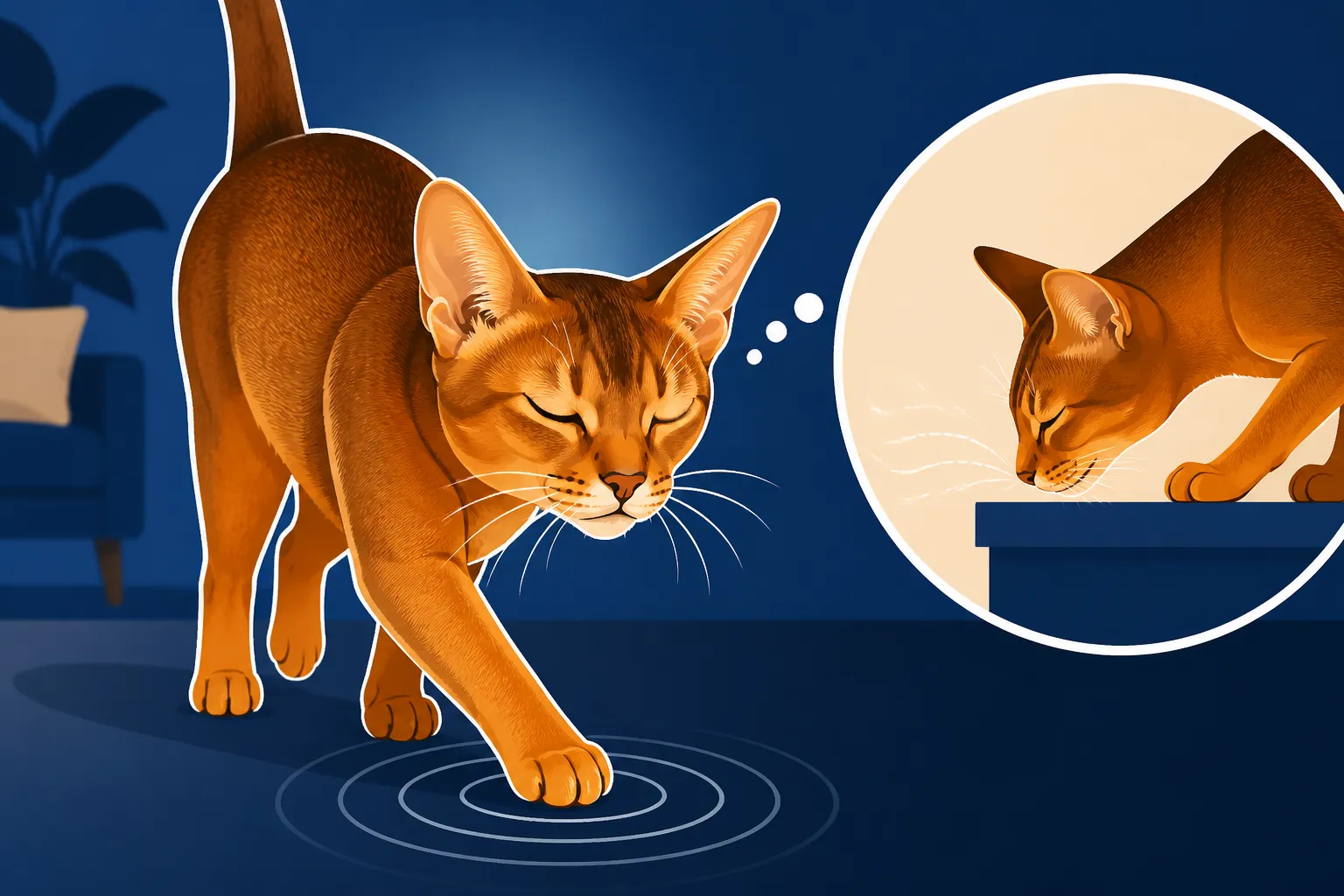
They might also become more reliant on sound and scent to navigate, rather than just visual cues. You may observe them twitching their ears more frequently to pinpoint sounds or sniffing the floor more often as they walk, using their nose like a guide. A cat who once effortlessly navigated a dark room might now wait for you to turn on a light before entering, or choose to sleep in a spot closer to a light source. These small adjustments in their daily travels are their way of compensating for an increasingly blurry or narrowing world, long before they show overt signs of distress.
Altered Play Patterns
Play is the lifeblood of an Abyssinian. Their boundless energy and intelligence truly shine during interactive play sessions. When their sight begins to fade, however, you’ll start to see a difference in their play style. Instead of instantly locking onto a wand toy or a laser pointer dot, they might seem to track it less efficiently, missing swatting attempts more frequently. They may become less interested in toys that move quickly or unpredictably across open spaces, preferring those that stay closer to the ground or make distinct sounds.
They might even get frustrated more easily during play, especially if they are missing their target repeatedly. You might notice them giving up on a game sooner than usual or retreating to a quiet spot if the play session becomes too visually demanding. They might still chase a thrown crinkle ball, but they might struggle to locate it once it stops moving. For an Abyssinian, who truly thrives on interaction and mental stimulation, these changes in play can be a quiet indicator that their keen eyesight is no longer quite as sharp as it once was, hinting at the gradual progression of a condition like How PRA-rdAc Blinds an Abyssinian Slowly.
The Role of Progressive Retinal Atrophy (PRA-rdAc)
Progressive Retinal Atrophy (PRA-rdAc) is one of the most common causes of inherited vision loss in the Abyssinian breed, and it's a condition that all responsible breeders screen for. Understanding how it progresses can help owners be more vigilant.
Understanding PRA-rdAc and Its Onset
PRA-rdAc, or rod-cone degeneration in Abyssinians, is a genetic disorder that causes the photoreceptor cells in the retina (the light-sensitive tissue at the back of the eye) to degenerate over time. The "rod" cells, responsible for night vision and detecting movement, are typically affected first, leading to initial signs of night blindness. The "cone" cells, which handle color and detailed vision in brighter light, then begin to degenerate, eventually leading to complete blindness. This degeneration is, as the name suggests, progressive, meaning it gets worse over time.
While the gene mutation is present from birth, the clinical signs of vision loss usually don't appear until an Abyssinian is a young adult, often between the ages of one and five years old. However, some cats may show earlier or later onset, which makes regular observation crucial. This means that a seemingly healthy, energetic young Abyssinian could quietly be experiencing the very first stages of vision degradation, making the subtle behavioral changes discussed earlier all the more important to recognize. The knowledge that PRA-rdAc Takes an Abyssinian's Sight by Five highlights the typical age range for observable symptoms.
How an Abyssinian's Pupils Change With rdAc
One of the less obvious, but still significant, physical indicators that an Abyssinian's sight might be going due to PRA-rdAc relates to their pupils. In the early stages of rod degeneration, an affected cat might develop pupils that are unusually dilated, particularly in dim light or darkness. This is because the remaining healthy parts of the retina are trying to capture as much light as possible to compensate for the failing rod cells. They're essentially trying to open the aperture wider to let more light in.
As the disease progresses and more of the retina is affected, the pupils may remain dilated even in brighter light. This happens because the retina is no longer effectively processing light, so the iris doesn't constrict as it normally would. You might also notice a tapetal reflection, a greenish or yellowish "eye shine" that becomes more prominent. This is the reflective layer behind the retina, which becomes more visible as the retina thins. Observing these changes, especially in combination with behavioral cues, should prompt a veterinary visit.
Genetic Testing and Proactive Breeding
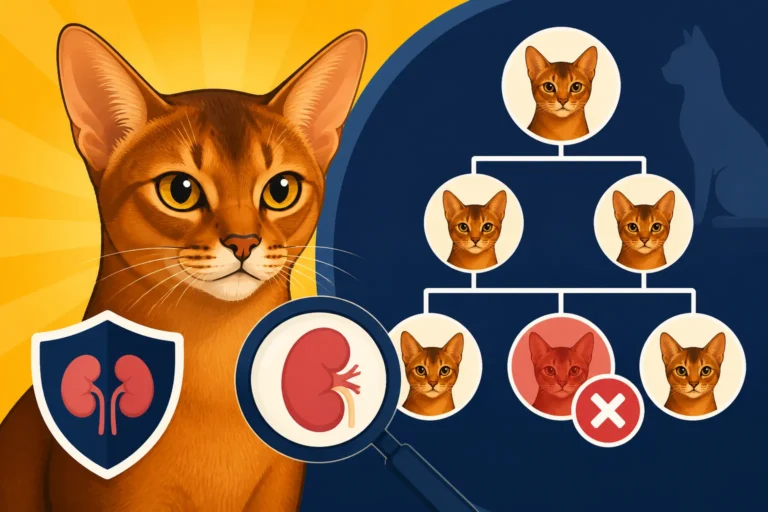
Fortunately, for PRA-rdAc, there's a highly reliable DNA test available. This test identifies whether an Abyssinian carries the gene mutation responsible for the condition. Breeders can test their cats to ensure they are not breeding affected individuals or two carriers together, which would produce affected kittens. A cat can be "clear" (meaning they don't carry the gene), a "carrier" (meaning they carry one copy of the gene but typically won't develop the disease themselves, though they can pass it on), or "affected" (meaning they have two copies of the gene and will develop the disease).
Responsible breeders ensure that both parent cats are tested and that no breeding pair will produce affected kittens. This proactive approach has significantly reduced the incidence of PRA-rdAc in the breed. If you're considering bringing an Abyssinian into your home, always ask about the parents' genetic test results. Knowing What an Abyssinian Breeder Should Have Tested Before You Buy is crucial for securing a healthy kitten. For existing owners, if your cat's history is unknown, a simple How the CEP290 Test Clears an Abyssinian can confirm their genetic status, giving you valuable information about their future health.
Compensatory Mechanisms and Their Limitations
Abyssinians are incredibly resourceful animals. When faced with a physical challenge like vision loss, they don't give up; they adapt. However, there are limits to these adaptations.
Relying on Other Senses
One of the primary reasons vision loss is so hard to detect early in Abyssinians is their incredible ability to compensate using their other highly developed senses. Their hearing is phenomenal, capable of picking up subtle sounds that alert them to movement or changes in their environment. They use their ears like radar dishes, constantly scanning for auditory cues. Their sense of smell is also far superior to ours, allowing them to detect familiar scents that help them navigate their home and identify people and other pets.
Most crucially, Abyssinians have an exquisite tactile sense, primarily through their whiskers (vibrissae). These sophisticated sensory organs detect air currents, measure distances, and help them feel their way around obstacles, especially in dimly lit conditions. When their vision starts to go, they naturally begin to rely more heavily on these other senses, often without us even realizing it. They might hold their head lower to the ground to feel the textures underfoot or use their whiskers more actively to "sweep" an area before stepping. This sensory cross-training means they often manage surprisingly well for a long time, leading us to believe everything is fine.
Why a Blind Abyssinian Still Climbs
It might seem counterintuitive, but even as an Abyssinian's sight diminishes, they often retain their urge to climb and explore vertical spaces. This is largely because climbing is deeply ingrained in their predatory nature and a fundamental part of their physical and mental well-being. They thrive on height, viewing it as a safe vantage point and a fun challenge. When vision loss begins, their memory of the layout, combined with their incredible proprioception (their sense of where their body parts are in space), allows them to continue scaling cat trees and shelves. This is a powerful demonstration of why a Why a Blind Abyssinian Still Climbs can surprise owners.
However, their climbing might become more cautious or less fluid. They might take longer to assess a jump, relying more on touch and the feel of the surface. They might also stick to routes they've traveled countless times, avoiding new or unfamiliar climbing structures. While they can still enjoy their vertical world, you might notice they choose to stay on a known, safe ledge rather than exploring the highest, most precarious points. Their love for elevation remains, but their execution shows tiny tells of their adapting reality.
The Impact of Environmental Consistency
For an Abyssinian experiencing early vision loss, a consistent environment is their best friend. They build detailed mental maps of their home, remembering the exact placement of furniture, litter boxes, food bowls, and favorite sleeping spots. When their vision is failing, these mental maps become even more critical. They rely on their spatial memory to navigate fluidly, even when visual input is compromised.
This is why even minor changes can become a huge hurdle for them. Moving a piece of furniture, even slightly, can disrupt their carefully constructed internal map and lead to confusion, hesitation, or even bumping into objects. Imagine if you suddenly found yourself in your own home, but everything had shifted just a few inches — it would be disorienting. For a cat with declining vision, it's amplified. Maintaining consistency in their environment is one of the kindest things you can do to support them through the early stages of vision loss, minimizing their reliance on visual cues for daily tasks. This consideration is key to understanding What Not to Move Around a Blind Abyssinian.
Recognizing Red Flags and Seeking Veterinary Help
While Abyssinians are adept at hiding their struggles, there comes a point where their coping mechanisms start to falter, and more obvious signs emerge. Knowing when to act is paramount.
When to Suspect More Than Just "Getting Old"
It's easy to dismiss subtle changes in an older cat as simply "getting old." However, for an Abyssinian, many of the early signs of vision loss can mimic general aging or even mild clumsiness. The key is to look for patterns and persistence in these behaviors. Is your Abyssinian consistently bumping into the same piece of furniture, especially in low light? Do they seem less confident leaping onto the bed, even though their joints appear fine? Are they hesitating before taking familiar stairs or missing toys more often during play? These aren't isolated incidents, but rather accumulating evidence.
If you observe your Abyssinian becoming more withdrawn or less enthusiastic about their favorite activities, it could also be a sign of deeper issues, including vision problems. A normally confident cat might start to cling closer to you, or become startled more easily by unexpected movements or sounds. A quiet Abyssinian is often a worrying sign, as these cats are typically so engaged with their surroundings. If these behaviors become consistent, it’s time to consider a veterinary check-up, specifically mentioning your concerns about their vision, not just their general health.
How a Vet Confirms Retinal Atrophy in an Abyssinian
When you bring your Abyssinian to the vet with concerns about their sight, the diagnostic process will involve a thorough examination. Your general practitioner vet will likely start with a basic eye exam, checking for clarity of the lens, pupil responses, and general eye health. They may use an ophthalmoscope to look at the retina, though early changes can be difficult to spot without specialized equipment. They might perform a "menace response" test, where they make a threatening gesture towards the eye to see if the cat blinks, or a "tracking" test to see if the cat follows a moving object.
For a definitive diagnosis of retinal atrophy, especially PRA-rdAc, your vet will likely recommend a visit to a veterinary ophthalmologist. These specialists have advanced equipment, like electroretinography (ERG), which measures the electrical activity of the retinal cells in response to light. An ERG can detect retinal dysfunction long before outward signs of blindness are obvious, or before changes are visible with a standard ophthalmoscope. Genetic testing is also a key component for PRA-rdAc. Knowing How a Vet Confirms Retinal Atrophy in an Abyssinian ensures you seek the right kind of specialized care. This is where pet insurance providers like Healthy Paws can be invaluable, helping to cover the costs of these specialized diagnostics and consultations, which can quickly add up.
Initial Steps After a Diagnosis
Receiving a diagnosis of vision loss, even if gradual, can be unsettling. However, it’s not a death sentence for your Abyssinian’s quality of life. The first step is to accept that your cat will need your help to adapt. Sadly, for conditions like PRA-rdAc, there is currently no cure or treatment that can reverse or significantly slow the degeneration. This leads to the difficult truth that Whether Anything Slows Retinal Atrophy in an Abyssinian usually comes with a negative answer.
However, your vet can help rule out other treatable causes of vision loss, such as glaucoma or cataracts, which can sometimes be managed. Once confirmed, the focus shifts entirely to supportive care and environmental modifications. Your vet can offer advice on maintaining a safe and enriching environment, and discuss regular check-ups to monitor overall health. It's also a good time to review your pet insurance policy; many plans, including those from Healthy Paws, can help with ongoing veterinary visits and any related care or complications that might arise from your cat's condition. Being proactive in managing their environment and health is the best way forward.
Living with a Visually Impaired Abyssinian
While a diagnosis of vision loss is tough, many Abyssinians adapt remarkably well and continue to lead happy, fulfilling lives with the right support. It's all about making their world safe and predictable.
Adapting Your Home Environment
The most immediate and impactful change you can make is to adapt your home environment. Think of it from your Abyssinian's perspective: their visual landmarks are gone or fading, so their other senses need to take over. Keep furniture in consistent locations. If you absolutely must move something, do it gradually or block off the area for a short time to help your cat adjust. Consider outlining furniture with scented markers (like diluted essential oils or pet-safe sprays, away from where they might groom) that only your cat can detect.
For high places, ensure they have clear, safe paths for climbing and descending. Add ramps or lower steps to favorite perches. Avoid clutter on floors, as even a small object can become a tripping hazard. For cats with some residual vision, ensure good, consistent lighting, avoiding sudden dark spots or glares. This is directly related to How a Blind Abyssinian Maps a House and emphasizes the importance of a predictable home.
Here's a quick guide to home adaptations:
| Area of Concern | Adaptation Strategy | Reasoning |
|---|---|---|
| Furniture Placement | Keep fixed; introduce new items slowly or not at all. | Maintains mental map; prevents collisions. |
| Clutter on Floor | Keep pathways clear; secure rugs. | Eliminates trip hazards and unexpected obstacles. |
| Vertical Access | Use ramps, lower steps; ensure secure footing on cat trees. | Facilitates safe climbing and reduces risk of falls. |
| Food & Water Bowls | Keep in consistent, easily accessible spots. | Ensures easy access for essential needs. |
| Litter Boxes | Place in predictable locations; consider more boxes. | Prevents accidents; easy to find without vision. |
| Sound & Scent Cues | Use audible toys; maintain consistent scents. | Enhances navigation through other senses. |
| Safety Hazards | Childproof cabinets; cover sharp edges; block off stairs. | Prevents injuries from unknown dangers. |
| Outdoor Access | Strictly indoor only, or a secure catio. | Protects from predators, traffic, and getting lost. |
Maintaining Mental and Physical Enrichment
Even with vision loss, an Abyssinian still needs plenty of mental and physical stimulation. Their energetic, intelligent nature doesn't disappear with their eyesight. You'll simply need to adapt their playtime. Focus on toys that make noise – crinkle balls, bells, or toys with catnip. Food puzzle toys are excellent for engaging their minds and sense of smell. You can also hide treats around the house, creating a scavenger hunt that relies on their nose rather than their eyes.
Interactive play with wand toys can still be beneficial, but you might need to keep the toy closer to them and let them "feel" its presence with their whiskers before pouncing. Consider investing in a variety of textured toys, which offer different sensory experiences. Continue to talk to your Abyssinian frequently, using your voice to reassure them and guide them. Your voice becomes a key part of their navigational and emotional landscape.
Emotional Support for Both Cat and Owner
It's completely normal to feel a range of emotions when your beloved Abyssinian loses its sight – sadness, frustration, even guilt. Remember that these feelings are valid. However, your Abyssinian will pick up on your emotional state, so try to remain calm and reassuring. Offer plenty of gentle affection and verbal praise. Your steady presence and comforting touch will be more important than ever.
Building a new routine together can also be incredibly helpful. Consistent feeding times, play sessions, and cuddle moments will provide a sense of security and predictability. Don't underestimate the resilience of your Abyssinian; they are incredibly adaptable creatures. With your love, patience, and thoughtful adjustments, your visually impaired Abyssinian can continue to be the joyous, busy companion you adore, thriving in their familiar, safe world.
Disclaimer
This article is intended for informational purposes only and does not constitute veterinary advice. Always consult with a qualified veterinarian regarding any health concerns or before making any decisions about your pet's care.