Why an Abyssinian Suits an Active Owner
An Abyssinian can be a wonderful match for someone who enjoys movement, play, and a cat that stays involved in daily life. But “active” means more than owning a few toys: this bright, athletic breed needs regular interaction and safe places to climb. This guide explains what that commitment looks like, how to make it work at home, and when another cat might suit you better.
Why an Abyssinian fits an active owner
A companion who wants to join in
Abyssinians often like being near their people, but they may show affection by following you from room to room rather than settling on your lap for hours. You might be making breakfast with a curious cat watching from the counter, folding laundry while it investigates the basket, or trying to read as it relocates to the highest shelf in the room. They tend to enjoy being part of the action.
That makes an Abyssinian a natural fit for someone who wants an interactive companion. You don’t have to spend every minute entertaining the cat, but you should expect it to seek out company and respond to activity around it. If you’re hoping for a pet that is content to nap unnoticed through a busy evening, this breed may feel more demanding than you expected. The difference between companionship and constant lap time is worth considering before you bring one home; Why an Abyssinian Will Not Sit on Your Lap explores that distinction.
Play is a daily need, not an occasional treat
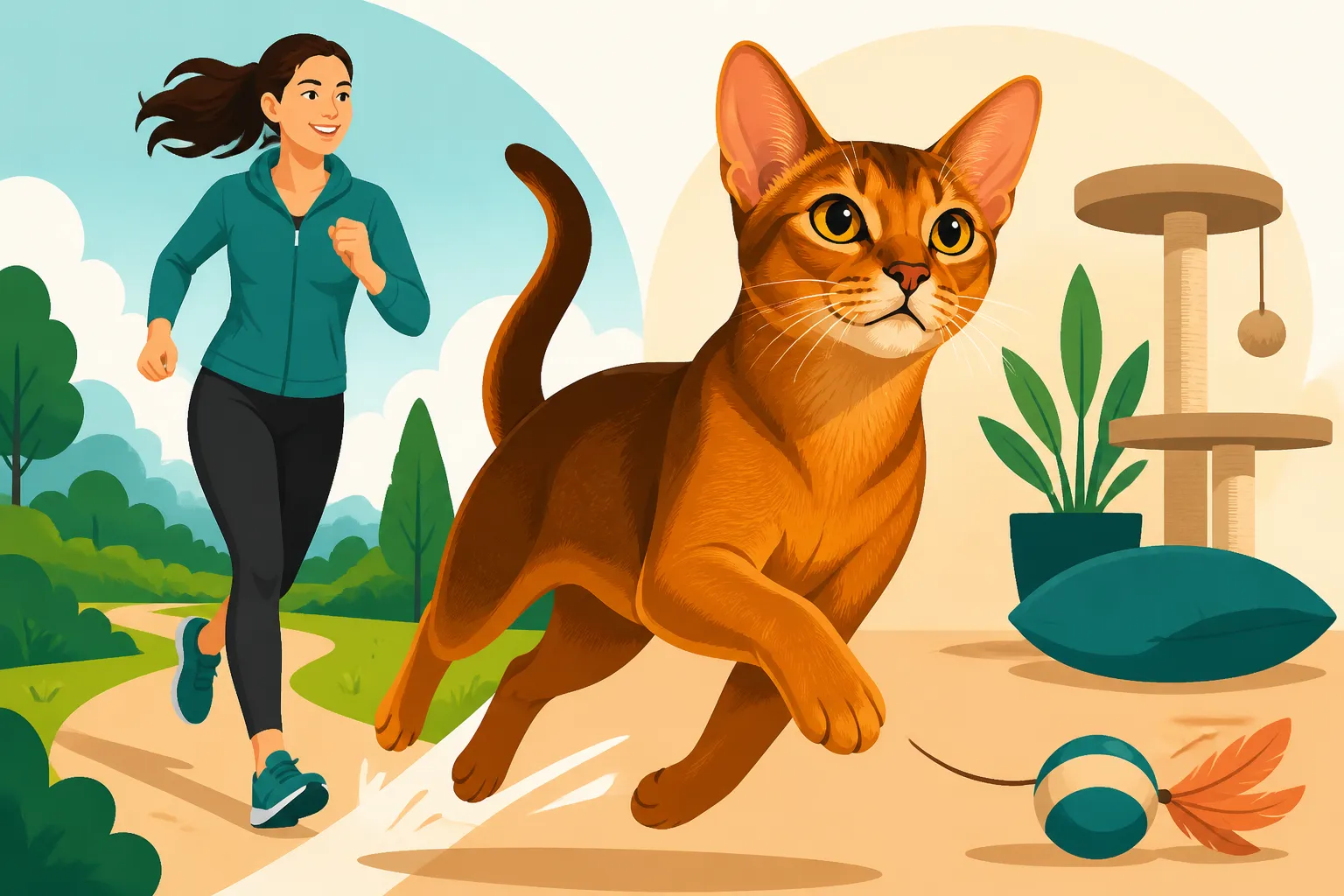
Abyssinians are athletic and mentally curious. A brief burst of play can help, but many do best when activity is built into the day in several short sessions. A wand toy can give your cat a chance to stalk, chase, leap, and catch. Food puzzles and simple hide-and-seek games add a thinking challenge, especially when you rotate them so the same toy doesn’t become predictable.
For example, you might offer a short chase session before breakfast, hide a few pieces of the cat’s daily food around a safe room before leaving, and play again after work. Watch your cat’s response rather than treating any single schedule as a rule: some days it may be eager for a long game, while on others it may prefer a few quick bursts. If you’re building a routine from scratch, How Much Play an Abyssinian Needs Each Day and How to Split an Abyssinian's Play Into Sessions offer useful ideas.
Height gives an active cat somewhere to go
Abyssinians often like to observe their surroundings from above. A stable cat tree, cleared bookcase shelves, or securely installed wall shelves can give them ways to climb and rest without turning every kitchen counter into a destination. Make sure each route is safe: shelves should be firmly attached, landings should not be slippery, and the cat should have an easy way down.
This matters even in a small home. A well-planned vertical route can add useful movement and choice without taking up much floor space. A window perch can also provide a safe place to watch birds or neighborhood activity, though it does not replace play with you. For ideas on creating an indoor climbing setup, see An Abyssinian Needs Height More Than It Needs Floor and How to Make an Abyssinian's Climbing Route Safe.
What an active owner needs to provide
Make play engaging without making it complicated
You don’t need a house full of expensive equipment. A few different play options are often more useful than a large pile of toys left out all the time. Try a wand toy, a lightweight object your cat can carry, a treat puzzle, and a cardboard box or tunnel. Put some toys away between sessions and bring them back later; a toy that has been out of sight can feel more interesting than one that is always underfoot.
Follow the rhythm of a hunt when you play: move a toy away from the cat, let it hide or pause, then give it a chance to pounce and catch. Ending every session with the toy just out of reach can leave an eager cat frustrated. Food puzzles can help on busy days, too, but choose one your cat can use safely and adjust the challenge if it gives up or empties it instantly. If you’re shopping for enrichment, Chewy is one place to compare puzzle feeders and wand toys, but a simple homemade activity can work just as well when it is safe and supervised. Why an Abyssinian Loses Interest in a Toy Fast has practical ideas for keeping play fresh.
Turn ordinary routines into opportunities
An Abyssinian may enjoy training because it combines attention, movement, and rewards. You can teach a simple cue such as coming to a mat, touching your hand, or retrieving a small toy. Keep sessions brief and positive, and stop while your cat is still interested. Training can also be useful in everyday situations, such as guiding your cat into a carrier or away from a doorway.
Food can become enrichment as well. Rather than leaving every meal in one bowl, you might offer part of the daily portion in a puzzle feeder or scatter a small amount across a few safe locations. Measure the food as part of the normal daily amount, so extra games don’t quietly become extra calories. Chewy may be useful for browsing different feeder styles, but check that a particular design is easy to clean and appropriate for your cat’s size and eating habits. For more on making food mentally engaging, see Why Foraging Suits an Abyssinian's Mind.
Choose the right climbing and scratching setup
A tall, sturdy cat tree can offer a perch, a scratching surface, and a place to stretch. It should not wobble when your cat leaps onto it. If you use shelves, place them so your cat can move between levels without risky, overly large jumps. Add suitable scratching surfaces near favorite resting spots and along common routes through the home; a scratcher hidden in an unused room may not be much help.
Before your cat arrives, look at the room from its point of view. Is there a tempting route from a chair to a curtain rail? Can it reach an open window? Are breakable objects sitting on a narrow shelf it is likely to investigate? Securing hazards and offering safe alternatives is usually more effective than relying on repeated scolding. You can compare different climbing approaches in Why Wall Shelves Work Better Than a Tree for an Abyssinian.
How to tell whether your lifestyle is a good match
The best fit is engaged, not necessarily athletic
You don’t have to be a runner or spend every evening playing. An active owner in this context is someone willing to notice the cat, offer regular interaction, and make the home interesting. A person who works from home may find it easier to share the day with an Abyssinian, though the cat may still climb onto the desk, investigate supplies, or demand attention during a meeting. Predictable breaks for play can help, but some cats will be more insistent than others.
If you have a packed schedule, think honestly about when you can offer attention and what the cat will do while you’re away. A puzzle feeder, safe window perch, climbing furniture, and toy rotation can make the environment more rewarding, but they do not make social interaction unnecessary. Whether an Abyssinian Suits Someone Working From Home and Whether an Abyssinian Suits a Full Time Worker can help you weigh the day-to-day realities.
A small home can work if it is thoughtfully arranged
An apartment can suit an Abyssinian, provided there is enough safe enrichment and the cat has chances to climb, play, observe, and rest. Floor area is only part of the picture. A modest living room with sturdy vertical spaces and regular interaction may be more satisfying than a larger home with little to explore.
Plan for safe indoor activity rather than assuming that outdoor roaming is the answer. Open windows and balconies need secure barriers, and a harness should be introduced gradually if you want to try supervised outings. Chewy offers supplies such as harnesses and cat furniture, but the important question is whether each item fits your home and your individual cat. Start with a secure environment and build new experiences slowly; don’t rely on a product alone to prevent an escape.
| Your routine or home | How it may suit an Abyssinian | What to plan for |
|---|---|---|
| You enjoy daily play and interaction | Often a strong match | Keep play varied and consistent |
| You work from home | Can work well | Expect interruptions and provide safe places nearby |
| You live in a small apartment | Possible with planning | Add vertical space, window viewing, and indoor games |
| You are away for long stretches | May be challenging | Arrange enrichment and consider companionship needs |
| You want a quiet, hands-off pet | Often a poor match | Consider a more independent individual or another breed |
Think about companionship and alone time
Some Abyssinians can live as the only cat, but their social and energetic nature makes the individual cat’s temperament especially important. A second cat may provide company, yet it is not an automatic solution: introductions take time, and the animals need compatible personalities and separate resources. A younger, playful cat may also overwhelm a quieter resident.
If you’re away for much of the day, consider how your cat will spend those hours, not just whether it has a second animal in the home. Cats need safe resting spaces, places to eat and drink, clean litter facilities, and enrichment suited to their preferences. A camera can help you notice patterns, but it cannot substitute for interaction or tell you everything about how a cat feels. For household fit and companionship considerations, read Whether an Abyssinian Can Be an Only Cat and How to Introduce a Second Cat to an Abyssinian.
Common challenges and how to handle them
Curiosity can look like mischief
Abyssinians may open cupboards, investigate bags, and reach places you thought were out of bounds. That curiosity is part of what makes them engaging, but it can create safety problems. Store medication, cleaning products, string, and small swallowable objects behind secure doors. Use a lidded bin and check that windows, doors, and balconies cannot be pushed open or slipped through.
When your cat keeps returning to a tempting spot, ask what need the behavior may be meeting. A cupboard might be interesting because it smells like food; a high shelf may offer a better view; a repeated leap could signal a need for more play. Block access to hazards, then offer a safe alternative nearby. Avoid turning every incident into a chase, which can accidentally make the forbidden spot more exciting. Why an Abyssinian Opens Doors and Cabinets provides more guidance on managing this clever streak.
Energy changes, but the need for connection remains
Abyssinians may become less relentlessly active with age, but they still benefit from attention and suitable stimulation. An older cat may prefer shorter games, lower climbing steps, or a warm resting spot close to household activity. Adjust the intensity to your cat rather than assuming it should keep up with its younger self.
Changes in behavior deserve attention, too. A cat that suddenly stops climbing, withdraws, or loses interest in play may be experiencing discomfort or illness, not simply “calming down.” Keep track of what is normal for your cat and speak with a veterinarian about a noticeable change. If you’re still deciding whether the breed matches your household, Whether an Abyssinian Is the Right Cat for You can help you look at the whole picture, including the commitment beyond play and enrichment.
Set expectations before bringing one home
A good match is not about being endlessly energetic. It’s about enjoying a curious cat that wants to participate in household life and being willing to shape your home around safe activity. If you like interactive play, enjoy a cat with opinions, and can provide climbing options and daily attention, an Abyssinian may be a rewarding companion.
If you prefer a pet that is usually content to occupy itself quietly, take that preference seriously. It is kinder to choose a cat whose needs fit your routine than to hope a high-energy personality will change after adoption. Talk with a reputable breeder or rescue about the individual cat’s behavior, daily habits, and experience with other pets. The breed gives you clues, but the cat in front of you is the one you’ll share your home with.
Disclaimer
This article is for general informational purposes only and does not constitute professional advice. Laws, prices and regulations vary by location and change over time. Consult a qualified professional for guidance on your specific situation.